



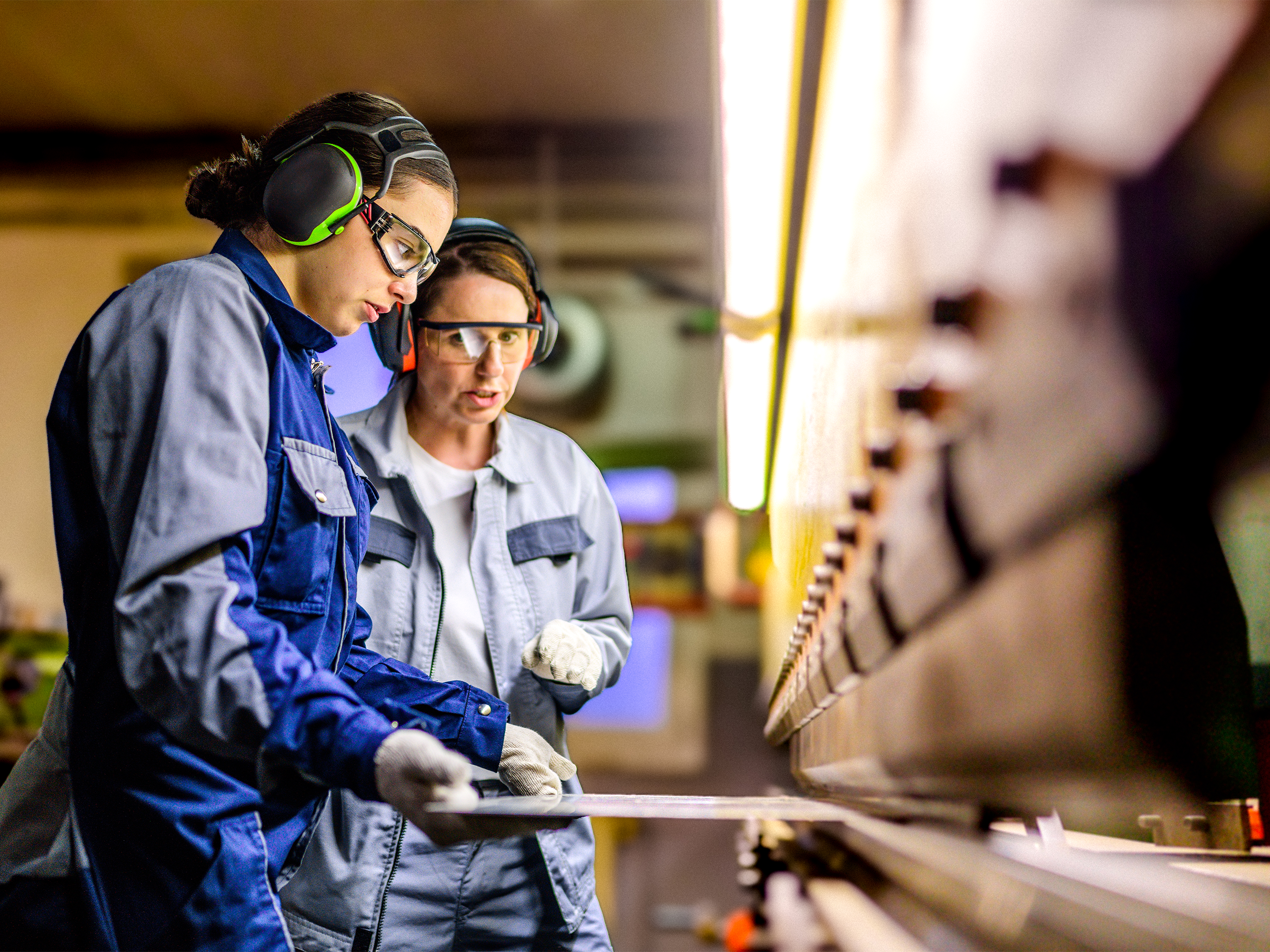
Over the past few years working across Australia, I’ve spent a lot of time inside workshops — metal fabrication shops, automotive repair businesses, and small manufacturing operations. One thing that keeps standing out to me is not the big problems, but the small ones that happen every single day.
**This story originally appeared in the July 2026 edition of AMT Magazine**
These small inefficiencies are easy to ignore. They don’t stop production, they don’t trigger alarms, and no one really tracks them. But over time, they quietly build up into real cost.
Waste Is Not Always Visible
In abrasive-related work such as cutting, grinding and sanding, consumables are constantly used. Because each item is relatively low in cost, they are often not managed closely.
But in reality, a lot of waste comes from very normal daily behaviour.
For example, a worker may switch between cutting and grinding tasks several times during the day. When changing discs, partially used ones are often left aside or mixed together. Later on, instead of finding the original disc, a new one gets opened.
The same happens with sanding discs. Many are replaced before they are fully used. Some still have 30–50% of usable life, but they are simply not used again.
Individually, this doesn’t seem like a big issue. But across multiple workers and over time, it adds up faster than most people expect.
The System, Not the Worker
It is easy to think this is a discipline problem. In my view, it’s usually not.
Most of the time, it comes down to how the workshop is organised.
In many places, there is no clear system to separate new consumables from partially used ones. Under time pressure, people will always choose the fastest option — which is opening a new item. That is just how people often work in a busy environment.
The same logic applies to safety.
In some workshops, PPE is encouraged but not enforced, relying on reminders rather than structure. As a result, compliance is inconsistent, and this can lead not only to injury, but also lost time and disruption.
Small Changes, Real Impact
What I’ve noticed across Australian workshops is that improvements don’t always require big investment.
Simple changes can make a real difference.
For example, separating new and used consumables into clearly marked areas already reduces unnecessary waste. In one workshop I visited, they installed a simple rack to store partially used discs. Workers were encouraged to reuse them before opening new ones.
There was no strict rule, no extra supervision — but it worked.
This kind of approach aligns with basic lean principles like 5S. Not in a complicated way, but in a practical, workshop-friendly way.
Efficiency Is Not Just Speed
When people talk about efficiency, they often focus on speed — faster machines, faster processes.
But in real workshop environments, efficiency is also about consistency.
If materials are not organised, time gets wasted looking for things. If tools are not managed properly, work becomes interrupted. If safety is not controlled, the risk of downtime increases.
All of this affects output, even if it’s not immediately obvious.
A Practical Reality for Australian Manufacturing
Manufacturing in Australia is under pressure — labour costs, energy costs, and supply chain challenges are all increasing.
In this environment, improving efficiency is not about major upgrades all the time. Sometimes, it’s about doing the basics properly.
From what I’ve seen, workshops that focus on small operational details tend to perform better over time.
Conclusion
In most workshops, inefficiency is not caused by big problems. It comes from small actions repeated every day without a clear system.
Fixing this doesn’t require large investment. It requires attention, structure, and consistency.
And in a competitive market, those small improvements can make a bigger difference than expected.
By Dever Yang, Abrasivestocks Australia