



Creating sustainable solutions, reducing environmental impact and upscaling performance in personal vehicles, Jaunt makes a difference. AMT Editor Paul Hellard goes on a road trip.
Jaunt is an automotive workshop reinventing four-wheel drives and classic cars through electric conversion. Swapping engines from internal combustion to electric allows people to enjoy their vehicles while reducing their environmental impact.
Despite the political word salad in 2019 Canberra about electric cars ‘ruining the weekend’, Australia has been converting cars to electric since the 1970s. In fact, the Australian Electric Vehicle Association (AEVA) is one of the oldest electric vehicle associations in the world.
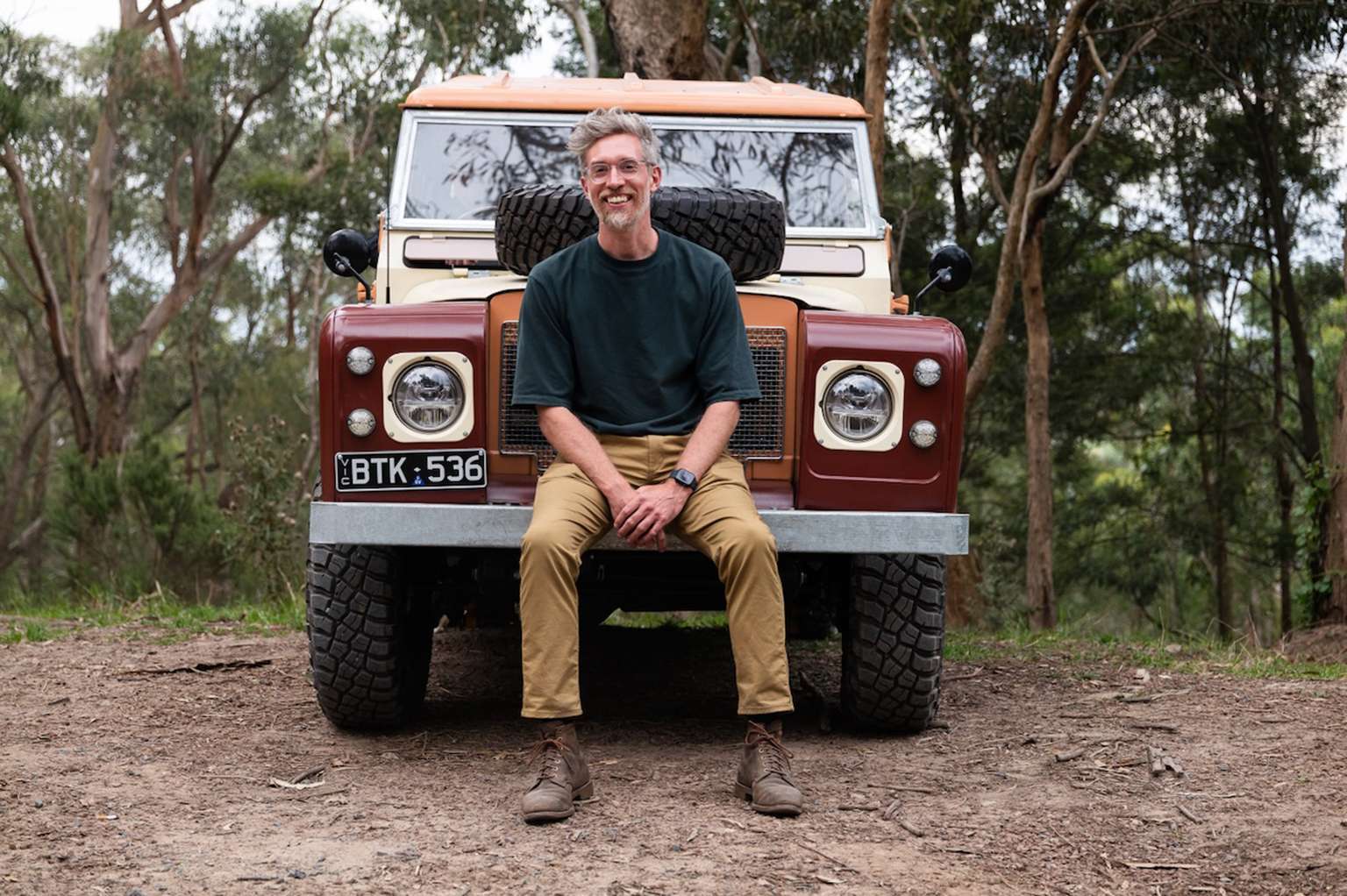
Dave Budge and his business partner Marteen Burger had “worked together with some great engineers and designers on making emerging tech beautiful and saleable,” explained Budge. “We both enjoyed camping and four-wheel-driving. I owned a Land Rover, but I wished it was electric, and there was no electric 4×4 on the market.”
Budge had worked as a consultant with Holden and General Motors globally for a long time, which familiarised him with automotive sales stats. “Australia buys more four-wheel drives than anyone else, and the only electric cars were sedans and hatchbacks in 2018-19,” he stated. “Basically, a Nissan Leaf or a Tesla Model X was what you could buy back then.”
What became clear to Budge was that there was plenty of fantastic work being done by individuals in their home garages. At that stage, it was possible to package that end product’s emerging technology but it was for electrical engineers, by electrical engineers. It wasn’t designed for non-enthusiasts. The market was there, and it wanted to purchase an electric version of some classic cars, and Budge just needed to sell cars. He’s been asked to develop electrical conversion systems in his company, Jaunt. Of course, with every business plan, there are always bumps in the road. “We came in with large growth plans, a large workforce, and then COVID hit,” explains Budge.
“It needed to be thought of holistically as a car, for people who just loved the style, the look, the shape,” explained Budge. “What does it mean to take a classic with all this nostalgia? We are standing on the shoulders of some great car brands.”
Budge sees the mission of Jaunt as selling a car you’d imagine it to be like rather than what it is. Since COVID, they haven’t had much to do with Land Rover, the brand. But the Land Rover community has been very supportive. “We started a singular brand, ‘Make-It-Car’, to prove that we got it,” he added. “We weren’t just jamming electric stuff inside it. We sell many after-market Land Rover parts we’d developed but don’t have a connection with Land Rover.” They now have a line of classic Land Rovers being worked on. Refitted. Set up to plug in.
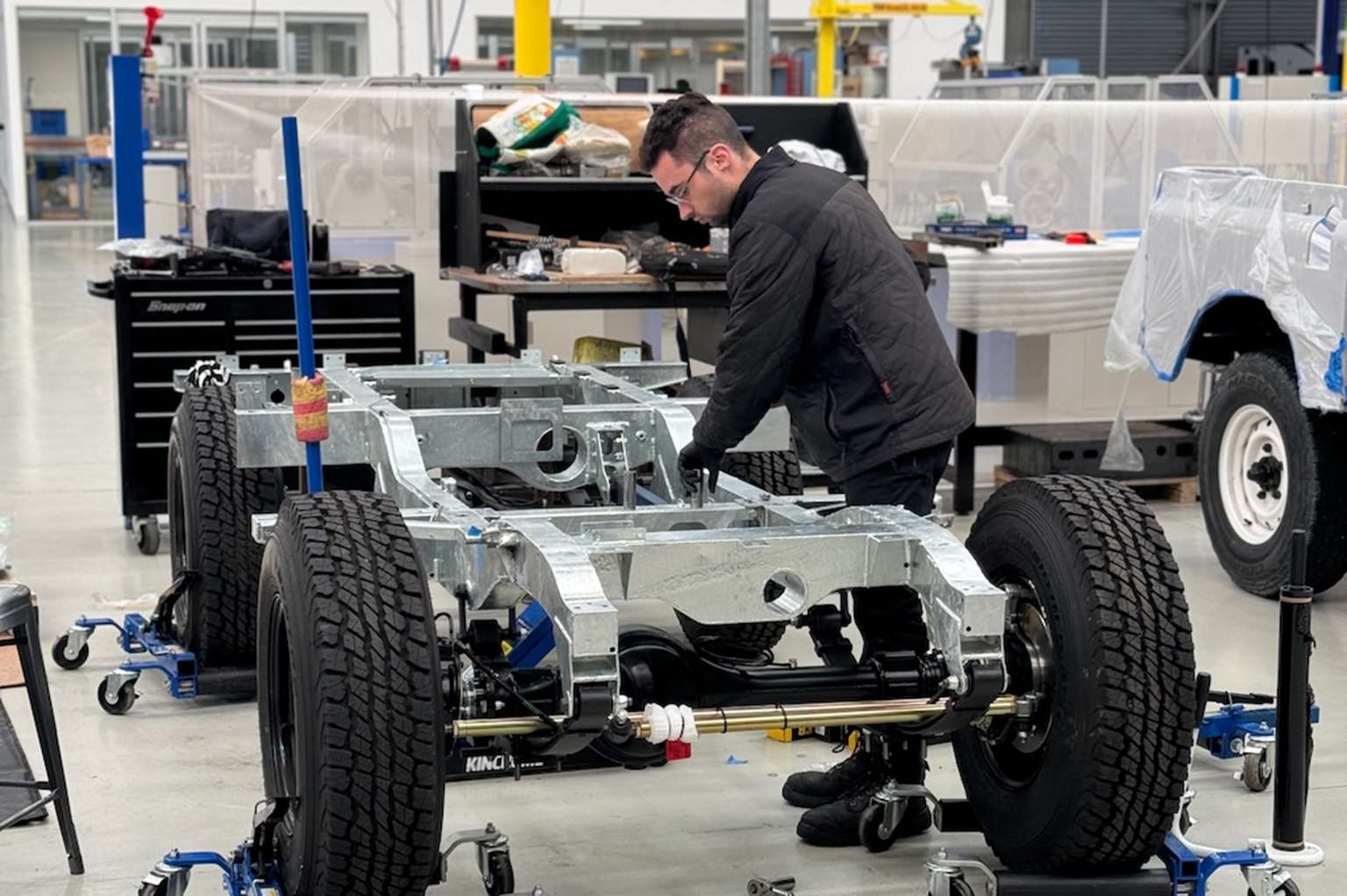
Even today, Jaunt is only 16 people. Neither Marteen nor Dave are mechanics or engineers. “But we’ve spent a lot of time and money to get to a level where our teams build a new car,” he added. “We have a digital twin in CAD for every car we build.”
Getting the right people on the floor to work in this space has been lucky for Jaunt in some ways. “We’re finding people with experience in robotics and digital electronics areas, as well as a couple from motorsports and some who are ex-GM,” explained Budge. “I guess the environmental and the sustainable side of what we’re doing attracts people who would never have been excited about automotive.”
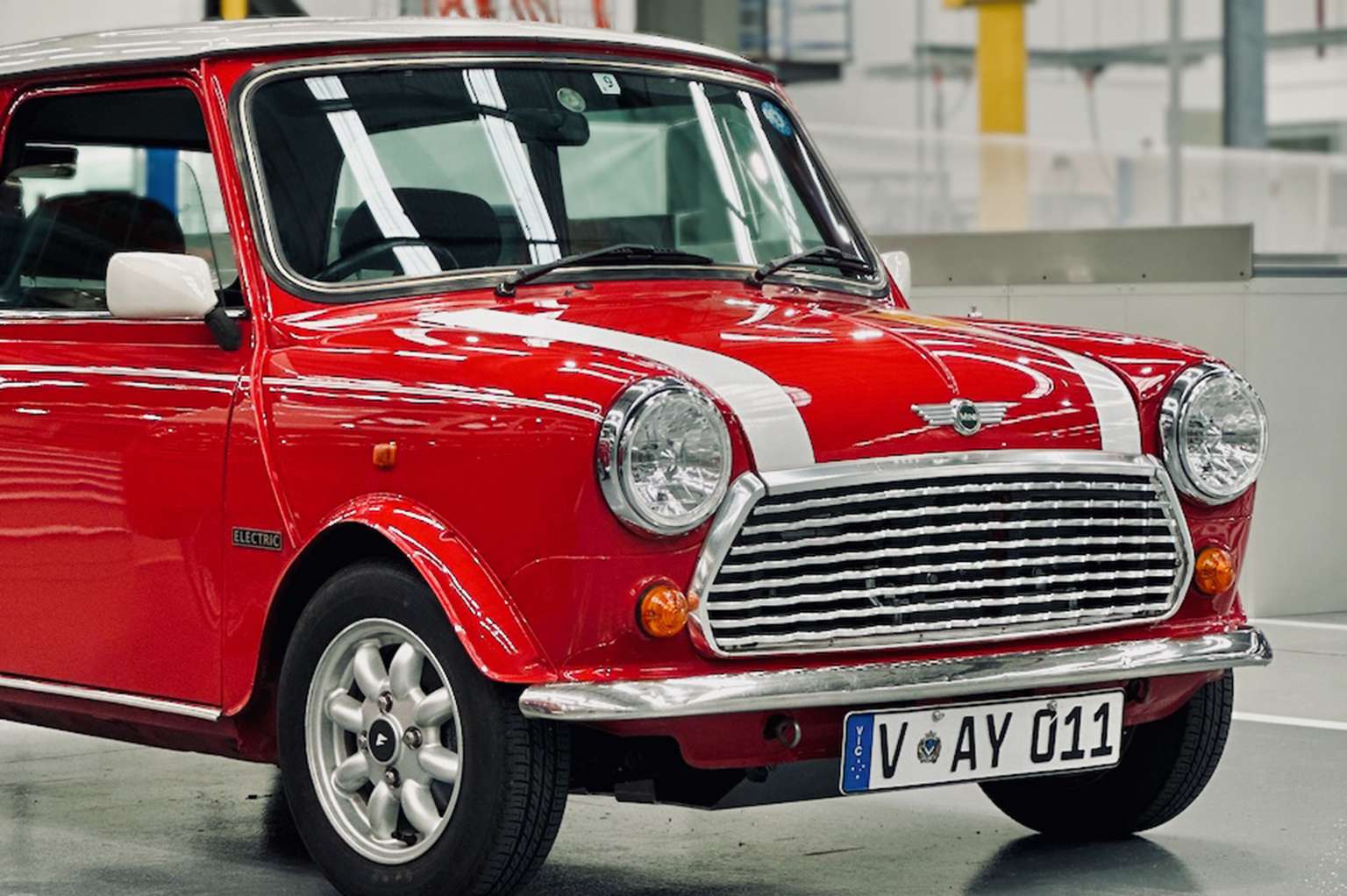
“We’ve also reached out and worked with Mini Australia and did our first electric Mini in partnership with them,” said Budge. Jaunt converted and sold the Classic Mini as an electric vehicle, while Mini Australia promoted their new Electric Mini. It allowed Jaunt to promote that you could have an electric Mini, and it could even be a classic older Mini people might still have, just needing an electric engine. The electric motor and battery combination is ten kilos lighter than the original petrol engine in a Mini.
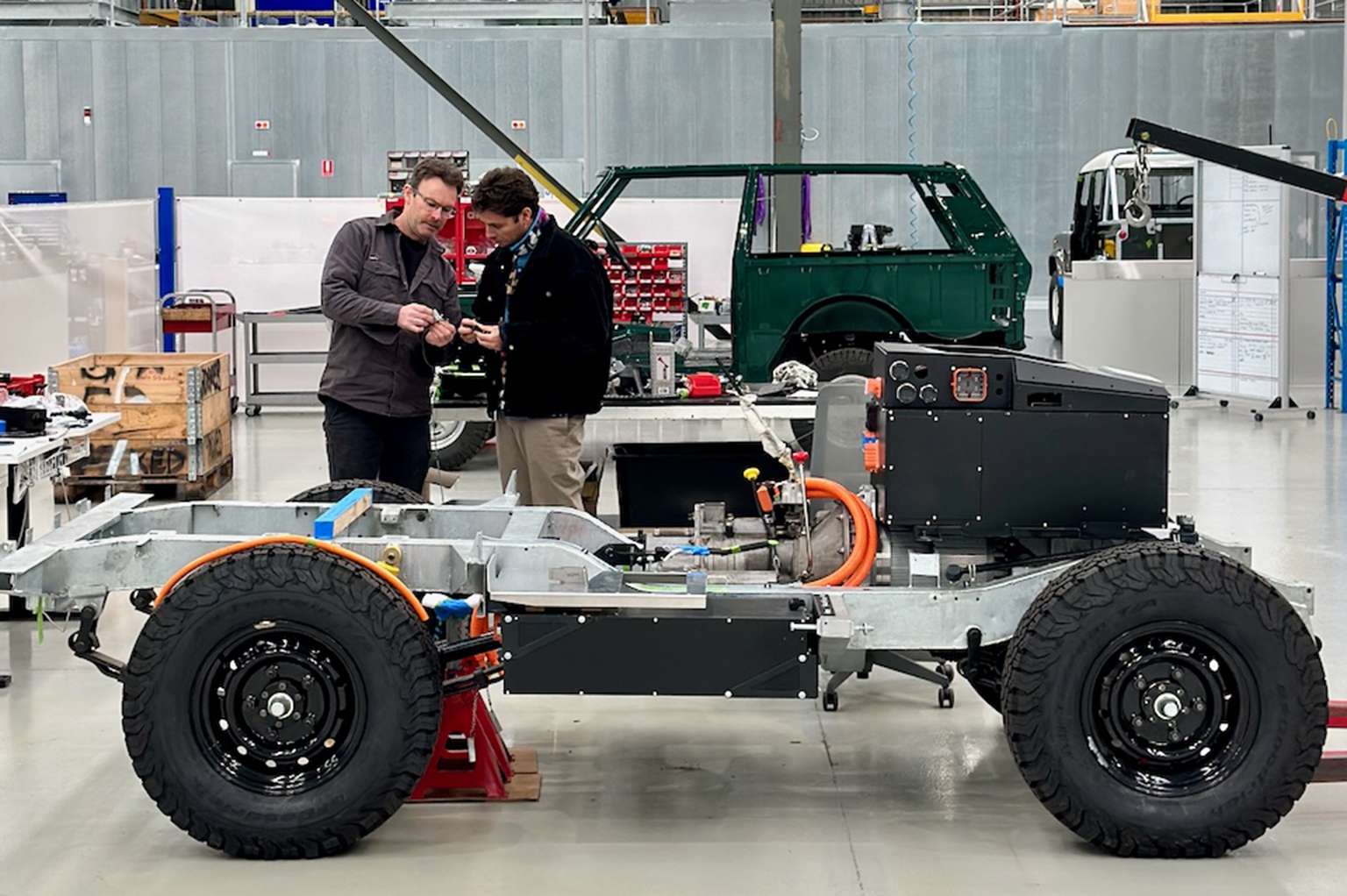
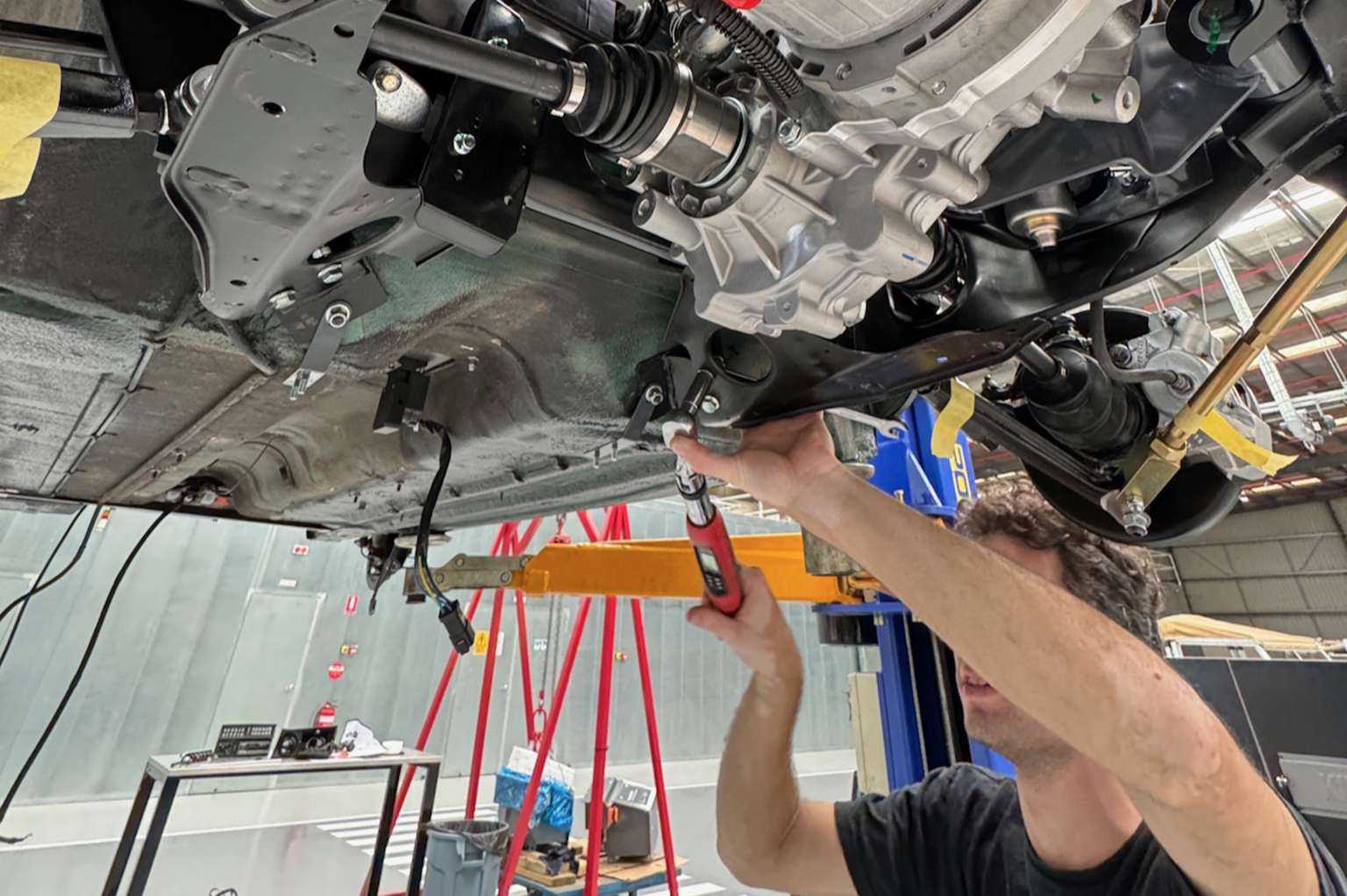
There’s also been a lot of tinkering in the warehouse in Scoresby around a Volkswagen Kombi wagon, affectionately named a ‘Voltswagen’. It’s landed back here to undergo some fine-tuning and be upgraded. The new platform Jaunt has developed for this vehicle will fully comply with global EV standards. “A lot of the vehicles we’re dealing with, older classic Volkswagens, were assembled to some extent in Australia for some period of their lives,” said Budge. “And that’s why they resonate.”
When you go from internal combustion to electric, there’s no barrier to entry anymore. You don’t have to know how to fix an old car. The automotive industry, particularly with classic vehicles, is quite conservative. “There will always be great workshops, with their reputation, experience and skills,” qualifies Budge. “They’re building beautiful machines with internal combustion engines.”
“If their customers say they want to convert it to electric, that’s a big step for those mechanics, but it can be done. More and more US workshops are open to conversions, even more so in the UK. Jaunt is open to training other workshops as well,” noted Budge. “We have some industry customers in New Zealand who are bringing a car over, and we’ll be doing a conversion for them and helping to train their manufacturing and automotive engineering staff. That’s a whole different arm of our business.”
All vehicles refitted at Jaunt now have bi-directional charging installed with the batteries. This gives the vehicle an immediate ability to power your house during a blackout, run a small business out on the road, or charge a neighbour’s vehicle.
Jaunt uses many manufacturing service providers from all over the country to manufacture its vehicles. For instance, they use Hardy Spicer for all their drive shaft development. “They do custom shafts, and they do a lot of work on our Land Rovers,” explained Budge. Precision Engraving and Briter Australasia produce the dashboard labels, and Ultimate Laser does all the laser cutting from their facility in Dandenong.
“Retro Rack in South Australia brings in a very modular rack-and-pinion steering system that we can adapt to different angles,” Budge added.
Jaunt is also participating in the Supercharge Australia Innovation Challenge as part of the “Retrofit Nation” initiative. This program aims to convert half of Australia’s vehicle fleet—around ten million vehicles—into electric vehicles by using retrofitting solutions.
This is about much more than the technical aspects of EV conversion. It’s about creating sustainable solutions at scale that benefit everyday Australians. “It’s also a chance to continue pushing boundaries as we grow our team and refine our processes for vehicle retrofitting,” Budge concluded.