



Technical capabilities required to ensure successful vacuum window fabrication. By Kevin Quist, National Sales Manager – Optics, Zygo
Many factors contribute to the successful manufacture of vacuum windows. Understanding and using cutting-edge technology, quality control via state-of-the-art metrology tools, and material properties are critical to their design and manufacture. Combined with a culture of innovation and in-depth and broad experience in precision optics manufacture, these technical capabilities can be honed to ensure optimal vacuum window manufacturing.
What are vacuum windows?
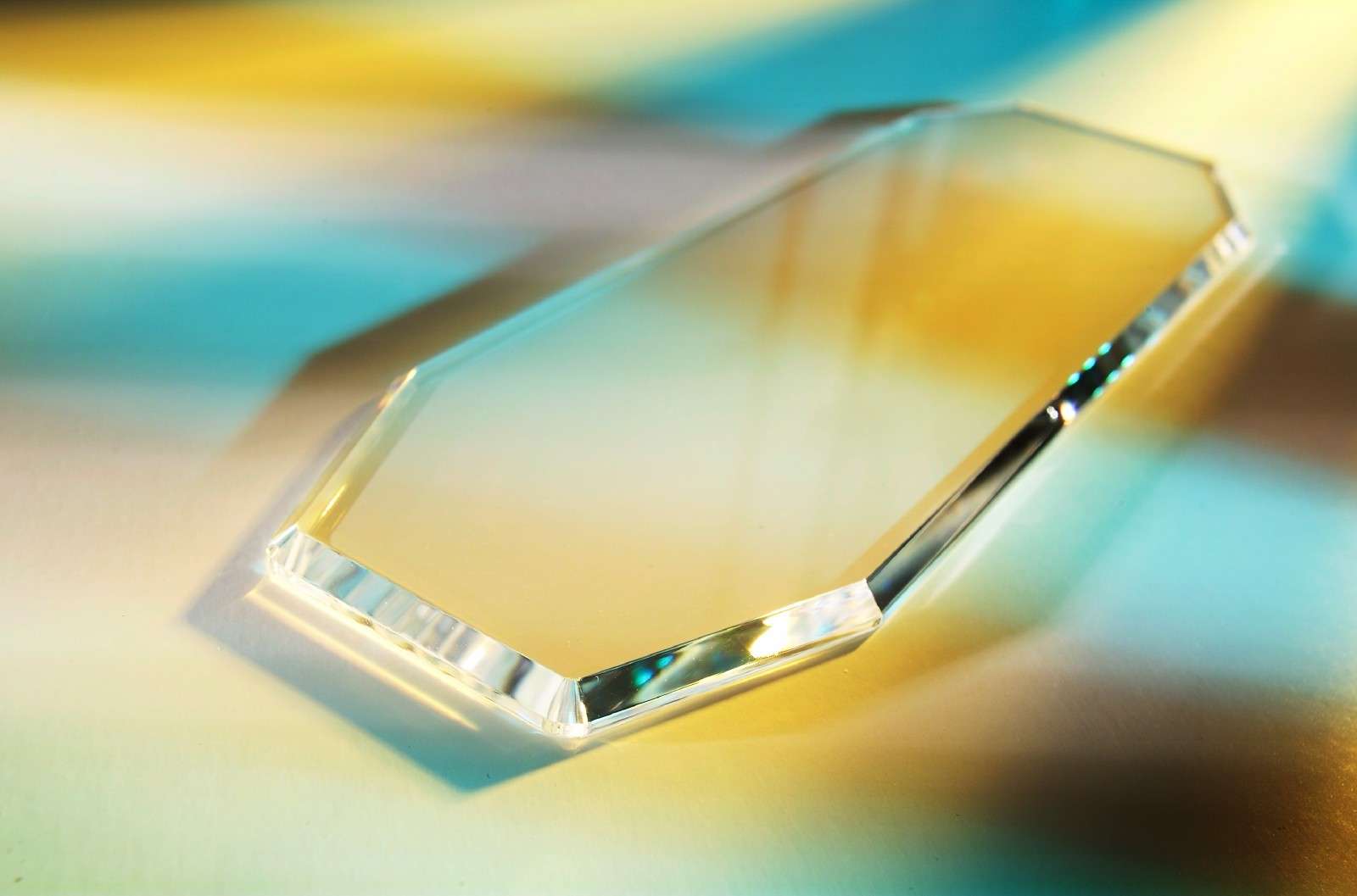
Vacuum windows are components designed to separate different environments while allowing light to pass through. They are commonly used in applications where a controlled atmosphere, such as a vacuum, must be maintained on one side of the window while allowing optical observation or the passage of laser beams.
They are made from materials with high transparency to specific wavelengths of light and excellent mechanical strength. Common materials including fused silica (known for its low thermal expansion and high transparency in the ultraviolet to infrared range), sapphire (extremely hard and durable, suitable for harsh environments), borosilicate (excellent thermal resistance, low thermal expansion, and high chemical durability); and Zinc Sulfide (high transparency in the visible and infrared spectrum and good mechanical strength and resistance to thermal shock). To enhance performance, vacuum windows may apply anti-reflective coatings to reduce reflection losses and increase transmission. Coatings are selected based on the specific wavelength range used in the application.
Vacuum windows need to withstand the pressure differential between the vacuum environment and the external atmosphere. This requires high mechanical strength and careful design to prevent deformation or breakage. Also, in many applications, vacuum windows need to operate under varying temperatures without significant thermal expansion or distortion, which can affect the optical performance.
Vacuum windows are typically used in laser systems where they are used to transmit laser beams into or out of vacuum chambers; in spectroscopy, where they allow light to enter or exit a spectrometer while maintaining a vacuum environment for accurate measurements; in microscopy, where they enable observation of samples under vacuum conditions; in space applications where they protect instruments where a vacuum is present; and in semiconductor manufacturing where they are used in vacuum chambers for processes like chemical vapour deposition or etching.
They are typically mounted in specially designed frames or flanges that provide a seal between the window and the chamber, ensuring no leaks that could compromise the vacuum. Overall, by combining appropriate materials, coatings, and design features, vacuum windows ensure high optical performance while maintaining the integrity of the vacuum environment in precision optical systems.
Required technical capabilities
Various technical capabilities are required to make vacuum windows successfully, and these capabilities ensure the creation of long-life, high-performance optics.
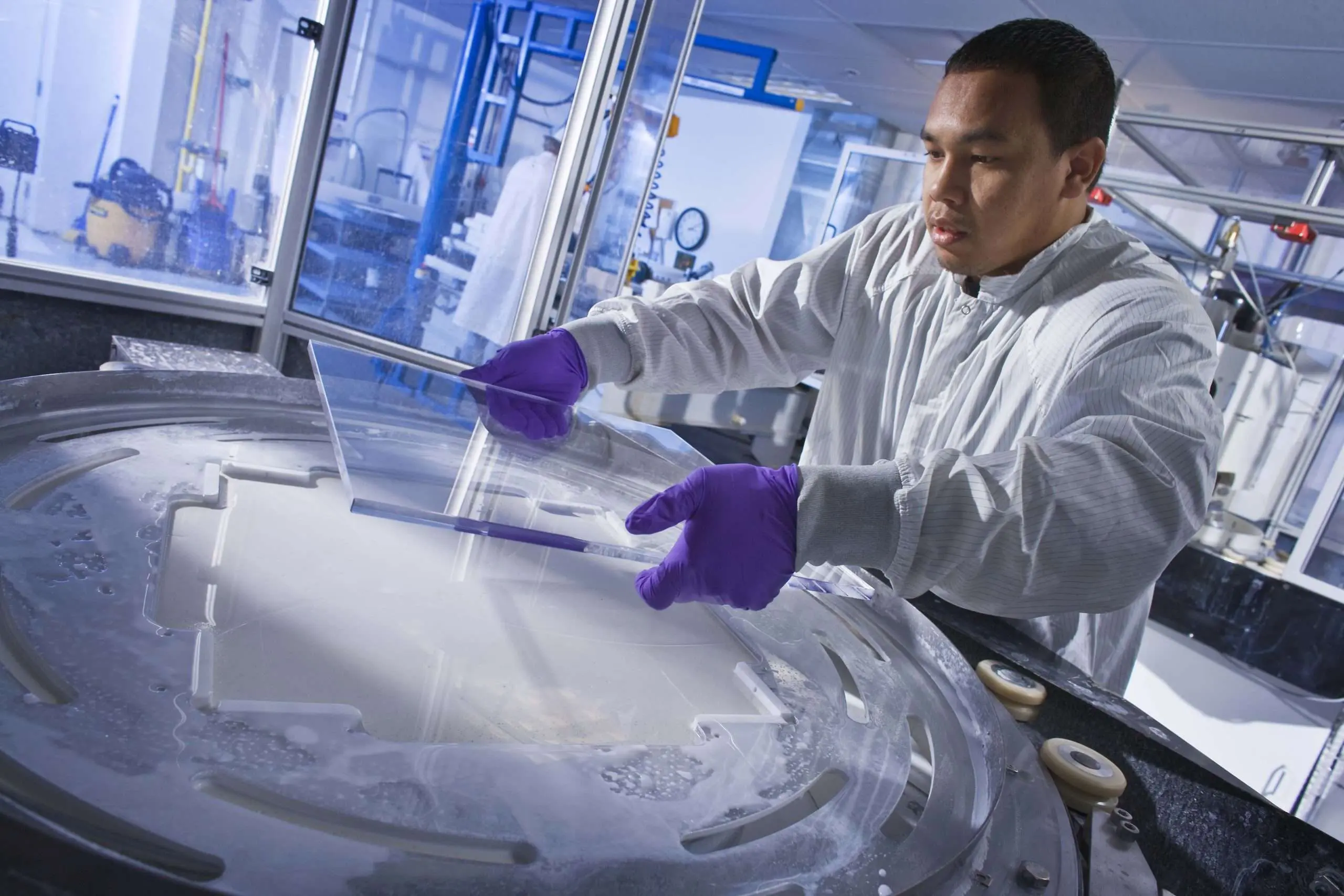
Advanced manufacturing capabilities are essential for producing high-quality vacuum windows, ensuring the final product meets stringent performance and reliability standards. This includes precision machining, which is critical in shaping materials to extremely tight tolerances. Such precision is vital because even minor deviations can significantly impact the vacuum windows’ optical performance and structural integrity. In addition, sophisticated polishing techniques are employed to achieve high optical clarity and surface smoothness. These techniques minimise surface irregularities, defects, and sub-surface damage, thereby reducing scattering and enhancing light transmission through the window.
Advanced polishing processes are needed to achieve a near-flawless surface finish, which is crucial for applications requiring high optical performance. Additionally, using state-of-the-art coating facilities is necessary for applying highly precise anti-reflective and other specialised coatings. These coatings play a significant role in enhancing the performance of vacuum windows by reducing reflections, improving light transmission, and providing protection against environmental factors such as moisture and chemical exposure. Applying these coatings uniformly and accurately is vital and only possible with advanced technological capabilities and expertise.
Integrating cutting-edge technologies and equipment in the manufacturing process allows for greater control and consistency in production, ensuring that each vacuum window meets the highest quality standards. This combination of precision machining, sophisticated polishing, and advanced coating techniques underscores the importance of advanced manufacturing capabilities in producing high-quality vacuum windows that perform reliably in demanding environments.
Expertise in a wide range of materials is another critical technical capability. Manufacturers must be capable of working with various optical materials — as mentioned previously — such as fused silica, sapphire, borosilicate, and Zinc Sulfide, and possess a deep understanding of these materials’ properties and behaviours under different environmental conditions, including vacuum and varying temperatures.
For example, fused silica is known for its excellent thermal stability and low thermal expansion, making it ideal for applications where the window will experience significant temperature changes. Fused silica maintains its shape and optical clarity in a high-temperature environment, ensuring consistent performance. Additionally, its low coefficient of thermal expansion minimises the risk of thermal stress and potential cracking, which is crucial in maintaining the integrity of the vacuum window. On the other hand, sapphire is valued for its exceptional hardness and durability. Sapphire’s high mechanical strength suits it for harsh environments where the window might be exposed to abrasive particles or high-pressure conditions. Its durability ensures the window remains intact and functional even under mechanical stress, particularly in aerospace and industrial applications where reliability and longevity are paramount.
An excellent relationship with material suppliers is also important. The grade and quality of raw optical materials can significantly impact the final window’s optical and mechanical performance. The lead time for raw materials can also significantly contribute to the overall project deadlines. Therefore, both the polisher and raw material vendor need to be in close collaboration to ensure on-time compliance with the vacuum window’s final performance specification.
Quality control and metrology are fundamental technical capabilities that ensure each optical component meets the required specifications and standards. This involves the use of advanced metrology tools that measure surface quality, flatness, and other critical parameters with high accuracy. These sophisticated instruments can detect minute deviations from design specifications, ensuring that even the smallest imperfections are identified and corrected. High-precision measurements are crucial because any aberrations can significantly impact the performance of vacuum windows, especially in high-stakes applications like those found in aerospace and semiconductor manufacturing.
Advanced metrology tools such as laser interferometers and 3D optical profilers facilitate a comprehensive understanding of the optical surfaces’ characteristics, enabling precise control over the manufacturing process. This level of precision ensures that components can perform reliably under various operational conditions, such as extreme temperatures or vacuum environments. Alongside these advanced tools, rigorous quality control processes should be implemented at multiple stages of production. This includes thorough inspections of raw materials, in-process evaluations, and final product testing, ensuring consistency and adherence to stringent quality standards.
Manufacturing vacuum windows relies on advanced technical capabilities and rigorous quality control measures. These windows used extensively in applications ranging from laser systems to space instruments, are made using precision machining and sophisticated polishing to achieve high optical clarity. At the same time, advanced coating techniques enhance light transmission and durability. Quality control is also paramount to ensure each window meets stringent performance criteria. A culture of innovation and extensive experience in precision optics also allows manufacturers to continuously improve their techniques and adapt to new challenges, thereby maintaining high standards in vacuum window production.
ZYGO has a highly experienced team with a decades-long history of success in designing and building optical devices in an incredibly broad range of applications. ZYGO has worked with a broad range of optical devices, including those that contain zoom groups, gratings, displays, MEMS, cameras, micro-lens arrays, cylinder lenses, aspheres, free-forms, diamond-turned plastic and aluminium, spatial light modulators, fibre optics, polarisers, and birefringent crystals. The company is expert in a broad range of applications, including AR/VR, medical imaging, laser eye surgery, fluorescence microscopy/gene sequencing, flat panel lithography, high laser power material processing, high-performance Intelligence, Surveillance, Reconnaissance (ISR) imaging systems; NewSpace (including low earth orbit multi-spectral earth imaging telescopes, star tracker navigation optics, lasercom terminal optics); microscope objectives for semi inspection, including solid immersion (SIL) NA3.3 microscope objectives; and fibre coupled micro-optics devices.