



Revolutionising drone design and manufacturing with additive technologies
Drones are increasingly becoming indispensable in the aerospace and defence sectors, driving mission-critical operations ranging from surveillance to search-and-rescue. As the demand for more agile, adaptable, and high-performance drones grows, so does the challenge of designing and manufacturing components that meet these exacting requirements. While effective for simpler geometries, traditional manufacturing methods often struggle to meet the complex demands of modern drone systems, especially when it comes to lightweight yet durable designs. Additive manufacturing (AM) is transforming the industry, unlocking new possibilities in speed, design, and functionality for the next generation of drones.
At EVOK3D, we enable our clients to overcome these challenges by leveraging Additive Manufacturing (AM). AM’s flexibility allows clients to create intricate designs, such as internal cavities and lattice structures, achieving significant weight reduction without compromising strength. Additionally, the capability to rapidly prototype and iterate designs accelerates the product development process, reducing timelines from months to weeks.
The role of HP MJF and nTop in drone design
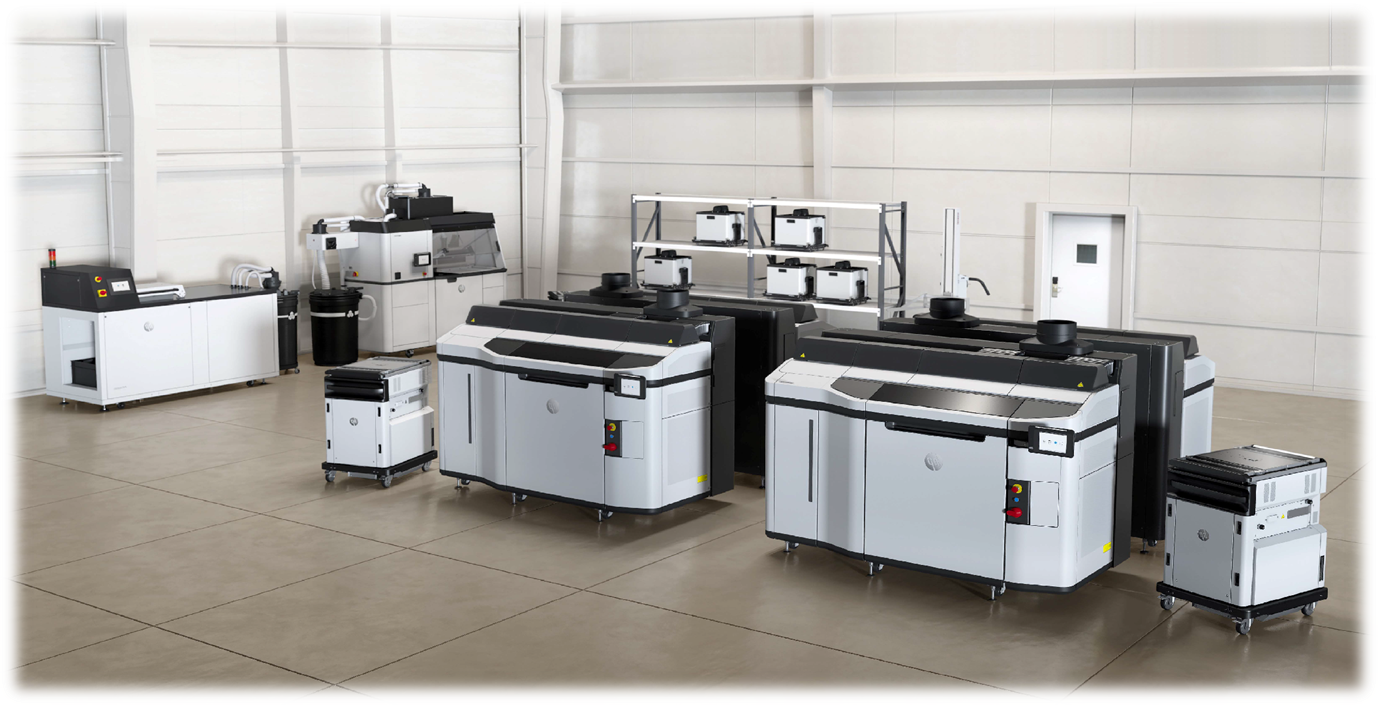
Design and prototyping are crucial in developing high-performance drones, where factors such as weight, strength, and functionality are critical. Traditional manufacturing methods are often limited to producing complex, lightweight, and durable parts. HP MultiJet Fusion (MJF) and nTop’s design tools offer a transformative approach to the design and production of drone components. They enable manufacturers to seamlessly transition from functional prototyping to end-part production without changing processes or materials.
nTop: Advanced generative design for optimisation
nTop’s computational design platform enables engineers to create highly optimised components for drone systems. At its core, nTop uses generative design principles to explore a wide range of potential geometries based on performance criteria. This approach allows for simultaneously testing multiple design candidates, optimising for factors such as structural performance, material efficiency, and weight reduction.
One of nTop’s standout features is topology optimisation, which removes unnecessary material from a design while ensuring the part can withstand the required mechanical stresses. Using finite element analysis (FEA) simulations, nTop determines the most efficient material distribution for drone components like arms, frames, and structural supports. This results in lightweight designs without compromising strength and durability.
Moreover, nTop enables the creation of lattice structures and internal channels—innovations that significantly reduce part weight while maintaining the necessary strength for flight. For example, drone frames and battery compartments can be designed with internal lattice structures to minimise weight without compromising structural integrity. These complex geometries are easily fabricated with HP MJF, ensuring that even the most intricate designs are possible.
nTop’s multi-material design integration is another key capability. This feature allows engineers to design components incorporating multiple materials with different properties for different areas of the same part. For instance, rugged materials can be used for areas of a drone component requiring high-impact resistance, while lightweight materials can be used where weight reduction is a priority. This precision ensures that components perform optimally in their specific roles.
HP MJF and materials selection for drone manufacturing
Once the optimal design is finalised using nTop, HP MJF brings these designs to life. HP MJF’s precision and versatility make it an ideal choice for manufacturing drone components, especially when complex geometries are involved. One of the key materials used in HP MJF is PA12, a versatile and durable material known for its high strength-to-weight ratio, excellent chemical resistance, and surface finish. PA12 is particularly effective for components like frames, arms, and structural parts that must withstand stress and wear during flight.
PA11 is often selected for specialised applications requiring additional durability. Known for its exceptional toughness, it is perfect for parts subjected to high mechanical loads or harsh environmental conditions.
HP MJF offers further design flexibility by enabling features such as thin walls, internal geometries, and improved surface finishes—all essential for producing high-performance, lightweight components. Unlike traditional manufacturing, where support structures are often required, HP MJF can produce parts without the need for additional support, allowing for greater design freedom and faster production.
One of the most significant advantages of HP MJF and AM in general is the ability for manufacturers to go directly from functional prototyping to end-part production. Traditional manufacturing methods often involve lengthy lead times, delaying testing and production phases. With additive manufacturing, engineers can produce prototypes in days, test them in real-world conditions, and adjust based on feedback in hours.
This rapid iteration cycle is invaluable when developing drones for specific operational requirements. Whether designing a drone for surveillance, search-and-rescue, or industrial inspections, customisation is often necessary to meet unique mission needs. In traditional manufacturing, these changes could require expensive retooling and weeks of production downtime. With HP MJF, modifications can be made quickly and cost-effectively, resulting in faster time-to-market and reduced overall costs.
Furthermore, HP MJF ensures that even complex drone components meet stringent design specifications. Whether a lightweight frame or a sensor housing, the high-quality surface finish and intricate details achievable with MJF make it an ideal solution for aerospace applications.
Testing, prototyping, and iteration in drone development
Testing is a vital stage in the development of drone systems. Once components are designed using nTop and produced using HP MJF, they undergo rigorous testing to ensure they meet the demanding requirements of aerospace and defence industries. Unlike traditional methods, AM allows for faster and more flexible testing, enabling engineers to iterate quickly and refine designs based on real-world performance.
Through HP MJF, functional prototypes are produced rapidly, allowing for mechanical and environmental testing. Components such as drone frames, arms, and battery compartments undergo tests for tensile strength, impact resistance, and fatigue durability. Parts made from PA12 and PA11 undergo extreme environmental testing to ensure reliability in harsh conditions, such as high temperatures, humidity, or exposure to UV light.
Customisation for mission-specific applications
AM’s ability to customise designs for specific use cases is one of its most significant advantages. Whether developing a drone for high-altitude inspections or underwater surveillance, AM enables engineers to adapt the drone design to suit specific mission needs. For instance, drones intended for high-altitude operations may require aerodynamically efficient designs, while those used underwater may need additional corrosion-resistant coatings.
Thanks to additive manufacturing’s flexibility, these customisations can be implemented quickly. Engineers can test prototypes, incorporate feedback, and refine designs within weeks.
Once the design and prototyping phases are complete, scaling production is seamless with HP MJF. MJF’s precision and repeatability ensure that the final product maintains the same high level of quality throughout large-scale production. This is crucial for aerospace and defence applications, where reliability and consistency are paramount.
The materials selected—PA12, PA11, and others—offer the durability required for extreme operating conditions, ensuring that components remain functional in high-stress environments. nTop’s generative design ensures that each component is optimised for weight, strength, and functionality, while HP MJF’s capabilities allow for consistent, high-quality production, making it an ideal solution for both low- and high-volume manufacturing.
Conclusion
The integration of HP MJF and nTop’s design tools is revolutionising drone component design, testing, and manufacturing for aerospace and defence applications. As the exclusive partner for HP 3D Printing in Australia, EVOK3D is at the forefront of this technological shift, empowering manufacturers with cutting-edge, cost-effective solutions that meet the industry’s rapidly evolving needs. By embracing additive manufacturing, aerospace and defence sectors can accelerate innovation, optimise component performance, and maintain a competitive edge in an increasingly dynamic market.