



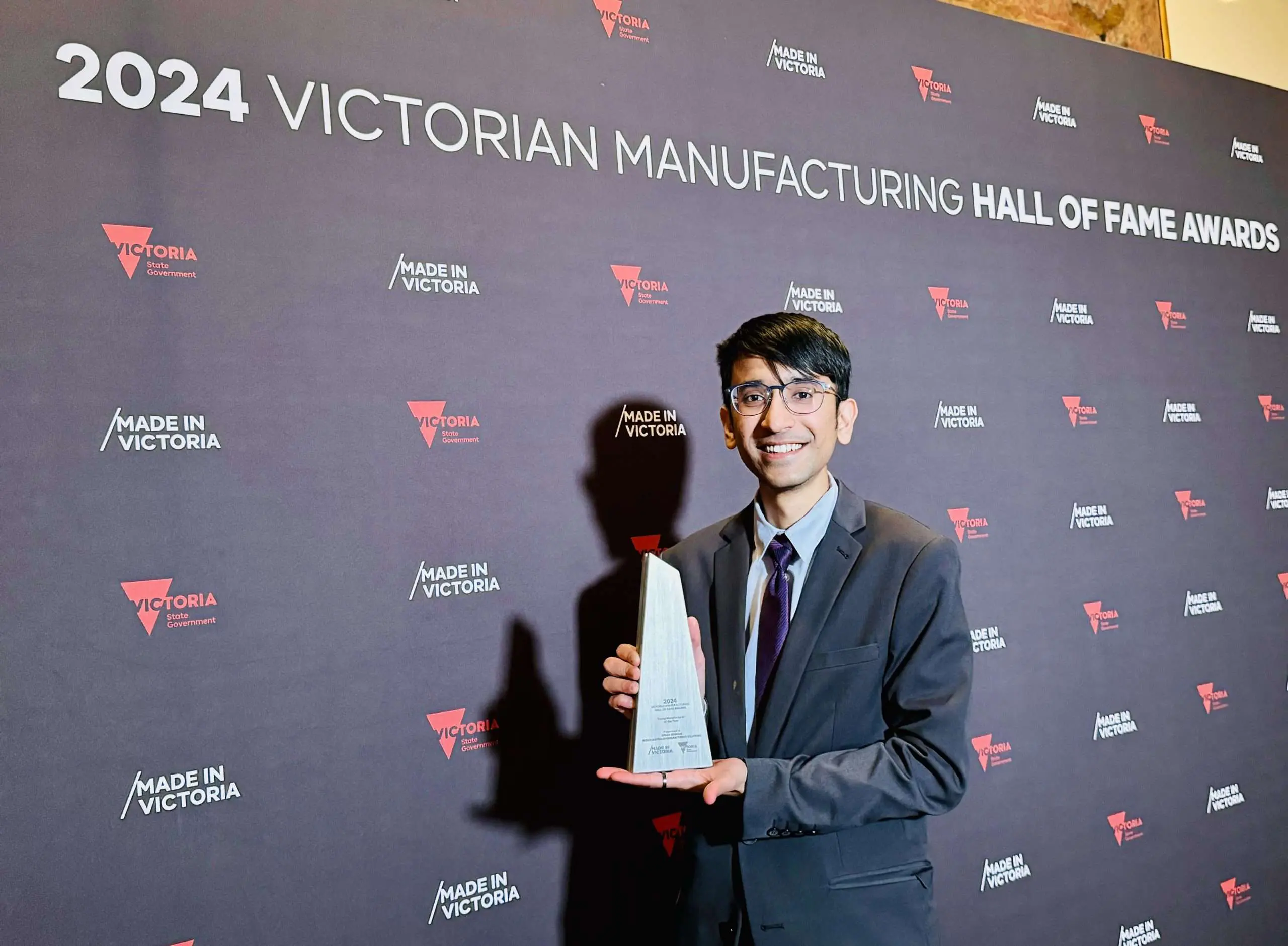
AMT speaks to Afnan Siddique after he wins the Victorian Young Manufacturer of the Year Award at the Victorian Manufacturing Hall of Fame 2024
AMT: Thanks for your time, Afnan. Congratulations on the award. What was your initial reaction when your name was read out?
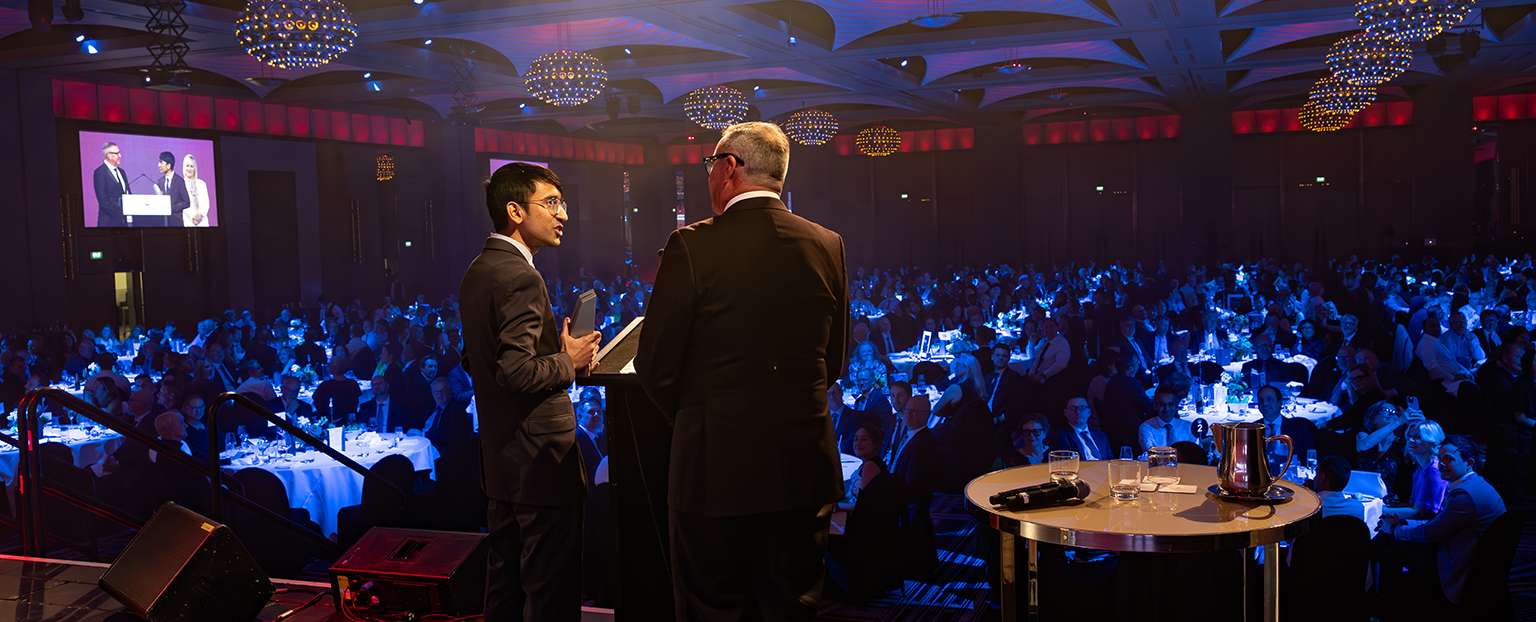
Afnan Siddique: I was surprised, happy, and grateful. It was genuinely a lovely feeling. It was an honour to be recognised as the Young Manufacturer in 2024 in Victoria, which has a rich history in manufacturing. The other finalists’ stories were astounding, so I didn’t expect to win the award.
As I stepped onto the stage, I couldn’t help but think of my parents back in Bangladesh. When I started pursuing my Bachelor of Mechanical Engineering at Swinburne University here in Australia, they had their qualms, fearing AI would be a threat to my job prospects. The news of my award brought them to tears. I’m glad that I was able to show them that their hard work raising me and their sacrifices somehow paid off. Ultimately, Mum and Dad are my biggest catalyst and the reason I am where I am today.
AMT: Can you share about your journey from a student to Bosch Australia Manufacturing Solutions?
AS: I have always had a great passion for mechanical engineering. When I was a second-year student, I signed up as the Lead Powertrain Engineer for Team Swinburne Formula SAE, putting my head together with a dozen engineering students to build and commission a full powertrain system for the 2022 Electric Vehicle. This car was one of the first 4WD entries in Formula SAE Australasia and brought Swinburne their best-ever result.
However, one of my main goals was to secure an engineering internship. I took on an unpaid opportunity at a ‘screw pile’ company, where I gained hands-on experience in mechanical design. Then, I saw a job opening in Bosch Oceania’s student recruitment program. It was a one-year full-time work placement, which meant I would have to find a way to balance my final year study. I knew Bosch had a huge Student Program, with around 80 students around the Clayton campus at any given time. However, I didn’t want to get my hopes up, because I wasn’t sure they would take international students for this highly competitive program. I did jump up when I received their admission letter.
So, I became a Solutions Engineer Student at Bosch Australia Manufacturing Solutions (BAMS), a division of Bosch that focuses on building machines, production lines, and other manufacturing solutions for customers. It was like a dream for me to be able to work on a wide range of projects, even as a student.
Not long after I came on board, the pandemic hit, making it tough for us to support Australian manufacturers, especially during lockdowns. That was when I took the lead on developing BAMS’s first physics-based Digital Twins architecture, which allowed us to virtually commission machines, saving time and resources when we could not conduct physical site visits. In May 2023, BAMS management asked me to present my Digital Twin solutions at a prestigious conference in Suzhou. As the only student presenter at the conference, I felt incredibly privileged to have been given such an excellent opportunity.
After graduating, I was offered a full-time position at BAMS.
AMT: What’s your working day like at Bosch Australian Manufacturing Solutions?
AS: Since joining Bosch 3.5 years ago, I’ve taken on quite a number of roles, all within BAMS. My current team, specialising in robotics vision and simulation, is the youngest engineering team in the division. We call ourselves “The Everything Else” department, as we’re responsible for using the latest technologies to identify and address gaps in all the engineering processes.
My typical days involve working with the robotic arms, vision systems and other industrial automation devices and machines. A significant portion of my time is spent on configuring devices, coding, and commissioning. Another core part of my role is to understand the needs of the different engineering disciplines and help integrate the subsystems and processes together. Often, I find myself leveraging tools like simulations and digital twins to aid this process. Since developing our first Digital Twin architecture, we’ve taken a big leap towards standardising the workflow and making Digital Twins not just “nice to have”. It is an important, increasingly becoming inevitable tool to merge the physical and digital worlds, enhancing manufacturing efficiency and innovation. I genuinely believe that Digital Twins will be shaping the future of Australian manufacturing, and I’m so excited about it.
AMT: What sort of industries have Bosch applied the Digital Twins to?
AS: At its core, Digital Twin is a virtual replica of a physical asset, simulating all features and behaviours of the real machinery. With the support of virtual sensors, the system will constantly generate data, which through Digital Twin architecture, will be easily understandable, enabling the users to track the real-time operational status, spot errors, predict failures, and make data-driven decisions. That said, any industry that involves a complex automation system can use Digital Twins, from MedTech and renewables to food and beverage, etc. At BAMS, we have applied the technology to not only bespoke production lines, but also single-purpose machines built based on our customers’ unique needs. Our customers can range from a startup looking for a machine to realise their innovative ideas to well-established companies doing mass production.
AMT: What kinds of freedom do you have at Bosch about what you work on?
AS: The freedom to put forward new ideas, mobilise resources, and push boundaries. Needless to say, I don’t think many companies in the world let a student like me to lead a project in such a cutting-edge technology as Digital Twins a few years ago. I learn a lot from the experienced engineers on the ground, and from Bosch’s online community hubs – there are hundreds of them, where people around the world ask questions and share their wisdom. With the vibrant culture of learning and sharing here, I’ve had the chance to explore advanced robotics, simulations, and digital systems. And within Bosch Oceania, BAMS is compared to a startup, where we have the agility to try new ideas and unprecedented approaches.
The most rewarding part of my job is the opportunity to work on impactful projects, many of which are fuelled by our customers’ groundbreaking innovation. It is also inspiring to work alongside passionate and talented individuals who are dedicated to technological advancements.