



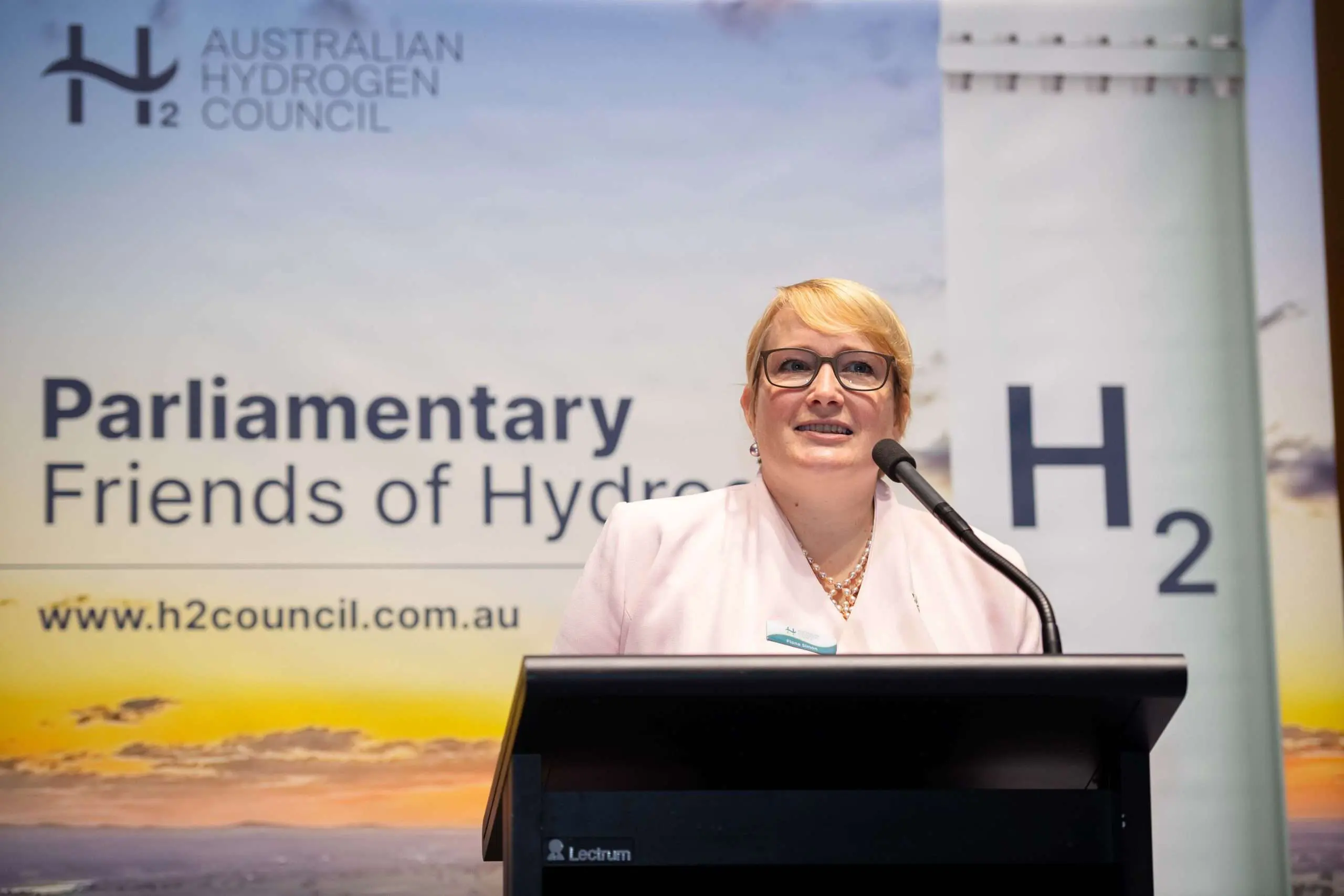
Production tax incentives for renewable hydrogen and critical minerals. Carole Goldsmith speaks to Dr Fiona Simon, CEO of the Australian Hydrogen Council (AHC)
The Future Made in Australia Production Tax incentives constitute a significant step toward boosting the production of renewable green hydrogen and critical minerals in this country.
The Federal Government’s Future Made in Australia (Production Tax Credit and Other Measures) Bill 2024 passed to Parliament in February this year, a big step in making Australia indispensable to the global net zero transformation.
The legislation provides tax offsets for producing renewable hydrogen and critical minerals and expands Indigenous Business Australia’s role and scope.
Jointly announced by the Treasurer, Jim Chalmers, Minister for Climate Change and Energy, Chris Bowen, Minister for Resources, Madeline King; and Assistant Minister for a Future Made in Australia, Senator Tim Ayres, the legislation establishes two tax incentives:
- A Hydrogen Production Tax Incentive worth two dollars per kilogram of renewable hydrogen produced between 2027–2028 and 2039–40 for up to ten years per project.
- A Critical Minerals Production Tax Incentive worth 10% of relevant processing and refining costs for Australia’s 31 critical minerals, for critical minerals processed and refined between 2027–28 and 2039–40, for up to ten years per project.
These tax incentives aim to encourage and enable new industries that will put Australia on a path to net zero. The Australian Government also provides around $500m in support for Regional Hydrogen Hubs nationwide.
HyResource – everything you need to know about hydrogen in Australia
HyResource is a collaborative knowledge-sharing resource supporting the development of Australia’s hydrogen industry. Future Fuels CRC, CSIRO, and the Australian Hydrogen Council jointly initiated it.
By December 2024, HyResource listed 90 hydrogen-related (industry) projects in Australia: Operating – 15, Under construction – 14, Under development – 58, Projects completed – 2. One ‘project’ is a Demonstration Display of 100% hydrogen use in a standard family home setting. A description of each project is listed on the site.
The HyResource Projects Map – provides a map of active projects across Australia and filtering capability by status, main end-use, and leading proponents.
Australian Hydrogen Council – peak body for the Australian hydrogen industry.
AMT magazine interviewed Dr Fiona Simon, CEO of the Australian Hydrogen Council (AHC), to learn more about hydrogen development and growth in Australia.
Before joining the AHC, almost six years ago, Dr Simon worked for close to 20 years in energy policy and regulation, specialising in energy retail competition and consumer protection matters. She has also published a well-regarded academic book on retail energy regulation in Australia.
“AHC started off as a different organisation called Hydrogen Mobility Australia,” advises Dr Simon. “In 2019, we changed the name to AHC to reflect the broader coverage and wider membership. We focus mostly on the policy environment.
“We have over 90 members from various sectors and organisations, from large multinational companies to much smaller businesses and local organisations. Our broad spectrum of membership demonstrates the diversity of hydrogen opportunities in Australia and globally. We are the lead industry association, and we work with the policymakers to get policy in place to support the industry.”
Dr Simon notes that in the last five years, there has been a major change in awareness and understanding of the diverse hydrogen opportunities. “There have also been some complex realities because we’ve had COVID and the war in Ukraine since the first National Hydrogen Strategy was launched in 2019.
“This year, the Department of Climate Change, Energy, the Environment and Water released the National Hydrogen Strategy 2024. As an update to the 2019 strategy, the new strategy focuses on increasing the amount of green renewable hydrogen manufactured in Australia.”
The 2024 report summary reveals that the global hydrogen market is forecast to reach US$1.4Tn in 2050. This includes around US$280bn of interregional trade. Australia’s renewable energy advantages mean that this country is well-placed for export and manufacturing opportunities in the energy transformation.
Australian hydrogen can be exported as an energy carrier to countries that cannot generate renewable electricity. It can also be exported through low-emissions products manufactured locally using hydrogen as a chemical or heat input to the production of green metals, ammonia, and low-carbon liquid fuels.
“In 2019, we had a different view of hydrogen opportunities than we do now. We have seen a tremendous amount of exploration into other project types, a significant project pipeline is being established and some terrific policy developments are now coming to fruition.
“Some of these challenges that have come to life with hydrogen, is that it is expensive to produce. It is also challenging to transport, and we are working through the economic and the engineering realities of some of the highly integrated hydrogen projects that we are talking about for the future,” says Dr Simon.
Currently, the bulk of the hydrogen produced in Australia is used to make ammonia for explosives and fertiliser, plus in refineries. The traditional production of it is fossil fuel emissions’ intensive with no carbon abatement. Hence, future hydrogen production aims to make it clean and green, not using fossil fuels like diesel and coal.
“Of the total amount of hydrogen produced in Australia now, only a small percentage of that is generated by electrolysis using renewable energy. There is, however, more green hydrogen manufactured today in Australia than five years ago,” advises Dr Simon. You can see the current Australian green hydrogen projects in the HyResource List of current projects online.
Among the several green hydrogen projects listed are: the Emerald Coaches Green Hydrogen Mobility Project under development in QLD, Energys Renewable Hydrogen Production Facility under construction for power use in VIC and the Darwin Green Liquid Hydrogen (LH2) Export project under development in the NT with an export focus, for liquid hydrogen supplemented by local domestic supply. The Fortescue Christmas Creek Renewable Hydrogen Mobility Project is already operating in WA, and its Christmas Creek Green Iron Trial commercial plant is under construction and, when completed, will be used for green iron production.
Dr Simon notes that the 2024 hydrogen strategy prioritises green hydrogen, green metals, and low-carbon liquid fuels. She explains that green iron can be made with green hydrogen. This involves reducing iron ore with green hydrogen in a direct reduced iron (DRI) furnace instead of burning coal in a blast furnace.
Green iron can substantially cut the iron production’s carbon footprint because the emissions generated when oxygen from the iron bonds with green hydrogen is water (H₂O) instead of carbon dioxide (CO₂).
Dr Simon says hydrogen will be key to decarbonising heavy industry: “Even though it is challenging to advance hydrogen as an industry, we won’t get to net zero without it.”