



There’s more to manufacturing dental materials than meets the eye. Former AMT Editor Paul Hellard opens wide.
Occupying half a nondescript side street in an industrial area of Bayswater, a sprawling medical device research and manufacturing facility buzzes with activity. Inside this complex is SDI Limited, primarily involved in researching and developing, manufacturing, and marketing specialist materials for the dental profession. Founded in 1972, SDI is fast becoming a world leader in specialist dental materials, and has been recognised with multiple export and international awards.
History
Over 50 years ago, the company’s Chairman, Jeffery Cheetham OAM, founded SDI Limited. SDI expanded into composites in the 1990s, and whitening and glass-ionomer cements in the 2000s, now making a wide range of materials for clinicians.
SDI Limited’s products compete in the highly regulated medical device market and have full accreditation in each country, including the EU MDR, so they will continue this practice for the foreseeable future.
SDI Limited is classified as a medical device company. Those brave enough to visit the dentist every six months will have seen their range of dental products in use.
Technology
The high-tech devices are mainly products which the clinician can apply to the patient in situ. SDI is increasingly expanding its technology with composites, adhesives, etchants, glass ionomers, sealants and all kinds of accessories
Dr Leon Prentice is the Chief Research & Development Officer at SDI Limited, and was as excited about the products as I. “We work in both the materials space and the manufacturing space – both are really, really complex,” he said. “This is high tech, with strict demands on our materials. And then the production processing side is phenomenal.” The composites made onsite at SDI have five main types of ingredients. Prentice explained that “typically dimethacrylate monomers are mixed with fillers, which are mostly glass or amorphous silica that are functionalised to react to the monomers.”
“Around half of our composite materials are glass,” explains Prentice. “There’s a lot of technology in the glass because it is radiopaque.” This means the mixture is a paste that sets, or cures when exposed to a strong blue light. “It’s typically a strontium or barium glass. Then, there are initiators to trigger the curing reaction. Usually photoinitiators like camphorquinone and co-initiators. We also add pigments to create lifelike tooth-coloured materials.”
The other technology within the cured material mimics the aesthetics of naturally translucent teeth. “We need the translucency to get the curing,” he explained. “So there’s a whole lot of technology around tailored translucency shades, and even complex opalescence and fluorescence, which natural teeth have.”
Additionally, some inhibitors will prevent premature curing. “Each element involves significant technology because we want these compounds to light cure in 10 to 20 seconds while the patient is in the dentist’s chair.”
Manufacturing
The SDI plant has furnaces for producing specialised metals, silver alloys and dental glass. The reasoning behind it was pretty clear.
“We used to have some items made overseas,” explained Jitesh Kattoor, Operations Manager at SDI. “But after a few issues, this fueled the drive to start from scratch because we had much tighter control. Now, we can even change the formulation; we can change recipes as the market changes and technology matures. When we perhaps hear from R&D that we need to make another kind of glass, we can change this formulation ourselves, and it can take about a week to produce that glass in a powder form.”
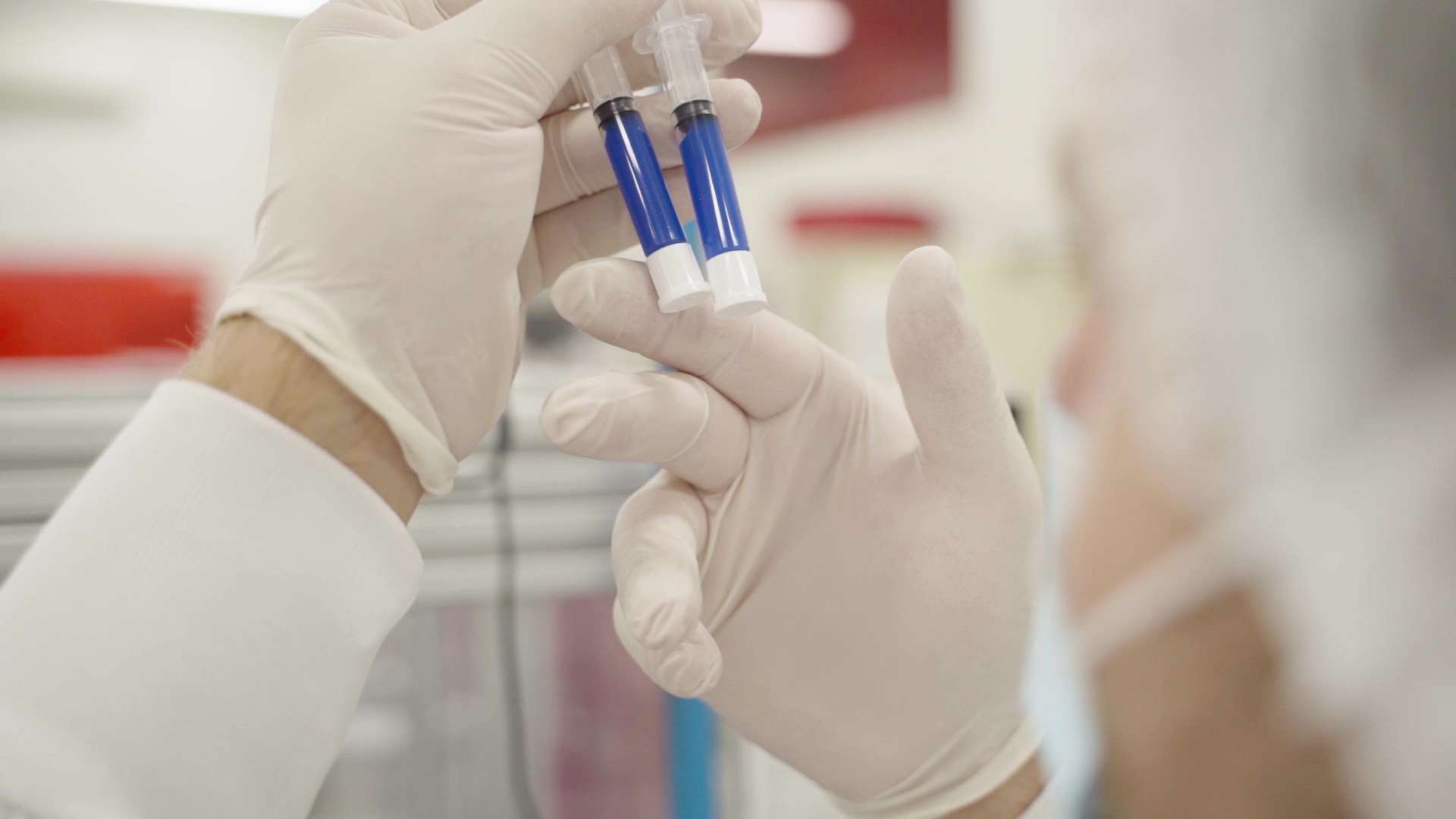
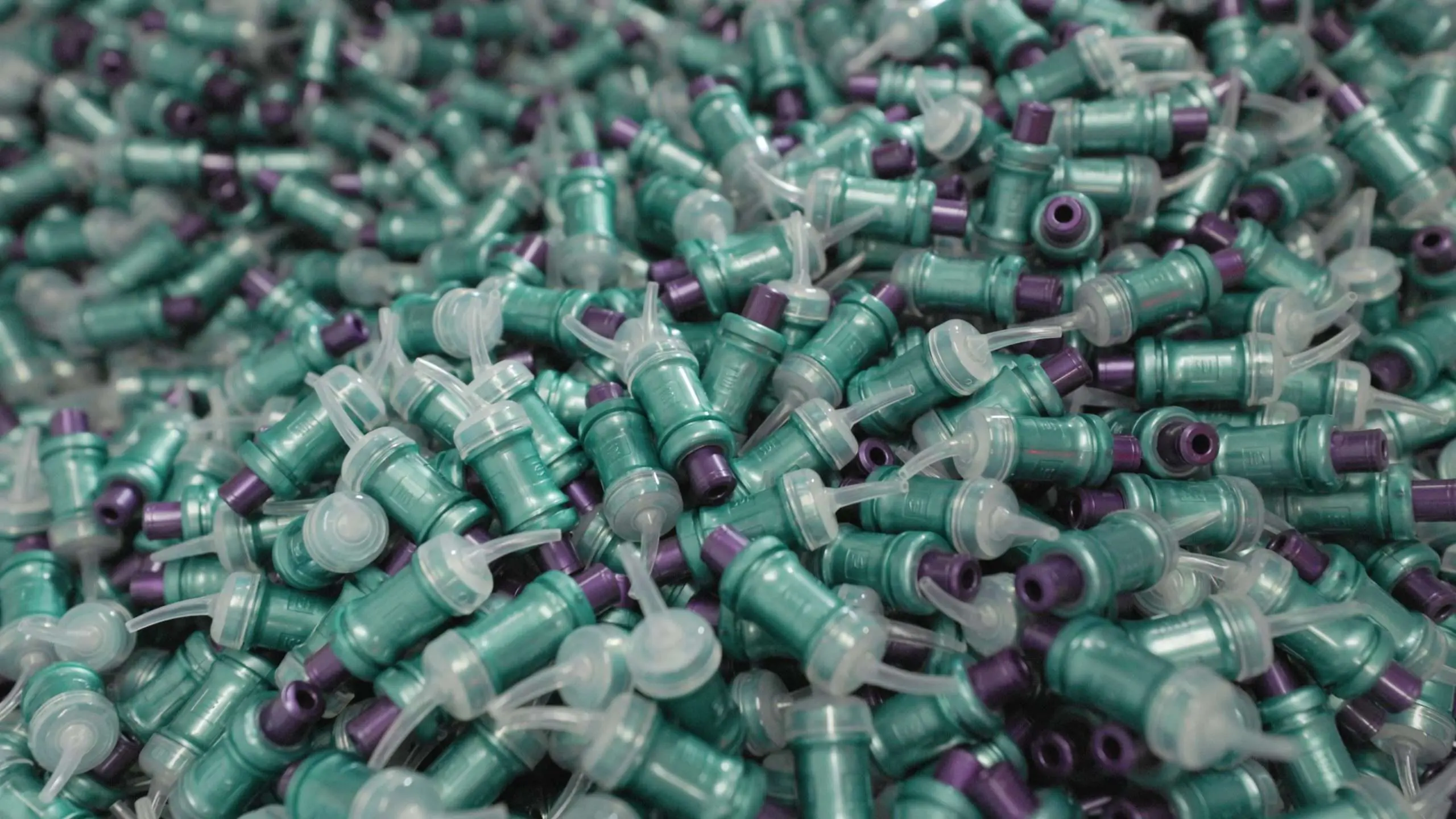
All grinding and surface treatments occur on-site as well, and this process is unified to create the final materials. “There are perhaps four companies in the world doing what we do,” said Prentice. “We also do our own injection moulding of the capsules, syringes, and other delivery systems, to ensure they are as clean as possible. We have 18 injection moulding machines working all the time.”
All encapsulation machines are also made onsite. “Now every part in the line is made here,” explained Kattoor. “So the resin, the fillers, the glass, and the plastic parts are all made here. That’s about as ‘Australian Made’ as it gets.”
There is also a large contingent of robots at SDI, active in filling, picking and packing their final products. SDI is also actioning a long pipeline of automation projects, trying to get into that heavily automated business. “We have a diverse product range, so we’re working with the many local machine manufacturers and robot suppliers to design new assembly lines,” explained Kattoor.
Stela
The latest product is Stela, a high-performance self-cure composite. Developed in partnership with UNSW and the University of Sydney, and helped by a CRC-P Government grant, Stela offers an unlimited depth of cure and low-stress polymerisation with a gap-free interface. There is no need to an acid etch or light cure. Instead of photoinitiators, it cures on mixing two resin components, plus adds a primer. “Conceptually, a bit like a twin tube applicator for Araldite, but very much stronger, and very different,” Prentice qualified.
Stela achieves its ground-breaking properties through a tailored combination of BPA-free resin monomers, SDI’s bioactive proprietary ionglass hybrid glass fillers, and specially surface-modified amorphous silica. Stela’s outstanding mechanical properties come from a rapid curing reaction. The Stela monomers form tiny polymeric chains and, simultaneously, these chains are rapidly and densely cross-linked to each other, creating a complex web that strongly binds the ionglass filler and the amorphous silica, resulting in a strong and resilient restorative material.
The Stela snap set fast cure is due to an innovative hydroperoxide-based initiation system. This ensures fast-setting characteristics, good colour stability and an excellent conversion rate.
Riva
Riva is another SDI product, manufactured for the minimally invasive dentistry area or MID. This is more tooth-like chemistry,” Prentice explained. “It’s a polymer-reinforced cement. It’s at least three times stronger than your street cement and sets in about four minutes. It sticks straight to the tooth structure and releases fluoride and strontium ions, synergistically enhancing tooth bio-remineralisation to strengthen your teeth. We love simple preventative dentistry. We hope our materials mean you never need anything more serious than a filling!”
Riva Self Cure replaces dentine by imitating several of its natural features. The ionglass technology utilised in Riva Self Cure replicates the hydrophilic characteristics of dentine and its coefficient of thermal expansion. No etching or adhesive is required to ensure the restoration process is efficient. This significantly reduces chair time for the dentist and minimises the risk of sensitivity for the patient.


Strength
These materials need to be incredibly strong. They are strong enough to withstand significant grinding, as one might imagine. Natural tooth enamel can be tough, with a 300-400 megapascals compressive strength. SDI’s composites boast similar strength. “Stela is in that window, integrating well with natural tooth structure,” added Prentice.
Trade
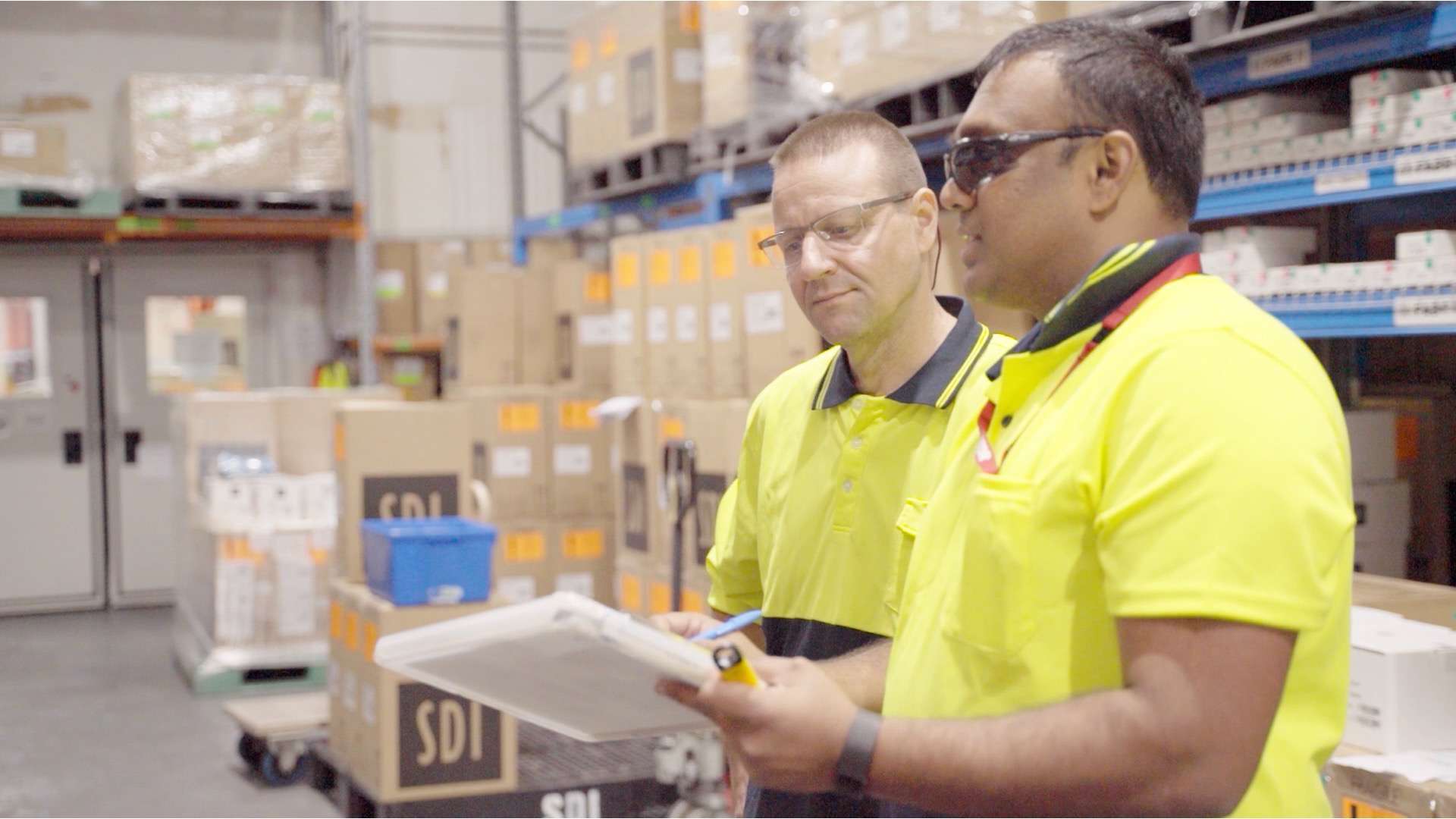
SDI manufactures all of its products in Victoria and sells them through distributors in over 100 countries worldwide. SDI also has offices and warehouses in the USA, Germany, and Brazil. A new 24,000sqm property in Montrose is allowing SDI to expand production. The established warehouse was refurbished to meet medical device standards and became fully operational in September 2023. A new manufacturing plant is planned to commence building in 2025, followed by all manufacturing in Bayswater moving in 2027.