



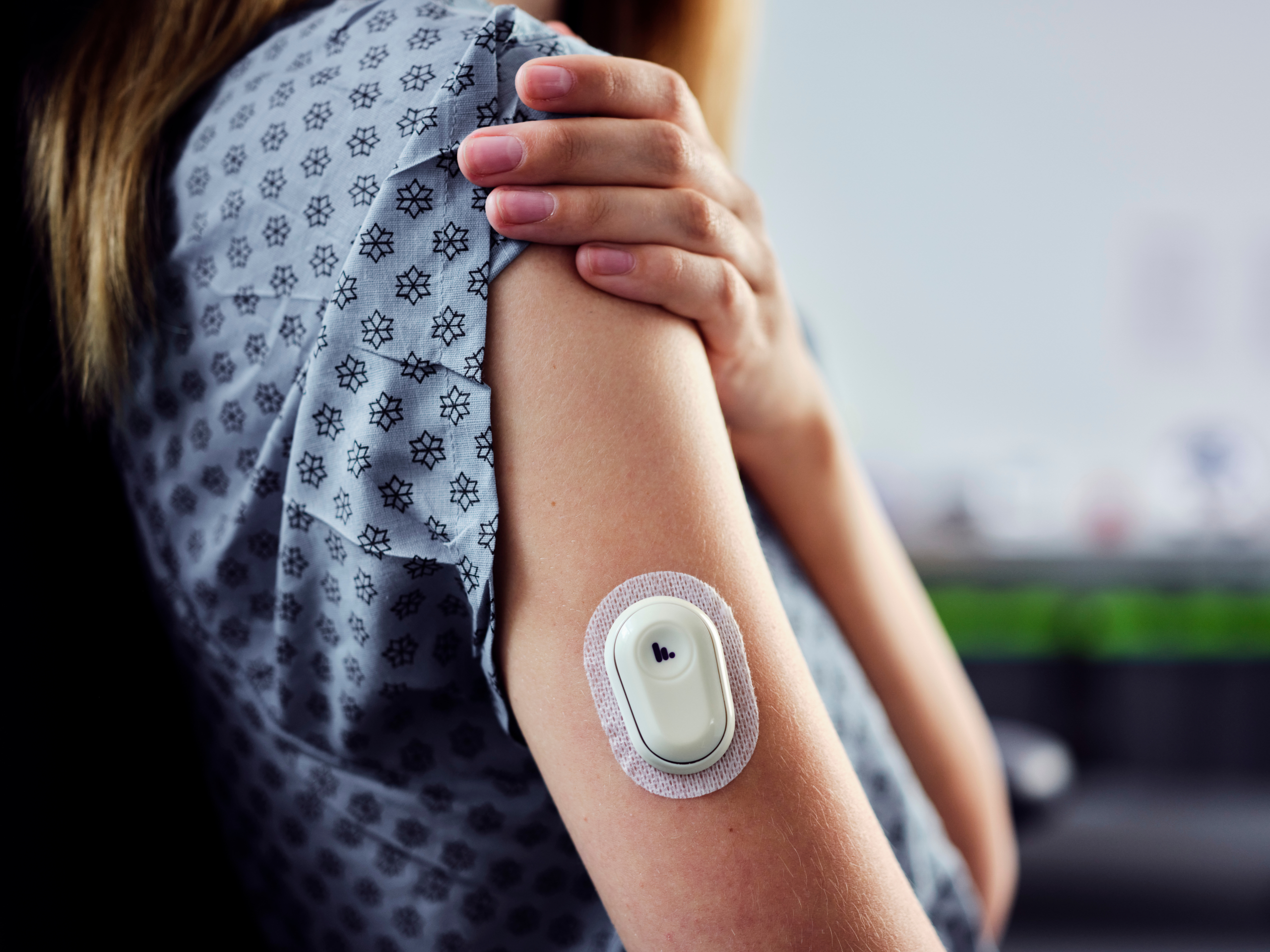
Four leading medical technology developers discuss the road to commercialisation and building a future for medical manufacturing in Australia.
**This story first appeared in the October 2025 edition of AMT Magazine**
When it comes to medical innovation, Australia has much to be proud of – with world leading research institutions and great minds hard at work developing products for the greater good. But taking that success in innovation and transitioning it to success as a leader in advanced medical manufacturing is another challenge – with four panellists at a recent forum explaining their own reasons why.
BioMelbourne Network’s BioForum, The Smart Health Revolution: Rewiring Care Pathways, held in late July, heard from three developers of new wearable technologies – Nutromics chief executive Peter Vranes, Kali Healthcare cofounder Fiona Brownfoot and Proton Intelligence co-founder Victor Cadarso – along with Madhu Bhaskaran, research director of the Discovery to Device medtech prototyping facility at RMIT University.
In her role at RMIT University, Bhaskaran leads a team of electronic materials engineers, helping companies create technologies and better design medical products including care diagnostics – such as saliva-based tests – or which are either designed to operate near a patient, or be worn by them.
“Basically, a wearable is something which monitors the world within you and the world outside of you,” she says.
Ranging from smart patches and biosensors to remote monitoring wristbands, today’s wearables offer the possibility of capturing data from a patient in real time and enabling earlier intervention in case something goes wrong.
But panellists agreed design is central to their success – a clunky, uncomfortable or intrusive device risks being abandoned by patients before it delivers value. For Brownfoot, whose Kali Healthcare is aiming to develop wearable foetal heartbeat monitors for expectant parents, working with midwives and obstetricians was essential to developing the product.
“One of the key things that we found was that women don’t like things over their umbilicus (navel) – they find it really irritating, it’s a really sensitive area,” she says.
“So that’s why our design is in a C shape, leaving the umbilicus free… A lot of work has gone into these designs, but if patients are not able to use the technology well, then it’s just never going to be able to improve outcomes.” And this is for a technology that 90% of the people surveyed said they wanted, both for convenience and peace of mind.
Bhaskaran notes that some patients in aged care facilities had raised objections with existing nearable technologies, which monitor a patient while near them, including footpads patients stepped on when getting into or out of bed.
“Some didn’t like using it, so they kicked it under the bed the first time they got in,” she says. With another nearable technology of mattress sensors, Bhaskaran’s team had completed about 6,000 related cycles of testing before setting it up in an aged care home – only to find all sensors were offline the next day. “And then we realised someone had yanked off the cable when they were making the bed… and then two weeks later somebody borrowed the cable to go charge their phone,” she says.
“Human beings can break technologies in more creative ways than we can come up with in the labs – so I think the sooner we get our technology into the hands of people who are capable of breaking it, the better, and the more insights we will gain from it.”
In the field
Bhaskaran has seen a series of different companies work to make the move from the early stages through to commercial production, many working from RMIT’s Micro Nano Research Facility.
“Companies could make four or five or 10 sensors, but the minute they had to start making hundreds and thousands was where they tripped up every single time,” she says.
“Most manufacturing partners can work with you once you start talking order quantities of 10,000, so we really needed an injection of funding and a facility which will kind of cover that gap, while keeping sovereign manufacturing in mind.”
Discovery to Device, the new Victorian medical device prototyping and scale-up facility expected to open next year, will enable medical technology manufacturers to access specialised expertise and infrastructure, as well as a competitive and cost-effective design and user engagement solution.
“It’s a sovereign medtech prototyping facility. what it basically allows you to do is to scale up volumes to support field trials – it’s an external facing facility supported by the Victorian government,” she says.
“We are really hoping to keep a lot more startup companies afloat and bridge that ‘Valley of Death’, which sits between making a few prototypes and actually going into manufacturing.”
Vranes’ company Nutromics has designs already in place for a manufacturing facility that the company hopes will deliver about 10 million of these patches every year – and create roughly $3 billion in export revenue.
Nutromics wearables are designed to monitor any diagnostic target or drug continuously and in real time.
The company is starting with monitoring of the antibiotic vancomycin, which Vranes says is given to one in every six ICU patients, but which could also very easily be overdosed, injuring the kidneys through which the drug is cleared.
“Our first market is a patch with a vancomycin sensor so that clinicians can measure vancomycin in their patients in real time – to keep the dose in the therapeutic zone and outside the toxic zone,” Vranes says.
Beyond that, the company is planning on developing sensors to monitor for sepsis, cardiology, triage and the next generation of continuous glucose monitors (CGM).
“And the beautiful thing about this pipeline is that they’re all leveraging the same platform. All we do is swap out the sensor on the end, on the tips of those microneedles…. We can solve these big unmet needs in healthcare, and all of these come off the same manufacturing line,” he says.
Vranes adds that he sees a great deal of new interest in wearables – saying the interest was coinciding with a surge of interest and activity in Artificial Intelligence.
“That’s the perfect storm really. When you’ve got huge data sets from wearables combined with the power of AI, then you can truly have some really big shifts in consumer healthcare.
“And I think that’s really exciting,” he says. “We have that vision because no matter how the patient goes through the hospital system, whether it’s triage, treatment or outpatient, the patch will give really substantial clinical utility to the hospital, to the patient, and it’ll save a lot of money as well.”
Beyond the bottleneck
Bhaskaran says she is excited for the arrival of the new prototyping facility, which she said had been a significant barrier to medtech startups.
“That was our biggest bottleneck in some ways because many technologies are handmade at the moment. You have a dedicated team of people who are sitting at the microscope and hand-assembling those tiny electronic components, which means you can’t make more than 40 at any given time,” she says.
“So having something that can semi-automate it is something that we were really lacking.” She adds that more widely, she has observed a renewed interest in sovereign capability and a greater interest in doing more manufacturing on Australian soil following the COVID-19 pandemic.
“I know it may not happen with every single case, but the longer we can do it and retain valuable IP onshore, the better.”
But the need for sovereign capability also extends to the workforce – and helping to equip STEM students with the skills to succeed in medtech was also important, she says.
“Some of the skills sets and masters’ degrees have to be shaped around cross-sector collaboration … in Australia, once you’re out of academia it is very hard to make a comeback,” she says. “When you can have that as a two-way door between sectors such as academia and industry and have that cross pollination of ideas and people, I think things will go much further and much faster.”
Vranes says that there are many things to praise in Australia’s approach to creating new technologies – including the research and development tax incentive and the way clinical trials are conducted. “But there are things we don’t do well.
Funding is a huge problem, and it’s a doubly huge problem when we’re in the financial market that we’re in,” he says.
With low levels of private investment had come fewer initial public offers, fewer mergers and acquisitions and less money flowing back to venture capitalists as a result. “We have a liquidity issue, and it won’t be there forever… but we have got to get back to that place – and that is where governments are stepping in in a pretty major way for various obvious reasons, because they want to protect their industries.”
He says that government support had been vital for some of Australia’s most successful medical technology companies, and said strong investment in these companies had a proven record of success.
Match funding, where governments matched an investment above a high threshold in companies working in priority areas, would be a beneficial use of public funds, he adds.
“If the government is going to participate and really help companies, you don’t really necessarily want them competing with venture capital firms around the world.”
“What [governments] do really well is grant funding, and that’s fantastic… and I think the return on investment on those public funds would be very, very high.”