



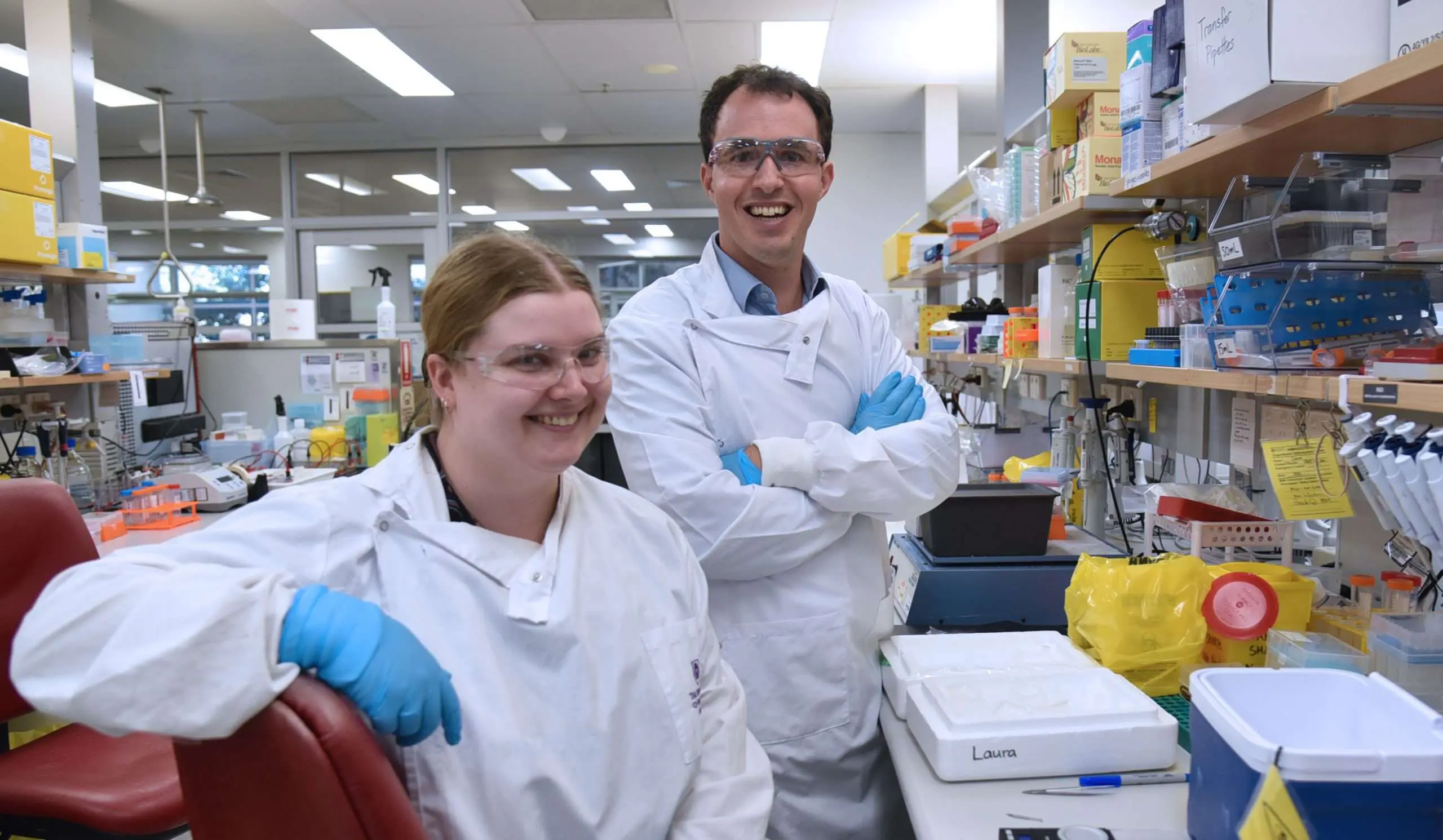
Personalised cancer vaccines to be produced at new UQ lab
A new facility at The University of Queensland is set to provide Australian researchers with cancer vaccines tailored to individual patients.
The lab at UQ’s Australian Institute for Bioengineering and Nanotechnology (AIBN) will combine equipment and expertise to enable the design, manufacture, and delivery of new mRNA cancer vaccines.
Backed by a $3.3m grant from the Medical Research Future Fund’s (MRFF) National Critical Research Infrastructure program, the new hub will provide the local research community with vaccines that match each patient’s specific treatment needs.
Deputy Director of AIBN’s BASE facility, Dr. Seth Cheetham said it could transform cancer treatment.
“Personalised mRNA cancer vaccines are now being used to train the body’s immune system to recognise and eradicate cancer cells,” Dr. Cheetham said.
“Despite the huge potential, Australian researchers haven’t had the necessary infrastructure to build these vaccines, leading to a critical gap in the local drug development pipeline.
“This lab changes that, with a leading team of investigators in a purpose-built space, working with local industry and academics to progress a range of high-quality mRNA cancer vaccine candidates from design through to preclinical evaluation, to enable future clinical trials.”
The mRNA cancer vaccine hub is expected to operate in BASE by late 2024.
BASE is already recognised as Australia’s leading provider of mRNA for research and pilot studies. Since its launch in 2021, it has provided academic and industry partners with more than 300 experimental-grade vaccines.
“In addition to the potential impacts on patient health, mRNA cancer vaccines represent a $7bn opportunity over the next decade,” Dr. Cheetham said.
“This rapidly expanding industry, encompassing researchers, biotech start-ups, multinational pharmaceuticals, AIBN, and BASE, will now be at the centre of a range of promising new treatment options.”
The new lab was one of four UQ projects funded in the latest MRFF grant round, adding to the $6.6m funding awarded to BASE in 2023 to boost clinical mRNA production capabilities.
AIBN Director Professor Alan Rowan said the hub would complement Australia’s existing research strengths in oncology and affirm AIBN as a therapeutics and personalised medicine pipeline.
“Governments and society want sustainable innovation that enables high-quality research and delivers translatable outcomes,” Professor Rowan said.
“The mRNA cancer vaccine hub is the latest example of how AIBN combines world-class infrastructure and technical expertise to bridge the gap between research and clinical development.”
The five-year program will also bring together partner investigators from UQ, QIMR-Berghofer, Mater Research, Garvan Institute of Medical Research and the Queensland Children’s Hospital.