



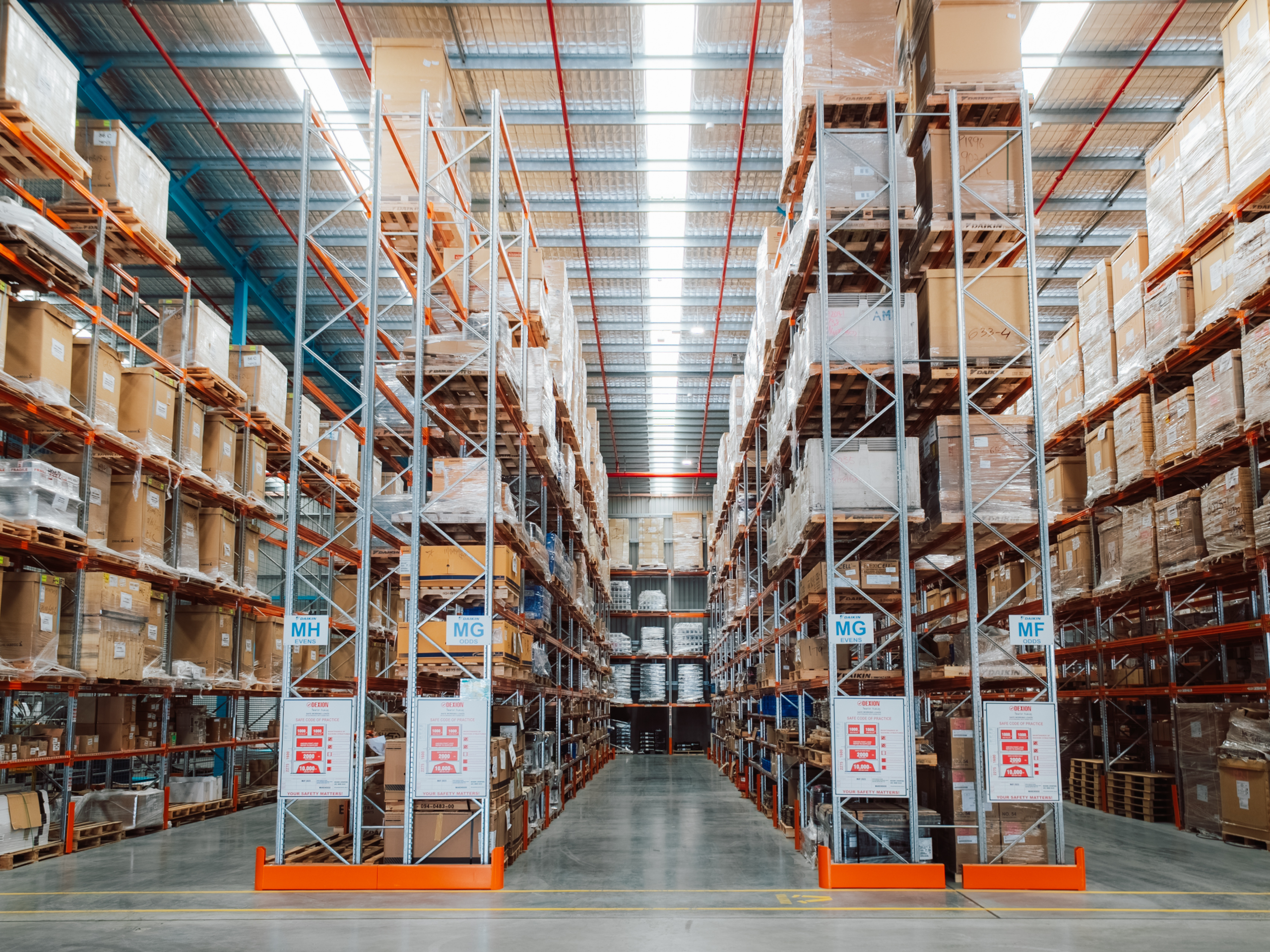
New factory to focus on Australia-specific designs and local training strategy, Daikin Australia says.
**This story originally appeared in the February 2026 edition of AMT Magazine**
Daikin Australia has opened a new factory in the Sydney suburb of Chipping Norton which it says will help put local designs and skills at the centre.
The new $28.2 million Factory 2 expands Daikin’s capability to produce customised Air Handling Units and Rooftop Packaged Air Conditioners for Australian buyers.
Daikin Australia manufacturing general manager Nick McDonald explains the company’s Australian-made ducted units were engineered from the ground up for local clients.
“They are designed to suit the Australian home… they have geometry such that they fit inside an Australian roof space, so they’re easy to install. They are designed so they come apart into several pieces, so they can be easily manhandled up into the roof space by our dealer group.”
That Australian focus extends to performance in harsh conditions:
“If you go to South Australia, the roofs are very hot. The temperature inside the roof cavity can be well in excess of 60 degrees, for example. So our equipment has to operate inside that sort of environment, and our equipment is designed for that,” he says.
On the commercial side, the new facility expands Daikin’s air handling unit (AHU) capabilities – giant units designed to regulate heating, ventilation and air conditioning in large-scale buildings. Every AHU is engineered as a one-off solution.
“Every single air handling unit is a unique, customised product – it all depends on the project it’s going into,” McDonald says.
“We have local engineers who design for local customers – the customers can come and speak with their engineers and get very close to the design process, and then we can build exactly what the customer wants.”
“We are not trying to be China or Southeast Asia – we’re not trying to move huge volumes of highly mass-produced product. We are on selling our engineering expertise,” he says.
The new plant is supported by solar PV – a key lever for Daikin’s plan to reach carbon-neutral manufacturing by 2030 – and by autonomous mobile robots as part of a broader automation strategy that, McDonald stresses, is “for growth, and… for enhanced safety [and] quality.”
Alongside new lines and autonomous mobile robots, one of the most significant investments is Daikin’s Skills Dojo – an in-house training centre to turn new recruits into skilled manufacturing professionals.
“We can bring them from just straight out of the labour force, school, or a very fundamental level of qualification. We can bring them to our factory, and we can teach them to be manufacturing professionals, and that’s what we do,” McDonald says.
“We train our people to go from zero to be basically really highly skilled brazing technicians in the space of about three months… we then move on to the production line in a straightforward job, and we do on-the-job training and gradually coach them up to the point where they can work on every assembly.”
Hideaki Furihata, Managing Director of Daikin Australia, said the expansion reflects confidence in Australia’s market strength and skilled workforce.
“Our decision to invest locally stems from Daikin Australia’s strong market position, our confidence in our people, technology and network, and our plans to broaden our range of locally designed and produced products,” he says.
“This new factory strengthens our ability to meet the needs of Australian customers with products that are designed, engineered and built here, while advancing our goal of carbon-neutral manufacturing by 2030.”