



This 70-year-old skincare producer demonstrates the value of sustainability in local manufacturing. Paul Hellard reports.
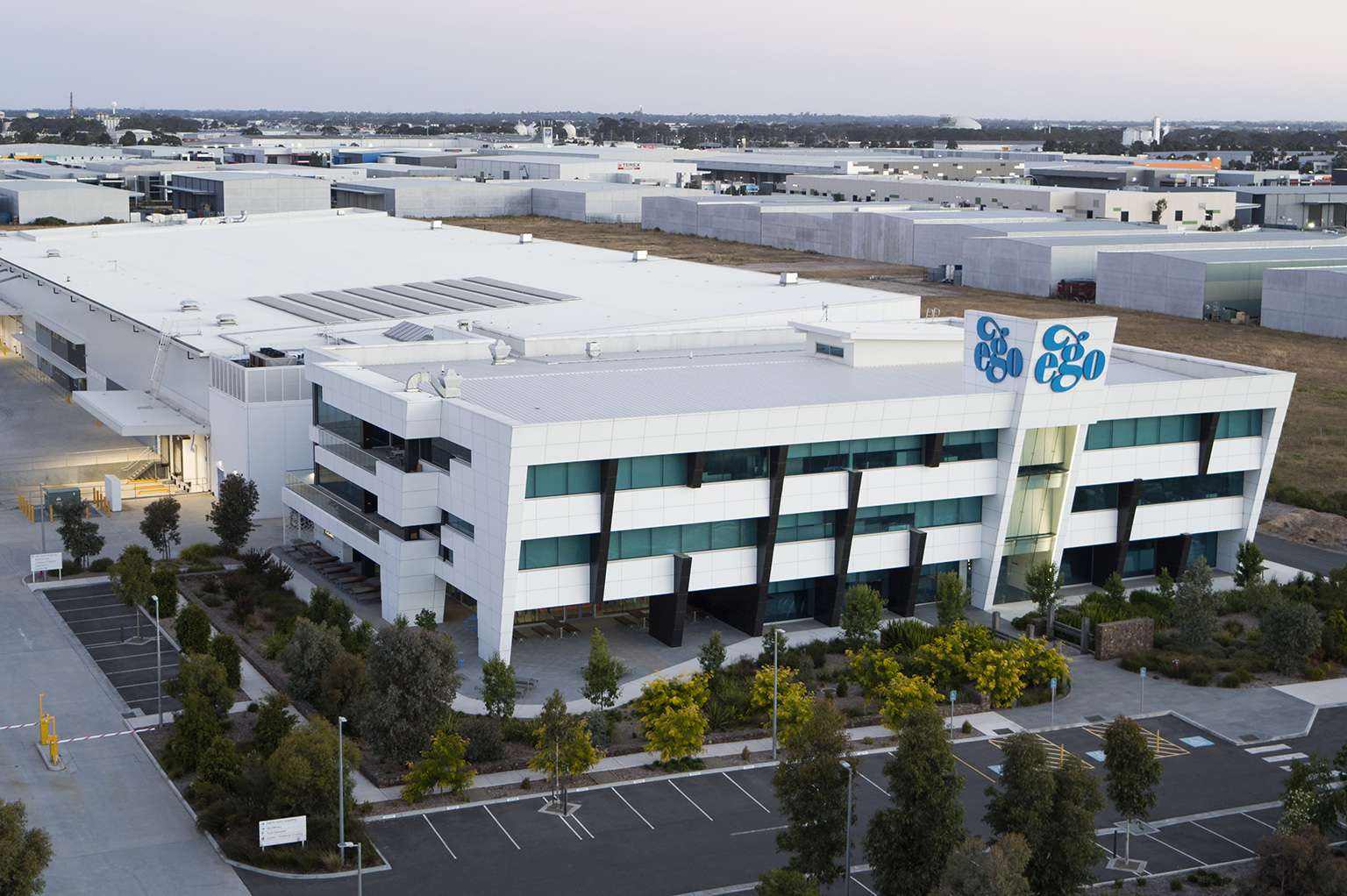
There’s a lot of work going on at Ego Pharmaceuticals (Ego), equating to a huge investment in their future. As they grow their capacity to provide quality skincare to the world, they also work passionately towards operating within even more sustainable means.
This complete refurbishment of Ego’s production at their Braeside site, costing $100m, will increase production capacity by 100% and create 90 new jobs. The company is also extending the Distribution Centre in Dandenong South; increasing capability and capacity to support local and fast-growing export markets.
Ego produces more than 150 dermatological skincare products, with brands including QV, SunSense, Elucent, MOOV and Aqium being stocked both locally and across more than 15 countries. Key export markets include Asia, the Middle East and the United Kingdom; with exports now making up half of the sales.
From humble beginnings 70 years ago in a laundry in suburban Melbourne, Ego has grown into a leading global brand with more than 730 employees in 15 countries, including more than 400 staff in Victoria.
Sustainability Measures
Right up front, Ego has always been ahead in science. When you’re making skin creams designed to be applied directly onto human skin, it has to be safe. They are ‘following science to a better tomorrow’. This focus on science pushes their work on improving sustainability. Ego is a participant in the UN Global Compact, joining 13,000+ businesses and delivering measurable impact to the world’s most pressing challenges. Ego has used the UN Sustainable Development Goals to guide its Corporate Social Responsibility goals across the business.
“These goals have been created to help protect the planet, and ensure that by 2030 Ego is carbon neutral,” said Jane Oppenheim, Ego’s Scientific and Operational Director. “Ego’s own goals will ensure we use resources economically, manufacture more efficiently, reduce our waste and work together to manage our number one resource – our people. By setting goals, we can track and communicate our progress to our team and customers, as we strive to reach and surpass them.”
As just a part of the Sustainability project, Ego’s engineers installed some 65 electricity meters to monitor the specific use of electricity onsite. “We re-planned a lot of the power distribution for the site,” explained Ego’s Chief Engineer Glen Fleming, “which allowed us to connect the right equipment to the right boards and attach meters, so we knew specifically where electricity was being used.”
Ego is now looking for additional consumption savings onsite. A month ago an Ego engineer and electrician visited the site on a weekend and checked the power usage all through the site. “We had already done a lot of work on scheduling to save power on weekends, but we were still using 50% of the electricity on the weekends as we were during the week. So we now know there are some opportunities there to identify what’s consuming power and schedule to turn them off. That’s going to save us another 8% or so of electricity consumption on the weekends,” Fleming explained.
“With additional monitoring, we’ve identified the biggest consumers of electricity,” Fleming added. “Turning these off when not in use hasn’t really cost us anything but time.”
The Ego facility in Braeside hasn’t reduced its gas use by as much because the alternative is to use electricity from the grid. The site uses quite a bit of steam in its processes, which can’t currently be produced efficiently with electricity, though the steam does use heat exchangers to supply heat to processes that run at 80 degrees. Using electricity, with heat pumps to assist, will likely come along in future fit-outs.
Jane Oppenheim notes that many of Ego’s engineers are like Glen Fleming and are passionate about sustainability. “Lots of people can come up with ideas, but the engineers know how to implement the ideas for the greatest energy saving. I think that’s the advantage of manufacturing in Australia. You actually have more control over things, and you can make a difference.”
Engineering Challenges
During the COVID lockdowns in 2020-21, Ego was picking up speed on producing hand sanitiser locally but onsite construction at the time proved difficult.
“Well, everyone wanted hand sanitiser and at the time we had a huge building project going on,” explained Oppenheim. Ego spoke to the Victorian Government and they gave an exemption from some of the construction restrictions. “We had the choice of all the tradespeople to come and work. The builder’s contractors managed it really well and kept everybody separate and the build went as fast as any project did,” Oppenheim added.
“It just took strong determination to get things done during COVID,” explained Fleming. “For all the pressure to make adjustments here and there, the most challenging part wasn’t our capacity here, it was sourcing materials and components. I think our purchasing team were the busiest out of everyone, sourcing alternative pumps and everything else our production team needed.”
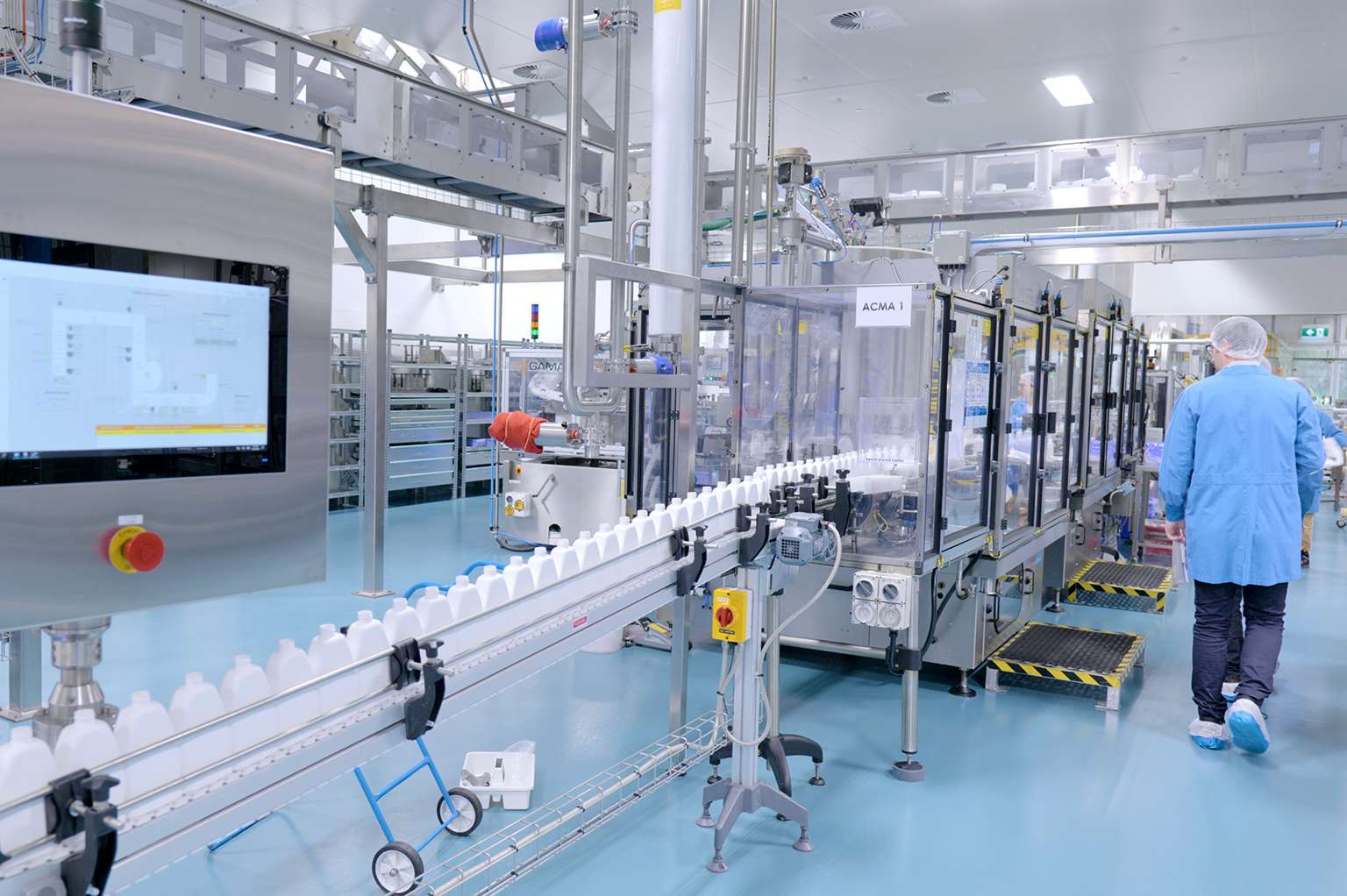
Where Ego is spending a hundred million on current works is quite obvious. Their huge three-story building is slowly being refitted with assembly lines filled with tanks, pipes and valves, new ceilings, palletisers, and new tube lines being installed, some of which are engineered and manufactured in Australia.
Ego is effectively the system integrator. “We’ve purchased and procured all of the equipment,” explained Fleming. “The conveyor components come from Sweden, but an Australian company does the assembly and fabrication, and we’ve designed the overall line. We’ve taken ownership of all that as well. There’s a line control system that talks to all the equipment; and turns machines on and off.”
“If any of this equipment here stops at the end of the filling line, we have an inbuilt five minutes of accumulation time to fix the problem before the issue stops our filling machine completely. So while we purchased the equipment from overseas, it was Ego engineers who considered the overall systems integration. That’s all us, that’s all Ego and it’s all Australian engineering.”
A recent IBC project is one Jane is particularly proud of, which was all planned and executed by Ego’s engineers. They implemented a system for handling bulk ingredients and delivering these directly to manufacturing rooms. “Our three biggest liquid ingredients: ethanol, glycerin and liquid paraffin are received into bulk tanks. The next five biggest ingredients are received in Intermediate Bulk Containers (IBCs). The IBCs are placed in pairs in segregated rooms. The tanks or IBCs are monitored for supply levels. “All these liquids are delivered directly to the mixers,” explained Jane. “This has improved Ego efficiency greatly, moving from one batch per shift, we can now do three six-tonne batches per shift.”
The bulk liquid and cream handling system between the mixer and the cream-filling line is 100% designed and built in-house. Precision Stainless and Fineweld, nearby companies in Braeside made the tanks, and another local contractor, Total Piping and Mechanical, did all the pipework, fabrication and installation.
At the end of the line, they have also eliminated using four tonnes of shrink-wrap plastic each year, as well as the 10kWs of electricity heating the plastic in the ‘shrink tunnel’ and cooling the room.
“Within four weeks, we had four projects done, each saving about 5%,” said Jane. “Now, as I said to Glen, all we need is 20 more projects like that!” Fleming adds that Ego is working on step eight of a 12-step Master Plan drafted in 2019.
Fleming says a lot of these sustainability measures aren’t hard at all, but they take a bit of focus. “Several years ago we created a Sustainability Committee to get a range of people across the business to work on our ideas and what our opportunities are. Myself, Jane, other managers and a range of staff from many sides of the business meet up once a month. It’s driven a lot of change.”
“And then I think we’ll get to the point where we won’t be able to get much more out of this site,” explained Jane Oppenheim. “So this is our plan for the even larger site in Dandenong. We have purchased greenfield land, ready for future production expansion. We have a warehouse and a corporate head office there now. We’ve planned ahead.”