



Adam Best is a Principal Research Scientist at CSIRO, Australia’s national science agency, specialising in battery technology.In this interview, he discusses his career path, the evolution of battery research, and the opportunities and challenges facing Australia’s battery manufacturing sector.
**This story first appeared in the October 2025 edition of AMT Magazine**
Q1: Can you tell us a bit about your background and what led you to specialise in batteries?
My background is in material science—I completed a Bachelor of Science with honours, focusing on materials in my final year. I initially wanted to pursue a PhD in chemistry, but due to the competitive environment at the time, I ended up crossing into engineering for my PhD at Monash University.
My research focused on solid-state batteries before they became a major field, and I was fortunate to have supportive supervisors in Prof. Maria Forsyth and Prof. Doug McFarlane who encouraged me to pursue this path. The irony was that I ended up doing a PhD because I just really loved the research. I really enjoyed the collaborative and supportive work environment that I had – I had great other student and postdoctoral colleagues supporting me – it was a really exciting and fun time.
During my PhD, I spent time at Chalmers University of Technology in Sweden working for the late Professor Per Jacobssen. Later, I was a post-doctoral fellow at the Technical University of Delft in the Netherlands, working on a collaborative project with Shell Exploration and Production to make batteries for downhole robots. After that, I worked on fuel cell technology, exploring acid-stable polymers, before returning to Australia to join CSIRO as a postdoctoral researcher. I’ve been with CSIRO since 2007, working on a range of battery-related projects.
Q2: What are some of the major projects you’re working on at CSIRO right now?
We’re involved in a number of exciting projects. One of the biggest is a collaboration with the Department of Industry, Science and Resources, stemming from the Australia–US Climate, Critical Minerals and Clean Energy Technologies Compact. We received a $2 million grant to facilitate research and development engagement with the United States, which we’ve used to create five key initiatives.
These include a Researcher Exchange Network, allowing Australian researchers to work with leading US institutions, companies and national laboratories; grants for Australian graphite manufacturers for research on graphite material – particularly natural or innovative synthetic graphites; and studies on the metals for cans and foils used in batteries, like high-purity copper and aluminium. We’re also developing models to predict the demand for critical minerals as new battery technologies emerge and working on technoeconomic modelling to help Australia produce battery materials competitively.
Q3: How do battery standards and safety testing work, and why are they important?
Battery safety is a huge focus for CSIRO. There are strict international standards, like the UN 38.3, which mandates a series of tests batteries must pass for transportation and shipping. Beyond that, organisations like the International Electrochemistry Commission and Underwriter Laboratories set standards for specific applications—whether it’s e-bikes, home storage or electric vehicles.
If you’re an Australian manufacturer, battery safety testing has to be managed through overseas organisations, making this part of development time-consuming and expensive.
At CSIRO, we’re working to create an easier solution for manufacturers, so watch this space!
Q4: How do you see the battery market evolving in Australia, and what are the biggest opportunities for local manufacturers?
Australia’s battery market is poised for significant growth, and I’m optimistic about the opportunities for Australian manufacturers. The biggest opportunities lie in leveraging our rich endowment of critical minerals, particularly lithium, nickel, and graphite, and moving beyond raw exports to high-value downstream processing.
I see the biggest opportunities coming from Australia’s natural critical minerals wealth. By investing in advanced manufacturing capabilities, Australia can transform raw materials into essential battery components like cathode and anode materials. For example, converting nickel into NMC cathode material or refining lithium into battery-grade lithium hydroxide or carbonate can dramatically increase the value of our exports. Similarly, upgrading natural graphite into coated, purified, spheronised graphite can boost its market value from around $300 per tonne to over $8,000 per tonne.
This kind of value-adding strengthens our position in global supply chains. There’s a big prize if you can do this and do this properly. So, the challenge is there for Australia to get organised to take advantage of these opportunities in a global market. If we get this right, we won’t just be mining the future, we’ll be manufacturing it.
Q5: What is the significance of graphite in battery manufacturing, and what role can Australia play in helping push it forward?
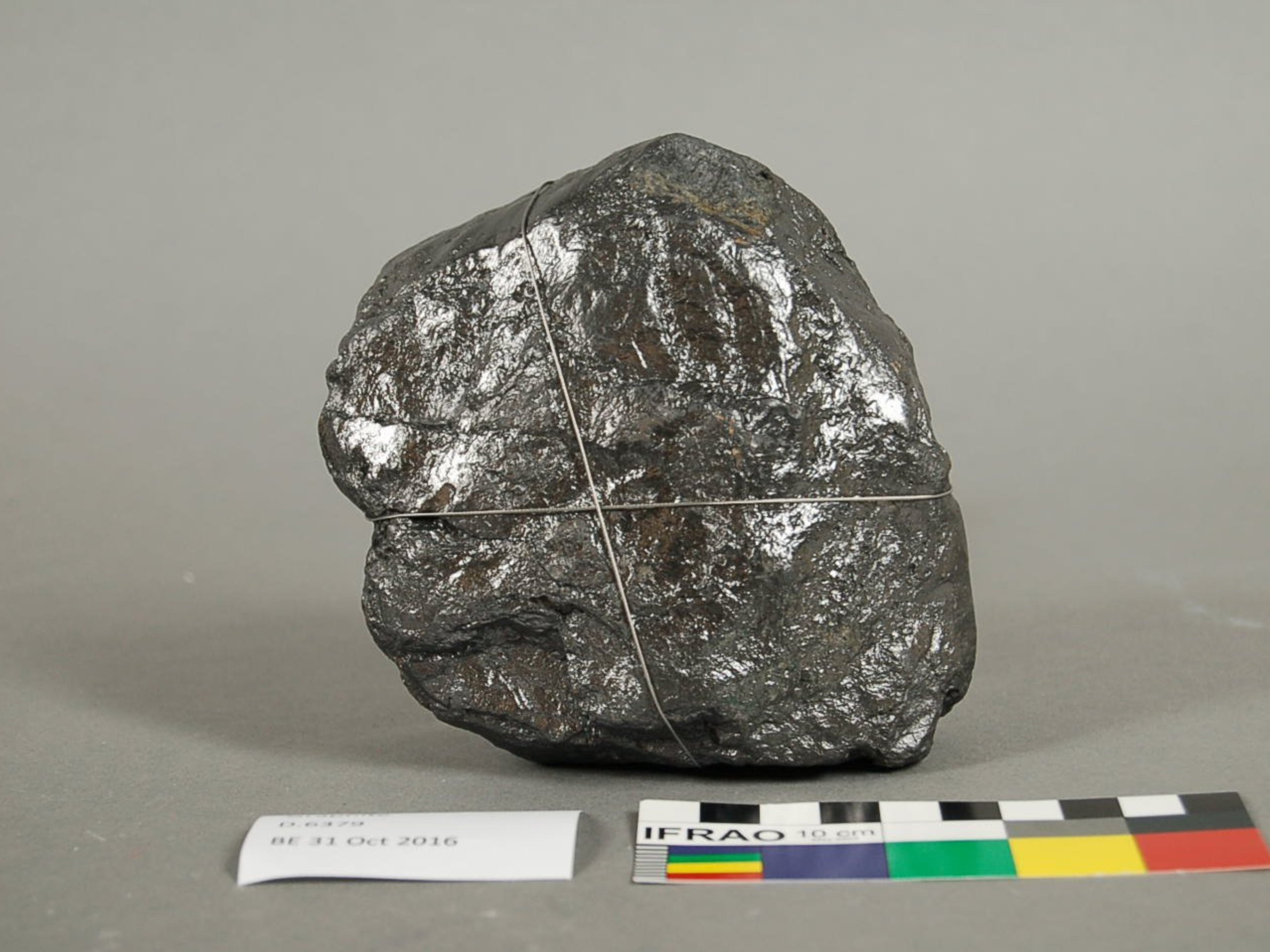
Graphite is indispensable to lithium-ion battery production. About 25% of a lithium-ion battery is graphite and it’s used in every battery of this type. Its role as the primary material in battery anodes makes it a critical mineral in the global energy transition. Australia is fortunate to have substantial natural graphite resources, which gives us a real opportunity.
The process involves mining graphite ore, concentrating it, purifying it to very high levels and then coating it to improve battery performance.
Synthetic graphite production is energy-intensive and polluting. But innovation is already underway, including research at CSIRO into low-carbon graphite production using alternative feedstocks. We are working on processes to produce graphite that has a much lower carbon footprint, is more sustainable and better for the environment.
By leveraging our natural resources and renewable energy, Australia can produce more sustainable battery-grade graphite. By committing to this opportunity, Australia can build a competitive, environmentally responsible graphite supply chain that meets rising global demand.
We need to solve how to provide cheap renewable energy, how to make processes more sustainable and find new ways to nurture markets that are competitive to meet global demand?
Q6: How does CSIRO collaborate with industry, and what makes for a successful partnership?
The best collaborations happen when companies come to us with a clear technical problem they need to solve. We can then bring our suite of tools and expertise to address that problem, iterate through prototyping, and help them develop products that meet their needs and those of their customers.
A great example is our work with Energy Renaissance and the development of the super storage product, in that the company had a very clear vision for the type of product they wanted to build, and we were able to iterate through the prototyping process to get to a product that met their needs.
We’re also able to work with the company to identify local suppliers who could then support them by bringing in the components necessary for them to manufacture a product.
Q7: What are the challenges and opportunities aroundbattery recycling and reuse?
Recycling is going to be critical. The demand for battery materials will soon outstrip what we can supply through mining alone, especially given the long lead times for new mines. Recycling allows us to recover valuable materials from end-of-life batteries and put them back into the supply chain.
However, batteries are hazardous devices, and improper disposal can cause fires and other safety issues. There’s a real need for public education around safe disposal and recycling.
On the reuse side, there are regulatory and legal challenges—like certifying that reused batteries are safe and determining who is responsible for them. But if we can solve these issues, recycling and reuse could become major industries in their own right. CSIRO is helping to get there with a pilot of Australia’s first dry lithium battery recycling facility which is also working on a new process for recovering lithium electrolyte salt, that can be used for making new batteries.
Q8: What lessons can the Australian battery sector learn from recent industry developments?
One of the big challenges is the low cost of imported batteries.
I think we have to play smart and box smarter – we have to collaborate where we can, but we also need to compete where we can, where we need to, to innovate and add value.
Our techno-economic modelling helps us understand the supply chain in detail and identify where CSIRO and industry can make the biggest impact.
Ultimately, I believe Australia needs to treat battery manufacturing as a matter of national energy security, much like oil and gas. We need to ensure we have the capability to produce and deploy batteries domestically, especially as we transition to more renewable energy.
Q9: I know also that you were involved in the foundation of the Australian Battery Society. Can you tell me a little about that and what the organisation aims to achieve?
The Australian Battery Society was started by myself and my colleagues, Professor Neeraj Sharma at the University of New South Wales and Dr Rosalind Gummow at James Cook University, when we made a bid in 2018 to host the International Meeting on Lithium Batteries in 2022.
When we took that on, we saw that as an opportunity to think about, well, how can we leave a lasting legacy in Australia for battery technology?
In the early days, our colleagues at Energy Renaissance offered us some money to provide scholarships to allow people to travel overseas and to go and share their knowledge, or go and learn more, or attend some conferences – do some things that would create more value. From that, we’ve actually had a whole bunch of other great sponsors come online to help us extend that that vision.
We were recently admitted to Science and Technology Australia, so we’re now going to have a professional membership aspect of the ABS. So, we’re really hoping to grow the community more, tell the story more about batteries, and maybe even do a bit more of an education component.
And I think one of the things that Neeraj, Ros and I are most proud of recently is that our business model has been appropriated by the Canadians and, more recently, by the Indians. We have some fantastic volunteers who help us put our newsletters together and do our events, and our sponsors are extraordinarily supportive as well, and we really value this to create a community.
Q10: What message would you like to leave with people about the future of batteries in Australia?
I think the future is very bright for Australia’s battery industry. We have the resources, the expertise, and the opportunity to become a global leader—not just in mining, but in advanced manufacturing, recycling, and innovation. It will take collaboration across industry, government, and research, but the potential benefits for our economy and environment are enormous. It’s really exciting to see the work that we do and the impact that it can have.