



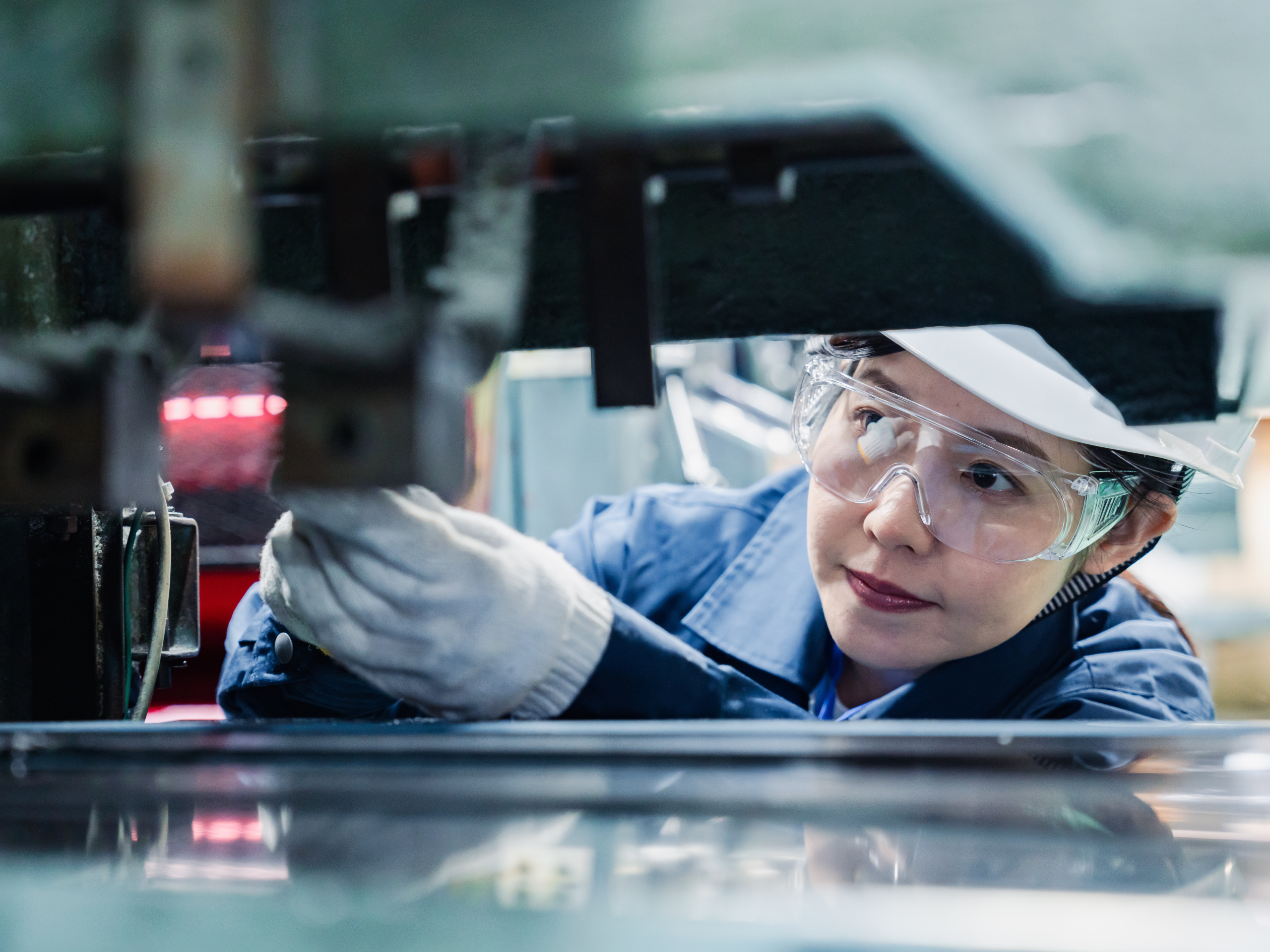
More women are working more hours in manufacturing, and careers are also getting longer, according to new research.
Automation has helped to open doors for women to move into manufacturing roles, according to new research prepared by the Australian Industry Group (AIGroup). AIGroup measured the number of hours worked by women in various industries using newly available microdata from the Australian Bureau of Statistics.
The research found that while industrial sectors such as manufacturing, mining and construction had the lowest share of hours worked by women, they were also leading the national effort in closing the gap.
AIGroup research manager Colleen Dowling writes in a research note that most industrial sectors had seen an increase in the proportion of hours worked by women in the last 20 years.
The number of hours worked by women in manufacturing rose from 21.2% in 2006 to 25.2% in 2025, as did those in mining, from 12.6% to 17.7%, and construction – from 7.8% to 11%.
Dowling writes that little had changed in industries where most hours are worked by women, such as healthcare and social work, where about 75% of hours are worked by women. The rate is 70.8% of hours worked by women in education – a reduction in balance compared to 2006, when women worked 65.8% of hours of all hours worked in education. “This means it is industrial sectors – and only industrial sectors – which are showing any progress in closing the gender gap in workforce participation. Why are these traditionally male industries doing most of the work?” Dowling writes.
In the research note, she mentions a series of government and business policy initiatives to increase female employment, including gender improvement programs and apprenticeships for women. “Government measures such as reporting requirements and project tender criteria have put gender firmly on the agenda for many industrial businesses, impacts absent in non-industrial sectors,” she writes.
“Male-dominated sectors have faced a level of scrutiny and societal pressure to change that female-dominated sectors haven’t.” Dowling adds the wider uptake of STEM subjects by women at the secondary and tertiary level has created a wider pool of candidates for technical roles.
“At the same time, ongoing skills shortages have pushed businesses to widen hiring searches. Increased technology adoption and automation has reduced the physical demands of some industrial jobs enabling a broader pool of people to participate,” she writes.
AIGroup head of research Jeffrey Wilson told AIGroup’s DBrief podcast that many Australian businesses had adopted automation and other new technologies in a bid to boost productivity.
“When a business goes down that Industry 4.0 route, they also, incidentally, lower some of those barriers to women’s participation – they transform into higher skilled industrial roles that rely more on human capital than physical capital,” he says.
“When you go through the Industry 4.0 process, you don’t just improve safety and lower your costs, but you also lower that intrinsic barrier to women’s participation by changing what it is that your industrial workforce is doing.”
“[This] is why we see those sectors having those big uplifts, because they’re the ones that are really driving industrial technology in Australia,” he says.
Wilson says that automation to reduce and automate manual handling was central to this change, adding that the increase of women was being driven by women over the age of 55 remaining in the workforce.
“Historically, people of that generation exited the labour market in retirement in their mid-50s. But what we’ve seen is that that workforce has been retained, and they’re able to work past 50, up towards the retirement age of 65,” he says.
“It’s not just the male/female aspect of physical jobs, but it’s also the young/old aspect of those physical jobs.”
Despite the broader improvements, Dowling wrote that she did not expect the gap in workforce participation between men and women to close for another one or two decades on present trends. “In early 2025, women comprised 47.9% of the labour force, a record level,” she wrote.
“The female share has been steadily trending up for the last two decades and is rising by around 0.15% per year.”
Dowling also notes that women are more likely than men to be employed part-time, adding that some would prefer to work more hours if given the opportunity and necessary support.
“This indicates a pool of available labour of staff that may already have the education level, skills and training – making them well-positioned to fill existing shortages,” she writes.
“Maximising the potential of existing employees, particularly women seeking more hours in industrials and men seeking more hours in education, health and social assistance, represents a practical solution for shortages.”