



MaxMine enables NRW Mining to enhance fleet efficiencies and curb emissions
NRW Civil & Mining (NRW) is one of Australia’s leading contractors, able to deliver a complete suite of civil and mining services at numerous locations nationwide. It is part of the NRW Holdings Group, an ASX-listed entity offering diverse contract services to Australia’s resources and infrastructure sectors.
After securing the mining, train loading, and miscellaneous services contract with Karara Mining Ltd, NRW began reducing GHG emissions at the Karara Iron Ore project, the largest mining operation in the Mid-West Region.
With a track record of excellence in managing the environmental implications of mining and civil projects, NRW continues beyond ensuring compliance with legislative mandates. They go beyond partnering with clients to refine best practices and find innovative ways to reduce the carbon footprint of their operations.
NRW planned to introduce an intelligent technology solution at Karara, to harness data-driven insights to refine operator behaviours, improve performance, and establish tangible carbon emissions reduction strategies.
NRW partnered with MaxMine to achieve these objectives, building on their successful collaboration at the Dalgaranga project.
The MaxMine intelligent technology platform is designed to help mining operations collect and collate data, in good time and in granular detail. “We engaged MaxMine at our Dalgaranga project, and it is on that project that NRW saw the benefits of the MaxMine solution and improvement in operator behaviour and resultant efficiency and productivity improvement,” said Brendan Shamrock, NRW’s Alternate Project Manager at Karara. “Unlike traditional fleet management systems, our technology provides a view of what each piece of mobile mining equipment is doing at every moment, through every shift. Our data scientists and partnership coaches then work closely with clients to decipher the insights and meet their goals.”


Key objectives
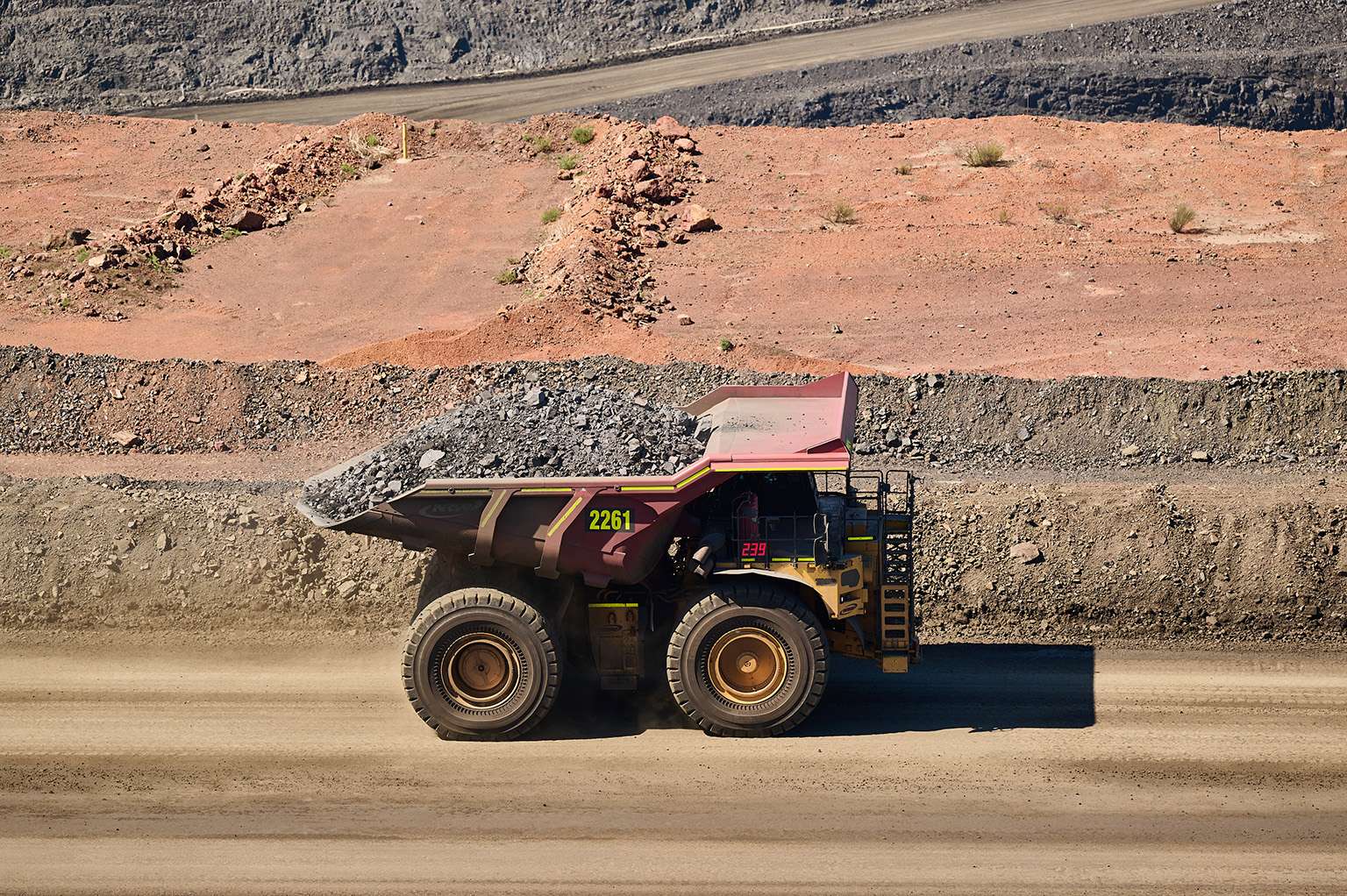
NRW’s main objective was to enhance operator behaviour, initially focusing on the truck fleet. The goal was to ensure each operator maintained optimal travel speeds to maximise safety and productivity while reducing road degradation and the overall carbon footprint of its operations.
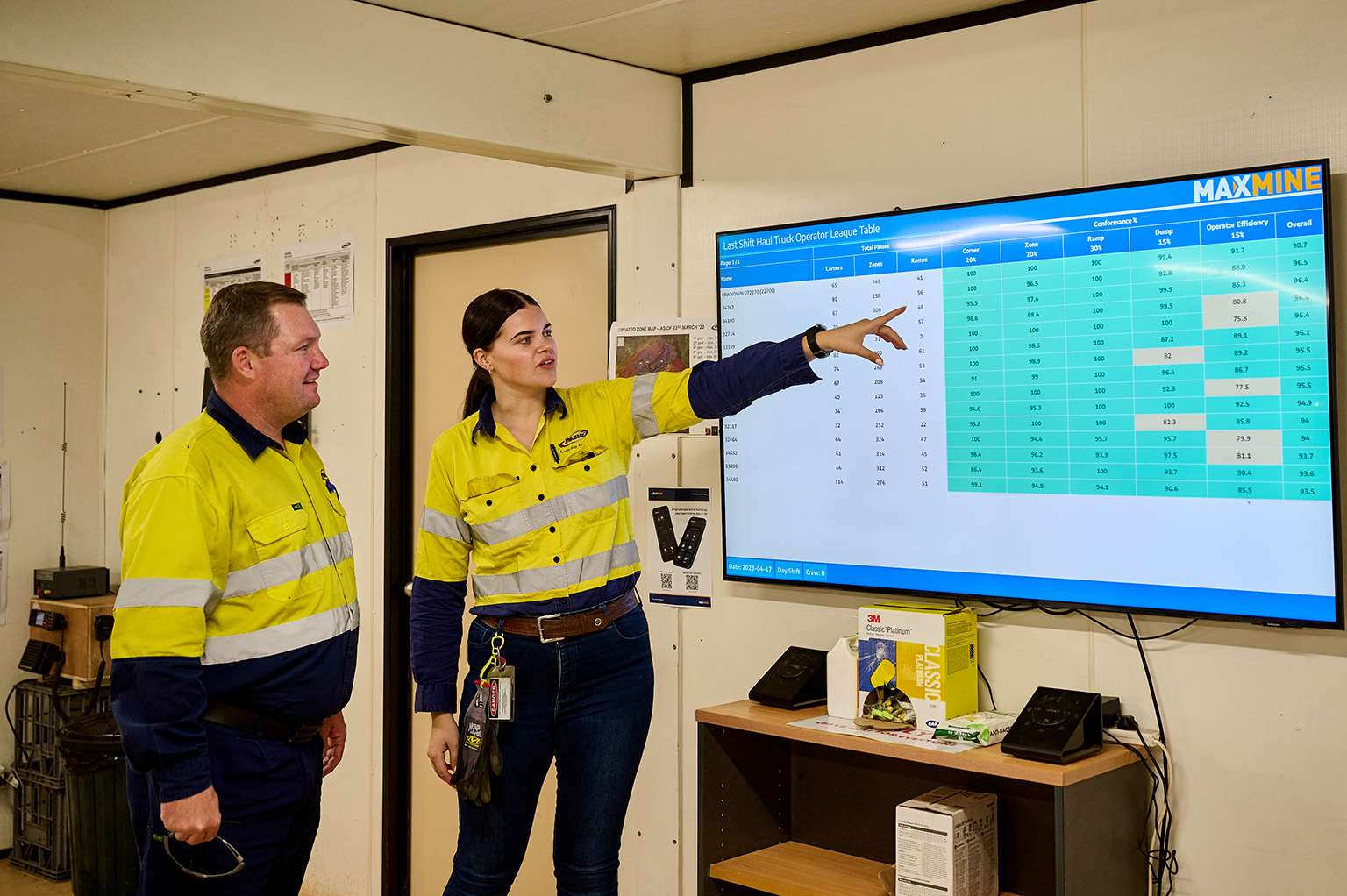
“Initially we targeted ramp, zone and corner speeds. By setting expectations and coaching our crews, we have improved our overall score from a baseline of 76%, to 96%,” notes Shamrock.
The MaxMine solution monitored speeds and was flexible enough to be configured to specific speed rules, providing personalised performance feedback to operators. The feedback was made accessible in a designated area and displayed as a league table to ensure the visibility of results and encourage healthy competition between operators. Every day, operators had an opportunity to refine their practices based on real-time data.
NRW has also implemented a MaxMine Pulse solution, which gives them a near-live snapshot of operation and production. Supervisors can review fleets and look at trucks in circuit, queuing and cycle times.
One notable achievement was an average fill factor improvement of three extra tons per load. With approximately 17,000 loads monthly, this translates to an additional 612,000 tons of material being moved annually without incurring any extra costs.
“This optimisation in productivity directly translates to reduced fuel consumption and minimised tyre wear, and ultimately leads to savings in CO2 emissions,” Brendan adds.
Shamrock notes two components that have proven to be instrumental in achieving positive outcomes: the availability of quality data and the support of the solution by the site team.
Availability of high-quality data
The availability of high-quality data forms the foundation for any successful technology implementation. The accuracy and reliability of the data collected by MaxMine enabled accurate analysis, benchmarking, and informed decision-making. By leveraging this quality data, NRW gained valuable insights into our operational workflows, identified areas for improvement, and established ambitious targets to drive performance enhancements. This data-driven approach empowered our teams to make informed decisions that lead to positive carbon reduction outcomes.
Embracing the system
Equally important was the way operators on site have embraced the system. It has become a talking point amongst the crews on what they must do to improve their overall scores. Technology implementation requires collaboration, coordination and effective communication among team members. When the entire site team fully embraces the solution, the likelihood of success increases exponentially. By fostering a culture of openness and receptiveness to change, team members have maximised the benefits of MaxMine and effectively leveraged its capabilities to drive operational efficiency.