



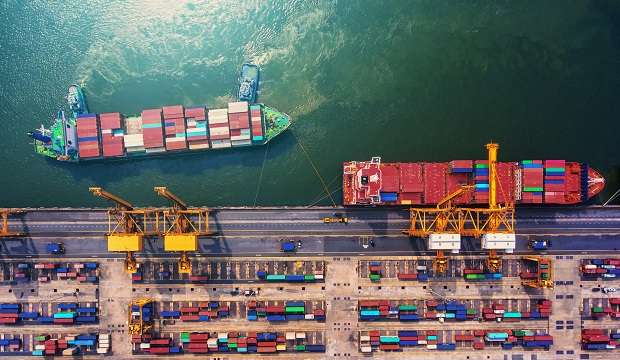
Events brought on by the COVID-19 pandemic, such as movement restrictions, supply shortages, panic-buying, closure of major international ports and skyrocketing shipping container prices, have put significant pressure on global and local supply chains, writes George Harb.
These disruptions have presented a whole set of new challenges for organisations in terms of how they can meet the needs of consumers. Even as we journey toward what appears to be the latter stages of the pandemic, Australia’s supply chain continues to face significant challenges; in early September 2021, Australia Post announced a temporary pause on parcel collections from ecommerce retailers due to a shortage of staff, with 500 employees having to isolate, while many retailers are already worried about stock availability and their ability to meet the upcoming Christmas demand peak.
Over the past 12 months, the Federal Government has already taken several positive steps to help introduce more resilience into the supply chains supporting its economy. Alongside the governments of Japan and India, and in recognition that local and global supply chains have been left vulnerable due to a range of factors, the three nations formally launched in April 2021 the Supply Chain Resilience Initiative (SCRI) to build resilient supply chains in the Indo-Pacific region.
Highlighting at the time the importance of risk management and continuity plans to avoid supply chain disruptions, the trio said that possible policy measures may include, in addition to trade and investment diversification, supporting the enhanced utilisation of digital technology. The tripartite agreement builds on a local SCRI launched by the Australian government in October 2020, when it announced an investment of $107.2m committed towards addressing supply chain vulnerabilities.
Moving forward, how can organisations ensure their supply chain ecosystems are resilient? Digital technology is clearly a major part of the answer.
Digital technology is imperative to building a strong supply chain network that can withstand disruptions however it’s important to invest in the right technology. Every organisation should invest in systems and solutions that integrate with the broader ecosystem; operating in isolation is no longer a viable route for long-term success. Information must flow smoothly and securely between employees, business departments, and extended business networks. Without the right technology at the core, organisations increase the likelihood of negatively impacting collaboration among employees, transparency with partners, and ultimately the smooth operation of the entire supply chain.
Characteristics of the modern supply chain
As the modern supply chain incorporates more organisations across a broader geographic footprint than ever before, it becomes increasingly complex. For this reason, it’s vital for supply chain participants to collaborate. Failure to do so can prove costly and disruptive, seeing materials go to waste, longer order-to-delivery cycle times, inaccurate shipments, impacts on quality of service and so on. This is where the need for a connected and resilient supply chain comes in.
The pandemic and its effects have tested supply chains across the globe, perhaps more than at any other time in history, and the ones that have proved strongest and most resilient are those that have been able to pivot at a moment’s notice. This feat is achieved by collaborating effectively through technology. Modern technologies such as the cloud, the Internet of Things (IoT), big data and so on must be embraced and connected at all levels to make this a reality.
The next level: accelerate digital transformation
To take it to the next level and build true resilience, organisations need to accelerate their digital transformation initiatives so their supply chain ecosystems can integrate data analytics, transactional content and cybersecurity, while providing robust activity reporting, content creation and receiving capabilities and dashboards. Additionally, the use of artificial intelligence (AI) and analytics is now a key enabler for Australian manufacturers as they seek to better align operations that will meet the needs of customers. These innovations also give them the flexibility they need to respond to unforeseen events, quickly change their business model and adapt to new demands.
Emerging technologies are at the heart of the fourth industrial revolution. AI and data analytics are transforming the speed at which manufacturers are creating products by using past data to recognise which methods work most efficiently. Hence, it is unsurprising the Advanced Manufacturing Growth Centre has revealed many Australian organisations are embracing these emerging technologies in order to drive growth.
The importance of the consumer
While technology facilitates collaboration and transparency in the supply chain, it also increases transparency, which is increasingly important for today’s environmentally conscious and socially responsible consumers. In fact, 84% of Australian consumers prioritise buying from companies that make it clear they have ethical sourcing strategies in place.
To meet these needs, Australian manufacturers need to invest in technology that allows them to share data in real-time and gives them clear visibility into partner performance, practices, and certifications – making it easier to establish and operate an ethical supply chain and appealing to the demands of today’s consumer.
While some manufacturers are still plodding along with their digital transformation efforts, it is evident that many others are recognising this opportunity and using emerging technologies to accelerate progress. The combination of IoT, AI and data analytics will provide organisations with access to intelligent supply chain data that will measure and analyse activities within the organisation and with downstream partners. Not only will this ensure an efficient and resilient supply chain, but it will also deliver maximum transparency into the working practices of supply chain partners and give organisations the opportunity to earn customer loyalty by demonstrating their entire supply chain operates ethically.
George Harb is Regional Vice President | Business Ecosystems, APAC at OpenText.