



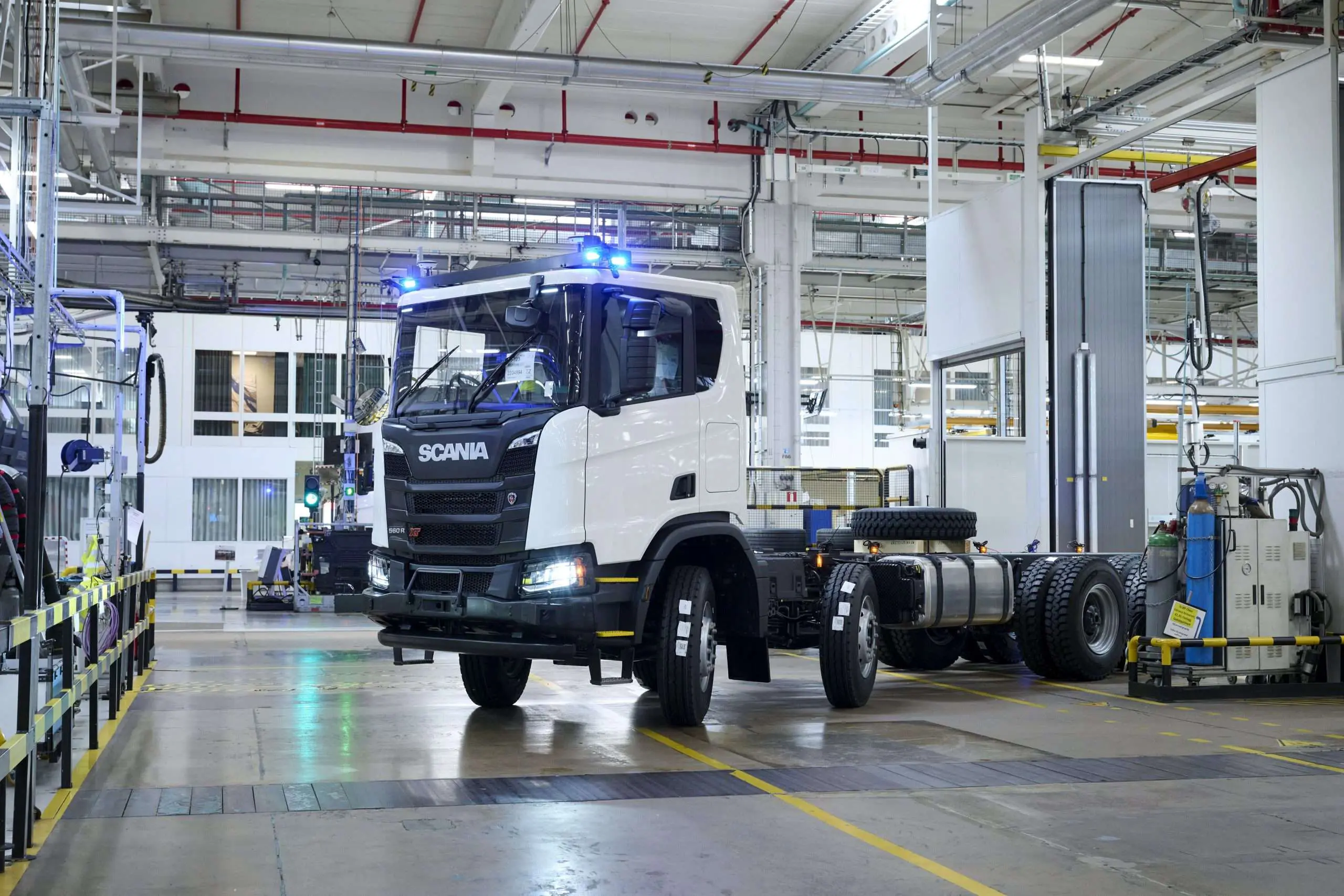
Scania’s autonomous trucks to make global debut in Australian mine
Scania and Australian services provider Regroup will launch the world’s first fleet of autonomous in-pit mining trucks in the Pilbara in 2025 with a rollout planned at Element 25’s Butcherbird Mine.
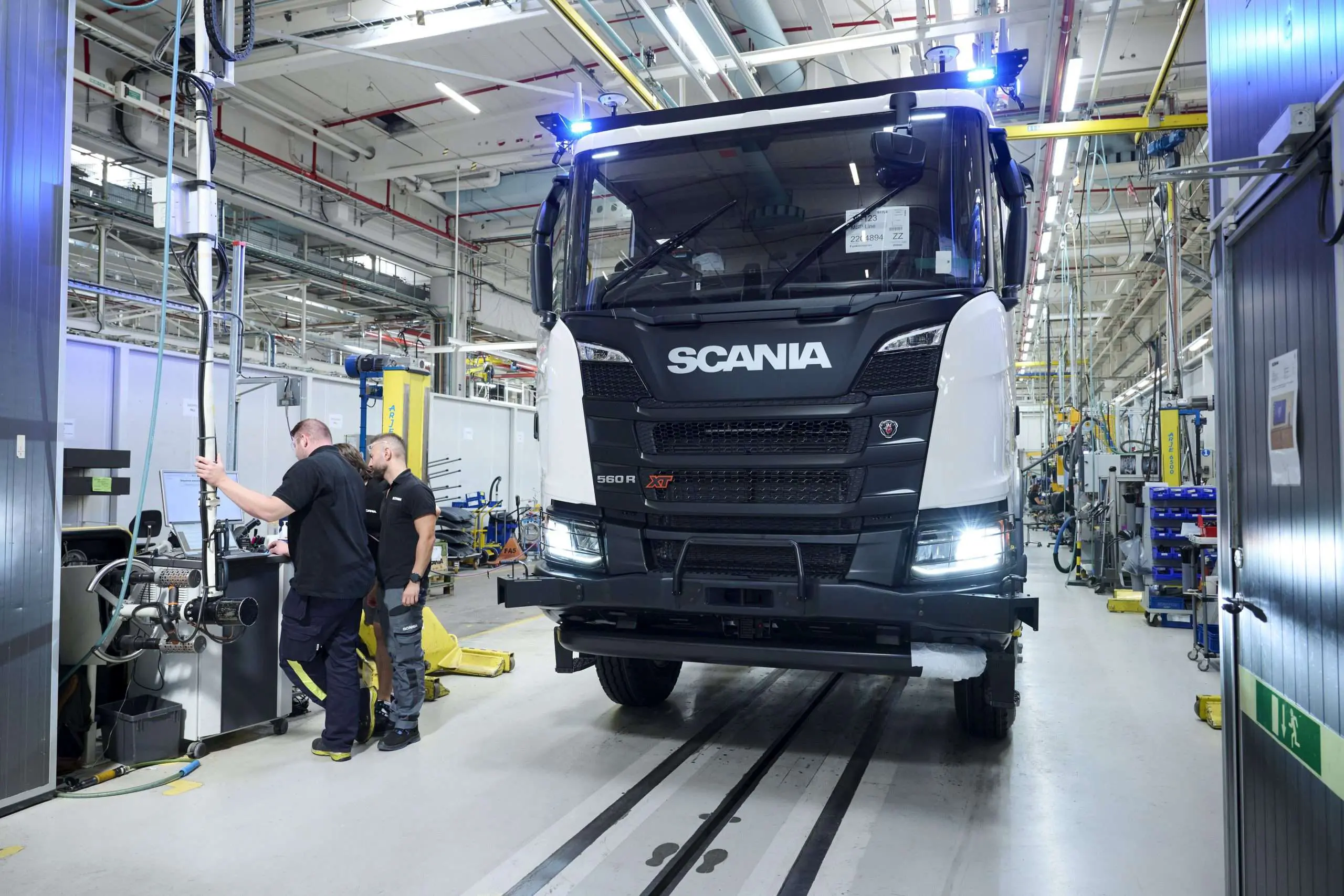
The world-first fleet of 11 autonomous rigid G 560 8×4 tippers, transporting manganese ore for Element 25 at their Butcherbird site, is planned to start work in late 2025 in Western Australia’s Pilbara region. Scania, Regroup, and Element 25 will collaborate to finalise the particulars regarding this solution and align with the expansion of the Butcherbird mine.
“Scania in Australia has been working closely with several partners in the local mining industry over recent years to finesse our autonomous truck programme in advance of this announcement,” says Scania Australia Managing Director, Manfred Streit.
“We are delighted that this historic event, the first global order for a fleet of Scania’s new autonomous trucks, has been made by a privately-owned Australian company, which will provide these trucks for use in an Australian mining environment.”
“With this fleet order, we bring to commercial reality the concept of an autonomous fleet working at scale in demanding real-world conditions. We anticipate the Regroup fleet deployment will be the first of many, as operators around the world see the safety, productivity and ease-of-use benefits of Scania’s technology,” said Peter Hafmar, Head of Autonomous Solutions, Scania.
Regroup, a fully integrated civil, mining and bulk commodities haulage partner, sees the autonomous truck fleet as the first critical stage in its path towards a zero-tailpipe emissions mining fleet future.
“Along with Scania, we are excited to be establishing our first fleet of autonomous vehicles in the Australian mining industry. It is not lost on us that we are able to collaborate with one of our key, and long-standing partners in Element 25 as we look to roll this solution out across their site. We have always been aligned in our values in supporting industry innovation and the electrification of the global vehicle fleet. It is great that we can demonstrate this on site,” said Regroup Managing Director, Michael Still.
“Regroup has excelled at initiating and delivering sustainable and renewable practices, and these new autonomous trucks are just the first step in our transport plan. We look forward to adding Scania zero-emission autonomous mining trucks as the next step. In addition to the autonomous trucks coming next year, we have also ordered a driver-operated battery electric Scania rigid 8×4 truck that we will look to incorporate into the Element 25 Butcherbird operation, which will serve as a water cart, underlining our overall aim of decarbonising our mining activities,” Still said.
“We’re investing eight figures with Scania to establish a fully autonomous onsite mining haulage fleet. Regroup has a track record in investing in innovative fleets,” he said.
“We see the autonomous Scania fleet also reducing our diesel consumption, as we’re moving from a larger capacity fleet of 100-200 tonne vehicles to a smaller class unit, and from a decarbonisation perspective, we’re burning less fuel on site, so we’re reducing our impact on the environment to achieve the same commercial result,” he said.
Regarding the new autonomous fleet, Still said there will be no reduction in his driver cohort, because the new fleet will be operating as an expansion of a current programme, so no additional drivers will be sought.
“On the one hand we will reduce our (notional) driver requirement by 21 people, due to the autonomous trucks replacing three shifts of seven drivers, so there is a saving on wages, flights, food and accommodation, but we will be creating control room jobs, which are safer environments, and eventually we anticipate they can be remote sites, such as their hometowns.
“Our existing workforce is unaffected, but it allows us as we grow not to rely on new talent into the business as much as in the past. We’ll be able to take people out of the dirtier more hazardous environment and deploy them into safer cleaner more appropriate, more attractive working environments,” he said.
“I think this has a much bigger impact on the family,” Still said. “But I think the other point is that this is our road map to electrify our fleet and provide our customers with a road map too. We will run these diesel vehicles initially with one BEV in there, but as technology develops – and we see Scania as a key partner having demonstrated capability in this area – as the larger trucks become available and become an electric option, we would look to swapping out the fleet to the fully electric fleet on site as well.
“Regroup certainly wants to be an early adopter. That’s been a part of our vision as a business, but we’ve also been watching OEMs and some aftermarket providers attempting to automate their fleet and to electrify their fleets. We always had a clear commitment within our business that the solution that we’ll ultimately pick should be backed by the OEM.
“We have seen that Scania, as a business based out of Sweden, has already been working in the Pilbara in mining on autonomous trucks for a while, getting their hands dirty in the harshest of environments, and they back their product in this application to be the first commercial operation in the world,” Still said.
“We expect these new autonomous trucks to arrive in the latter half of 2025. We are fortunate that within our team, we have some people who have experience integrating autonomous equipment into the fleet in the Pilbara, so they know what to expect. They were involved with the early concept trials of the autonomous Scania solution in the Pilbara so we’d be relying on those guys and the Scania team. This is really where that partnership works,” Michael Still said.
“Regroup is a business on a rapid path to expansion, having been voted the top regional business of the year in WA,” said Robert Taylor, Head of Mining at Scania Australia.
“We can see that Regroup and Element 25 will benefit from reduced operating costs using our autonomous trucks, decarbonising their operations, and transferring labour requirements from the field to remote control room locations, which are also safer working environments. So, this fleet will provide a win-win for all parties,” Taylor concluded.