



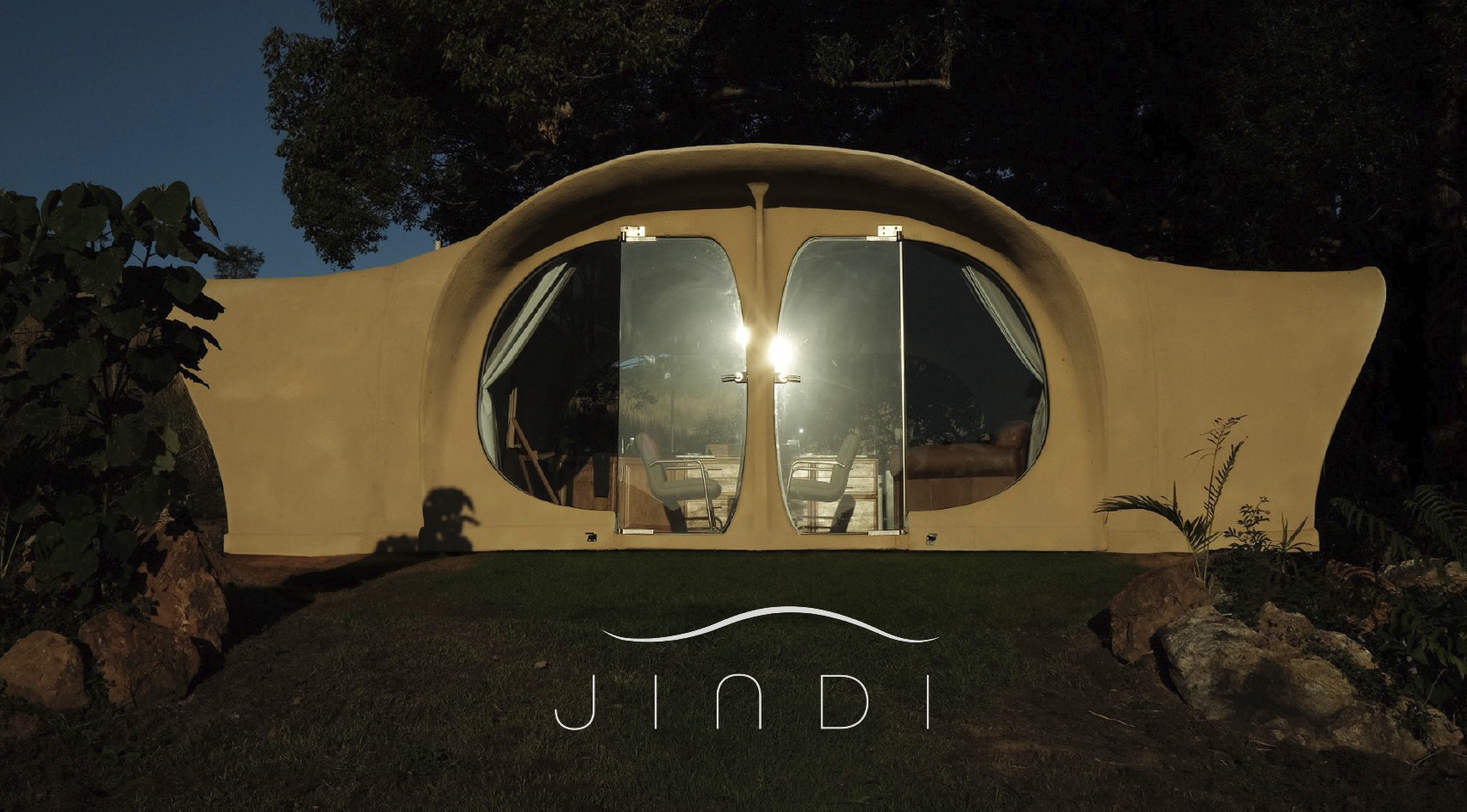
CADzilla is set to produce low-cost and durable houses from recycled consumer waste. AMT Editor Paul Hellard speaks to Studio Kite founder Steve Rosewell
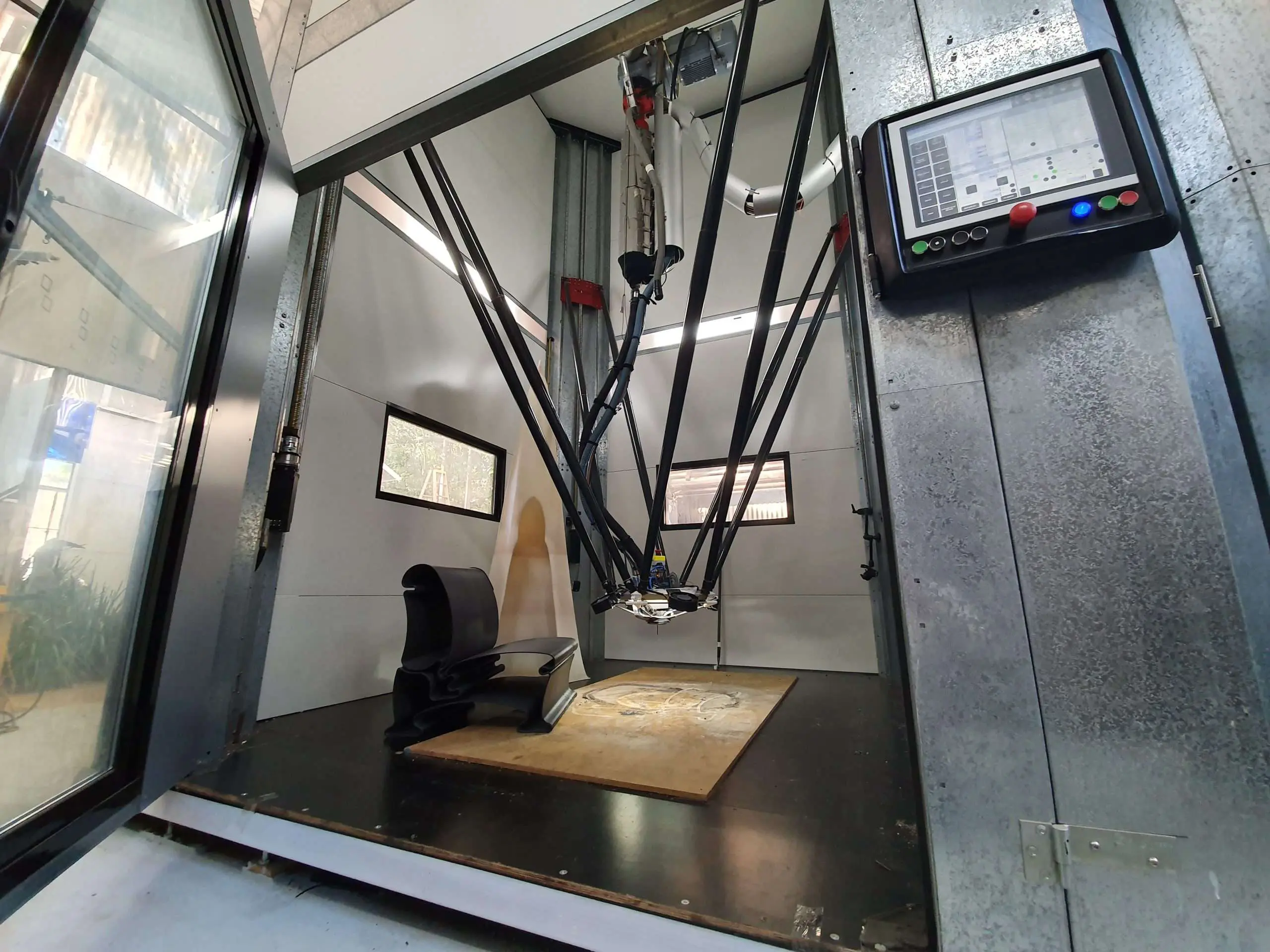
Studio Kite is at the forefront of 3D printing technology, having built two massive 3D printers, fittingly named CADzilla. As the name suggests, these printers are designed for large-scale fabrication and have been fully operational for the past seven years, producing props, sculptures, public art, and prototypes, all on a grand scale. With 25 years of experience in 3D printing and 35 years in cinematic special effects, sculpture, and model making, Studio Kite now plans to start mass-producing affordable homes from plastics destined for landfill. Introducing Jindi, a building solution that Studio Kite says “doesn’t cost the earth. ”
“Over the last few years, we have vigorously fine-tuned the shapes to optimise the materials as best we can; these forms have been rigorously tested to enter the housing and construction market. We’re 3D printing using 100% recycled consumer waste, which is challenging and costly to recycle consistently. We 3D print an optimised sacrificial formwork that gets coated with a thin shell of basalt fibre-reinforced cement,” said founder Steve Rosewell.
‘Jindi’ is the Yugambeh-Bundjalung word for ‘nest.’ The Bundjalung Nation is the custodian of the northern coastal area of NSW, Australia.
“The inspiration for building houses came from the extraordinary success of 3D printing nest boxes for endangered species,” explained Rosewell. “We proved we could economically 3D print a comfortable Wild B&B from waste plastic that will far outlast the existing materials like plywood and hollowed logs. That’s when there was a clear light bulb moment: why can’t we do this for humans too?”
Using plastic waste
Converting waste plastic back into fuel or oil to produce more plastic is costly and energy-intensive. Due to polymer degradation, most types of plastic cannot be endlessly reprocessed to perform the same function. Meanwhile, housing construction costs are rising far beyond inflation, making housing unaffordable for a significant portion of the population. The construction industry alone contributes to approximately one-quarter of Australia’s emissions. Each year in Australia, twenty million tonnes of building waste end up in landfill.
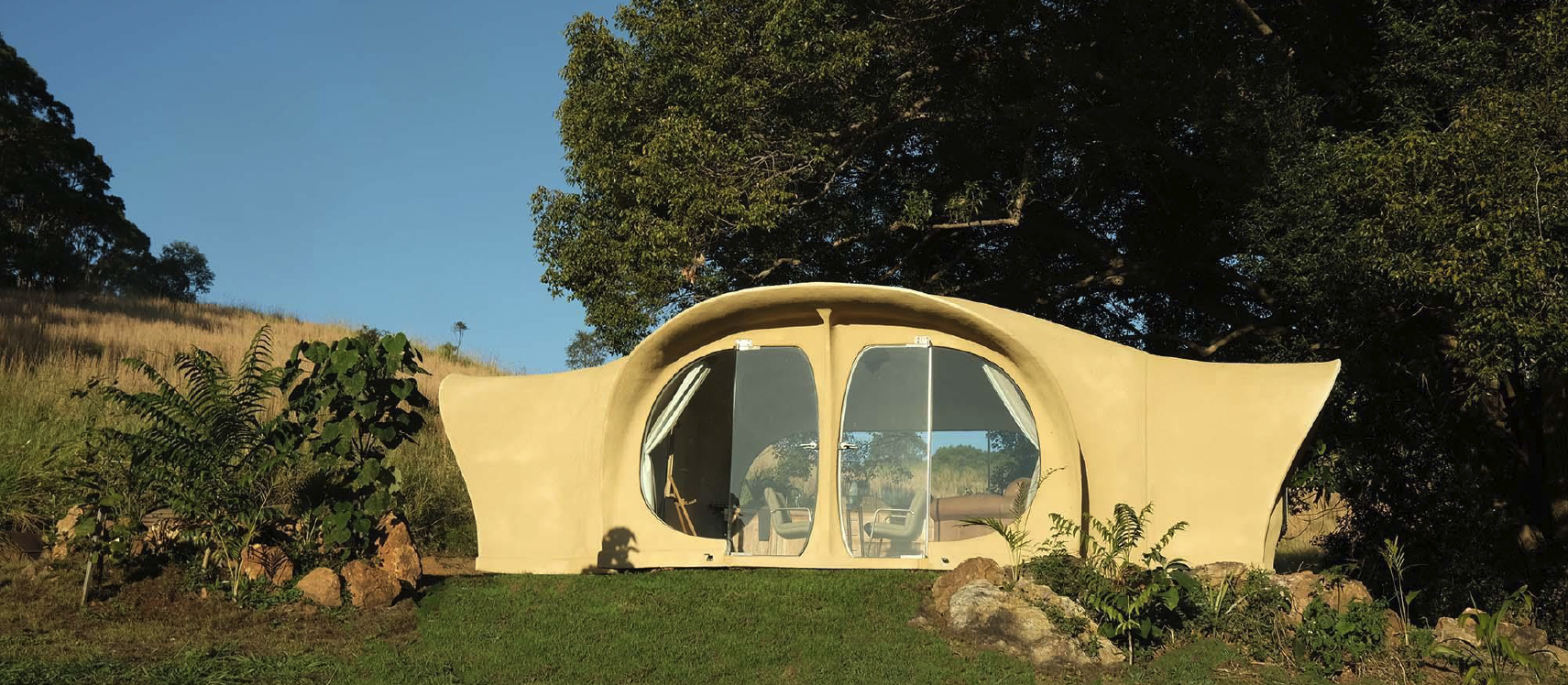
“Two years ago, we built an example of what is possible,” says Rosewell. “During this process, we’ve learned a lot about how to make Jindi strong, bushfire-proof, comfortable, and potentially last for centuries. Southern Cross and Adelaide universities have been great champions of the vision, facilitating and executing extensive engineering tests to a point where we’ve passed the structural requirements to meet the Australian construction code, and our first formally accepted building is going up.”
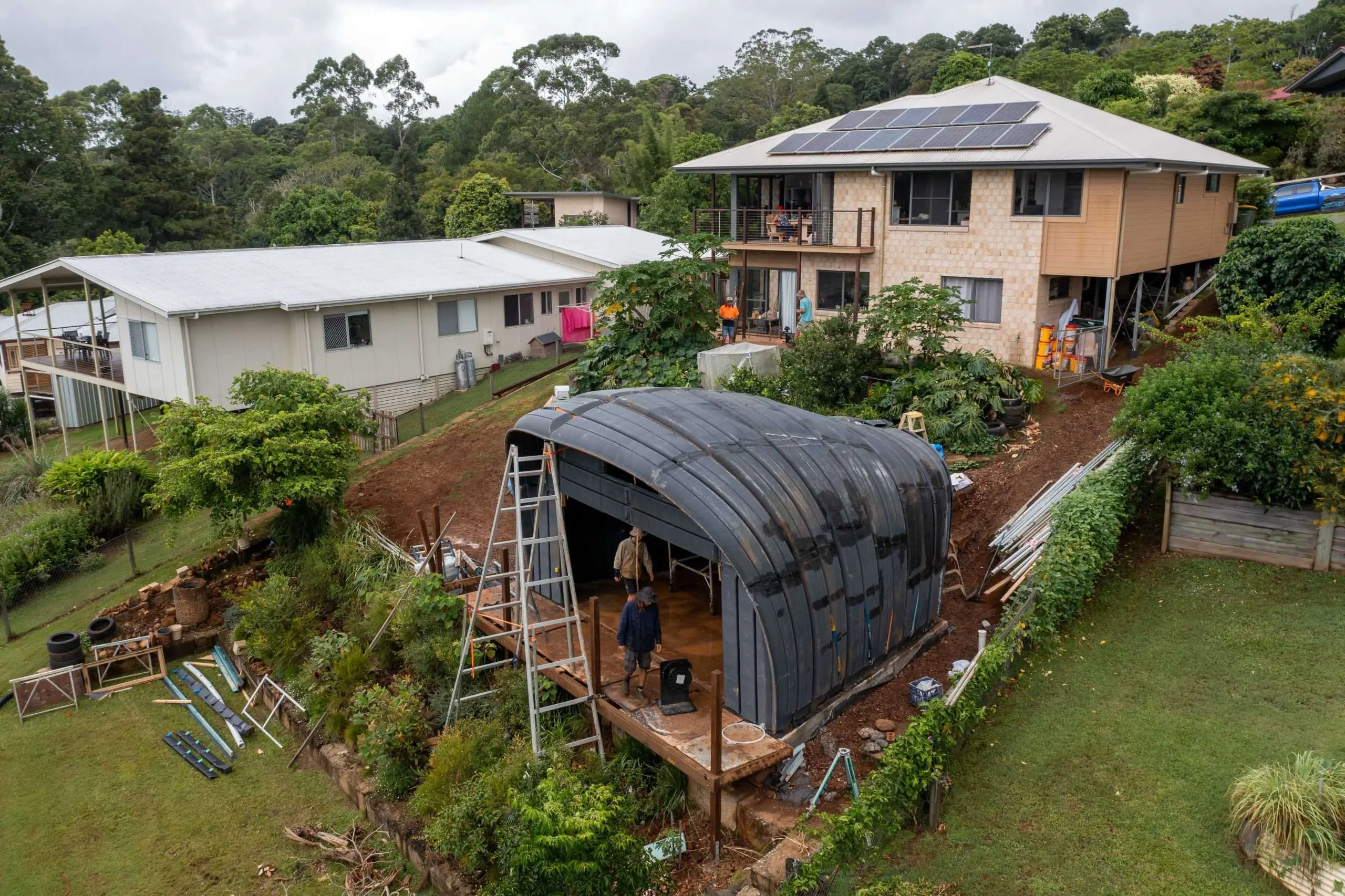
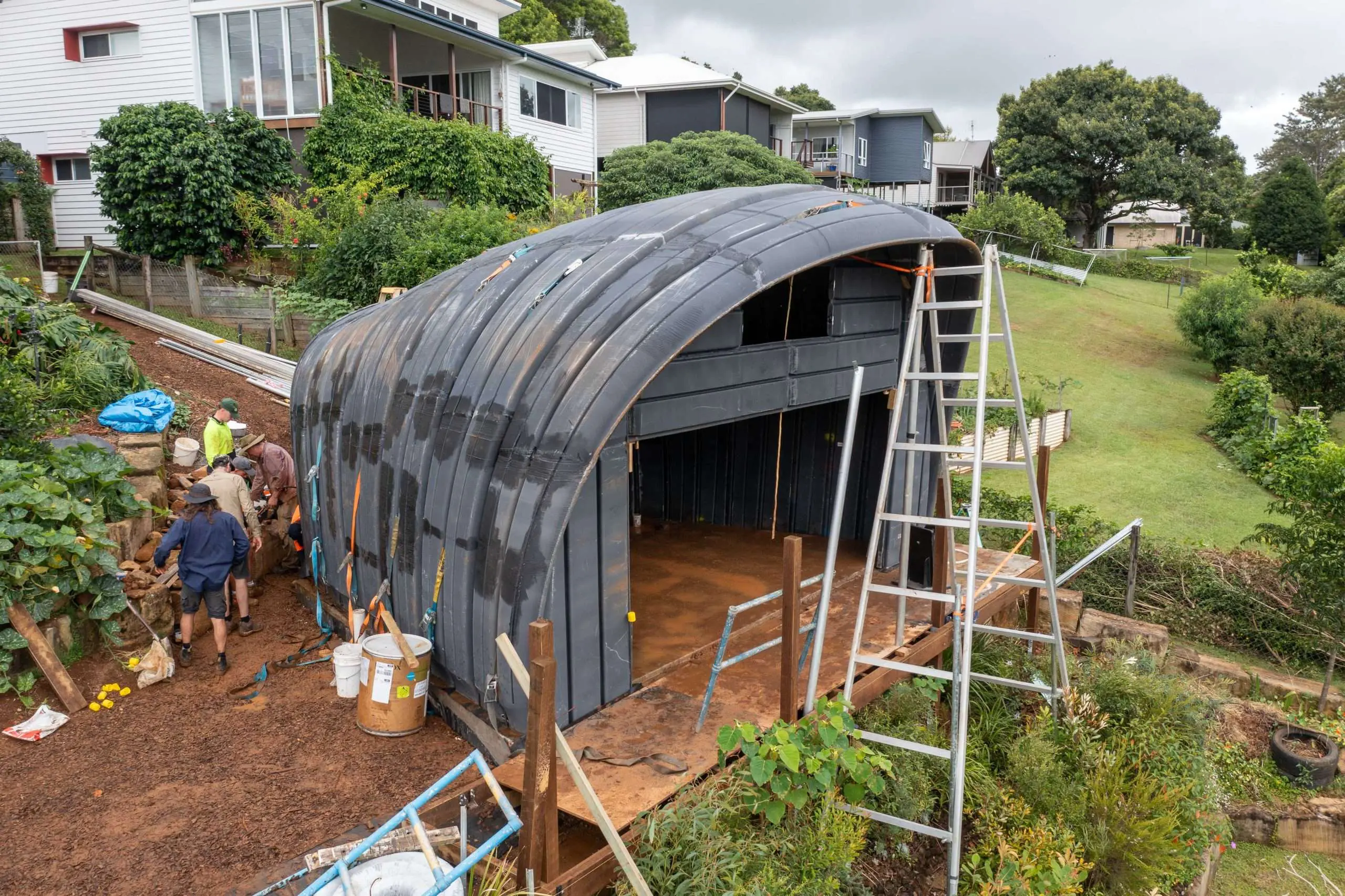
Jindi is a system that promises a low-carbon and more affordable building form and offers endless opportunities for exciting new house shapes. It starts with a cellular structure that is 3D printed from recycled plastic. Various types of plastic can be utilised, and they don’t need to be perfectly clean— a small amount of contamination won’t significantly impact the outcome. The idea is to make use of the mass of consumer waste polyfins, primarily polypropylene, which is typically found in laundry detergent containers, higher-quality takeaway food containers, and plant pots, in addition to HDPE, another standard food container, and finally LDPE, the familiar plastic wrap or ‘scrunchy material’ we all know well. We incorporate a small amount of glass fibre into the plastic to help stabilise and enhance printability. These 3D printed shells are assembled on-site and coated with basalt fibre-reinforced cement. This basalt fibre is created by melting a common type of rock and spinning it into a fibre, providing strong rust and rot resistance without the use of chemicals; its tensile strength is ten times stronger than steel by weight!
There’s no need for steel or timber in Jindi houses. If we utilised all the plastic currently sent to landfills to construct homes, we could diminish the demand for wood by 30%—imagine the forests we could save.
The closed cells in the walls create a superior thermal barrier, preventing heat and cold from easily passing through. To endure extreme weather conditions, the walls can be constructed to any desired thickness and filled with various insulation materials.
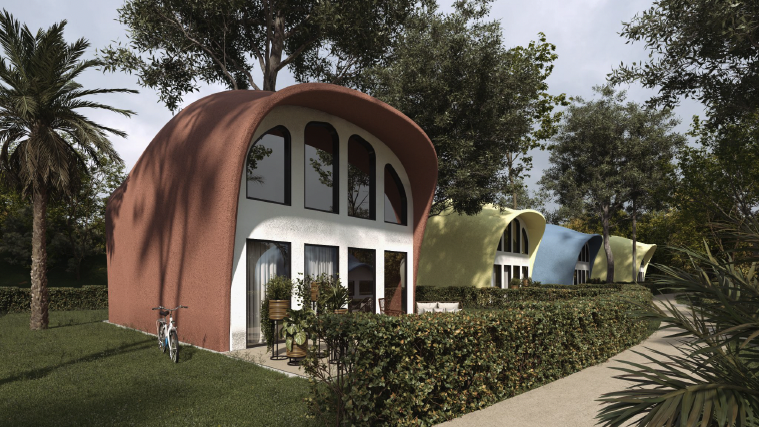
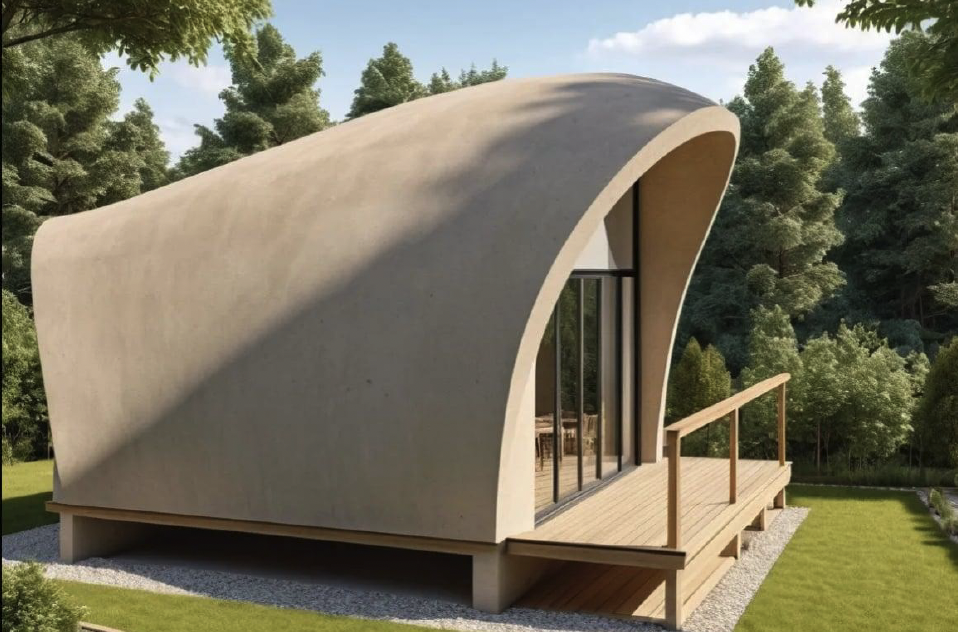
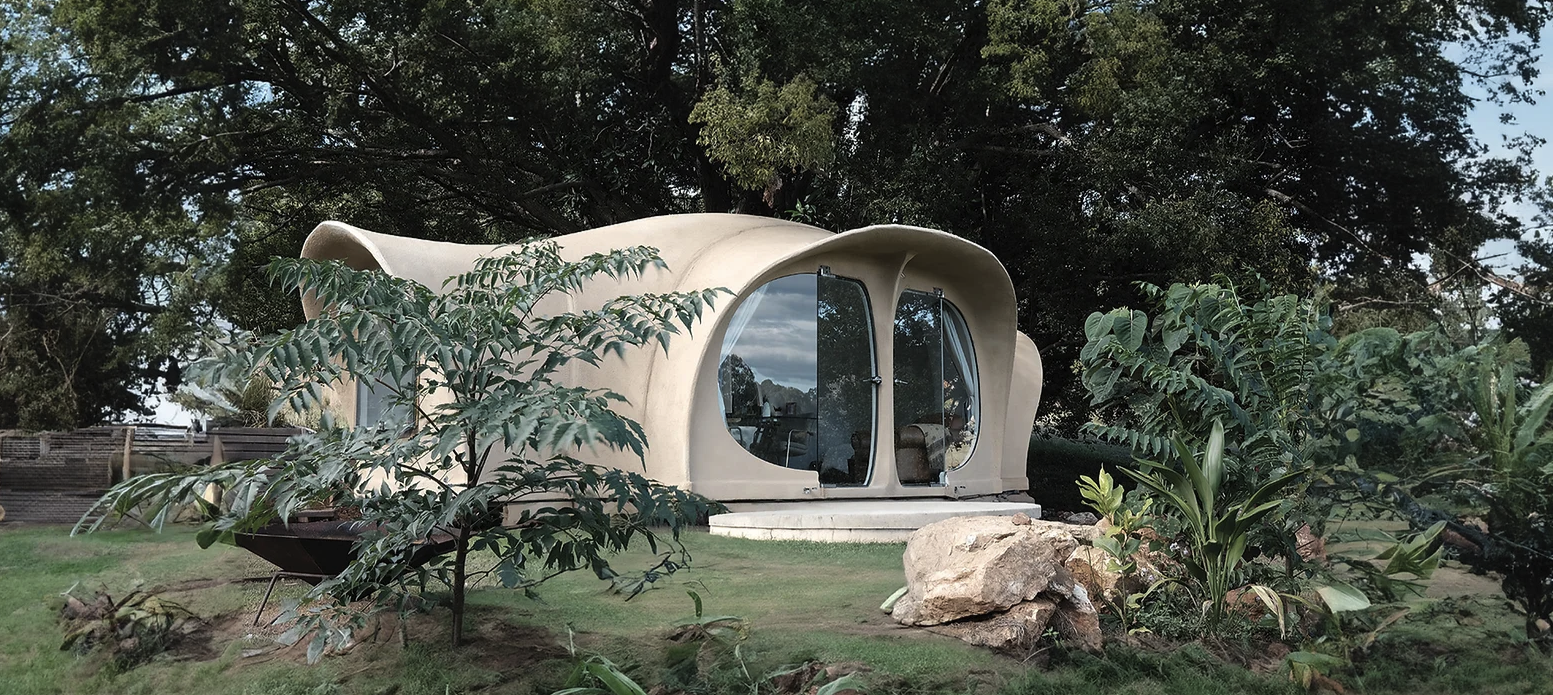
Curves and self-supporting roofs create an expansive and uplifting living space in Jindi. This design provides a far better sense of space compared to boxy rooms. A significant feature of Jindi is that frameless glass doors and windows can be installed directly into the reinforced 3D-printed structure, eliminating the need for window frames and their associated costs. Additionally, storage cupboards can be integrated directly into the printed walls, further lowering fit-out expenses.
Remote and isolated locations
No matter where people live, plastic waste is abundant. In remote areas like central Australia and the Pacific Islands, durable building materials are hard to come by due to transportation costs. In the outback, you can simply dig a hole and pile the plastic in, but there is limited space to dig such holes on the Pacific Islands. With the threat of cyclones, the risk of this waste ending up in the ocean is exceptionally high. The plan is to build a containerised recycling and 3D printing plant that can be moved to the islands where the houses are needed. Once it is operational, people in these areas will have a good reason to sort and adequately store these soon-to-be valuable materials.
Temperature control
The energy a building consumes over its lifetime is as important as the resources required for its construction. Jindi features a unique system for extracting or harnessing heat from its walls. As the 3D-printed cells in the walls extend from the ground to the ridge, heat build-up can be expelled quickly using a small extraction fan. Additionally, in winter, any warm air that accumulates in the cells can be redirected back into the building, helping to maintain warmth during the evening. This vital function stabilises the temperature, creating a more comfortable environment without incurring high energy bills.
Four horses
Subjecting a section of the Jindi wall to fire testing surpassed the requirements of the Australian bushfire Flame Zone Tests. After 40 minutes of a fan-forced fire with surface temperatures reaching 800°C, there was no damage. “I know where I want to be when a bushfire approaches; it’s in one of these homes,” said Rosewell.
The materials used in a Jindi are waterproof; there’s no wood to rot or steel to rust. In the event of flooding, a Jindi house will simply need a thorough hosing out.
Thanks to Jindi’s solid construction, pesky vermin are kept at bay since there are no gaps of any size, aside from open doors and windows. Thus, there is nothing for white ants to eat. The walls are fully integrated with the floor and roof, and continuous reinforcement rods run around the building. This makes it nearly impossible to dismantle, even against the worst fury a cyclone could unleash. Furthermore, no amount of shaking could cause it to collapse due to its low weight and flexibility, making Jindi resilient even during the most severe earthquakes.
When asked how long they would last, Steve Rosewell stated it would be about 1000 years, “but you’ll need to recoat it with cement every century or so. Hopefully, with the promise of longer-lasting geopolymer materials, cement will become a thing of the past. These low-carbon cement-like options are an important step forward for housing like this, and I’d love to start using them.”