



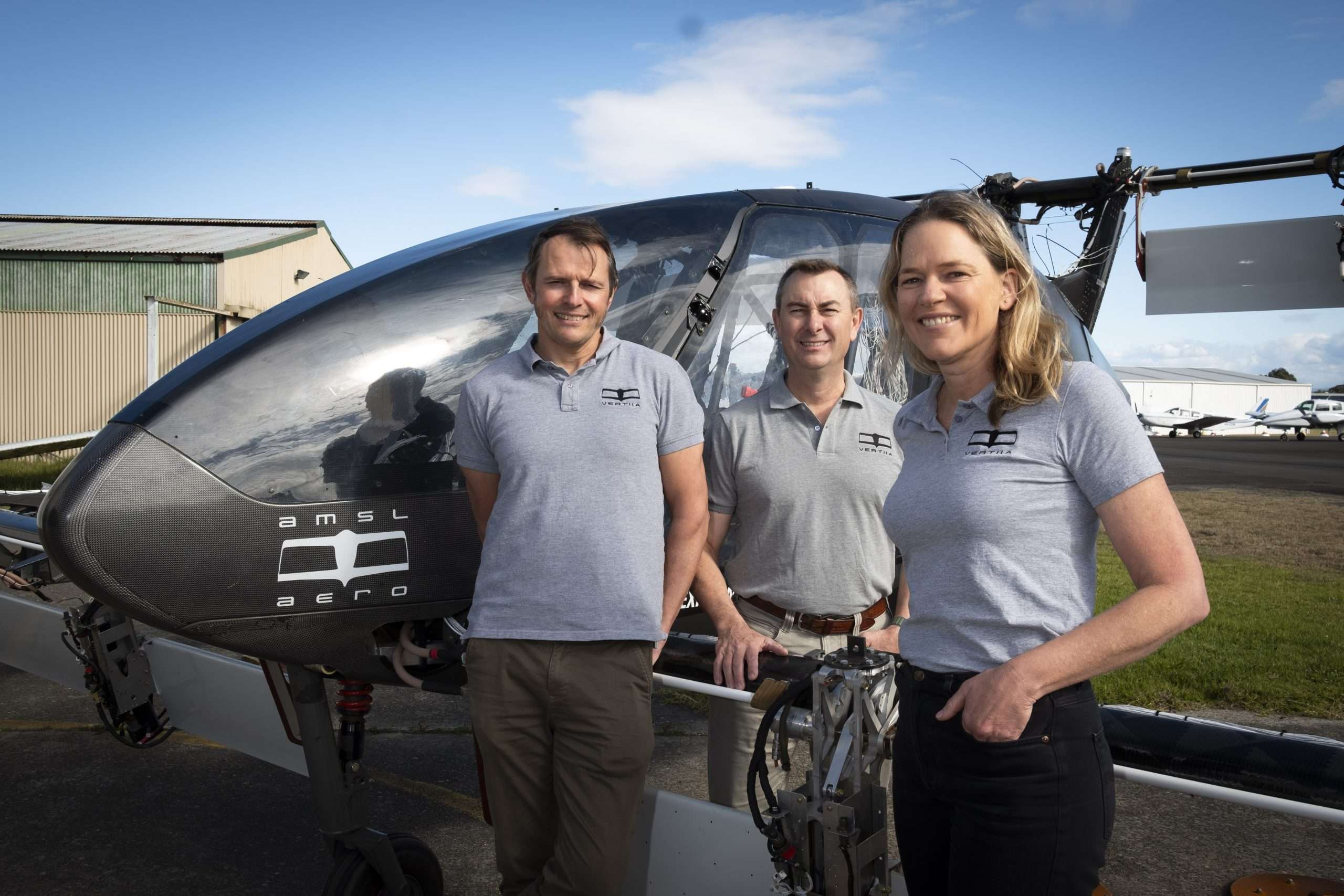
AMT speaks with AMSL Aero Co-Founder, Chief Engineer, and Vertiia inventor Andrew Moore about the eVTOL and how his early life shaped his view of the use of air transport
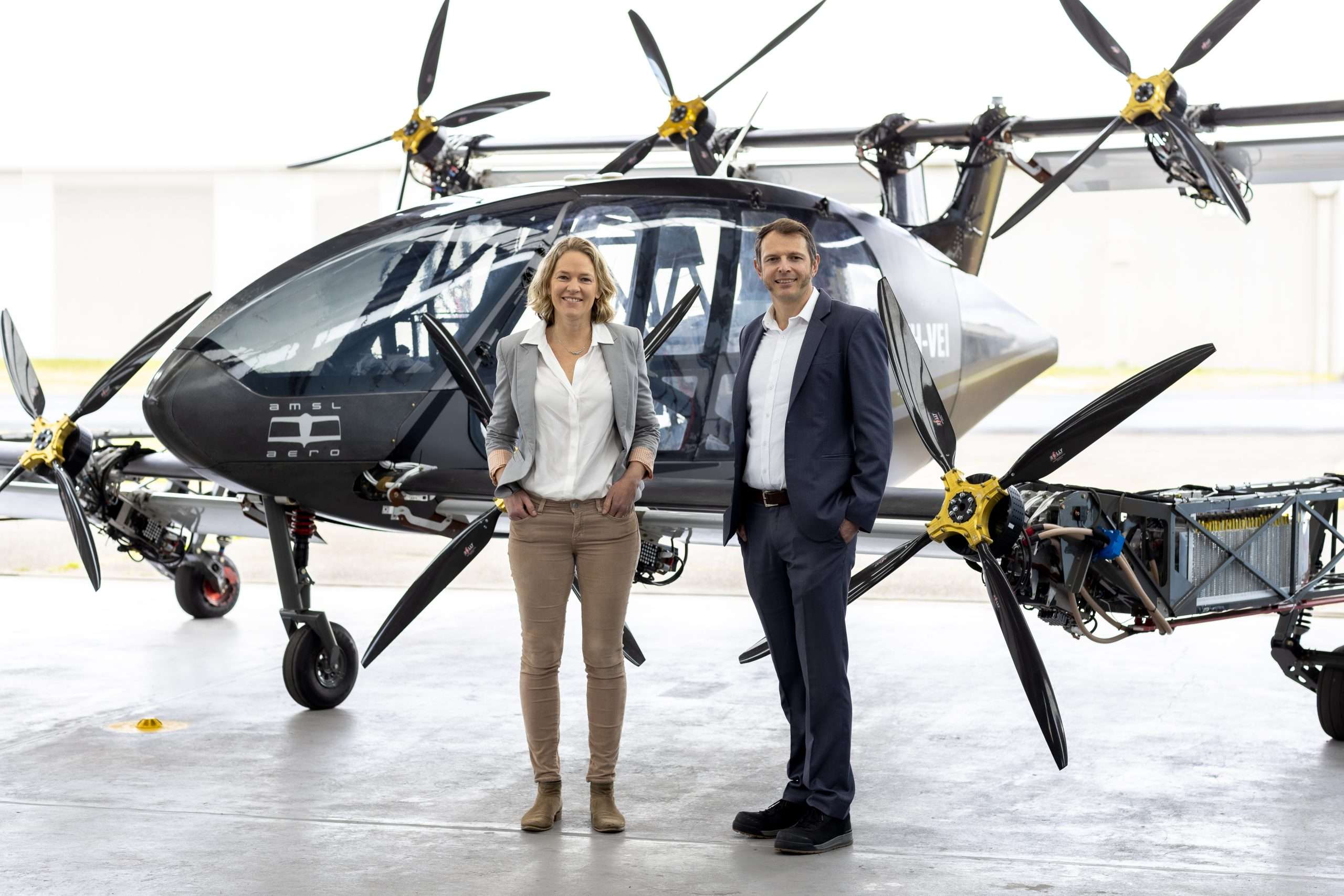
AMSL Aero, a zero-emission aircraft designer and manufacturer, has been completing test flights of Vertiia, Australia’s first passenger-capable, emission-free, long-range electric vertical take-off and landing (eVTOL) aircraft.
The craft has been designed to travel up to 1,000 kilometres on hydrogen at a cruising speed of 300km/h with zero carbon emissions. It can carry up to four passengers and a pilot. AMSL Aero’s Vertiia customers plan commercial flights following certification and regulatory approval in 2027. Vertiia is an Australian-designed and manufactured eVTOL, the new generation of aircraft that takes off and lands like a helicopter but flies fast and smoothly like a fixed-wing aeroplane.
“My Dad was in the Navy and always spoke about flying off aircraft carriers,” explained Andrew Moore. “I grew up on a farm that had an airstrip. In the vastness of outback NSW, you had the ‘bank run’, the ‘mail run’, and medical and pathology supplies all having to be flown in. Growing up, I felt like aviation was everything. The alternative was nine hours driving on not-always-safe gravel roads, which could be cut to two or three hours in an aircraft.”
Moore grew up to join the Navy and became an Aerospace Engineer while in the forces. He was involved with peacekeeping in the Solomon Islands, and posted on what was called a helicopter ship. This ship was an amphibious landing platform. It was also a hospital ship with hangar-shared facilities. “The front end of the hangar was part of the hospital facility, so it could be used for either, depending on what was going on,” Moore described. “I was heavily involved in aviation, and managed the flight deck and operations around that aspect. But I was already having a strong connection into the medical world.”
When Moore left the Forces, he joined a small company called Total Aerospace Solutions (TAS), working closely with the medical community. “One of the key projects was to build a great medical fit-out for an effective flying ICU.”
When Moore left TAS more than 15 years ago, it was clear to him that Australia’s medical system depends on being able to transport patients by air. When he considered starting AMSL Aero, a couple of things needed immediate attention for the national interest, and one of them was finding a better way to transport patients, especially in a country as big as this.
“The reality is, despite my upbringing, where most people are, there aren’t airstrips. Where the patient flights, medical transport and other work happens, they do a lot of work between airports, but the patient has to get there first,” Moore described. “It would be best if they didn’t have to do that. It would be much better to land directly where the patient is and pick them up. Many patients move from hospital to hospital; every hospital has a helicopter landing site.”
Local design and manufacture
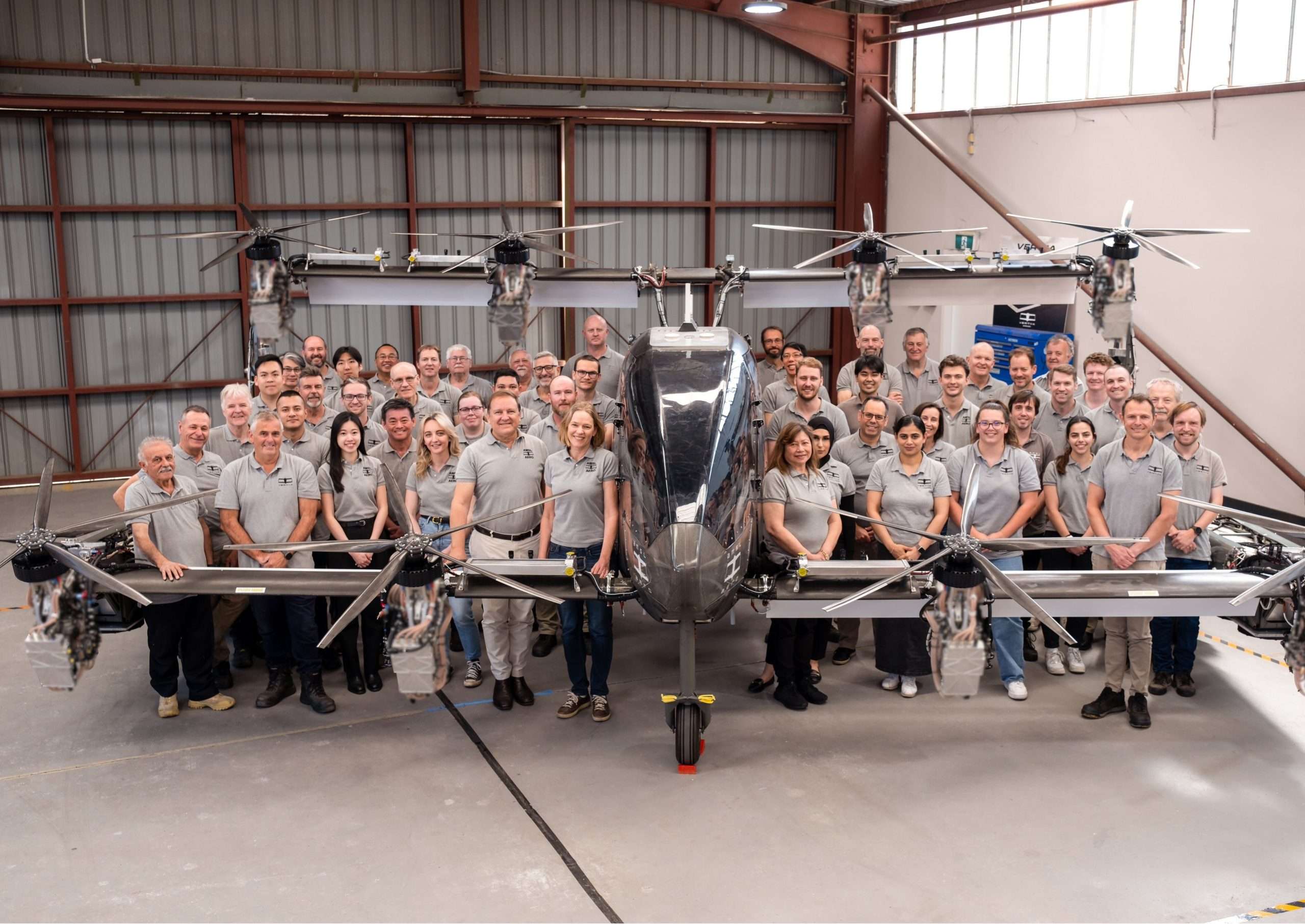
This concept vehicle is designed and assembled here in Bankstown, NSW with components manufactured by various local companies. “We have composite parts made by Australian companies such as Innovation Composites, CST Composites, and Quickstep Holdings, and others.”
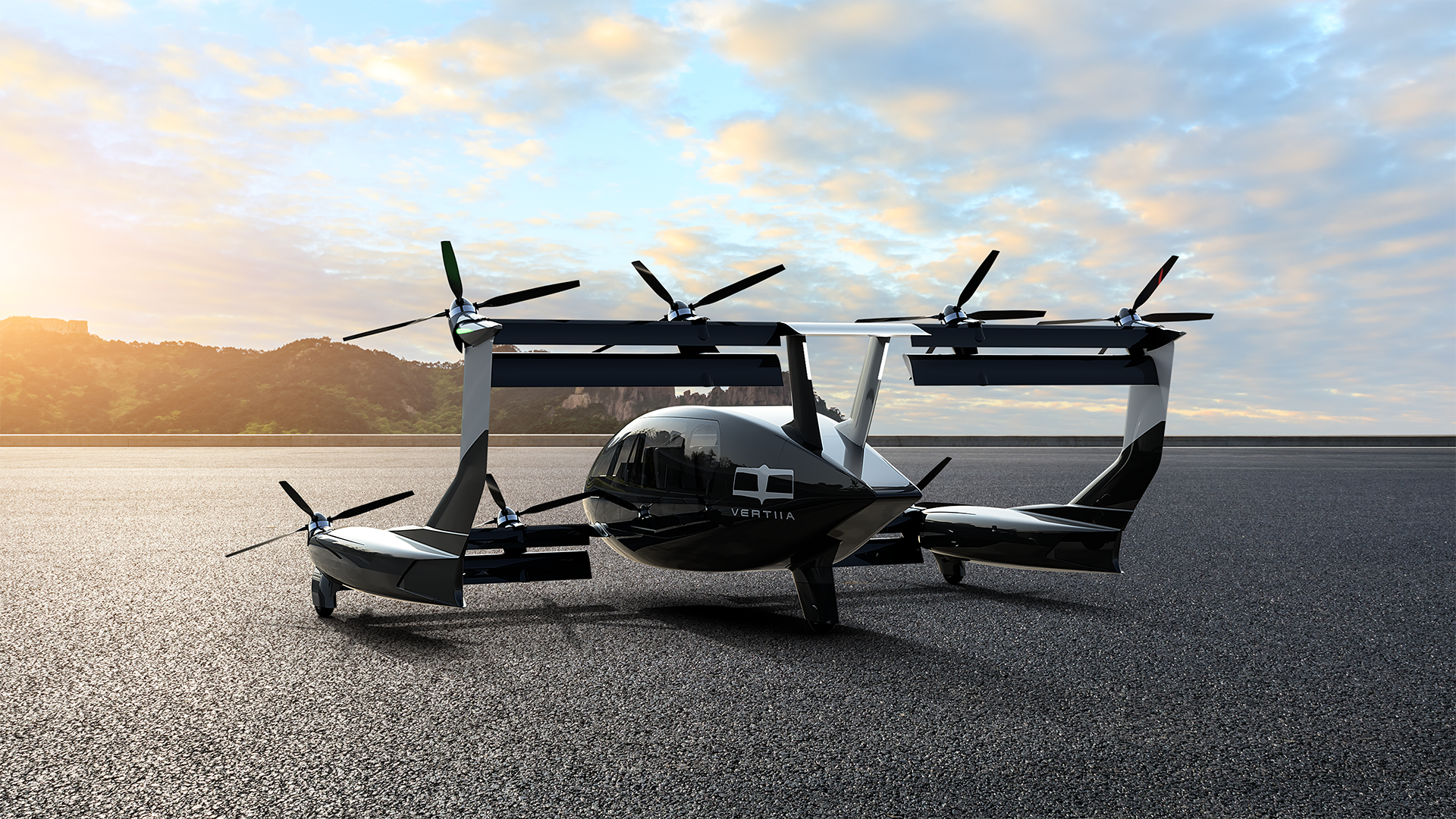
AMSL Aero uses many of these carbon fibre composites in unique areas. “There is a different design configuration that allows them to do things not viable for other design concepts,” explains Moore. Their use of the box wing design, initially invented in 1898 by Lawrence Hargrave, was tested thoroughly. “We went through significant configuration studies, looking at all these options to meet a long list of requirements. Ultimately, the box wing met most of those, so we chose it. That allows us to do things slightly differently from others and select unique manufacturing methods. Automating the manufacturing process would be a bit lower cost and more straightforward. And that’s one of the key parameters we’ve always considered. It’s great to build a high-performing VTOL aircraft, and some applications need it, but it needs to be on a pathway without a large amount of capital expenditure.”
The engineers at AMSL Aero propose a combination of conventional aerospace materials, such as carbon fibre composite, but using them in a slightly unconventional way. Some methods adopted along the way include infusion methods for certain parts. “We have used film winding for structural components and other more traditional aerospace manufacturing methods, like pre-impregnated composites under a vacuum,” Moore explained. “On a prototype, we used some aluminium alloy, selected for specific corrosion-resistance and stiffness reasons. But there are always opportunities to move to a higher spec, reduce weight, and achieve better performance in the next generation or on a production aircraft.”
Power to weight
The hybrid Vertiia aircraft has an electric motor with a battery, a hydrogen fuel cell, and a tank. These days, you can buy batteries that have an energy density of about 250watt/hours per kilo. “Some good ones are coming out of the power tool industry, and some of those have found their way into other applications,” Moore added. “The sorts of battery cells we use are quite different from what they use in automotive. They require higher power than some of those automated applications do.”
“With a hydrogen tank, you can achieve energy density in the order of 1000watt/hours per kilo because you’ve got the hydrogen fuel cell piece, and then you’ve got the hydrogen tank. If you want to go further, make the hydrogen tank slightly bigger.
“You need to be able to travel a certain distance and follow up for that equation to be beneficial. But the fact is that for almost every application that we spoke to customers about, they already wanted and needed that sort of range. And so, within six months of starting the company, we started exploring hydrogen as an option to increase the range of our aircraft. In recent years, you can store hydrogen as a liquid in a composite tank, achieving a weight efficiency unheard of with any other form of energy. Nothing comes close to that, and then it becomes how much of a system you need to convert that hydrogen into electricity.”
Electrified aviation using zero-emission, locally-made hydrogen has the opportunity to flip all that on its head completely, and we can see an operating cost that is better than airlines in an equivalent per kilogram of payload or per passenger metric. And that’s truly game-changing. The zero-emission solution will have an order of magnitude lower cost than the fossil fuel version.”
Vertiia will cruise at 300km/hour, and its range will be up to 1,000km on hydrogen power. AMSL Aero holds international patents for Vertiia, protecting its core technological features, including its unique wing tilting mechanism, box wing design and flight control system.
Vertiia is an eight-electric motor tilting wing aircraft that can operate from a helipad or similar size landing site. The craft can connect regional hubs, and due to the small number of seats, it can conduct on-demand (unscheduled) services to reduce excess capacity (empty seats).
Futures
AMSL Aero plans to revolutionise patient pickup in Australia. eVTOL aircraft have already attracted attention in the Philippines and New Zealand.
“There are enormous opportunities to improve the lives of people here in Australia and anywhere with transport infrastructure challenges,” described Moore. “Papua New Guinea, Indonesia, East Timor, Solomon Islands. Walking from Dili to a remote village could take days, but with a Vertiia, you could be there in an hour.”
This year, AMSL Aero received deposits for 26 Vertiia aircraft orders from civil customers, including 20 from Aviation Logistics. Aviation Logistics operates the Air Link, AirMed, and Chartair brands, which offer passenger services, aircraft charter, air freight, and aeromedical flights across Australia.
“There are so many broad opportunities to change the way we deliver healthcare,” Moore added. “Sometimes, an autonomous aircraft could fly to where a patient is. The aircraft may be joined by a medic or someone else, who would return with the patient. There could also be different models for air transport. So, it could change how transport happens across the nation. Now, we know there are a lot of regulations that make it easier to have a pilot on board when you have passengers on board. And so we’re building our aircraft from the outset to be certified for a pilot on board for those applications.”
Vertiia can also be remotely piloted, and there are many applications with no regulatory barriers to its operation. There’s work to be done, but there are no barriers to its use under specific applications. They could be remote area cargo, remote pilot firefighting, potentially remote crop dusting, surveillance, and search and rescue-like activities. Some of those situations can be serviced right now without any regulatory changes. You could even pre-position a remotely piloted aircraft to meet any location’s daily surge or seasonal demand.