



May 11, 2018
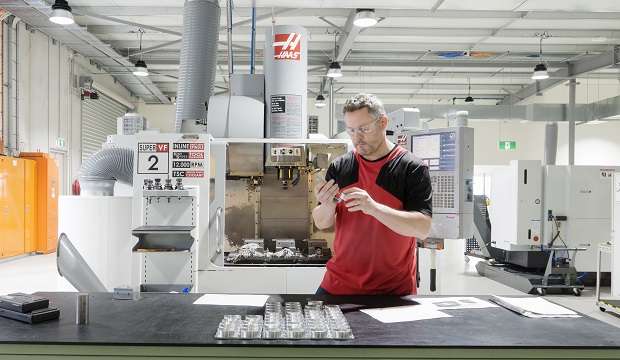
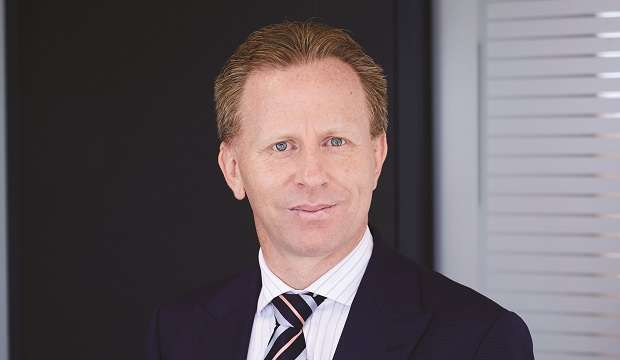
Ellex is a global leader in medical devices for the diagnosis and treatment of eye disease. It has about 10 core products across five areas: glaucoma; diabetic eye diseases; secondary cataracts; age-related macular degeneration; and vitreous opacities (commonly known as eye floaters). The company officially opened new headquarters in the northern Adelaide suburb of Mawson Lakes in December. The new 2.18-hectare facility allows Ellex’s machine shop, clean rooms and administration to be co-located for the first time. A major feature is the Controlled Environment Room (CER), a state-of-the-art, dust-free space where the lasers are built, eliminating contamination risk. Early indications have shown measurable reductions in costs and manufacturing time per unit, without any risk of compromising the quality and reliability of products. Ellex sells its laser and ultrasound systems in more than 100 countries and has offices in the US, France, Germany and Japan. Executive Director Dr Meera Verma said Ellex almost doubled the laser and ultrasound side of the business between 2013 and 2017 and was experiencing remarkable growth –…
May 11, 2018
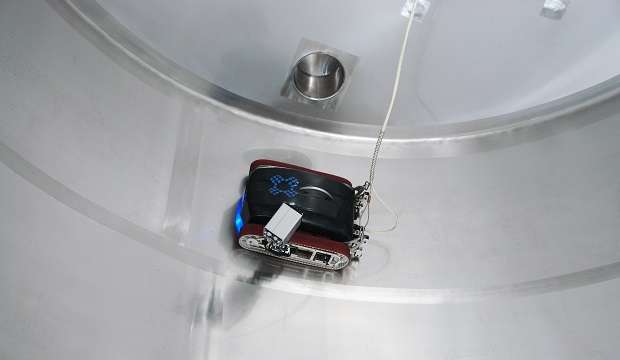
Invert Robotics’s patented climbing robots are installed with high-definition cameras and sensor technology that allow for equipment to be assessed for maintenance and preventative analysis on a remote basis. The robots enable precise and accurate remote inspection of surfaces, even those made from non-ferromagnetic materials such as stainless steel, carbonfibre, aluminium and glass. Inspectors are fed real-time video during the inspection, enabling immediate and highly accurate analysis. “Unlike other inspection methods using dyes, drones and optical or laser devices, Invert Robotics’s technology provides 360-degree diagnostics and does so in up to half the time of traditional inspections,” says Invert’s Managing Director Neil Fletcher. The robots are already being used by the major Australian and New Zealand dairy companies and co-operatives such as Fonterra, Synlait and Murray Goulburn, as well as a number of global brands throughout the food & beverage manufacturing industry in Europe and Asia, such as FrieslandCampina and Heineken. However, Invert’s technology…
May 11, 2018
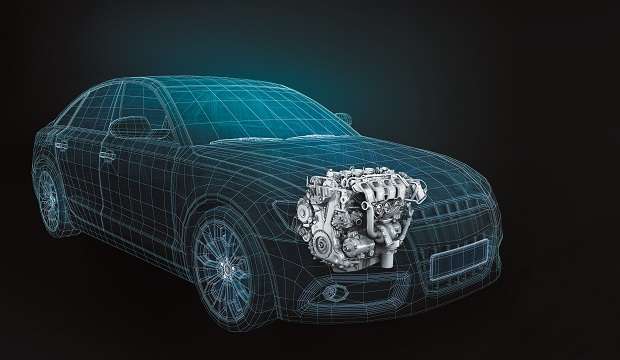
While the industry is developing electric vehicles and enjoying a global upsurge in demand for cars, it is also faced with the urgent need to refine combustion engines to reduce consumption. Lightweight yet high-performance drive systems are the order of the day. This presents the machining industry with a challenge, since some of the new materials used to achieve this are difficult to machine. Added to this is the increasing pressure to improve the efficiency of the production process. Rarely throughout its history has the automotive industry been under such intense pressure to implement change: within the next two decades, the combustion engine is set to give way to the electric drive. National governments and the EU administration in Brussels have started to introduce tax incentives to promote electric vehicles over vehicles with combustion engines. And that is just the beginning. Car manufacturers face penalties if they fail to comply with the political requirements for reducing CO2 emissions. At the same time, private transport is becoming ever more popular, and with this rise in popularity inevitably…
May 11, 2018
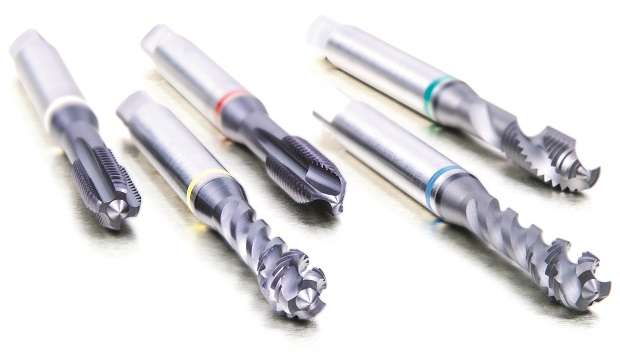
The global market for HSS cutting tools is expected to grow to more than $10bn by 2020. This is a significant amount, especially when the current global market for the entire cutting tools industry is valued at around $18.5bn. The increase is supported by a steady demand from key segments, such as automotive and construction, as well as heavy electrical and industrial equipment. Despite the growing competition from solid carbide, HSS continues to be popular with manufacturers due to its high wear resistance and excellent hardness and toughness properties. HSS cutting tools are best suited to mass production environments where tool life, versatility, productivity and tool cost are of the highest importance to an end-user. It therefore still has a major part to play in efficient and reliable machining of many components. Also, the current focus for a good-quality product that meets the customer application requirements at…
May 11, 2018
As issues abound with respect to escalating electricity prices and the Energy Security Board (ESB), and the Turnbull Government scrambles to unveil the National Energy Guarantee, more and more corporate acquirers of large-scale electricity are turning their minds to how best to procure cost-efficient, environmentally-friendly energy. Globally, a trend is beginning to emerge whereby large corporate manufacturing and retail businesses such as Ikea, Volkswagen, General Motors and Dow Chemical have undertaken to purchase their electricity directly from offsite renewable energy generators such as solar and wind farms. This ‘Direct Model’ of procurement is a departure from commonly recognised approaches, which involve a recognised retailer acting as middleman for the procurement. This international trend reveals the potential for a new Australian market to emerge with respect to offsite renewable energy procurement by corporate entities. Models for offsite renewable energy procurement The proliferation of new market structures supporting renewable energy procurement presents challenges of complexity to energy users looking for a better deal. The most commonly used model for large-scale procurement or…
May 4, 2018
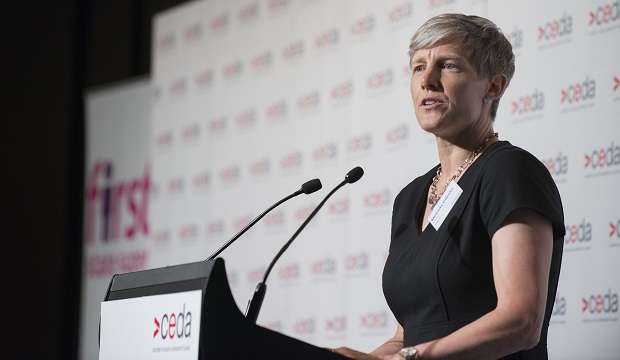
AMT: Tell us about CEDA and what its aims and objectives are as an organisation. Melinda Cilento: CEDA has been around for about 60 years now. We are a member-based organisation; we’re passionately committed to advancing good public policy debates in Australia with a view to driving better policy outcomes that support social and economic development in Australia. AMT: What areas of policy are you seeking to influence? MC: I’m relatively new to the role. For me, the priority this year is to actually take a bit of a step back from the agenda that we’ve had in recent years and reaffirm our purpose by exploring the whole concept of economic development. It’s a phrase we use in our title, but when you think about a country that’s now grown consistently for 27 years, and we are an advanced developed economy, I think it’s time to circle back to the concept of economic development and have a conversation about what that actually means, what we think…

May 4, 2018
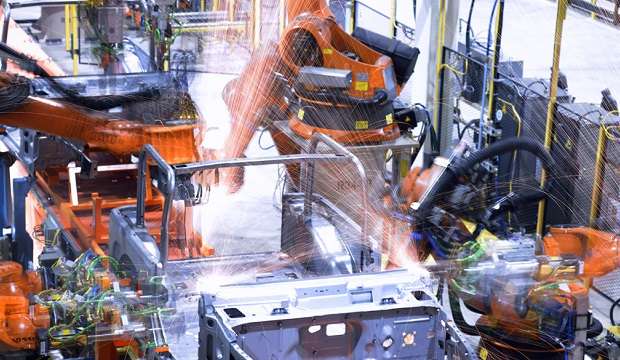
FUTUREMAP is a business diagnostic tool specifically developed for small-to-medium (SME) manfuacturers by the IMCRC in collaboration with the Advanced Manufacturing Growth Centre (AMGC) and the Federal Government’s Entrepreneurs’ Programme. Through either one-on-one structured discussions or interactive group workshops, FUTUREMAP enables participating manufacturers to map the current state of their business and identify where they can lift their awareness, competitiveness and build resilience against 13 key areas of industrial and advanced manufacturing competitiveness. The IMCRC will be facilitating the first FUTUREMAP interactive workshops at NMW, providing Australian SME manufacturers with an opportunity to identify areas of focus and potential investment to transform and future-proof their business in a rapidly digitalised world. David Chuter, CEO and Managing Director of the IMCRC, is confident that FUTUREMAP, as one of the first business diagnostic programs designed specifically for the Australian SME manufacturing sector, will become an engaging and valuable resource for the broader industry and potentially beyond. “The intent of FUTUREMAP is to…
May 4, 2018
April marked a 19th consecutive month of expanding or stable conditions for the Australian PMI – the longest run of continuous expansion since 2005. Readings above 50 indicate expansion in activity, with the distance from 50 indicating the strength of the increase . Six of the eight manufacturing sub-sectors expanded in April (according to trend data), with four sub-sectors reaching record highs in trend terms: machinery & equipment (up 1.0 point to 61.2); petroleum, coal & chemicals (up 0.4 points to 67.6); metal products (up 1.6 points to 63.8); and textiles, clothing & furniture (up 5.6 points to 57.1). Ai Group Chief Executive Innes Willox said: “The manufacturing sector extended its broad-based expansionary run in April. Growth was led by the machinery & equipment; metal products; coal, petroleum, chemical & rubber products; and non-metallic mineral product sub-sectors, all of which are enjoying strong demand from high levels of building and construction activity. The largest manufacturing sub-sector – food & beverages –…

May 4, 2018
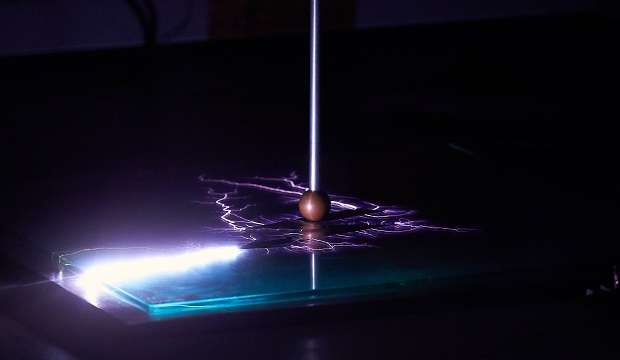
The Australian Manufacturing Technology Institute Limited (AMTIL) is the peak national body for the precision engineering and advanced manufacturing sector in Australia. Having a stand enables it to show its support for AMTIL members visiting or exhibiting at NMW, while also providing the opportunity to engage with Australian manufacturing businesses more generally and discuss the ways it can help them. For AMTIL members, ‘Happy Hour’ drinks will be held on the Wednesday and Thursday of the show (9 and 10 May) , from 4.00pm at the AMTIL stand. Any members at the show are invited to drop by the AMTIL stand for refreshments and a chat. AMTIL has a long-standing relationship with NMW, having co-located its own Austech exhibition with NMW for many years, and continuing to do so every second year in Melbourne. AMTIL’s participation in this…
May 4, 2018
Intensified networking and miniaturisation Digitalisation is changing the connection technology environment, as an increasing number of products and even individual components can and need to communicate. This means an increasing volume of data must be transmitted at increasingly fast speeds – something familiar in offices for years is now moving into the factories. Continuous increases in the performance of microchips are not only driving digitalisation but also – in conjunction with efforts to improve resource efficiency – are resulting in a move towards increasingly smaller and more compact products and devices. A smartphone now has the processing power of a 1990s supercomputer but at a fraction of the size, energy consumption and price. This is having a big impact on industrial connection technology. Robots and other machines are becoming more compact and demanding an increasing number of data connections. Special cable designs and technical tricks – such as insulation, for example – help to save…
May 4, 2018
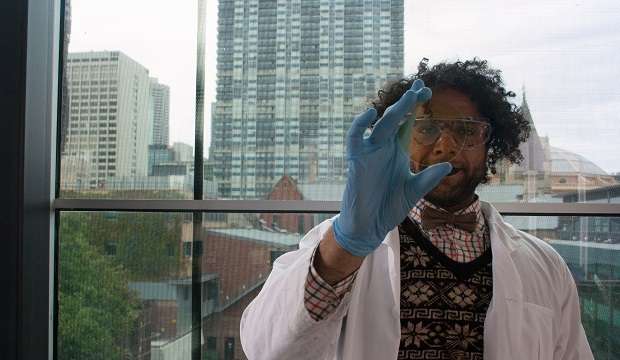
The self-modifying coating, a thousand times thinner than a human hair, works by automatically letting in more heat when it’s cold and blocking the sun’s rays when it’s hot. Smart windows have the ability to naturally regulate temperatures inside a building, leading to major environmental benefits and significant financial savings. The self-regulating coating is created using a material called vanadium dioxide. The coating is 50-150 nanometres in thickness. At 67 degrees Celsius, vanadium dioxide transforms from being an insulator into a metal, allowing the coating to turn into a versatile optoelectronic material controlled by, and sensitive to light. The coating stays transparent and clear to the human eye but goes opaque to infra-red solar radiation, which humans cannot see and is what causes sun-induced heating. Until now, it has been impossible to use vanadium dioxide on surfaces of various sizes because the placement of the coating requires the creation of specialised layers, or platforms. The RMIT researchers have developed a way to create and deposit the ultra-thin coating without the need for…