



May 15, 2019
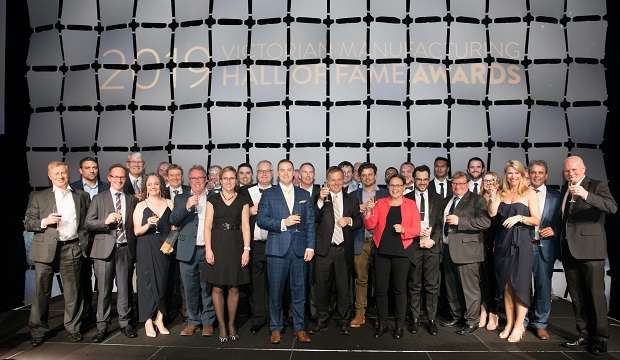
Minister for Jobs, Innovation and Trade Martin Pakula congratulated the winners and finalists for their work in continuing to take Victorian businesses to the next level. “The Victorian Manufacturing Hall of Fame Awards highlight the strength and competitiveness of Victoria’s manufacturing industry and I want to congratulate all our outstanding winners and finalists,” said Minister Pakula. “Our manufacturing industry is one of Victoria’s greatest strengths and successfully exports, invests and contributes to our thriving economy.” Inaugural awards were presented to Air Radiators, named the Leader in Innovative Product Development and Commercialisation, and to Holden Special Vehicles, who received the award for Leader in Global Supply Chain Partnerships. Robert Bosch Australia took out the Leader in Industry 4.0 award and Barker Trailers was awarded the 2019 Leader in Workforce Skills Development. For their excellence in leadership and innovation in the manufacturing industry, Rochelle Avinu from Leica Biosystems was awarded the Woman Manufacturer of the Year award, and Nicholas Orchowski…

April 4, 2019
Sometimes less is more. The temptation for a Government is to feel that they need to announce a whole series of new tax measures every year. But rarely is this the best way to develop a strong and efficient tax system. Thankfully the 2019/20 Federal Budget hasn’t gone down this path. Rather, the focus has been on targeting specific areas of tax avoidance, in particular through funding the ATO and other regulators. The Black Economy is a recognised issue and one that is being systematically addressed. The Federal Government’s continued support for addressing this issue would be welcomed by the vast majority of taxpayers who are doing the right thing. Funding of the ATO’s Tax Avoidance Taskforce is another effective way for the Government to ensure compliance with the tax system and raise tax revenue. The Taskforce targets the highest value and highest risk taxpayers in the system – multinationals, large corporate, large private groups, trusts and high-wealth individuals. The…
April 1, 2019
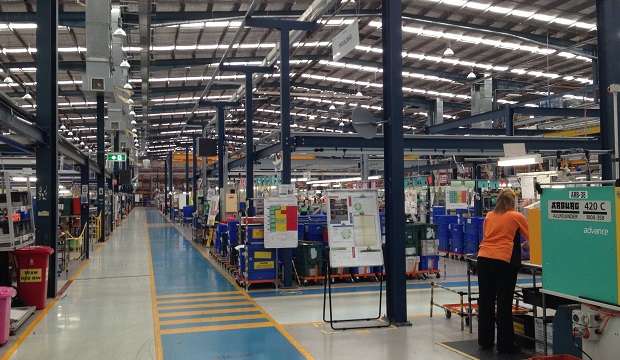
The Australian PMI has been stable or positive (readings above 50 points indicate expansion in activity, with the distance from 50 indicating the strength of the increase) since August 2016 (31 consecutive months), but its trend has suggested slowing growth rates since its recent peak in March 2018. Four of the seven activity indexes indicated expansion or stable conditions in March, with all indexes lower this month compared to February except for finished stocks (up 1.6 points to 46.1). Production (down 5.1 points to 52.8) and employment (down 1.1 points to 56.6) remained in positive territory, while the new orders index was stable (down 2.0 points to 50.0). There was a clear divergence among the six manufacturing sectors in March. Food & beverages (up 1.4 points to 59.0), chemicals (down 0.8 points to 51.3) and textiles, clothing, footwear, paper & printing (up 2.0 points to 57.7) expanded, while machinery & equipment (down 1.7 points to 46.1), metals…
March 14, 2019
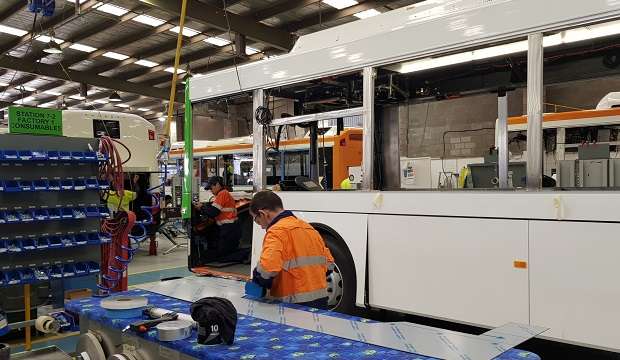
The launch of the Export Hub was announced at an event on 13 March at the headquarters of Volgren in Dandenong, south-east Melbourne. The event was attended by Minister for Industry, Science and Technology Karen Andrews, Dr Jens Goennemann, Managing Director of the Advanced Manufacturing Growth Centre (AMGC – a partner organisation in the Export Hub), and Paul Fowler, President of AMTIL. AMTIL will receive $1.5m from the Federal Government’s Small and Medium Enterprise Export Hubs Initiative to run the Export Hub. Export hubs are business networks that help SMEs harness opportunities in international markets, particularly where the Federal Government has signed free-trade agreements – including China, Japan, South Korea and Indonesia. Minister Andrews said the funding will boost the economy by helping more businesses to gain access to new and bigger markets, to increase sales, and create more Australian jobs. “The funding for this Hub is integral to helping Australian businesses grow and will ultimately…

November 8, 2018
Manufacturing is critical to the Queensland economy. It is the state’s sixth-largest employing industry with more than 170,000 people in the year to June 2018, and is the third-largest employer of full-time workers. Strategy is fundamental to the success and longevity of industry, which is why the Queensland Government has committed significant resources to ensuring manufacturing continues to be a key driver of the state’s economic and jobs growth. The Queensland Advanced Manufacturing 10-Year Roadmap and Action Plan, the State Government’s strategic vision for the sector, is supporting manufacturers as they transition to advanced manufacturing, increase productivity, improve international competitiveness and access emerging opportunities. Since the launch of the plan in December 2016, the State Government has provided advice and support to hundreds of Queensland manufacturing businesses, helping them make the transition to high-value, knowledge-based advanced manufacturing. Utilising industry expertise – The…
August 24, 2018
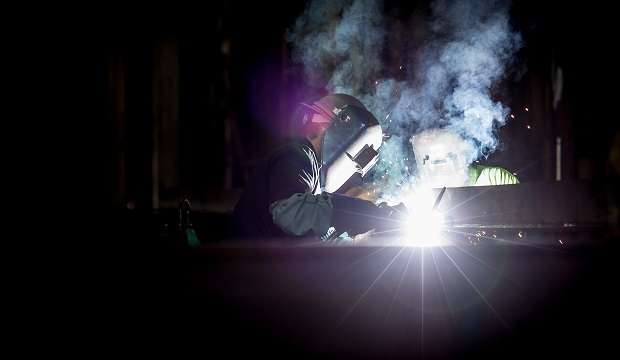
The first AWTC will be established at the Tasmanian Minerals and Energy Council (TMEC) Centre of Excellence in South Burnie. The newly refurbished centre will feature an advanced augmented reality lab equipped with five Soldamatic welding simulators, as well as advanced technical training to help upskill TasTAFE trainers. The training delivered at the AWCT will quickly qualify welders to the standard required by ISO 9606-1 Qualification testing of welders – Fusion welding. ISO 9606 is the only standard in the world that is accepted in both Europe and America. It is a simple test that assesses welding competency according to a specific weld procedure, based on a practical acceptance criteria. According to Geoff Crittenden, Chief Executive Officer of Weld Australia: “The combination of a curriculum based on global best practice delivered via advanced training technology will help ensure a strong supply of capable welders, both now and well into the future. “Without a doubt, the successful implementation of this innovative training initiative will revolutionise welder training…
August 9, 2018
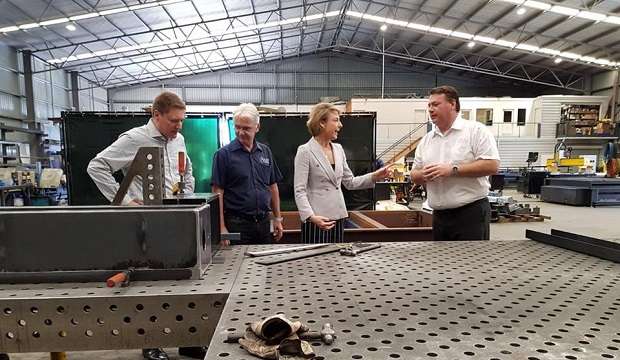
Based in Lytton, Queensland, ART has developed Metaltek XB1200, an advanced robotic structural steel processing system that has the potential to help Australian firms better compete with cheap imported fabricators through lower costs, quicker turnaround and superior accuracy. David White, Director of ART, said the grant funding would enable the company to transition from research & development (R&D) to a production product. “This grant will help us cover the costs of building and installing a prototype system here at our Brisbane facility,” White said. “It will also help us complete and transport a display model they we can use for real-world demonstrations in Australia and overseas. This will help us generate leads with companies that are crying out for this kind of product, because we’ll be able to actively demonstrate the efficiency of this system in an industry neutral environment.” To mark the awarding of the grant, ART was visited by Senator Michaelia Cash, Federal Minister for Jobs and Innovation, and Ross Vasta, the Federal Member for Bonner. Vasta…
May 18, 2018
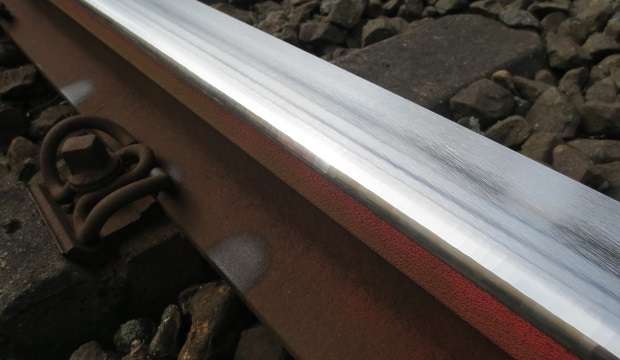
The focus of research & development (R&D) activities in the manufacturing sector is guided by many factors, including the global economic environment, domestic and international demand, regulations and standards, the nature of competitive global supply, the general level of confidence within the sector, and the subsequent capacity of domestic manufacturers to invest in research, innovation, capital equipment and human resources. To assist the rail industry to reduce barriers in undertaking R&D activities, the Rail Manufacturing CRC was formed. The Rail Manufacturing CRC is an industry-led Cooperative Research Centre supporting industry to develop new products, technologies and supply chain networks to increase Australian rail manufacturing’s competitiveness, capacity and productivity. The Centre is funded by the Commonwealth Government’s Department of Industry, Innovation and Science, and will operate until June 2020. Making connections in rail The Rail Manufacturing CRC connects Australian rail businesses with universities and research institutions that are leading the way in innovative rail research. Rail…
April 6, 2018
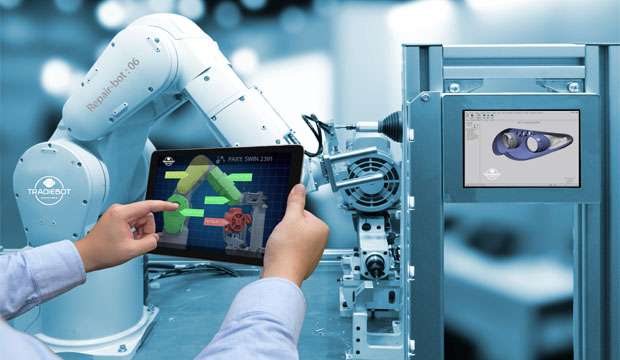
The collaborative project, ‘Repair Bot’, will employ robotics and 3D printing, along with complex materials, to enable an automated rapid repair service for plastic car parts. Inspiration for the project stemmed from the need for a technology-driven solution to overcome numerous issues facing the automotive repair industry. These issues range from material wastage, complex and restrictive design elements, the limited availability of skilled labour, and the long lead times and inventory holdings for replacement parts. Tradiebot Founder Mario Dimovski believes the project’s potential benefits go far beyond just the automotive collision industry. “The ability to repair previously non-repairable parts using world-first technology will reduce overall repair times and repair costs,” explains Dimovski. “It will also create real and significant export opportunities and has flow-on benefits for the environment by reducing land-fill. Tradiebot will also deliver new future skills to the industry as more processes become automated.” Research the key to unlocking…

April 4, 2018
The Facility for Intelligent Fabrication (FIF) combines the knowledge and resources of the UoW, TAFE NSW and the Welding Technology Institute of Australia (WTIA). FIF was formed in recognition of the changing business climate, as the Illawarra transitions from large-scale heavy manufacturing, and the need for local manufacturers to innovate and adapt to remain competitive. The facility draws on decades of research-based welding and automation expertise and welding training at both UOW and TAFE NSW, enabling local firms with their own history of fabrication expertise to access specialised knowledge and skills in automation. FIF will develop and implement solutions to industry challenges and provide demonstrations of technology and proof-of-concept, including prototype development. It will also support the adoption of new technology with technical education, training and certification support. Gareth Ward MP, Parliamentary Secretary for Education and the Illawarra and South Coast, launched the facility on behalf of John Barilaro, Deputy Premier, Minister for Regional New South Wales, Minister for Skills, and Minister…

March 23, 2018
AMT: Let’s start with Brand Tasmania. When was it established and what are its aims and objectives? Michael Grainger: The Brand Tasmania Council was formed in the early 1990s. It was established by a group of like-minded individuals who were exporting and promoting Tasmanian product all over the world. It became affiliated with the State Government not long after that and has grown over the years to represent Tasmania in many different aspects – for example, food & beverages, tourism, manufacturing, education and the arts are all pillars of our organisation. We share a fairly broad and equal range of promotion. AMT: What sort of activities does it engage in to achieve its objectives? MG: We engage really with the Tasmanian companies that are represented by Brand Tasmania to promote what they do, encourage and stimulate growth in the economy, create employment and just promote all things that are Tasmanian. We attend trade shows, we have our eFriends mailing list, a very big subscription for our Tasmanian…
March 17, 2018
One way to anticipate the future is to look to the past. British economist Angus Maddison has estimated that in the year 0, the population of Western Europe was 24.7m. A millennium later it was 25.4m, an increase of just 700,000. Total global population increased by only 37.3m in 1,000 years. Had we continued at this pace, in 2015 there would have been 312m people on Earth. Gross domestic product fared even worse. Between the year 0 and 1,000 - GDP per capita was stagnant or fell across all of Maddison’s seven global zones. Over the next 800 years, the pace quickened a little. World population quadrupled to crack the billion for the first time. By 1819, the Eastern European population of 91.2m generated some $60.9bn worth of stuff (1990 International $) or $665 per person. Then in 1820 everything changed, sort of. Fuelled by a potent mix of technology, ideas, appropriated resources, and a distressing number of…

March 16, 2018
Doxa has selected 12 business-minded young achievers from a diverse range of backgrounds for Cadetship. These individuals are motivated, talented, tenacious and have overcome enormous barriers in their pursuit to stay engaged in education. 44% of applicants this year are studying a STEM subject. This CSR-aligned social investment opportunity offers Program Partners a talented STEM undergraduate as part of their team; skilled volunteering opportunities for existing staff; and a chance to change the life of a high-achieving young Australian from a disadvantaged background. Doxa supports Cadetship Program Partners by providing a shortlist of talented applicants relevant to their sector; building a learning and development framework; providing mentoring; and recruitment support as well as on-boarding advice. “We have a diverse range of Cadets, all in great need,” says Doxa CEO, Steve Clifford. “51% live off a family income of below $30,000 per annum, 24% are refugees/newly arrived migrants, 18% come from rural/regional areas. These young people are experiencing significant disadvantage. They don’t have the social capital, financial support or professional networks that you and I…