




November 3, 2020
The findings come from a survey of an independent panel of 258 Australian business owners with employees whose businesses are still in operation, commissioned by online financial information platform Money.com.au. The results revealed that 2020 will likely be the worst year for businesses on record. While the majority of businesses suffered a decline in profits, 35% made the same profit as last year, and just 15% made more profit. This is despite the widescale cuts that directors made to their businesses. Among the 55% of business owners who made cuts to crucial expenses, 44% let go of employees and contractors, despite JobKeeper being made available to hold onto staff on payroll. A quarter (24%) made cuts to their own salaries, and 24% froze salaries and did not pay bonuses across their businesses. Nearly half (45%) made cuts to travel. Travel was drastically reduced at the start of the pandemic, as a result of government restrictions and…
November 3, 2020
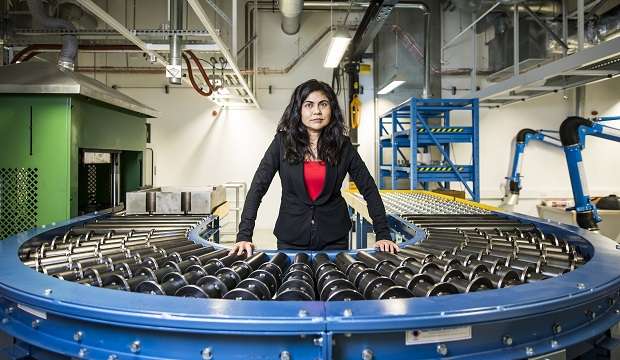
The novel ‘material microsurgery’ technique developed by Professor Veena Sahajwalla and her team at SMaRT can extract valuable materials and elements from complex waste items and reform them into strengthening layers for steel and other applications. The technique is the latest breakthrough by Sahajwalla’s team as they seek to develop new ways to address society’s growing waste and recycling challenges with innovations that can boost manufacturing capability, creating jobs and prosperity while enhancing environmental and social outcomes. The SMaRT Centre created the phrase ‘mircorecycling science’ to describe its novel approach to researching innovative approaches and technologies to reform various waste streams into value added materials and products. “Australia’s governments have agreed to ban the exporting of glass, plastic, paper and rubber tyres from January 2021,” Sahajwalla explains. “Therefore we need to start treating these waste items as the ‘renewable resources’ they really area. Ever-increasing population, technological advancement, variable consumption trends, and lack of efficiency in using materials are forcing us near a…

November 2, 2020
Australia's manufacturing industries grew solidly in October with production, employment, sales and exports all moving convincingly into growth territory. Once again, the large food & beverages sector led the way with strong contributions from machinery & equipment manufacturers and with support from firmer growth in the textiles, clothing, footwear, paper & printing group. The chemicals sector stabilised in October while the pace of contraction eased in both the metal products and building materials sectors. Respondents across all sectors noted a jump in sales and new orders as a result of pent up demand from the initial activity restrictions. The jump into expansion was driven by large improvements in New South Wales, which rose into expansion, and Victoria, which remained in contraction but improved from a deep contraction in September . “With the quantity of fiscal support easing in October and with the tax cuts only just starting to flow…
October 29, 2020
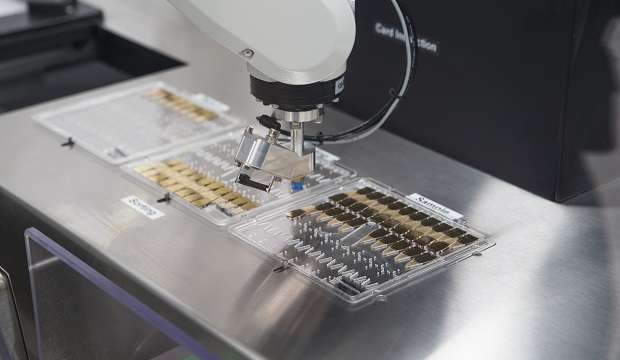
I have been involved in the robotics and industrial automation industry (on and off) for more than 30 years. Over the years I have seen a lot of projects make the transition from wild concept to productive and effective reality, and I have learnt a lot about what is behind both the successful and the difficult projects. That experience boils down to what I call “The Three Ps”: Product, Process and People. You must manage all three for success. It is easy to do simple automation that ‘should’ work most of the time, but life rarely travels down the middle of the road. Great and successful automation projects must take full account and manage all the things that can go wrong so they can keep going when the road gets a little rough at the edges. Achieving 99% is not good enough – that might mean a stop every five minutes. To get rock-solid automation you must take account of all the exceptions – all the things that might…

October 29, 2020
The decision to hold the AGM online had been in response to the COVID-19 pandemic, but it also allowed the participation of members from much further afield, with around 90 AMTIL members logging in from across Australia. While conducting the AGM through video conferencing marked a big change from previous years, proceedings went smoothly, with voting on AMTIL matters taking place through onscreen polls rather than the usual show of hands. Proceedings kicked off with a keynote address from guest speaker Mike Rolls. In September 2001, Mike contracted meningococcal septicaemia, one of the deadliest diseases on the planet. He lived to tell the tale, but the infection left him with horrific internal and external injuries, including the amputation of both his legs. However, Mike refused to be set back by the illness, and has used his experience as a springboard to personal and professional success. In telling his inspirational story, Mike…

October 29, 2020
Founded in 1994, Angel Trains is a leading rolling stock provider for the UK rail industry, financing and delivering high-quality trains to UK passenger service operators. Each year, it makes significant investment in innovative solutions to modernise train fleets. One of its biggest challenges is finding an alternative to the traditional supply chain for replacement parts, which struggles to cope with growing demands. Unlike the automotive industry, where vehicles are mass produced in millions each year, rail industry fleets are comparatively small, and in some cases more than 30 years old. This combination presents several challenges for train operators, especially regarding vehicle maintenance and part replacement. “In recent times, we’ve seen growing concern among operators that sourcing replacement parts for older train fleets at a reasonable cost and in a short timeframe is proving increasingly difficult,” explained James Brown, Data & Performance Engineer at Angel Trains. “The problem is that traditional manufacturing methods only make it cost-effective to produce high volumes of spare parts, even though an operator…
October 29, 2020
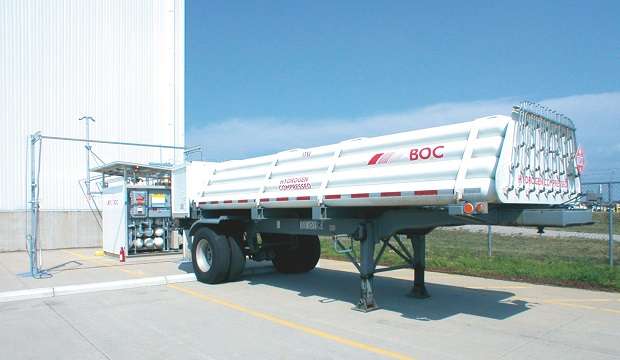
BOC will install a compressor to take the hydrogen produced using renewable electricity at HyP SA and transport it via tube trailers to industrial customers across South Australia and Western Australia. BOC’s Whyalla Argon Purification Unit (APU) will also use the HyP SA hydrogen as an energy source to make high-purity argon used in industrial processes and welding gases. By January 2021 this will completely replace the need to transport hydrogen from the BOC Altona facility in Victoria, saving 117,000km in annual driving and 122,000kg of carbon emissions per year. AGIG’s plant is Australia’s largest renewable gas project and will provide a 5% hydrogen blend with natural gas for supply to nearby homes and businesses via the existing gas network. Vesna Olles, Director, Strategy and Business Development, BOC said: “South Australia will now have a local supply of green hydrogen readily available for energy projects, storage, mobility and more. BOC is proud to be partnering with AGIG to support South Australian research groups and businesses which are developing…

October 29, 2020
Small and medium-sized businesses (SMEs) are at the heart of our economies, employing around 70% of labour markets and keeping profits within local communities. They are also suffering the most with COVID-19. Small manufacturers have been left behind by successive governments in favour of big businesses in the resources sector, and this may well be the final straw. Our research shows that successful companies are the product of resourceful entrepreneurs and favourable business conditions – their success depends on the local business environment. We’ve come up with three things that business owners can do, and twice as many that governments can do to boost firm performance and support recovery. What you can do: Knowledge, Network, Mindset A lot depends on what you know, who you know, and who you are. The more you know, the more places your business will go. Playing it by ear and blundering your way through means making costly mistakes that are easily avoided. Business schools, polytechnics, and start-up hubs all offer…

October 27, 2020
This year’s Ceremony commenced with an entrepreneurs panel discussing the role of the tech sector in rebuilding after COVID, after which the Minister for Industry, Science & Technology, Karen Andrews, delivered a keynote message. Highlighting the Federal Government’s recent commitment of an additional $460m to the CSIRO and $2bn in R&D incentives to support the tech sector, Andrews congratulated the finalists: “In so many ways our future rests in the creative hands, critical inventions and trailblazing thinking that defines all of the ATC finalists.” This year’s national Award winners were: Advanced Manufacturing Award – Contactile (NSW) Cyber Security Award – Castlepoint Systems (ACT) Disaster & Emergency Award – Helitak Fire Fighting Equipment (QLD) Energy Award – Village Energy (WA) Food & Agribusiness Award – Farmbot (NSW) Global Social Impact Award – 4ize (NSW) Medtech & Pharma Award – Electrogenics Laboratories (NSW) Mining Technologies Award – NextOre (NSW) Smart Cities Award – BindiMaps (NSW) Space Award – HEO Robotics (NSW) Alumni Achievement Award – AgriDigital (NSW) Australian…
October 27, 2020
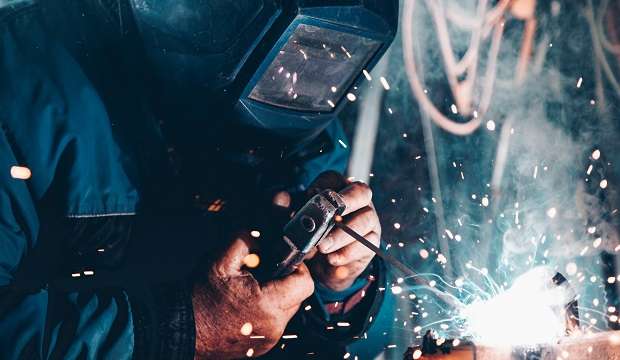
Welder training in Australia is outdated. The TAFE curriculum has remained relatively unchanged since 1998. TAFE has been required to teach courses such as fabrication, in which the welding modules are of varying degrees of complexity and are usually optional. This has not produced welders that are skilled or qualified to the levels needed by industry, especially within the defence sector. Young welding apprentices enter the workforce without the requisite skills or knowledge. Generally speaking, TAFE graduates cannot read a welding procedure, set up a welding machine, or weld according to Australian standards. Released in June 2019, the latest version of the Manufacturing and Engineering training package (MEM 2.0) differs very little from the previous versions (released in 1998 and 2005). In fact, many of the units and much of the content remains identical to the 1998 version. Not surprisingly then, MEM…

October 27, 2020
More than 1,700 directors were surveyed for the second DSI of 2020, which was compiled by Ipsos. Director sentiment remains in pessimistic territory in the second half of 2020 but it has climbed 22.4 points to minus 37.2, even with ongoing restrictions and the historic debt and deficit announced by the Treasurer earlier this month. AICD Managing Director and CEO Angus Armour said: “The challenges related to the pandemic will continue for some time so it is encouraging to see that despite continued pessimism directors are seeing an improved outlook in some areas. The Government’s welcome decision to extend key relief measures has no doubt played a part in easing anxiety. This includes the JobKeeper scheme, changes to continuous disclosure rules and allowing virtual AGMs. Directors have once again nominated climate change and energy policy as the policy priorities the Federal Government should address in both the short and long-term. “Earlier this year…
October 27, 2020
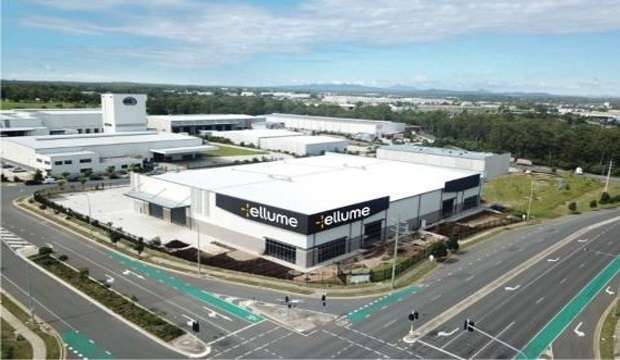
Brisbane-based Ellume has developed a suite of COVID-19 tests for use by laboratories, doctors and consumers that gives results in less than 15 minutes. The Ellume technology was developed to address the unprecedented global demand for rapid, accurate diagnostics. The first batch of product has already been shipped to the US, and Ellume’s new manufacturing facility in Richlands, Brisbane, is rapidly scaling up its production capacity. With extensive experience in precision assembly and production automation, BAMS will work closely with Ellume’s Engineering Team to build and install state-of-the-art automated assembly lines to increase production capacity. The assembly lines will include end of line functional testing to ensure reliable product quality. “We are delighted to bring the BAMS automation expertise to support Australian med-tech manufacturing for a global market – a real positive for local manufacturing, and a positive for the testing and medical diagnosis of COVID-19”, said Gavin Smith, President of Bosch Australia. Ellume CEO and founder Dr Sean Parsons said: “We’ve spent the last decade perfecting our…

October 27, 2020
Before you take a business-as-usual approach to managing an underperforming member of your team, consider this: what expectations can you, as an employer, reasonably have of a worker who is working from home with children underfoot, or being checked for a permit en route to work, or simply struggling with the mental load that has been dished up by 2020? When an employer manages a worker’s performance, it needs to be reasonable both in terms of the expectations that are being set, and the process that is followed. This is because ultimately, the risk is that you have to dismiss an underperforming employee. At that point, if the worker files an unfair dismissal claim, your entire process will be under scrutiny. A Fair Work Commissioner will assess whether you had set and communicated clear and reasonable expectations, whether the worker was warned…