



February 21, 2019
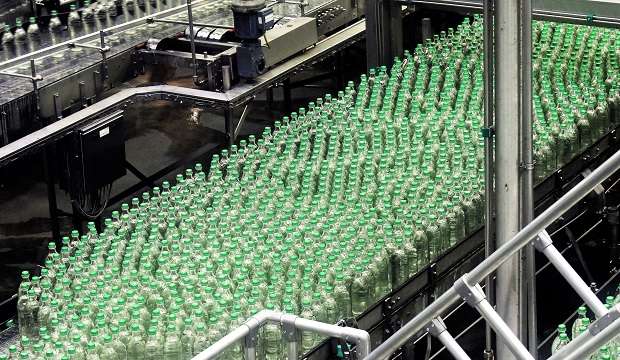
Although it’s true that larger companies possess more resources, with the right technology, small companies can behave like large ones – while still retaining the agility that makes them perfectly suited to the digital era. Here’s a closer look at four reasons why small-to-midsized enterprises (SMEs) are ideally poised to win big in the 21st Century, and how technology can provide the capabilities needed to do so. Innovation and investment This is the era of innovation—and not just in product design, but also in operational technologies. The Internet of Things (IoT) is driving much of this innovation. Sensor-generated data are paving the way for new offerings that are born from collected and analysed data points. Innovation is also taking the form of new business models, partnerships and co-manufacturing. SMEs are well suited for this type of out-of-the-box thinking. Crowd-sourcing and venture capitalists are helping start-ups execute the next great idea. Technology also plays a part as e-commerce, supply chain visibility, and predictive analytics all…

February 14, 2019
On 10 December, two F-35A Joint Strike Fighters (JSF) landed at RAAF Base Williamtown in New South Wales (NSW), the first deliveries in what will eventually see at least 72 F-35 aircraft based in Australia. Built by Lockheed Martin in the US, with support from subcontractors from all over the world, the JSF is the largest acquisition in the history of the Royal Australian Air Force (RAAF), and the arrival of the first two planes represented a landmark not just for defence and aerospace in this country, but also for Australian manufacturing. “Australian industry is manufacturing parts that will be fitted to every F-35 in production globally, and more than 50 Australian companies have directly shared in $1.2bn in production contracts to date,” said Steven Ciobo, the Federal Minister for Defence Industry. “Up to 1,500 contractors have worked on the construction of the facilities to accommodate the F-35A at RAAF Base Williamtown, representing approximately $1bn of investment in the Hunter region alone.” In the same week that the two…
February 14, 2019
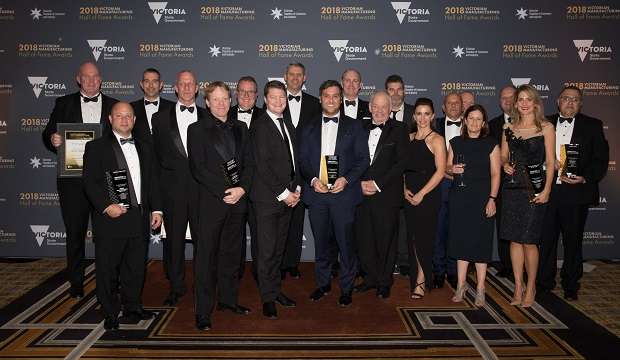
State Minister for Jobs, Innovation and Trade Martin Pakula has opened nominations for the awards, which will highlight the importance and strength of the local industry and the bright future of manufacturing in Victoria. The theme of this year’s awards is ‘Industrial Evolution’, recognising individuals and businesses that have demonstrated exceptional leadership and innovation. This year the company award categories include small, medium and large business Manufacturer of the Year awards, as well as Leader in Industry 4.0 and Leader in Workforce Skills Development. There are also two new categories: ‘Leader in Innovative Product Development and Commercialisation’; and ‘Leader in Global Supply Chain Partnerships’. A business will also be inducted to the prestigious Victorian Manufacturing Hall of Fame. Individuals will be recognised with awards including the Honour Roll, Young Manufacturer of the Year, and Woman Manufacturer of the Year. Victoria’s manufacturing industry contributes over $30bn to the Victorian economy, employing more than 279,000 people. “Victoria’s manufacturing sector is going from strength to strength, and we’re proud to be backing the industry and celebrating…
February 14, 2019
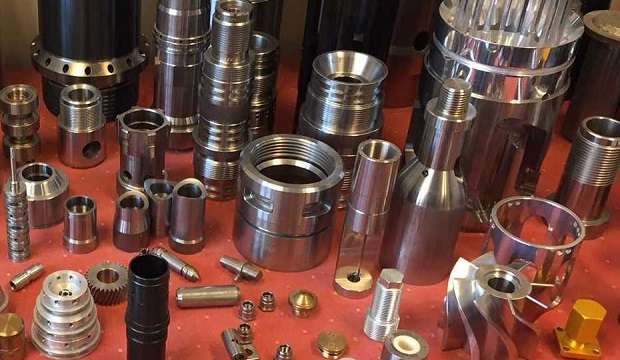
Manufacturing processes have evolved from craft-made single-item methods to mass production lines and output of increasingly greater numbers of identical parts: a high-volume/low product mix (HVLM) scenario. Most recently, digital technology in programming, machine tool controls and workpiece handling systems are facilitating a manufacturing environment known as Industry 4.0 that enables cost-efficient manufacture of highly diverse parts in small batches: high-mix/low-volume (HMLV) production.In the era of Industry 4.0 it is fashionable to highlight the newest production techniques and digitalisation technologies. However, maximum productivity and cost-efficiency still are based on a foundation of operational excellence. In the present economic environment, manufacturers generally consider speed to be a key indicator of operational excellence. A drawing comes into a facility and eventually a completed workpiece leaves the plant; manufacturers want the time between the two events to be as short…
February 14, 2019
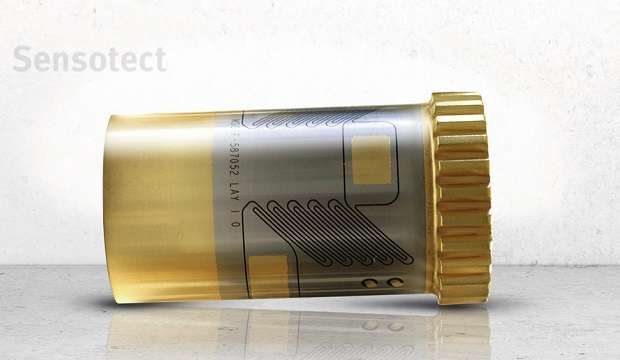
In all industrial machinery, components add value to the system, and the lifecycle of the system creates an entire value. Digital technologies typically play an important role in analysing data from components and sending this back to the cloud, to what we call a ‘digital twin’. This data can be used to optimise maintenance schedules or improve the performance of the system by changing the way that it is used. Sensors are one of the main methods of data collection, and are commonly placed on parts such as bearings, shafts, axles, bending beams and other moving parts. But they can’t always measure component parts, because of limited space or a lack of availability. To solve this accessibility problem, and revolutionise the way we think about sensors, Schaeffler has developed new technology that allows the industrial or automotive component to be the sensor. Schaeffler’s Sensotect coating system is a directly coated sensor layer that can sit over the…

February 14, 2019
The Exclusive License Agreement with CSIRO grants Titomic exclusive global rights to two patents for the production of pipe, as well as continuous pipe manufactured using titanium and titanium alloys. This will open significant revenue opportunities for Titomic across a number of major industries, in particular the oil & gas, defence, marine and mining sectors. Under the agreement, Titomic will also receive more than eight years of exclusive innovative additive manufacturing techniques, background IP, and know-how for the production of pipe and pipe components including, but not limited to, valves and fitting components. This technology results from the 2010 Victorian Government-initiated Victorian Direct Manufacturing Centre (VDMC) program, which received contributions of approximately $10M, from industry and research providers to help revitalise the manufacturing sector and deliver economic and environmental benefits to Victoria. Pipe can now be 3D-printed using Titomic Kinetic Fusion (TKF) systems, without the size and profile constraints of traditional pipe manufacturing techniques. TKF-produced metal pipe has superior wear and corrosion resistant properties in comparison to traditional wrought metal pipe. By utilising…

February 7, 2019
Austech is Australia’s premier advanced manufacturing and machine tool exhibition, showcasing the very latest in state-of-the-art manufacturing technology. The opening of registrations marks a significant milestone in the build-up to this year’s exhibition, which is set to be the biggest in the event’s history. Preparations for Austech 2019 have been marked by unprecedented levels of early interest. Floor space for the exhibition has been booked significantly faster than it was for Austech 2017, which went on to become one of the most successful shows to date. For this year’s event more than 5,600 square metres of space have already been sold. To accommodate such strong demand, AMTIL took the decision late last year to expand its booking with the MCEC, making this year’s Austech the largest in terms of floor space to date. However, despite the addition of further bays within the exhibition hall, demand has remained very strong, with most of the exhibition area now fully booked. Notably, early floor space sales have been dominated by a comparatively small number of…
February 7, 2019
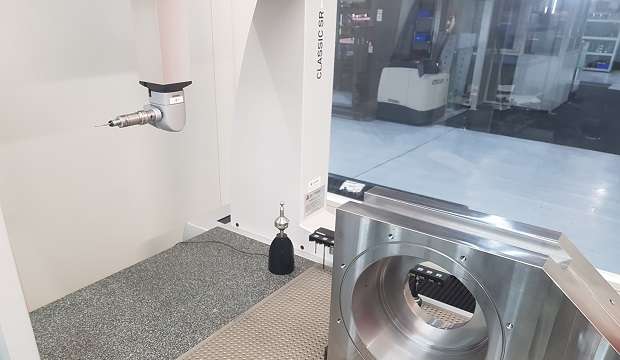
Competing in an increasingly competitive international marketplace, Nupress focuses on working smarter not harder. Its innovative manufacturing approach positions it well for the manufacture of unique, complex parts, while also being able to excel in high-quantity batch manufacturing. This commitment to innovation and quality led to Nupress’ Managing Director Murray Claire and its CEO Craig McWilliam embarking on an analysis of suitable co-ordinate measuring machine (CMM) technologies to complement and enhance their other leading edge technologies. Among other parameters, the key criteria established by Claire and McWilliam were threefold : The system should enhance the company’s process control capabilities and had to include continuous analogue scanning. The selected unit should be suitable for use in both a production and a quality assurance role. To get the best out of any system that Nupress chose, extensive ongoing local support would be critical. After evaluating three potential suppliers, Nupress decided on a Hexagon Global Classic SR 09.12.08 CMM with PC-DMIS software and analogue scanning. The Global Classic is…
February 7, 2019
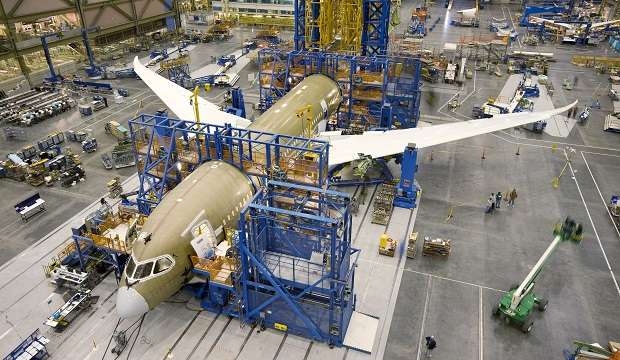
Australia has a proven history of aerospace manufacturing and continues to provide world-class products to both the local and the global aerospace sector, based on an understanding of unique considerations such as the need for particular expertise, and dedicated resources. According to the Aerospace Manufacturing Services Report published by the Australian Trade Commission, the aerospace industry has to deal in specialty alloys and materials for their products, and also has multiple regulations and certifications to consider during the overall manufacturing process and in meeting the all-important deadline. In order to accomplish this, certain matters must be taken into consideration. Time and quality management are crucial and can be the key differentiators. It is then critical that the right enterprise resource planning (ERP) system is in place. This will help to ensure a…
February 7, 2019
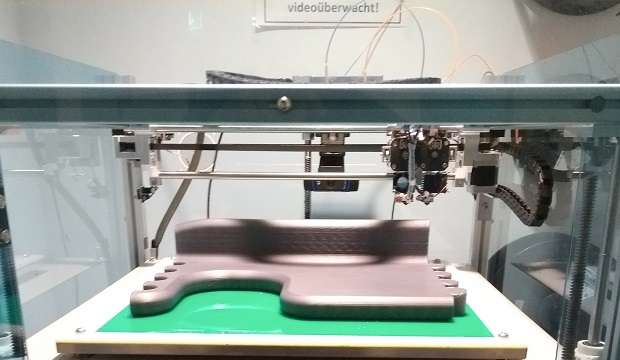
Frank Singer, Head of Department Vehicle System Installation at Airbus Helicopters in Germany explains: “It happens again and again that a crew member of a helicopter stands outside on the runners during the flight due to operational reasons under certain circumstances, such as during operation of the rescue winch. The relatively small footprint on the runners could be optimised by using a step.” Firstly, the nearly 3m-long model is subdivided into individual printable parts. Afterwards, individual plug-in connections are constructed, in a design reminiscent of a jigsaw puzzle. “In the past, we have had to divide larger prototypes into separate parts because of the print bed size,” says Frank Singer. “These were often glued together. However, this was always associated with further processing steps, which we can now save – if the application allows it. The quickly printed parts require no further processing steps or curing…

February 7, 2019
In the study, 90% of respondents indicated that they would be more likely to purchase food products that were made in Australia, 76% more likely for clothes, 73% for wine, 62% for sporting goods, 62% for electrical goods and 52% for motor vehicles. Ben Lazzaro, Chief Executive of the Australian Made Campaign said: “Roy Morgan’s research highlights the importance that Australian’s place on ‘buying local’. There is an increasing demand for authentic Aussie products produced in our clean, green environment and manufactured to our high standards. Awareness around country of origin labelling has increased in recent years, with more Australians wanting to know where their products come from. The Australian Made logo is the most important tool for consumers in identifying authentic Aussie products.” Michele Levine, CEO of Roy Morgan, explained that the data shows that Aussie-made products are favoured by consumers: “90% of Australians are more likely to buy a product that is ‘made in Australia’, up from a very…
February 1, 2019
The return to expansion follows a flat result in December 2018 that ended 26 months of continuous expansion (readings above 50 points indicate expansion in activity, with the distance from 50 indicating the strength of the increase). January 2019 saw mild improvements in sales, new orders, exports and production compared with December for many manufacturers. Conditions remain more favourable for food & beverages manufacturers than those in other sectors, with exports and new orders looking especially promising. Six of the seven activity indexes in the Australian PMI indicated expansion in January (see table below), but they have been trending down on average since Q3 2018. New orders improved by 2.0 points to 52.3 while the production index recovered from December’s mild contraction (up 4.9 points to 54.0). Supplier deliveries rose 6.2 points to 55.6, but finished stocks (inventories) were depleted in order to meet new year demand (down 7.8 points to 47.7). “2019 is clearly bringing a new set of challenges to Australian manufacturing,” said…

January 31, 2019
I wanted to start off with that because 2019 is going to be a big year for us here at AMTIL. Most importantly, it will be the 20th anniversary of the establishment of our Association. It seems hard to believe it’s been two decades since AMTIL was formed with the merger of the Institute of Machine Tools Australia and the Australian Machine Tool Association. The time has flown by, but the enthusiasm of the team here hasn’t faded, and we’re looking forward to many more years supporting the interests of manufacturers and manufacturing technology suppliers in Australia. We hope to be holding a number of events to celebrate AMTIL’s 20th birthday, but the biggest of all will – of course – be Austech, which will take place at Melbourne Convention and Exhibition Centre (MCEC) from 14-17 May. As Australia’s premier showcase for advanced manufacturing technology, Austech has been a core part of our activities for almost as long as AMTIL itself has been in existence. The show has…