



October 11, 2018
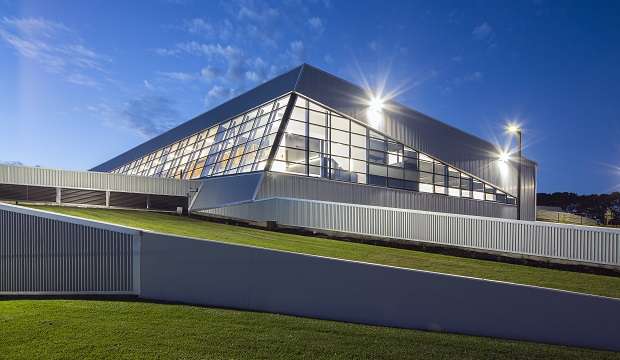
ManuFutures was built by Vaughan Constructions under a Design and Construct contract. Vaughan has been operational for more than six decades and is one of the most reputable and trusted builders nationwide. The company’s portfolio includes some of the largest and most complex structures in the Southern Hemisphere. Recently, Vaughan completed work on Australia’s largest water-based coatings manufacturing facility for Dulux, in Merrifield, north of Melbourne. The project presented significant delivery challenges for Vaughan, requiring adherence to a tight project programme and subcontractor co-ordination processes while working on a 325-hectare campus with a population of around 7,312 students. However, strict staging and meticulous project management ensured that the project was constructed without disruption to its surroundings and delivered to the highest standard for which Deakin University is known. ManuFutures is unique…

October 11, 2018
The Foundation is the charitable arm of the Vernier Society and was established with the aim of encouraging young people into careers in engineering and manufacturing. At the Forum, the audience, largely comprising young people from Year 7 to Year 11 along with Vernier Society members, enjoyed presentations by four speakers, each offering perspectives on the challenges and opportunities created by the future paradigms of work. The first speaker was Shona McPherson from the Foundation of Young Australians (FYA), a non-profit organisation with the express aim of “backing the next generation of young people who are going to rethink the world and create a better future”. McPherson began by asking “What do you want to be when you grow up?” She also expanded on the changing nature of work, explained that the FYA’s latest research showed that future workers will change jobs and careers much more frequently than past generations and will therefore need to relearn new capabilities.…
October 11, 2018
Australia’s life-sciences sector is booming, with investment in the industry at an all-time high. Business and employment growth are highly positive and Australia is recognised globally for its innovation, quality and expertise in life-sciences. This was revealed in the eighth annual Biotechnology Industry Survey, released this July. AusBiotech, supported by Grant Thornton, conducts this valuable industry survey every year. The research responses this year show that the biotech sector is thriving, with 87% of businesses surveyed expecting to grow in 2018. A massive $1.073bn was raised by Australian biotech companies last year to 31 December 2017, the second-largest amount this decade. Australia is regarded as one of the world’s leading countries for life-sciences innovation, quality and expertise. Investment and interest in life-sciences is growing, with around 140 ASX-listed life-sciences businesses, holding a market capitalisation of more than $50bn. The life-sciences sector employs 232,200 people across 1,654 organisations, or 1.86% of the nation’s labour force, with the industry employing 69,000 people in 850 companies. These figures compare favourably with the mining sector, which accounts for…
October 11, 2018
I don’t need to convince you of the game-changing benefits of the additive manufacturing (AM), do I? If I do, then you need to sign up to the AM Hub so you can see for yourself the great work that is being done right here in Australia. So what will this AM Hub funding go towards? Firstly, the AM Hub will have a dedicated person, working exclusively on the AM Hub; this will give the program some much needed energy and effort. Second, the AM Hub will have its own website, much like the AMTIL website, but focused on additive manufacturing (and not purple, but orange!). With a comprehensive capability directory, the latest news and events, case studies and information. The new website will be the first port of call for anyone seeking information about additive manufacturing technology. Lastly, the AM Hub will also deliver the ‘Build It Better’ grant, a…
October 4, 2018
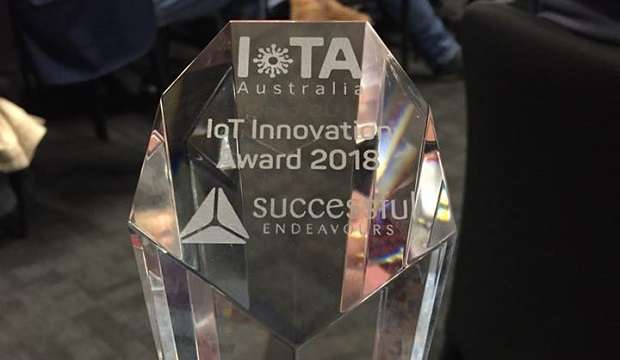
Supported by IoTAA (IoT Alliance Australia), IoT Impact was a two-day learning event held on 10-11 September at the University of Technology Sydney (UTS)’s Faculty of Engineering & Technology. IoTAA is the peak industry body representing IoT in Australia, with more than 420 participating organisations and 800 individual participants working to accelerate the adoption of IoT across the Australian economy and society. The IOT Awards were held at UTS’s brand new Tech Lab, in an event that coincided with the official opening of the facility. There were three IoT Impact Awards, presented for Enablement in IoT, Industry in IoT, and Innovation in IoT. Successful Endeavours won the Innovation in IoT Award for its work on the IND Technology EVFD system, which detects faults and problems in SWER electrical distribution systems to help prevent bushfires. Based in Berwick, Victoria, Successful Endeavours designs electronics products that are intended to be profitably made in Australia. Examples of its IoT technology include water & waste management, metering and monitoring, smart cities sensor suites, air-quality monitoring, fault detection,…
October 4, 2018
AMTIL regularly sends a delegation to the major overseas exhibitions and this year it was IMTS in the USA. AMTIL had a booth within the International Associations area of the show, alongside manufacturing assocations from countries all over the world. As well as enabling us to provide information and advice about manufacturing in Australia to anyone who came by the stand, it offered the opportunity to network and interact with those other associations, sharing insights about the state of the industry and exploring opportunities to collaborate. Moreover, having a fixed presence on the exhibition floor meant we were able to support any Australians who were visiting the show, offering a port of call where they could drop by for a chat and a coffee – our team were pleased to bump into a fair few familiar faces from back home during the week of the show. Australian companies were also making their presence felt in the exhibition, with the ANCA Group, Techni…

October 4, 2018
The Australian Advanced Manufacturing Council defines advanced manufacturing as a family of activities that either: depend on the use and coordination of information, automation, computation, software, sensing, and networking; and/or make use of cutting edge materials and emerging capabilities enabled by the physical and biological sciences, for example nanotechnology, chemistry, and biology. This involves both new ways to manufacture existing products, and especially the manufacture of new products emerging from new advanced technologies. Manufacturing in Australia accounts for almost a significant proportion of jobs across the country, with approximately 253,000 people employed in the industry. Embracing advanced manufacturing technology is crucial for the ongoing profitability of the industry, and the strength and diversity of the economy. Headland’s new Advanced Manufacturing Division boasts an extensive portfolio of product lines including Trumpf metal 3D printers and laser welders, VisiConsult Inspection/CT/X-ray scanners, and Voxeljet investment casting and industrial 3D printing (sand and plastic), and Mimaki colour 3D printers. Annaliese Kloé, Managing Director of Headland, says: “We’re thrilled to have partnered with such…
October 4, 2018
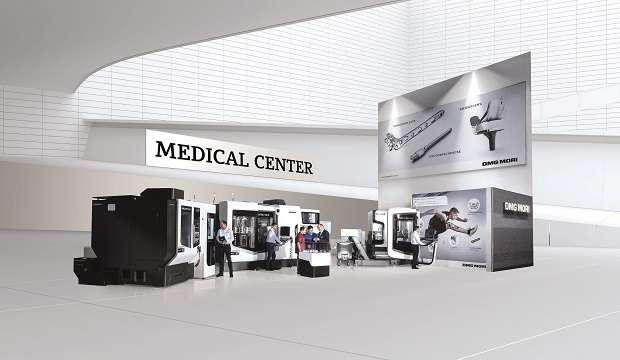
Advances in the orthopaedic field in particular are enormous; hip and knee prostheses and spinal implants are in demand like never before. Around 180 different types of product are being used in the human body nowadays. Interest in diagnostics and surgical instruments is also growing. Amid this growth, economic production of medical technology products is a key issue. As the leader of technology in machining and as a partner for virtually all notable manufacturers in the industry, DMG MORI plays a key role in enabling implants and instruments to be machined efficiently and above all to meet the high demands on quality. This comprises the entire material mix from high-strength plastic, stainless steel and titanium. to cobalt-chrome and now degradable magnesium alloys. CNC solutions for six-sided turn-mill machining, five-axis simultaneous milling, ultrasonic technology and high-speed cutting are all included in the portfolio, as well as additive manufacturing with powder bed technology, and digital solutions for future-oriented processes in medical technology. Continuous growth in the market for medical technology…
October 1, 2018
The Australian PMI has indicated positive conditions (results above 50 points) for 24 consecutive months – the longest run of recovery or expansion since 2005 (readings above 50 indicate expansion in activity, with the distance from 50 indicating the strength of the increase). Five of the eight manufacturing sub-sectors expanded in September (according to trend data), with expansions strongest in food & beverages, non-metallic minerals, and wood & paper products. Recovery in the petroleum, coal & chemicals sub-sector has been slowing in recent months and was broadly stable at 50.5 in September, with many respondents reporting that rising oil prices were putting upward pressure on input costs. “The run of strong performance by Australia's manufacturing sector hit a new milestone in September capping two years of growth,” said Ai Group CEO Innes Willox. “The food & beverages sub-sector has been the cornerstone of this run and has been solidly supported by the construction-related non-metallic mineral product…

September 25, 2018
As a listed entity within the Commonwealth Government portfolio of the Treasury, the Royal Australian Mint is the sole supplier of Australia’s circulating coinage. Since its establishment, the Mint has produced more than fifteen billion circulating coins and now has the capacity to produce two million circulating coins per day. The demand for uncirculated coins has led to the expansion of the Mint’s manufacturing capability of high-quality and innovative collector coins. In addition to producing Australia’s coinage, the Mint produces coins for other countries – along with medals, medallions, tokens, and seals for private clients both national and international. The Royal Australian Mint is also a tourist attraction. It educates students and visitors on the history of Australian coinage, and it explains how technology is being used in its modern manufacturing environment. Shifting focus In 2010, the Royal Australian Mint had implemented a manufacturing resource planning solution to facilitate the production of circulating coins and…
September 25, 2018
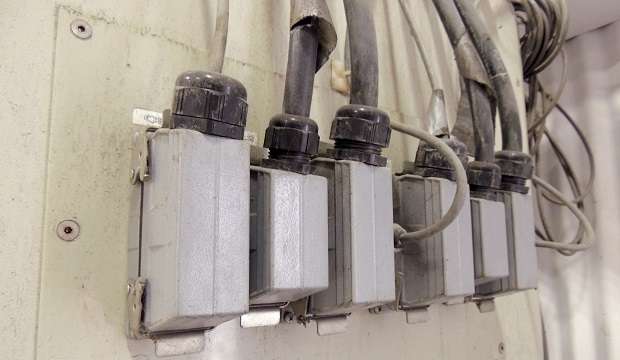
If you design or build industrial machines, you probably know all about hardwiring. It remains the most common way to bring power and signal to the machine because it offers perceived savings in installation costs. But the cost savings are really a mirage once you factor in the full range of wiring costs. These obviously include time and materials: the cost of the wire, cable, accessories and labour. Less obvious is the fact that you’ll also incur hidden installation costs with their own labour and time-to-market considerations. For example, many machines have to be disassembled for shipping and reassembled for start-up, so you’ll have to hardwire parts of the machine at least twice. Then there’s the cost of errors. Field wiring errors are common, especially when local electricians, unfamiliar with the machine, handle the wiring. At best, these errors can delay machine commissioning. At worst, they can damage the machine. Finally, add in the cost of testing, which can be complex and expensive in hardwired systems. Keep in mind the hidden costs will grow…
September 25, 2018
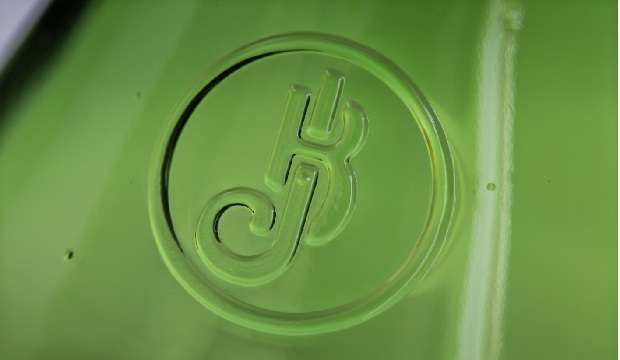
Before making the investment to overhaul its glass bottle tooling systems, the maker of James Boag’s Premium Lager needed to know an update to its bottle would not be change for change’s sake. It needed to be sure the new bottle would look good and be well received by customers. Ideally, this confidence would come before spending major time and capital on the project. As the supplier of Boag’s bottles, Orora had skin in the game to validate the design quickly and accurately. Orora’s Innovation & Design team put wheels into motion by contacting 3D Systems On Demand Manufacturing, a long-time partner, to develop a state-of-the-art 3D printed prototype. Keeping Boag’s existing supply chain processes top of mind, a new-look bottle was designed to comply with the manufacturing infrastructure already in place to help avoid expensive and time-consuming changes. To get Boag’s buy-in on the new design, a credible appearance model was needed for evaluation. To be convincing, the 3D printed models needed to have the same clarity and hue as glass…

September 25, 2018
More than just a flashy catch-phrase, Industry 4.0 is a merging of trends and technologies that promise to reshape the way things are made. Its goal: make manufacturing faster, more efficient and more customer-centric and detect new business opportunities and models. The biggest challenge to embracing it: knowing where to start. According to a recent study by Deloitte, while Australian executives are optimistic about the potential of Industry 4.0, few (2%, compared to 14% globally) are confident they’re ready to lead its implementation. So, where’s a manufacturer to begin? Just as the strength of a building lies in its foundation, so too does the successful implementation of digital technologies rely on its underlying IT infrastructure. If you skimp on either, and something fails, it’s not an…