



July 20, 2018
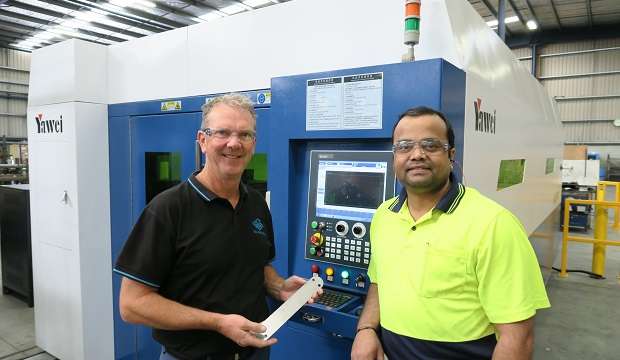
Ace Wire Works is one such company; it has successfully made the transition from supplying automotive products such as the wire seat frames for Toyota Camrys, to a diverse product range that now includes retail display stands, welded mesh panels, horticulture products, food & beverage equipment, designer furniture and wire and mesh products for medical applications. Founded by Albert Blashki in 1954, Ace remains very much a family business, with Albert’s son Philip now the Owner and Managing Director. Moreover, with grandson Simon also involved, a third generation is part of the company, which now employs approximately 40 staff. Ace’s General Manager Sam Harris joined the company around two years ago with the specific edict of assisting the company transition away from automotive to non-automotive products. To say that it has been a success is something of an understatement, with growth of these products up by more than 50% in the current financial year. Harris attributes the company’s ongoing success to several key factors – in particular, the fact…

July 20, 2018
Moreover, while the main material used for the additive production of vehicle components to date has been aluminium, the new brake caliper is made from titanium. This is therefore the world’s largest functional component 3D printed from titanium. Vehicle trials for the use of the 3D titanium brake caliper in series production are to start by mid-2018. “Vehicle development is a never-ending process. This is particularly true at Bugatti,” says Frank Götzke, Head of New Technologies in Bugatti’s Technical Development Department. “We are always considering how new materials and processes can be used to make our current model even better and how future vehicles could be designed. As our performance data are often at the physical limits, we are especially demanding. This is why Bugatti always goes at least one step further than other manufacturers in the development of technical solutions.” Götzke joined Bugatti in 2001 and played a key role…

July 20, 2018
Bosch Australia customer The Yield knew how to revolutionise the way growers operate. First, it developed an IoT system to reduce the impact of costly oyster harvest closures in the aquaculture sector. Connecting oyster farms with Bosch IoT device management software decreased unnecessary harvest closures by 30%. As a result, this could save Australian oyster growers an estimated $21m a year. Following this success, the AgTech company extended IoT from aquaculture to agriculture. In October 2017 it launched Sensing+ for Agriculture, a tailor-made solution for irrigated crops: from apples and wine grapes to carrots, potatoes and leafy greens. In this case, The Yield is hosting back-end architecture on the cloud for greater flexibility and ease of use. A unique microclimate sensing solution With a new generation of younger farmers taking the reins, agriculture businesses want smart…

July 12, 2018
When you walk around TRJ Engineering’s premises in Hallam, it seems to epitomise the modern, efficient manufacturing operation. The large, open workshop is organised into clearly defined areas according to products and processes, organised along rational, coherent lines for maximum efficiency. Management and administration are housed in a separated building, connected to the factory by a footbridge that provides a comprehensive view out across the entire shopfloor. It’s an impressive set-up. But it wasn’t always like this. Two years ago TRJ was based a couple of streets away, in three adjacent blocks on Apollo Drive. The business was doing well – indeed its occupation of multiple sites was indicative of its success. However, operating a growing manufacturing business spread across three separate workshops presented constant logistical challenges. David Murphy, TRJ’s owner and managing director, recalls the “lightbulb moment” when he realised things had to change. “It was a Saturday morning, I was sitting out there with a coffee, watching three…

July 12, 2018
The compact new DMU 50 3rd Generation sets new standards in five-sided to five-axis simultaneous machining. With its extended swivel range, more powerful spindle and an innovative cooling concept, the new machine guarantees a competitive edge in a multitude of branches. Its areas of application range from training to general mechanical engineering, jig construction, and applications in demanding branches such as the aerospace, medical and automotive industries. While developing the DMU 50 3rd Generation, DMG MORI has managed to harmonise the modern appearance of the design with user-friendly operation. For example, the large, smooth opening door to the work area, with a width of 876mm ensures unrestricted access from the front, even in combination with automation solutions. The table also has an ergonomic loading height of 800mm. The optimum accessibility of the DMU 50 3rd Generation even encompasses maintenance…
July 12, 2018
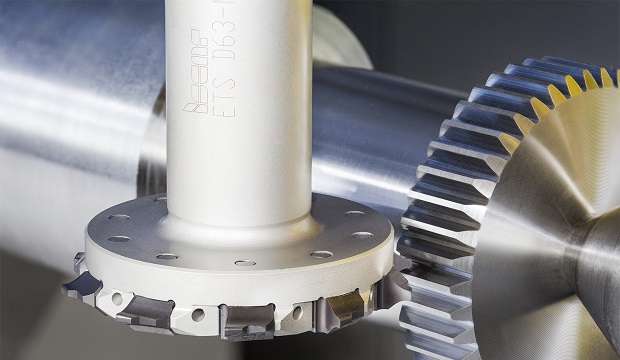
This interrelationship may be observed in metalworking. Over the last few years, leading-edge technology has resulted in multitasking machine tools and machining centers with impressive working possibilities. At the same time, this progress in machine tool engineering is significantly changing metal cutting technology. The advanced multifunctional machine tools increasingly widen the range of machining operations that can be performed. Technological processes developed for these machines are oriented to maximise machining operation for one-setup manufacturing, creating a new source for more accurate and productive manufacturing. Milling gears and splines is one of the operations suitable for performing on the new machines. Traditionally, gear (and spline) -making is a complicated process that involves milling, chamfering, grinding and other operations. With batch manufacturing, the majority is made on specific machines: for gear hobbing, gear shaving, gear grinding and so on. Developments in technology have changed the limits of hardness for cutting and considerably increased operational accuracy. This in turn has reduced abrasive machining in gear making…

July 12, 2018
Additive manufacturing (AM) and product design for AM have a had a rapid development towards producing 3D-printed products for end-use. Thanks to established technologies such as selective laser sintering and rapidly improving ones like multi jet fusion, the barrier to market of high production set-up costs is being lowered significantly. Both established business and startups can have products manufactured in small batches and even on demand in a quality that is either ready for market or requires minimal finishing. Since the mid-1980s, AM has developed to become the most optimal rapid prototyping technology and an alternative to conventional manufacturing for final products. The AM industry is projected to reach $12.8bn this year with an annual growth of 15%. The additive nature of AM allows…
July 12, 2018
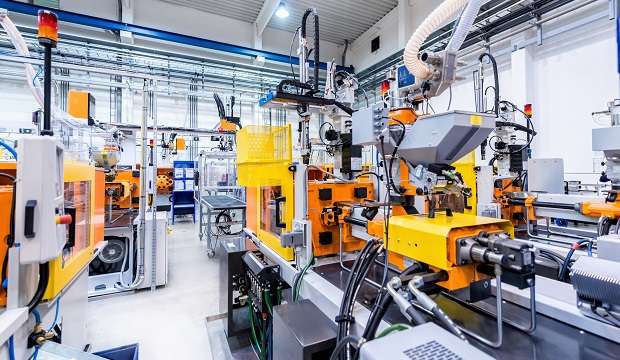
This digitalisation trend adds pressures to traditional businesses, but also offers exceptional opportunities that will optimise production and increase efficiency. These changes revolutionise activities, processes, competencies and models through a mix of digital technologies with an accelerating impact across not only businesses, but society and cultures. Sparked by a shift in new demands from customers, Industry 4.0 is the name for the current trend of automation and new technologies in the manufacturing sector. The revolution brings changes in all areas of life and existing business models. For example, it won’t just be me who uses Amazon’s Echo Dot – ‘Alexa’ – to carry out mundane tasks such as turning on music or making phone calls out of sheer laziness and convenience. This is an example of the shift and a starting point for automisation and its effect on society and the way we all operate. Industrial manufacturing organisations have realised the necessity in improving flexibility and reducing time to market, while at the same time ensuring the quality of products is…

July 5, 2018
Gihan is a futurist, conference speaker, author and consultant. His presentation will provide you a glimpse into what’s ahead and how you can become Fit for the Future, in both your professional and personal life. Take an inspiring, eye-opening, and engaging ride into the future to learn about the global megatrends shaping your industry, the mindset that helps you lead the change, and the skills you need to get things done in a fast-changing world. Gihan will discuss: the global megatrends shaping business and society; influence and power in the Age of Access; How change is the new normal; and how you can take more control of your own future. Also presenting will be William Buck's Dr Rita Choueiri, who will be talking about the R&D Tax Incentive. Rita will discuss go into detail on the scheme and its eligibility, shedding light on what sorts of business are eligible to claim. Following these presentations, AMTIL will be holding its Annual General Meeting. For more information about any of AMTIL’s upcoming events,…
July 5, 2018
The current run of expanding or stable conditions (21 months) for the Australian PMI is the longest since 2005, with the longest positive run being 50 continuous months from July 2001 to July 2005. Readings above 50 indicate expansion in activity, with the distance from 50 indicating the strength of the increase. Seven of the eight manufacturing sub-sectors expanded in June (according to trend data), with the textiles, clothing, furniture & ‘other’ manufacturing sub-sector’s stable conditions the only exception (down 1.0 point to 49.3). Sub-sectors providing manufactured goods for civil engineering, residential and commercial construction projects continue to report very strong levels of activity: petroleum, coal & chemicals (down 0.9 points to 62.3); metal products (down 1.8 points to 56.2); machinery & equipment (down 0.3 points to 58.9); and non-metallic minerals (down 0.4 points to 63.4). “Manufacturing production, employment, exports and sales were all higher in June, driving the Australian PMI to its longest run of expansion in well over a…

July 5, 2018
The cloud computing megatrend has been hard to miss for consumers or businesses. Cloud-enabled platforms have transformed everything from transportation to accommodation, and helped create some of the world’s most valuable companies. As a matter of fact, 1.65m business people rely on cloud data day in and day out. Adoption by enterprises has been swift. Technology research firm Gartner published a report in February predicting the pace of growth in public cloud services would reach its peak this year at 18%, with a total value of US$246.8bn. Companies were pursuing cloud strategies, said Gartner, due to the “multidimensional value of cloud services, including values such as agility, scalability, cost benefits, innovation and business growth ”. Despite these and other benefits, manufacturers appear to be slower adopters than those in other sectors. An Economist Intelligence Unit report published last year notes that “manufacturing appears to have something of a late…

July 5, 2018
Majans traces its history back to Fiji in the 1960s. Today it’s a thoroughly modern manufacturer, headquartered in Queensland and employing 120 people, with a decent share of Australia’s $1.2bn snack market. The company has grown exponentially in recent years with brands like Bhuja and Infuzions. Today, its gaze is firmly fixed on the future, and the opportunity to create an intelligent, efficient, data-driven factory of the future. It’s building the foundations right now. Working with Microsoft partner Sable37, Majans has replaced an SAP Business One solution with Microsoft’s Azure-based Dynamics365. Majans Director Amit Raniga explains that the business is focussed on gaining a competitive advantage by digitally transforming its end-to-end processes. While a significant player in the snackfood market, Majans is dwarfed by giant international competition. Sustained success and the opportunity to expand into international markets will rely on discovering ways to do things smarter, faster. “We have a weekly forum, we’re calling it Majans’ Labs, and the forum’s clear mandate…

July 5, 2018
Imagine the scenario: You own a small or medium-sized business. The business is stagnating because you don’t want to stop micromanaging. You have a team who can perform their roles, but you don’t believe you can depend upon anyone. You are mostly working in the business – not on it. As a result the business is not growing or realising its potential. You are in firefighting mode every day. The whole time is spent “managing” people, resources or urgent customer issues, which is frustrating. As a professional running the organisation, you hardly have time for your own projects that could help the organisation. You can grow fast as the market and the product you are in is in a growth phase. However, that growth needs managing and you are short of management resources. You need to hire managers but don’t know who to hire, what skillssets suit your organisation, or who will…