



November 6, 2015
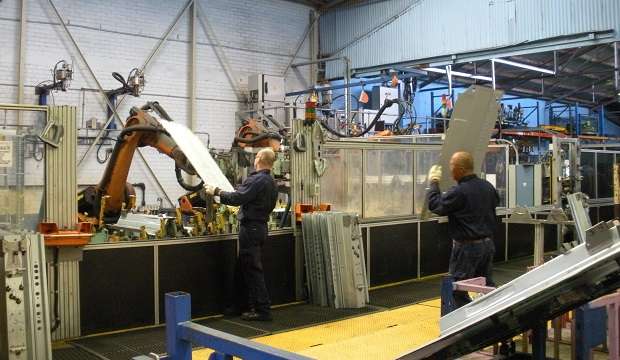
The Australian PMI fell by 1.9 points in October to 50.2 (readings above 50 indicate expansion in activity, the distance from 50 indicating the strength of the increase). The result marked the longest run of expansionary readings since July 2010. “A strong export performance in October helped manufacturing hold onto the gains made by the sector over the previous three months, clocking up the longest expansion in five years,” said Ai Group Chief Executive, Innes Willox. “There was, however, some easing of momentum: while production lifted again, domestic sales and employment were lower and new orders were broadly unchanged. The process of broadening the base of growth across the economy remains gradual and tentative. There is clearly scope for stimulatory measures to boost domestic activity.” Four of the eight manufacturing sub-sectors expanded: wood & paper products (down 5.5 points to 64.0); textiles, clothing, footwear, furniture & other manufacturing (up 0.5 points to 56.9); petroleum, coal, chemical & rubber products (up 0.3 points to 57.5); and, for the first…
November 6, 2015
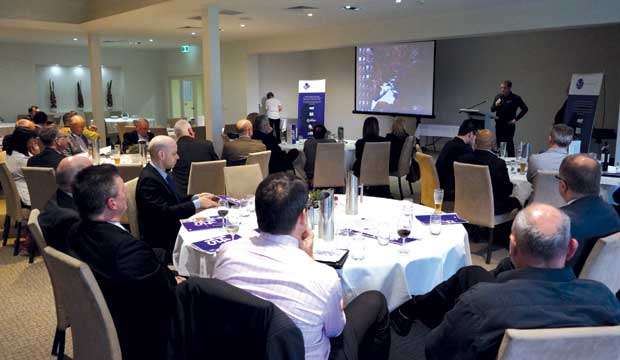
The event drew an impressive turnout, with a mix of new and long-term members in attendance and a packed schedule of association business to get through. Members in attendance were able to hear about AMTIL’s latest plans and initiatives, as well as getting an update from AMTIL CEO Shane Infanti on the previous year’s activities. AMTIL President Paul Fowler gave a Welcome address, while Board Member Saxon Fletcher provided a summary of AMTIL’s financial report. Fletcher, along with fellow Board members Brigitte Stavar and Mark Dobrich, were all up for nomination, and were renominated for another two-year term. In addition, AMTIL welcomed a new member to its Board, as Phil Xuereb of Sutton Tools was confirmed to join. “We’re very glad that all of our Board members will remain in place,” said Infanti. “All of the Board give up their time completely voluntarily to do this, so on behalf of AMTIL and its membership, I’d like to express our gratitude for their invaluable contribution. And I’d like to welcome Phil, whose…
November 6, 2015
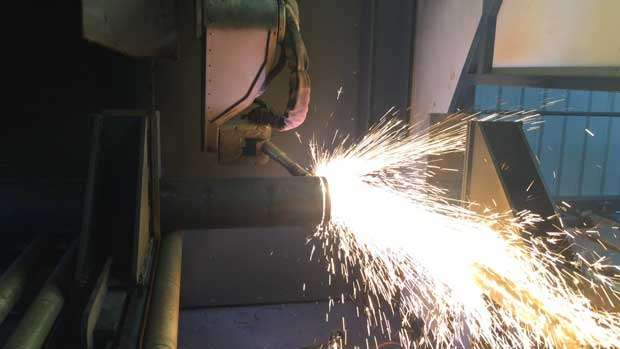
Traditionally, beam coping has been done manually by marking the dimensions for coping on the workpiece as per the drawings and then manually cutting out the cope from the steel beam using oxy-fuel gas torch. This method leaves a rough cut requiring considerable chipping and grinding to improve the finish. Coping machines provide high speed and quality, eliminating all the drawbacks of manual coping. While there are many different machines from well-known overseas manufacturers on the market, ART has studied the needs of every steel fabrication shop in Australia, from small to large, in order to develop an automated, versatile machine made at its manufacturing facility in Brisbane. The machine steel fabricators around the country a competitive edge – not only by creating an efficient automated machine, but also by offering local service and support. “We developed the Metaltek XB series to answer the need for fully-automated structural steel processing in one machine,” explains ART Director David White. “To eliminate as much…

October 30, 2015
As of February, we’ll be producing six editions of AMT per year, instead of ten. As opposed to the current monthly schedule (excluding December and January), each new magazine will come out every second month: February, April, June, August, October and December While this means AMT readers will get twice as long to read their copy of the magazine, there will be a lot more in each issue for them to get through. Next year we’ll be including a broader range of features in each issue, with each feature exploring its subject in greater depth. The new, bi-monthly schedule allows us to cover a greater array of industries and a more diverse range of products over the course of the year. In addition we’ll be continuing to expand our coverage via our online channels, via www.amtil.com.au/News. For information about advertising in AMT Magazine, please contact our Sales Manager, Anne Samuelsson, by calling 03 9800 3666, or by emailing asamuelsson@amtil.com.au. To submit articles or to discuss editorial ideas, contact AMT’s Editor William…
October 30, 2015
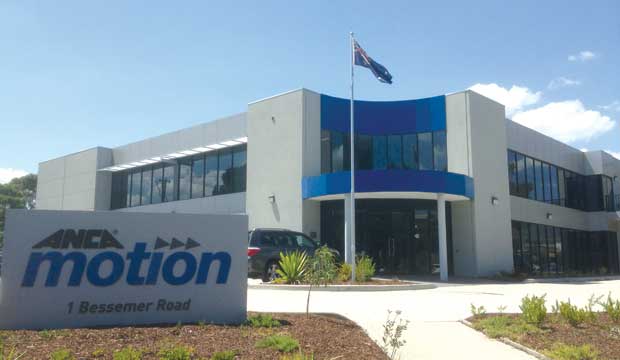
Both ANCA and RØDE are regularly cited as examples of the very best of Australian manufacturing today, using state-of-the-art technology and sophisticated processes to make high-value-add, proudly Australian-made products that are exported all over the world. These site tours will give you the opportunity to look behind the scenes at these highly successful companies and learn some of the factors behind their achievements. ANCA – A global leader Founded in 1974, ANCA has gone on to become a world leader in quality CNC grinding machines and CNC systems. ANCA sells to a wide range of industries including aerospace, medical, automotive, electronic, tool manufacturers and even woodwork. The company operates in a highly technical, advanced manufacturing space and exports 99% of the product produced in Australia. In 2008, sister-company ANCA Motion was founded to focus exclusively on OEM CNC applications. One of only a handful of Australian companies producing machine tools today, the ANCA Group has been identified as a true ‘Hidden Champion’ of the manufacturing industry worldwide. AMTIL’s tour of…
October 16, 2015
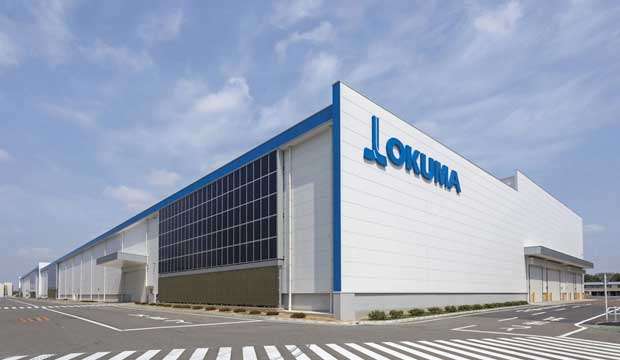
In 1898, a young and aspiring innovative engineer named Eiichi Okuma established the Okuma Noodle Machine Co. to manufacture and sell noodle-making machines. It may seem an unusual field of technology to enter, but the consumption of noodles was (and still is) very high in Japanese cuisine and an invention to cut down the massive labour content in producing them was indeed revolutionary. Eiichi Okuma went on to make several automated machines, most notably cigarette-rolling machines and even textile-knitting machines a little later. However, it was in 1904 that machine tools became Okuma’s focus as industrialisation really took hold, and by 1918 Okuma Machinery Works Ltd was formally established and the volume production of the OS Lathe commenced. By 1937, Okuma was the number 1 machine tool producer in Japan by value. The company’s growth remained rapid through the 1950s, and in 1963, it launched the OSP control with its unique absolute position feedback encoder, thus becoming the only machine tool builder to build its…

October 9, 2015
We have just gone through a number of focus sessions with our members and gathered feedback from them that the cost of inputs into their businesses is getting prohibitive and reducing their competitiveness. So I thought it would be a timely reminder that the benefits of industry associations should not be overlooked when it comes to minimising costs in your company. AMTIL offers quite a few member services including electricity brokerage, all types of insurance, foreign exchange, telephone and ICT solutions, and consulting services through William Buck. Make It Cheaper is our energy expert. The company offers a quick, easy and efficient route into what can be a murky energy market, doing everything they can to save time and money for your home or business. Their experts will compare prices from Australia’s leading energy suppliers to ensure you’re getting a fair deal. Once they have found the best prices from their panel of 14 different retail providers, they then set you up on these rates to make your…
October 2, 2015
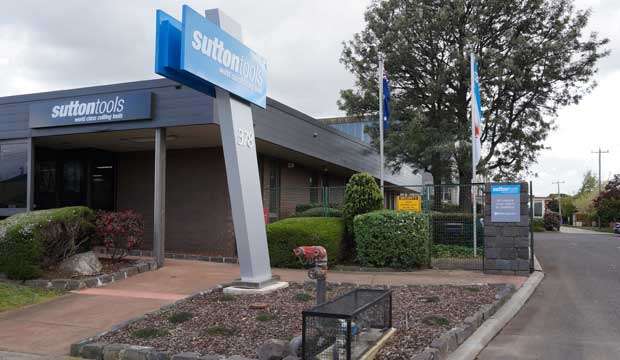
Since its establishment in 1917, Sutton Tools has continued to develop an expanding portfolio of cutting tools. Today, while its products are exported worldwide, the company remains a proudly Australian family business. The tour took in the entire production process, from raw materials to warehousing and distribution, providing fascinating insights into its specialised areas such as coatings, heat treatment and the company’s dedicated regrinding facility. One highlight was a look at the inspection process on a line of tiny forming taps that Sutton supplies to Foxconn in China for the production of Apple’s products. Sutton produces more than 10,000 of these taps a year, and each one must be meticulously checked for quality. Sutton’s Chief Manufacturing Executive, Peter Sutton, was particularly happy with the tour, saying it allowed the company to showcase its world-class facility and demonstrate that manufacturing can continue to exist in Australia. “We really enjoyed hosting the tour,” said Sutton. “It was a great networking opportunity to meet others from the…

September 25, 2015
AMT: Tell us about CSIRO Manufacturing and the sorts of activities it’s engaged in. Keith McLean: We’re a business of about 430 staff with a range of skills and backgrounds. We have a really diverse capability that stretches from molecular engineering through to organic chemistry, to materials-processing to additive manufacturing to modelling. It’s a diverse skill-set that we bring together as a mission-directed organisation, to tackle problems for our customers, partners and collaborators. Our focus here is on manufacturing, but of course manufacturing is a huge and diverse industry. We have a major program in biomedical manufacturing, from small molecule drug development, to materials for implantable devices and for growing stem cells. We have a program on Industrial Innovation, doing prototyping for a range of industries including for energy, rail and defence, a key potential growth area for the country. The chemicals and fibre manufacturing group are developing chemical and fibre processing capabilities for industrial, environmental, agricultural and energy applications. In the carbon-fibre space we are working closely with Deakin University and industry partners, using…

August 14, 2015
AMT: Let’s start with your background and how you came into your current role. Geoffrey Brooks: I started originally in chemical engineering. After I graduated I started working in a lot of small companies that were building and making and fabricating things. I got involved with all sorts of things; I ran a plastic fabrication business for a while. After a few years of that I did a PhD in pyrometallurgy (the science of making metals), and most of my research in the last 20 years has been in that area. I’ve worked in Canada, the USA, and I’ve been at Swinburne for the last 10 years. Personally I’m a specialist in the science of making steel, and I’ve also done a lot of work in aluminium and magnesium. A few years ago the university asked me to take over the role of co-ordinating all the manufacturing research at the university. And Swinburne has a lot of manufacturing research across all sorts of areas: IT, electric vehicles, nano-materials – it’s a very broad…
August 7, 2015
After only the manufacturing exports sub-index managed to stay marginally above 50 points in June, four of the seven activity sub-indexes expanded in July. Manufacturing sales (up 12.9 points to 53.9) expanded for the first time in 14 months, while production (up 10.6 points to 54.2) and supplier deliveries (up 6.3 points to 50.6) reversed sharp declines in June to return to expansion. New orders (up 7.6 points to 49.8) also recovered lost ground to approach stability, but stock levels (down 1.7 points to 47.9) and manufacturing employment (up 2.6 points to 47.5) remained in negative territory. The exports sub-index expanded for a third consecutive month (up 1.6 points to 51.8), reflecting the lower Australian dollar. The input prices sub-index was unchanged in July (up 0.2 points to 63.1), while the wages sub-index rose by 7.4 points to 64.5, reflecting the…

August 7, 2015
In order to pass this legislation, the Subordinate Legislation Act 1994 requires the completion of a Regulatory Impact Statement (RIS). The RIS process, including a mandatory public consultation period, will provide insightful and meaningful analysis (both quantitative and qualitative) of the benefits and costs of the public holiday on businesses and the broader community. This RIS process is expected to be completed by early August. It is an interesting debate. PricewaterhouseCoopers, in its capacity as advisor to the Victorian Department of Economic Development, Jobs, Transport and Resources, has just released the RIS which attempts to assess the impacts on the community and economy by the introduction of two additional public holidays – being Easter Sunday and the Friday before the AFL Grand Final. For the record, let me highlight the current number of public holidays each state and territory has just to put this debate into some perspective. In 2016, Tasmania has 10 public holidays scheduled, Victoria, South Australia, Northern Territory and Queensland have 11,…
July 31, 2015
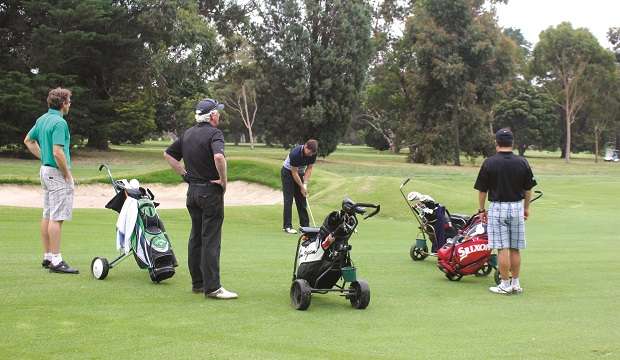
With Austech 2015 over and done with, we’ve been hard at work on the program for the coming year. Along with regular features such as the Annual General Meeting (AGM), our ever-popular Golf Day, and our usual Christmas get-togethers, we are planning a rich and diverse array of additional activities. Branded under the name AMTIL Connections™, these events and activities will be aimed at helping AMTIL members to learn ways to improve their business, gain access to valuable industry information, have their say on the issues affecting them, and simply to network and socialise with their peers in the sector. Our 2015-16 Events program will include: Plant tours – There are few better ways to improve your business than through learning first-hand from your peers. AMTIL is planning visits to the facilities of several major manufacturing companies and research organisations, where members can learn about new technologies and processes. Networking functions – Members will have the chance to share ideas, develop essential business relationships, and simply relax and socialise…