



April 29, 2021
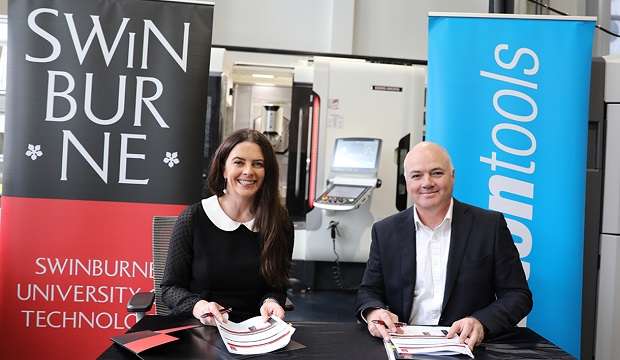
A research agreement was signed by Swinburne’s Deputy Vice-Chancellor (Research and Enterprise) Professor Bronwyn Fox and Peter Sutton, Managing Director of Sutton Tools, on 26 April. The new centre will play an important role in training students, staff and industry end users and will pursue joint research and development activities through different funding bodies. The centre will also play a role in the Australian Government’s Modern Manufacturing Strategy through developing a digital and sustainable local supply chain with Sutton Tools. Features of the collaboration will include: The loan of equipment from Swinburne to Sutton Tools. The joint funding of three PhD scholarships as part of our industry and impact PhD program. The placement of undergraduate and postgraduate students with Sutton Tools as part of Swinburne’s Work Integrated Learning program. Professor Fox commented “This partnership builds on a longstanding relationship between Swinburne and Sutton Tools that dates back to the early 1990s and underscores Swinburne’s research strengths in the manufacturing sector. In recent times this relationship has been…
April 27, 2021
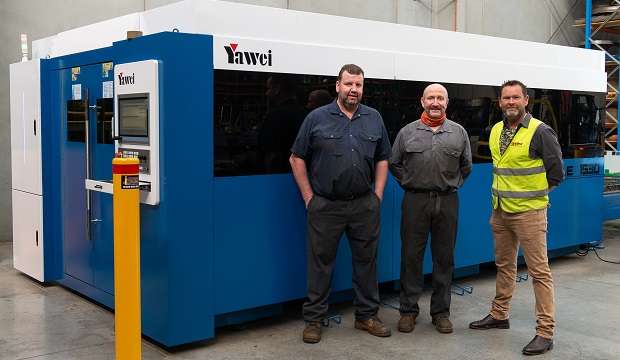
Formed in the Melbourne suburb of Burnley, Tighe Metal Spinners is a family-owned company operated by brothers Rod and Jeff Tighe. Early in the 1960s the business moved to Moorabbin where it remained for many years until moving into a brand new 1,600sqm state-of-the-art production facility based in Keysborough in 2014. Tighe Metal Spinners has always been involved in the specialised area of metal spinning (also known as metal forming), a process by which sheet metal is rotated at high speed over a mandrel to form round metal parts for domestic or commercial use. One of the more unique products that the company spins each year is the AFL Premiership Cup for Cash’s Awards and Promotion Solutions – something it has been doing since 1999. Virtually any metal can be spun or formed, including stainless steel, hot and cold rolled steel, aluminium, zinc, copper and brass. Metal products can be spun using one piece of material to produce parts without seams or welds. Without seams, a part can…

April 22, 2021
AMT: Tell us firstly about your background and how you ended up in your role with William Buck. Ian Cattanach: I’ve been in practice for more than 30 years. I started off at a firm called Bell Partners, which had the original connection with AMTIL. Indeed I’ve continued to act for the family of Bob Corbett, who was the founding chair of AMTIL, and we’ve been AMTIL’s auditor right the way through. In 2013, Bell Partners merged into William Buck, and we brought the AMTIL relationship with us. Since then AMTIL’s corporate partnership has morphed into what it is today, a much more structured, organised, symbiotic relationship. AMTIL staff will often refer members to William Buck representatives within our space, and likewise, we’re here to support the broader AMTIL membership, even though they may not be our clients. AMT: And what does William Buck do? IC: William Buck is an accounting and advisory firm with offices across Australia and New Zealand. We are over 125 years old and have tax,…
April 22, 2021
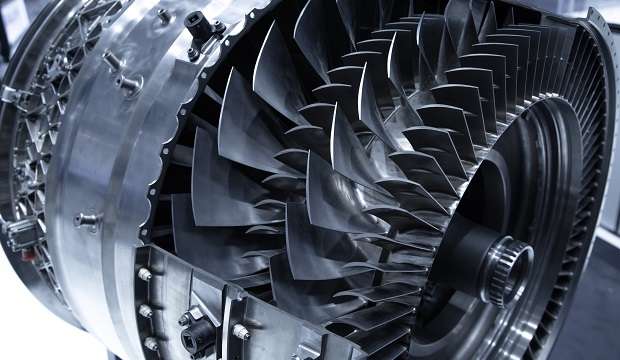
Holemaking is the most common of all machining processes, but it is also the one most often taken for granted. Many machine shops see little reason to change or upgrade their existing holemaking setup and have been using the same tools and cutting parameters for years. But, as the unpredictable effects of COVID-19 continue, this is all set to change. McKinsey & Company’s recent briefing note COVID-19: Implications for business calls the present industry situation a “next normal”, where manufacturers can expect unpredictable and lasting shifts in customer markets. The report advises that “resilience will be needed if manufacturers are to navigate an economically and socially viable path”. Most manufacturers, for example, are exploring new vendor bases and products. Consequently, machine shops that once specialised in a certain area of production are now opening their CNC lathes and mills to a wider variety of tough and challenging materials. At the same time, manufacturers must explore new ways to increase profits…

April 22, 2021
If you happened to be in Tonsley, in Adelaide’s southern suburbs, 13 years ago, you might very well have been standing in the middle of Mitsubishi’s car production line. The shell of the factory left behind when Mitsubishi relocated in 2008 has now been reinvented as the Tonsley Innovation District. Now Tonsley is the home of Line Zero – Pilot Factory of the Future. It’s at this new facility that new technologies, manufacturing techniques and processes are being tested, trialled and adapted for the Osborne shipyard, where nine Hunter class frigates will be built. The Hunter Class Frigate Program is the biggest surface ship project in Australia’s defence history, contributing towards Continuous Naval Shipbuilding capability for the nation. Line Zero – Pilot Factory of the Future is a collaboration between Flinders University, BAE Systems Australia and its subsidiary BAE Systems Maritime Australia (formerly ASC Shipbuilding). It marks the beginning of an exciting new era for developing Australian Industry Capability in support of the Federal Government’s sovereign capability objectives. The…
April 20, 2021
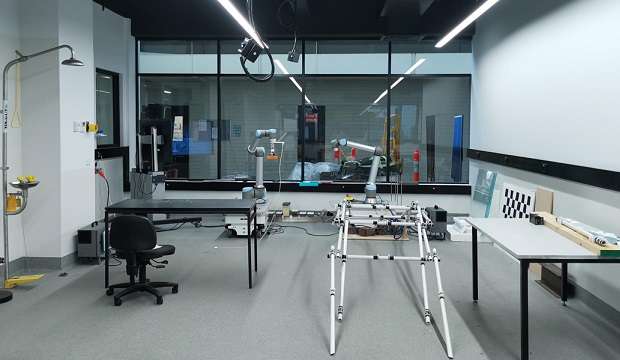
Professor Yu Bai from Monash University’s Department of Civil Engineering will lead an interdisciplinary team from seven Australian universities to develop a one-of-a-kind facility centred on structural assembly and construction automation. It will feature a flexible, adaptive design, with space for a team of collaborative robotics in an interactive environment to achieve automated prefabrication, assembly and building. The outcomes are expected to transform the current labour-intensive construction industry to one that uses highly automated and accurate prefabrication processes, with significant benefits to the economy and worker safety. Professor Bai said many industries, such as manufacturing and transport, had adopted automated practices to speed up, optimise, and economise production. However, the construction industry was lagging behind, failing to take advantage of such technological advancements. “Robotic technology has made significant progress in a number of industry domains in the last several years and construction can benefit from this advancement,” Professor Bai said. “The use of robotic technology can be a game-changing step as seen in other…
April 15, 2021
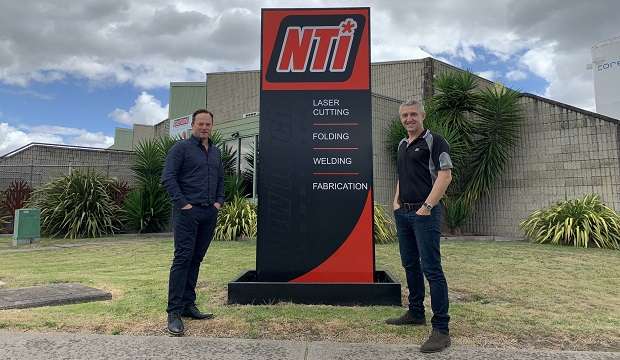
Few people get to see the results of their work out on public display on a regular basis, but for Brad Drury, Managing Director of New Touch Industries, it’s definitely one of the perks of the job . The company manufactured the stainless steel skins adorning the bridge columns on the EastLink motorway in Melbourne, with their striking laser-cut perforations. With New Touch Industries based in two sites: in Bayswater and Clayton, Drury inevitably spends plenty of time on the EastLink, and on seeing the bridges he acknowledges feeling some pride. “Absolutely,” says Drury. “I think there’s 88 bridges all up. When my kids were younger, whenever we’d drive past the bridges, up near Ringwood or down near the Monash, they’d always call them ‘Daddy’s holes’.” New Touch Industries has come a long way since the EastLink project was completed in 2008, but it certainly helped put the company on the map. Aside from its…
April 13, 2021
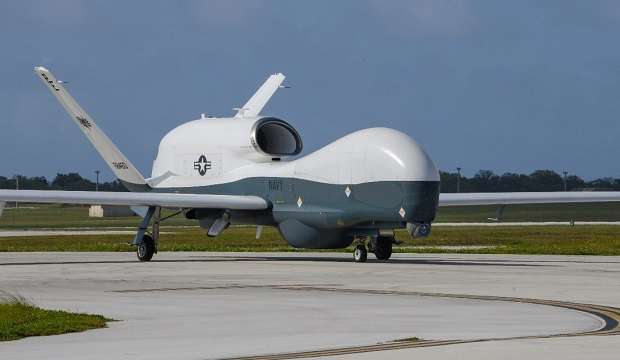
AME Systems is now a key Northrop Grumman supplier of cabling and wiring harnesses associated with the MQ-4C Triton program for the Royal Australian Air Force. “AME Systems is extremely proud to be partnering with Northrop Grumman,” said Nick Carthew, Managing Director of AME Systems. With the US Navy’s planned program of record for 68 operational Tritons and the Royal Australian Air Force (RAAF)’s planned acquisition of six to seven Tritons, the opportunities for AME Systems are significant. AME Systems’ enhancement of production capabilities has been further strengthened by being awarded Northrop Grumman’s harness manufacturing certification. AME Systems is now one of only three companies globally certified to this level of manufacturing, positioning AME Systems to potentially supply a new level of technology to Northrop Grumman and the broader Australian defence industry. “Growth of Australian industry content within our programs is one of Northrop Grumman’s top priorities,” said Chris Deeble, Chief Executive of Northrop Grumman Australia. “AME joins a growing number of Australian companies supplying components for the…

April 8, 2021
A few of these are outlined in brief below as we believe they are important to not only our future as an organisation and membership body, but to the wider manufacturing technology industry as well. Education and training initiatives We are looking at short, medium and long term initiatives that will address skill shortage issues that exist in our industry. Raising the image of manufacturing as a career opportunity for our younger generation is high on our priority list, along with developing some short courses that will produce CNC operators, which is a particular skill shortage that remains an issue. We are also looking at how we can leverage off our major exhibition - Australian Manufacturing Week – to be held next March, to showcase new and exciting technologies to our secondary students. Exhibition and event portfolio With the introduction of Australian Manufacturing Week, alongside Austech as our flagship exhibition moving forward, the discussion around timing and location of this event continues to be of strong…
April 8, 2021
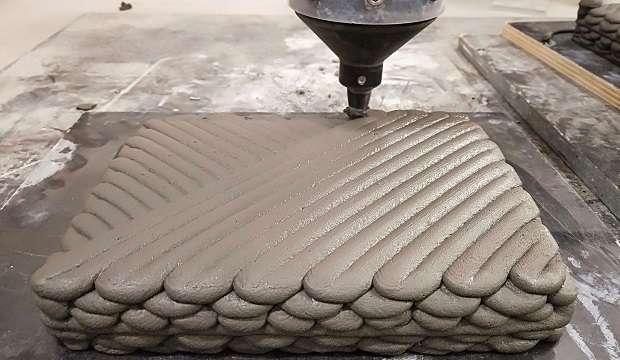
Digital manufacturing technologies like 3D concrete printing (3DCP) have immense potential to save time, effort and material in construction. They also promise to push the boundaries of architectural innovation, yet technical challenges remain in making 3D-printed concrete strong enough for use in more free-form structures. In a new experimental study, researchers at RMIT looked to the natural strength of lobster shells to design special 3D printing patterns. Their bio-mimicking spiral patterns improved the overall durability of the 3D printed concrete, as well as enabling the strength to be precisely directed for structural support where needed. When the team combined the twisting patterns with a specialised concrete mix enhanced with steel fibres, the resulting material was stronger than traditionally-made concrete. Lead researcher Dr Jonathan Tran, a senior lecturer in structured materials and design at RMIT, said 3D printing and additive manufacturing opened up opportunities in construction for boosting both efficiency and creativity. “3D concrete printing technology has real potential to revolutionise the construction industry, and our aim is to…

April 1, 2021
Shaping a part is performed by various machining processes using different cutting strategies. Progress in machining tools resulted in modern machines that enable combined and whole process operations; processes that were separated in the past. Moreover, advanced machine tool capabilities enable progressive machining strategies to achieve maximum performance. The metalworking industry must deal with different engineering materials. Progress in material science and metallurgy brought in exotic new materials, and technologies to create materials with pre-defined properties. Producing components from such materials has significantly improved the working parameters of parts, but machining has become more difficult. A cutting tool, the smallest element of the technological system, is the link between the machine and material. To realise the advantages of high-tech machine tools and productive machining strategies, the cutting tool must meet appropriate requirements. Finding a decent answer to the ever-growing demands of modern metalworking is the base for new developments in the cutting tool field. The metalworking industry has been through a rough time with…

March 31, 2021
Proudly owned and operated by AMTIL, Australian Manufacturing Week (AMW) is Australia’s premier manufacturing solutions event. In addition to the country’s biggest manufacturing industry expo, AMW will feature a number of parallel events to complement the exhibition itself. AMTIL has now revealed that these will include the Future Solutions Stage speaker series, and the UNLIMIT3D additive manufacturing conference. Taking place in the middle of the AMW exhibition floor, the Future Solutions Stage will offer a glimpse into the future of manufacturing, under the theme ‘Our manufacturing. Our Future’. The Future Solutions Stage program will feature an extensive line-up of speakers from across industry, academia, government and more, sharing their knowledge, expertise and insights. “AMTIL has regularly held speaker programs as part of our Austech exhibition over the years,” says Kim Banks, AMW Exhibition Manager and Head of Events at AMTIL. “I think it’s something people have come to expect when they visit our shows, and with the Future Solutions Stage we hope to really build on that.” Meanwhile, the UNLIMIT3D additive manufacturing conference…
March 31, 2021
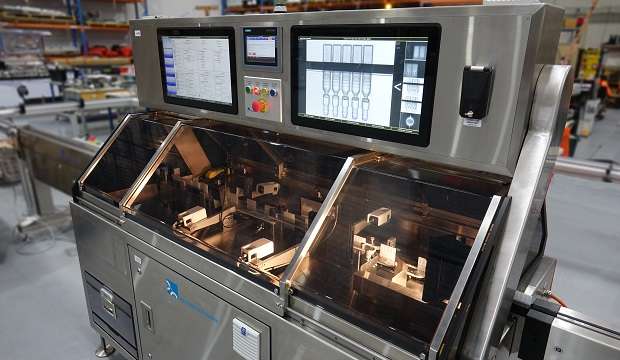
Under Operation Warp Speed, the US Government’s initiative to accelerate delivery of COVID-19 vaccines, ApiJect has assembled three high-speed lines to enable the complete fill and finish of up to 1.5 million injectors per day. The ApiJect injector system is based on Blow-Fill-Seal (BFS) technology, for which ADDE has over 20 years’ experience building custom manufacturing and packing equipment, including for AstraZeneca in Sydney, who operate the largest BFS facility in Australia. When ApiJect required a system to perform 100% inspection of each injector it contracted ADDE to build the highly specialised machinery. As expected for a COVID-19 vaccine and a program named Operation Warp Speed, time was of the essence, and ApiJect needed the shortest possible lead time. “Our first proposal was for a six-month program to completely design, build and commission three machines, and we thought that was pretty aggressive,” said Barry Hendy, Managing Director of ADDE. “But ApiJect then asked us if we could do it in three months!” Thanks to the…