



October 24, 2019
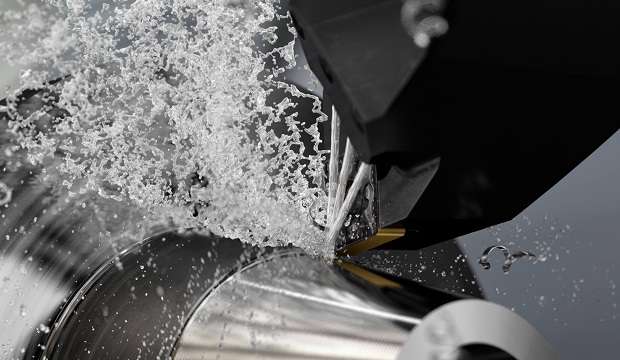
With sectors such as pump and valve, oil & gas, automotive and aerospace continuing to specify stainless steel components, the challenge for cutting tool manufacturers is to deliver solutions that can provide ever greater tool life and/or productivity to help machine shops succeed in an intensively competitive global marketplace. At Sandvik Coromant, there are high hopes for one such new solution. The challenge There are many different family groups within the ISO M stainless-steel material classification. However, two of the most common are austenitic stainless steels and duplex stainless steels. Austenitic stainless steels include familiar grades such as 304 and 316. Although relatively soft in the annealed condition, and with very good ductility, these grades undergo extensive work hardening during any form of machining. Work hardening produces hard surfaces and hard chips, which in turn lead to notch wear and compromised surface finish on the…

October 24, 2019
The new facilities make up the largest space of its kind in Australia with a 1200sqm workshop housing advanced manufacturing and prototyping tools and machines including 3D printers, vacuum formers, industrial robots and waterjet cutters. Technical and trade-qualified staff will assist students and researchers in bringing their ideas to life. UQ Faculty of Engineering, Architecture and Information Technology Executive Dean, Professor Vicki Chen said the new facilities would give UQ students a competitive edge when entering the workforce. “One of our main roles as a university is to give our students the confidence and capability to embrace the challenges of a changing world,” Professor Chen said. “And with the launch of UQ Innovate, we are in a much stronger position to fuel their curiosity, so they can drive sustainable solutions at the cutting edge, today and tomorrow.” Design-and-build teams from the student-led UQ Racing and UQ Space teams have used the University’s facilities and expertise to produce nationally competitive race cars and rockets. Managing Director of UQ Space, engineering and…

October 17, 2019
Family-owned and established in 1995, Sharpe Engineering operates from four facilities located in Queensland – in Roma, Chinchilla, Virginia and Zillmere. Sharpe Engineering boasts upwards of 50 pieces of plant, including CNC machines, milling machines, drilling machines and manual lathes, as well as Australia’s largest threading capacity. All of Sharpe Engineering’s equipment is procured from world-class suppliers, and the company’s state-of-the-art machine inventory guarantees the precision and the accuracy of its products. Sharpe Engineering’s equipment is a key part in allowing the business to produce quality, cost-effective products. It owns two Mazak 21-inch hollow-spindle Power Master Chuckers, and a 7-inch hollow spindle Power Master Universal. Sharpe relies on its world-class equipment line-up to remain at the sharp end of manufacturing for the oil and gas drilling industry. The latest addition, recently purchased by Sharpe, is a Mazak Slant Turn 550 turning centre, supplied by John Hart, which is used in the manufacture of drilling tools and thread repairs on drill…

October 17, 2019
Insufficient grip that causes slipping parts, pushback in chuck jaws and collets wearing out prematurely are issues well known to CNC turning machine tool operators. The resultant production downtime, operator idle time, and expense of new or re-worked jaws is a significant problem. Dimac has recently launched a new service designed to eliminate such issues, using a new form of carbide application equipment called Rocklinizer from the USA. The application process improves clamping force by as much as 50% - thereby providing significant extra grip on workholding equipment such as jaws and collets, while wear is accordingly reduced. The new service uses the proven spark deposition process called Rocklinizing to easily and quickly boost the grip coefficient of workholding jaws and collets. The unit electronically applies a hard and wear-resistant surface of Tungsten Carbide, Titanium Carbide or Rockhard electrode material to workholding tools. Material is impregnated both underneath and on top of the workpiece surface. Unlike welding or metal spraying, no appreciable heat is…

October 17, 2019
A hand-held device to predict heart failure based on saliva could help millions of potential victims take preventative steps to avoid their fate. Nano-sensors on the tip of the diagnostic stick measure heart disease biomarkers from saliva to accurately predict the risk of heart disease, failure or heart attack, then warn users via a simple app. Now a multi-partner deal has just been signed to bring the life-saving technology to market by 2021. The collaboration is being led by an Australian start-up based in Melbourne called ESN Cleer, with RMIT University and the IMCRC now researching and developing the device for pilot manufacture. ESN Cleer CEO Leopoldt de Bruin says the collaboration represents some of the best minds in medical device innovation, design and manufacture. “We’re really pleased to be able to bring these strands together in addressing such a major global health challenge,” De Bruin said. “Of the 400 million people who suffer from…

October 17, 2019
I often remark to my children or anyone who will listen at trade events that there are only two kinds of people in the world: cutting tool people and everyone else. In the case of my kids (and our Marketing Manager, for that matter), they issue a despairing groan and roll their eyes. This is not a trivial proposition – and it goes deeper! Even amongst the broader Cutting Tool Community, it’s my long-held opinion that it’s us Tap People who are the crème de la crème. On further investigation, the logic behind this highly reasonable position is both obvious and compelling (to me, at least). Once upon a time… My love affair with taps began in my schooldays, while working at the Sutton Tools factory during the summer holidays. That passion continues to this day, based on the philosophical concept of “value add”. I am a confirmed Tap Person. To the…
October 17, 2019
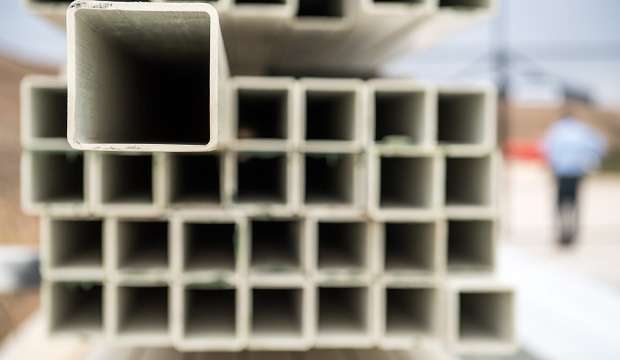
‘Pultrusion’ is the next big thing in manufacturing, and Wagners Composite Fibre Technologies (CFT) has teamed up with the University of Southern Queensland (USQ) and Allnex to redefine what the manufacturing process is capable of. According to USQ Polymer Composites researcher Dr Xuesen Zeng, pultrusion creates continuous lengths of composite material, ‘pulling’ fibre-reinforced profiles through a cross-section of die, resin and heating and cooling zones. “It has been the manufacturing method of choice due to its ability to produce large sections in volume which are economical and consistent in quality,” Dr Zeng said. “We’re increasing the productivity of the process, incorporating additives such as fire retardants, integrating braiding process with pultrusion, optimising injectable tools, and more.” USQ, Wagners CFT and Allnex have embarked on a $10m project that recently received a $3m funding boost from Federal Government’s Cooperative Research Centres (CRC) program. Together they are creating advanced structures expected to capture new high value markets in the oil & gas and transport industries both in Australia and internationally. Wagners CFT…

October 10, 2019
Australia’s industry growth centre for the med-tech, biotech and pharmaceuticals sector, MTPConnect is offering BioMedTech Horizons (BMTH) grants of up to $1m to support development and commercialisation of cutting-edge new medical technologies. The BMTH program forms part of the Federal Government’s Medical Research Future Fund and is administered by MTPConnect. “Following a highly competitive Round 2, we have Round 3 of BMTH opening later this year,” says Dr Dan Grant, CEO and MD of MTPConnect. “These grants can provide eligible SMEs (small and medium-sized enterprises) with up to $1m of funding over a two-year period to progress medical technologies and devices through to proof-of-concept stage. This is a fully funded grant program that encourages, but does not require, matching funding by the applicant.” The proof-of-concept stage is the point where the idea for a new device is technologically feasible and it has the potential to secure further venture capital to assist in its commercialisation. Dr Grant…

October 10, 2019
In the last few years, the concept and implementation of cooling solutions for cutting tools has enjoyed such a surge in popularity and enthusiasm it is almost as if it had never existed before. CNC machine manufacturers throughout the world have invested time and resources to develop solutions that can supply coolant at high pressures, and all new machine tools today are supplied with a high-pressure coolant option. Manufacturers from industries such as aerospace, automotive and large part production appreciate the immense advantage of supplying coolant directly to the cutting edge and are only ordering machines for milling centres or turning centres with high-pressure coolant capabilities – offering a minimum of 70 bar and up to as much as 300 bar. Mass production manufacturers are also benefiting from the integration of Iscar’s JetCut tools into their processes. Keeping temperature at bay One of the most serious enemies of carbide inserts is the high temperature of the materials that results from…

October 10, 2019
Digitisation is a tsunami of unprecedented proportions sweeping relentlessly across the business landscape with no respect for geographical borders, your loyal team or the blood sweat and tears you’ve put into building your organisation. Being big or established doesn’t give you the automatic clout it once did. Consumers can now effortlessly choose from a multitude of competitors and follow trends with a few swipes of their thumb. An expensive property in a prime location no longer ensures passing trade will come in the door. And in the B2B world you are increasingly judged by the strength and consistency of your digital brand and footprint. Digital assets are appearing on balance sheets across every industry. ERP systems that drastically improve performance and productivity are now essential for anyone who wants to have a hope of staying competitive. And effective websites, social media channels and email communications are the minimum required to compete in the marketplace. As business owners we are staring down the barrel…

October 10, 2019
The ProtoLAB supports students in design, engineering and architecture and meets the needs of academic research, testing and industry partnered work. “In research, it supports conversations with research partners,” says Dean of Design, Professor Jane Burry. “We also now have the space and large-scale robotics to undertake prototyping, fabrication and assembly at architectural scale.” The lab is equipped with a new high-speed HP Jet Fusion 3D Printer that allows students to print complex geometry without needing to remove support material. Also in constant use are a new Okuma CNC turn mill; seven laser cutters; a Biesse CNC router; a Multicam router; two KUKA collaborative robots designed to work with humans; and a new larger KUKA KR120 robot. “The KUKA KR120 runs on a 7.9m linear track, and reaches out to 3m,” says Andrew Tarlington, Manager of Technical Services, Architecture and Design. “It has a sync table at one end and a horizontal positioner along one side for multi-axis machining. Computer programs, and the students tethered to them are…

October 10, 2019
From cures for cancer to fusion power and driverless cars, almost every technology seems to be perpetually five to 10 years away. For researchers, “five to 10 years away” means we’ve been working on it for quite a while and it seems feasible, we just haven’t got there yet. We understand people’s scepticism when we say “in five to 10 years we’ll be 3D printing organs”. Sceptical? Don’t believe us? Consider this: Over the last decade, there has been a paradigm shift in stem cell research. Since the mid-1800s, researchers have been growing cells in sheets layered on top of glass and plastic dishes. This method is the cornerstone of biological research and its impact has been immeasurable – it’s responsible for the development of vaccines for polio, measles and smallpox, as well as the insulin that’s used daily by millions of diabetics worldwide. That’s why it’s surprising that stem cell biologists have stopped using this method. Why? It’s…

October 3, 2019
The high temperature resistance of nickel-based alloys often presents process managers with challenges during machining, not least because there is still relatively little experience to draw on compared to other materials. If heat-resistant super alloys are milled with carbide indexable inserts, the cutting speed is only around 45 metres/min. Milling cutters with ceramic cutting tool materials achieve cutting values that are approximately 20 times higher during roughing: with cutting speeds of up to 1,000 metres/min, they achieve a much higher metal removal rate. The higher feed rate easily compensates for the depth of cut, which is generally lower for ceramic cutting edges than for carbide edges: In specific applications, the metal removal rate of Inconel 718 with ceramic cutting edges…