



October 3, 2019
The phrase “all is number”, attributed to Pythagoras, is more pertinent now than ever before. Numbers enable us to capture and process physical magnitudes, be they positions, temperatures, flow rates, field strengths and many other quantities. A vast inventory of ingenious methods exists for measuring – or describing – the physical world using numbers. The age of computing has added a new, highly versatile tool: simulation. Simulation permits the inference of data that is not directly available for measurement. It is possible, for example, to gauge the temperature deep inside an object from measurements of the surface temperature combined with physical understanding of what is happening inside the object. The inaccessibility of a measurement point must not be strictly spatial. The data of interest can also be in the future, or even in a system that has not physically been built. Compared to physical testing, simulation can deliver huge savings in time and costs, as well as avoiding waste and potentially…

October 3, 2019
Industry 4.0 refers to advanced manufacturing technologies including the Internet of Things (IoT) and artificial intelligence (AI). It also facilitates new ways to apply old concepts such as automation and robotics, both of which have long been used in manufacturing (with outstanding results). Embracing emerging, intelligent technology is essential for Australian manufacturers to compete effectively in a tough globalised environment. While the manufacturing industry in Australia has recently returned to growth, strong competition from overseas manufacturers remains a concern for local firms. Manufacturers in this country tend to have higher costs in terms of energy, labour, materials and logistics, compared with overseas competitors. One of the ways to potentially overcome this disadvantage is to embrace smarter technology, such as IoT or AI. For example, one manufacturer has used cloud-based analytics and IoT to reduce equipment inspection times by 100%. This helped the company avoid a potential cost of $361 per second for downtime caused by manual inspections. This illustrates the enormity of savings that could be delivered…

October 3, 2019
Mapal already offers a wide range of innovative machining solutions for manufacturing individual parts and components in electric vehicles. However, the challenge is an ongoing one that Mapal is continuing to meet. High precision for large diameters using ultralight tools One of the core challenges in electrified automotive powertrains is the high-precision machining of the main bore in the stator housing. Presenting a challenge for the tool and machine, all other steps in the production of the stator housing can be carried out on machines with a HSK A63 spindle configuration. However, in most instances the main stator bore requires machining with HSK A100 spindle. This is down to two factors: firstly, the high cutting torque requirements of up to 500Nm; and secondly, the maximum permissible tool weight and tilting moment. Cost-effective manufacturing with short cycle-times calls for a solution whereby complete machining can be carried out on a single machine with small spindle connections. This is because these machines are characterised by their high spindle speeds, lower investment and operating…

October 1, 2019
Four of the seven activity indexes in the Australian PMI indicated accelerating and expanding conditions in September, while three indicated slowing but broadly stable conditions. Employment (up 6.2 points to 57.6) and new orders (up 3.8 points to 57.1) were strong, but production (down 3.4 points to 49.8), sales (down 4.8 points to 49.5) and exports (down 6.1 points to 49.6) all weakened to be roughly stable. Four of the six manufacturing sectors expanded in September (according to trend data) with food & beverages (up 0.2 points to 59.2) still leading the way, followed by a resurgence in machinery & equipment (up 2.5 points to 56.7), which has benefited from increased demand from the mining and defence sectors. "The strengthening of the manufacturing sector over recent months continued to build in September with a further rise in the Australian PMI,” said Ai Group Chief Executive Innes Willox. “Performance was…

September 25, 2019
If you’re hearing the term ISO 9001 for the first time, the short explanation is it’s a set of procedures dictating all of the processes in an accredited manufacturing business – everything from the design and prototyping to the manufacturing itself, right through to the delivery of goods and invoicing. As Paul Hughes, Managing Director of Integra Systems, explains, “It’s a set of procedures that pretty much govern the way you do business. “I’ll build a quote in our system. If the job gets converted to a sales order then it gets converted to a work order. Once a work order is raised, all your materials can be purchased from it. In effect, it creates a ‘traveller’ that goes around the factory, through the process, tracks your materials then, finally, it gets invoiced out. So that’s ISO 9001’s underlying framework to the business.” Having the official accreditation has not always been an essential component to doing business at Integra. However, the company’s growth…

September 25, 2019
Transporting a part inside a shop-floor, mounting and clamping it in a machine tool, and machine set-up are major challenges. Workholding massive and large parts is no easy task, and often requires non-standard solutions. Machining large parts involves removing a lot of material that may cause significant deformations due to unrelieved stresses. Another factor, which leads to dimensional problems, is thermal expansion caused by heat generation during cutting: the large sizes make it much more sensitive compared with more standard-sized workpieces. The necessity to remove a significant material stock requires appropriate chip evacuation to prevent the chip re-cutting, which negatively affects the applied cutting tools. The key for overcoming the difficulties lies in technology, based on effective process planning and utilising the most suitable machine tools, optimal workholding, and minimal part relocation. Single set-up machining represents an absolute ideal for machining a…

September 25, 2019
As experts in thermal spray technology, QSP Engineering specialises in the reclamation, repair and resizing of worn components, with the company servicing clients come from a wide and diverse range of industries including the mining, construction, earth-moving, marine and industrial sectors. QSP’s large workshop in Bethania, Queensland, allows the team to repair small items such as respraying household irons to repair and reclamation of very large parts worn and corroded through excessive and heavy usage – for example, pivot shafts. Over 40 years of successful operations, the company has built a range of services to meet the needs of its clients, resulting in a highly trained team with expertise in spraying techniques. QSP offers high-velocity oxy fuel spraying (HVOF), arc spraying, ceramic and plasma spraying. The latest laser technology has now been added to this mix, with a Laserline system that allows QSP to offer reliable finished workpieces. With a…

September 25, 2019
Graphene, a material that is just a one atom thick, has exceptional physical properties. The European Commission launched the Graphene Flagship in 2013 to facilitate the transition of graphene and related materials from academic laboratories to applications. With a budget of €1bn for an initial period of 10 years, the Graphene Flagship is one of Europe’s biggest research initiatives, aiming not only to continue developing graphene in academic laboratories, but spearheading efforts for the commercialisation of graphene, preparing for its widespread adoption in industry. Halfway through the 10-year project, the Graphene Flagship has successfully developed more than 25 commercial products, using the impressive conductivity, strength and flexibility of graphene to improve on the properties of previously used materials. However, bringing a new material to market is not without its challenges. Historically, it takes…
September 25, 2019
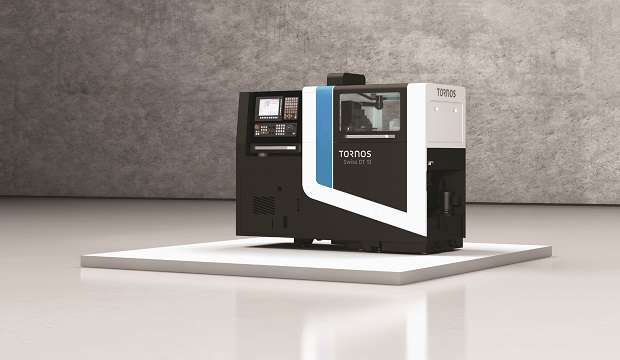
The entry-level segment of Tornos’ machine tool range comprises two product lines, namely the CT20 (the second version of the machine recently introduced), and the Swiss DT machine. Both model variants are subject to constant evolution to remain at the forefront of technology with a cost-effective and competitive platform. Against this backdrop, the Swiss DT13 and Swiss DT26 models have undergone significant modifications that are aimed at improving their rigidity and their axis feed rates. Moreover, the TISIS programming software has been enhanced to enable maximum performance and productivity. CT20: For a rapid return on investment The CT20 is a small and sturdy machine that is easy to use with its five linear axes and two C-axes. In its basic configuration, the CT20 machine comes equipped with drive motors for driven tools for main and back machining operations. Next to the counter-spindle, the machine can accommodate two driven tools for…

September 19, 2019
The new Manufacturing Modernisation Fund will contribute $50 million in co-funding over three years to support transformative investments in technologies and processes, as part of the government’s pledge to help manufacturing businesses innovate, develop global competitive advantage, and create new jobs. Minister for Industry, Science and Technology Karen Andrews says the fund will also “support businesses to upskill workers to maximise the benefits of technology” and is a “key part of the Government’s economic plan to create 1.25 million new jobs over the next five years”. Available funding The $50 million funding pool will be accessible via two streams: $20 million for grants of between $50,000 and $100,000 for small-scale technology and efficiency improvements $30 million for larger grants between…

September 19, 2019
A third-generation family company, Redline commenced operations in 1969 when the legendary record-breaking drag racer Eddie Thomas decided to turn his passion for designing and manufacturing automotive speed equipment into a business. He launched what has gone on to become a precision component manufacturing enterprise, and the drive, passion and high-performance commitment continues today through Eddie’s son Ken Thomas, now Redline’ Managing Director, and his son-in-law Ken Stuart, the company’s Director and General Manager. The two Kens lead a team of highly skilled and dedicated personnel. With an eye to precision, Redline purchased its first Okuma machine in the early 1990s. The company has subsequently developed an enduring, strong supplier relationship with the Okuma brand over the intervening period, with those early precision machines still in operation more than 20 years on. “When reviewing the market for our next new machine, Okuma was the standout with their professional proactive approach,” says Stuart. “It is one of the few companies which has had a constant presence in…
September 19, 2019
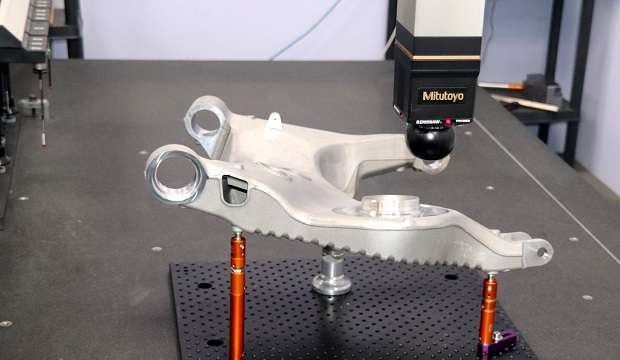
As a manufacturer that works primarily with automotive OEMs, as well as F1 engine manufacturers, aerospace, defence, rail and nuclear business sectors, Advanced Engineering prides itself on its quality management systems. As well as ISO 9001 accreditation, the Birmingham-based company can comply with all requirements, from other industry-specific criteria such as the TS: 16949 Automotive standard and the AS: 9100 standard, to meeting varying customer needs and expectations. The company has spent more than over £3m ($5.4m) on new equipment in the last five years; two of the most recent arrivals have been a VARIAXIS i-700 five-axis machining centre and a Quick Turn 250 turning centre, both from Mazak. This now gives the company a total of 19 Mazak machines, which undertake everything from complex prototype work through to automotive production projects. Such activities entail all levels of…

September 19, 2019
Just like the world-class manufacturers have done, mid-sized Australasian manufacturers want to increase production efficiency, improve quality and traceability, whilst improving the customer experience by being continuously updated. IIoT technology is a key part of Industry 4.0 and large multinational corporations have already adopted it as an essential part of doing business. It’s not good enough to adopt elements of IIoT for the sake of it though, there needs to be a clear perspective to identify the revenue and profit values at stake, the expected time frame to implement it, the technical enablers required, the optimal level of investment in technologies and services, and the capabilities that must be developed to ensure success. According to the report IIoT platforms: The technology stack as value driver in industrial equipment and machinery…