



May 18, 2018
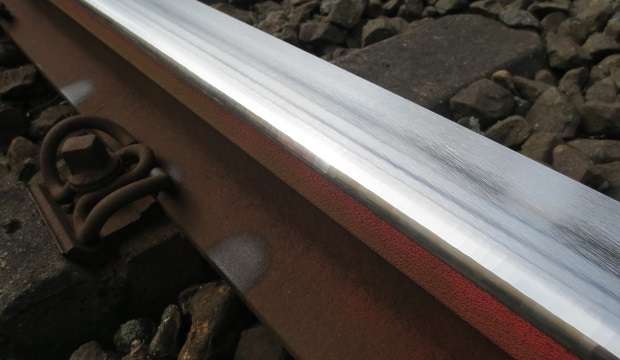
The focus of research & development (R&D) activities in the manufacturing sector is guided by many factors, including the global economic environment, domestic and international demand, regulations and standards, the nature of competitive global supply, the general level of confidence within the sector, and the subsequent capacity of domestic manufacturers to invest in research, innovation, capital equipment and human resources. To assist the rail industry to reduce barriers in undertaking R&D activities, the Rail Manufacturing CRC was formed. The Rail Manufacturing CRC is an industry-led Cooperative Research Centre supporting industry to develop new products, technologies and supply chain networks to increase Australian rail manufacturing’s competitiveness, capacity and productivity. The Centre is funded by the Commonwealth Government’s Department of Industry, Innovation and Science, and will operate until June 2020. Making connections in rail The Rail Manufacturing CRC connects Australian rail businesses with universities and research institutions that are leading the way in innovative rail research. Rail…
May 18, 2018
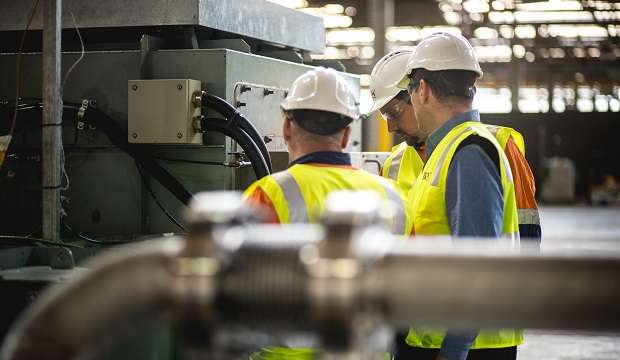
1414 Degrees has spent almost a decade developing its Thermal Energy Storage System (TESS) technology to store electricity as thermal energy by heating and melting containers full of silicon at a cost estimated to be up to ten times cheaper than lithium batteries. The South Australian company moved into a 3,000sqm factory on the site of the former Chrysler /Mitsubishi engine plant late last year. The Lonsdale plant housed one of the largest iron foundries in the Southern Hemisphere in the 1960s and 1970s and was closed in 2005. 1414 Degrees recently began building its first 10MWh TESS-IND system and expects to have at least two sites for installation in the first half of 2018. Work on the first 13.3MWh test cell for a 200MWh TESS-GRID system is expected to begin soon. The company is planning to initially build two grid-scale 1GWh systems in South Australia, which would be comprised of five 200MWh units and potentially play a significant role in stabilising the state’s renewable energy-dependent electricity network. 1414 Degrees has…

May 18, 2018
The International Manufacturing Technology Show (IMTS), the premier manufacturing technology show in North America, will be taking place in Chicago on 10-15 September. This will be followed by JIMTOF2018, the Japan international machine tool fair, on 1-6 November, in Tokyo. AMTIL will have stands in the international associations sections of both exhibitions, with our staff on hand to answer enquiries from exhibition visitors keen to know more about manufacturing in Australia and the opportunities here. In addition, AMTIL will be using the opportunity to engage with other international manufacturing associations. “Having a presence at the big overseas shows like IMTS and JIMTOF is vital for AMTIL,” says AMTIL CEO Shane Infanti. “As well as representing our members on the global stage, they allow us to build stronger links with manufacturing associations from around the world and exchange ideas and information.” AMTIL will be engaging in a range of activities in support of any members who will be attending IMTS or JIMTOF. If you plan to visit either event, please contact…
May 11, 2018
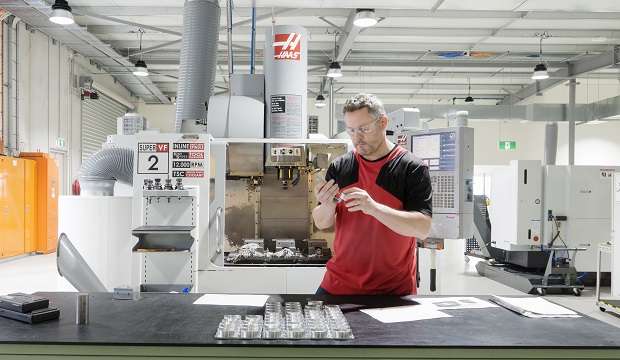
Ellex is a global leader in medical devices for the diagnosis and treatment of eye disease. It has about 10 core products across five areas: glaucoma; diabetic eye diseases; secondary cataracts; age-related macular degeneration; and vitreous opacities (commonly known as eye floaters). The company officially opened new headquarters in the northern Adelaide suburb of Mawson Lakes in December. The new 2.18-hectare facility allows Ellex’s machine shop, clean rooms and administration to be co-located for the first time. A major feature is the Controlled Environment Room (CER), a state-of-the-art, dust-free space where the lasers are built, eliminating contamination risk. Early indications have shown measurable reductions in costs and manufacturing time per unit, without any risk of compromising the quality and reliability of products. Ellex sells its laser and ultrasound systems in more than 100 countries and has offices in the US, France, Germany and Japan. Executive Director Dr Meera Verma said Ellex almost doubled the laser and ultrasound side of the business between 2013 and 2017 and was experiencing remarkable growth –…
May 11, 2018
As issues abound with respect to escalating electricity prices and the Energy Security Board (ESB), and the Turnbull Government scrambles to unveil the National Energy Guarantee, more and more corporate acquirers of large-scale electricity are turning their minds to how best to procure cost-efficient, environmentally-friendly energy. Globally, a trend is beginning to emerge whereby large corporate manufacturing and retail businesses such as Ikea, Volkswagen, General Motors and Dow Chemical have undertaken to purchase their electricity directly from offsite renewable energy generators such as solar and wind farms. This ‘Direct Model’ of procurement is a departure from commonly recognised approaches, which involve a recognised retailer acting as middleman for the procurement. This international trend reveals the potential for a new Australian market to emerge with respect to offsite renewable energy procurement by corporate entities. Models for offsite renewable energy procurement The proliferation of new market structures supporting renewable energy procurement presents challenges of complexity to energy users looking for a better deal. The most commonly used model for large-scale procurement or…
May 4, 2018
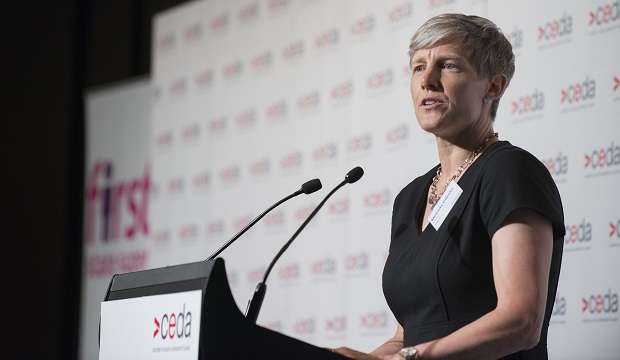
AMT: Tell us about CEDA and what its aims and objectives are as an organisation. Melinda Cilento: CEDA has been around for about 60 years now. We are a member-based organisation; we’re passionately committed to advancing good public policy debates in Australia with a view to driving better policy outcomes that support social and economic development in Australia. AMT: What areas of policy are you seeking to influence? MC: I’m relatively new to the role. For me, the priority this year is to actually take a bit of a step back from the agenda that we’ve had in recent years and reaffirm our purpose by exploring the whole concept of economic development. It’s a phrase we use in our title, but when you think about a country that’s now grown consistently for 27 years, and we are an advanced developed economy, I think it’s time to circle back to the concept of economic development and have a conversation about what that actually means, what we think…
May 4, 2018
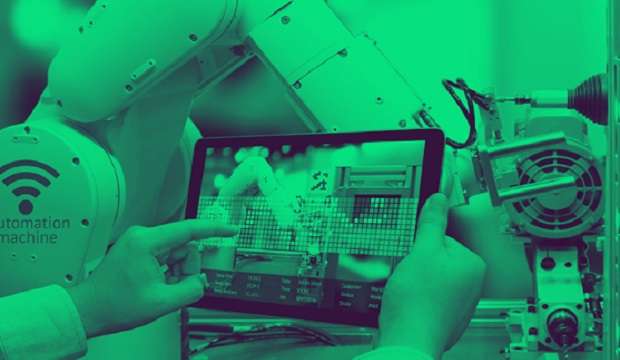
FUTUREMAP is a business diagnostic tool specifically developed for small-to-medium (SME) manfuacturers by the IMCRC in collaboration with the Advanced Manufacturing Growth Centre (AMGC) and the Federal Government’s Entrepreneurs’ Programme. Through either one-on-one structured discussions or interactive group workshops, FUTUREMAP enables participating manufacturers to map the current state of their business and identify where they can lift their awareness, competitiveness and build resilience against 13 key areas of industrial and advanced manufacturing competitiveness. The IMCRC will be facilitating the first FUTUREMAP interactive workshops at NMW, providing Australian SME manufacturers with an opportunity to identify areas of focus and potential investment to transform and future-proof their business in a rapidly digitalised world. David Chuter, CEO and Managing Director of the IMCRC, is confident that FUTUREMAP, as one of the first business diagnostic programs designed specifically for the Australian SME manufacturing sector, will become an engaging and valuable resource for the broader industry and potentially beyond. “The intent of FUTUREMAP is to…
May 4, 2018
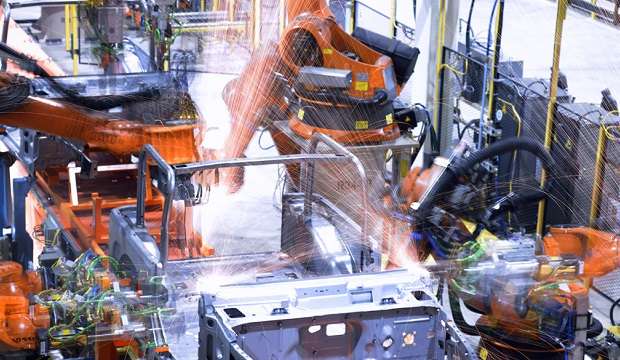
April marked a 19th consecutive month of expanding or stable conditions for the Australian PMI – the longest run of continuous expansion since 2005. Readings above 50 indicate expansion in activity, with the distance from 50 indicating the strength of the increase . Six of the eight manufacturing sub-sectors expanded in April (according to trend data), with four sub-sectors reaching record highs in trend terms: machinery & equipment (up 1.0 point to 61.2); petroleum, coal & chemicals (up 0.4 points to 67.6); metal products (up 1.6 points to 63.8); and textiles, clothing & furniture (up 5.6 points to 57.1). Ai Group Chief Executive Innes Willox said: “The manufacturing sector extended its broad-based expansionary run in April. Growth was led by the machinery & equipment; metal products; coal, petroleum, chemical & rubber products; and non-metallic mineral product sub-sectors, all of which are enjoying strong demand from high levels of building and construction activity. The largest manufacturing sub-sector – food & beverages –…

May 4, 2018
The Australian Manufacturing Technology Institute Limited (AMTIL) is the peak national body for the precision engineering and advanced manufacturing sector in Australia. Having a stand enables it to show its support for AMTIL members visiting or exhibiting at NMW, while also providing the opportunity to engage with Australian manufacturing businesses more generally and discuss the ways it can help them. For AMTIL members, ‘Happy Hour’ drinks will be held on the Wednesday and Thursday of the show (9 and 10 May) , from 4.00pm at the AMTIL stand. Any members at the show are invited to drop by the AMTIL stand for refreshments and a chat. AMTIL has a long-standing relationship with NMW, having co-located its own Austech exhibition with NMW for many years, and continuing to do so every second year in Melbourne. AMTIL’s participation in this…
May 4, 2018
Intensified networking and miniaturisation Digitalisation is changing the connection technology environment, as an increasing number of products and even individual components can and need to communicate. This means an increasing volume of data must be transmitted at increasingly fast speeds – something familiar in offices for years is now moving into the factories. Continuous increases in the performance of microchips are not only driving digitalisation but also – in conjunction with efforts to improve resource efficiency – are resulting in a move towards increasingly smaller and more compact products and devices. A smartphone now has the processing power of a 1990s supercomputer but at a fraction of the size, energy consumption and price. This is having a big impact on industrial connection technology. Robots and other machines are becoming more compact and demanding an increasing number of data connections. Special cable designs and technical tricks – such as insulation, for example – help to save…

April 27, 2018
The movement of goods from A to B may seem a simple process on paper for the average consumer. But it has taken years of development, progress and innovation to reach this level of streamlining, and that process is only becoming faster and more efficient. For the industrial supply chain, this can be an intricate process, involving a variety of stakeholders with countless variables to consider along the way when moving goods from one place to another. Road, rail, air and sea transport, warehousing, packaging services – there are many different facets involved in the process and adding value to every step of the supply chain. Giving the freight and logistics providers, and their customers – manufacturers, wholesalers and retailers – the opportunity to see the businesses, technology and innovation leading the cutting edge of progress within the Australian and international supply chain firsthand is one way to help the industry…

April 27, 2018
In CNC systems, the design of a mechanical part and its manufacturing program is highly automated. The part’s mechanical dimensions are defined using computer-aided design (CAD) software, and then translated into manufacturing directives by computer-aided manufacturing (CAM) software. The resulting directives are transformed by post-processor software into the specific commands necessary for the chosen machine to produce the component. What that means, in simple terms, is that the days of “one man, one machine” are now a fast-fading memory. One programmer at a computer console can program, implement, and supervise machine work that would be the equivalent of several operators on lathes, grinders, routers, mills, and shapers in earlier times. Computer-controlled, automated machining methods can achieve reaches, holds, and other actions that human operators and conventional machines typically don’t do efficiently. Generally, lathes and machining centres have two axes, but more sophisticated models have more, allowing for more advanced jobs to be…
April 20, 2018
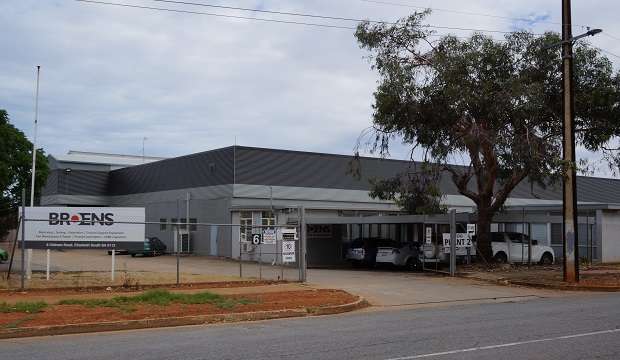
Broens began operations in Sydney’s south-west suburbs in 1979. Thriving as a manufacturer providing subcontract toolmaking and general engineering services, it soon diversified into sectors such as automotive, aerospace, medical, mining and heavy industry. In 2007, it took over two companies in Elizabeth, northern Adelaide – Static Engineering and Calbic Engineering – and consolidated them to form Broens SA. By then, Broens was a globally respected provider of design, manufacturing and engineering solutions, exporting to more than 16 countries and involved in projects such as the Boeing 787 Dreamliner and the F35 Joint Strike Fighter. However, towards the end of 2016, the company was placed into liquidation. At that point Adelaide City Engineering Pty Ltd came into the story. Adelaide City Engineering was formed in 2003 by Timothy Lillie as a new venture. The aim of the business was to provide quality services with continual improvement to its customers while also providing a safe…