




March 30, 2018
Eclipx Commercial recently commissioned independent research house East & Partners to delve into asset finance in Australia. Who uses it? Why do they use it? And ultimately, does asset finance offer any tangible benefits to businesses selling equipment or businesses buying equipment? We started by looking at small and medium businesses’ overall access to the funds they need to grow, both in terms of the availability of funds as well as the time it took for approval, and moved on to the specific pros and cons of asset finance. Some of the results, which can be accessed at Eclipx Commercial’s website, were surprising.…
March 24, 2018
Industry 4.0 is the latest phase in digitisation for the manufacturing sector. With increased productivity through intelligent, networked production systems, an Industry 4.0 marketplace means that machines offer their services and exchange information with products in real-time. Using internet or cloud-based platforms for businesses to connect to their machinery enables manufacturers to digitally connect to their own production line, machinery and supply chain. Access to the production control system via tablet or smartphone allows mobile productions planning. Cloud technology provides workers with an insight into the status of productions orders and the machines along with ease when adjusting information such as job orders or production quantities. Industry 4.0 has been driven by four disruptors: a rise in data volumes; increased computational power and connectivity; the emergence of analytics and business intelligence capabilities (for example, new forms of human-machine interaction such as touch interfaces and augmented-reality systems); and improvements in transferring digital…
March 23, 2018
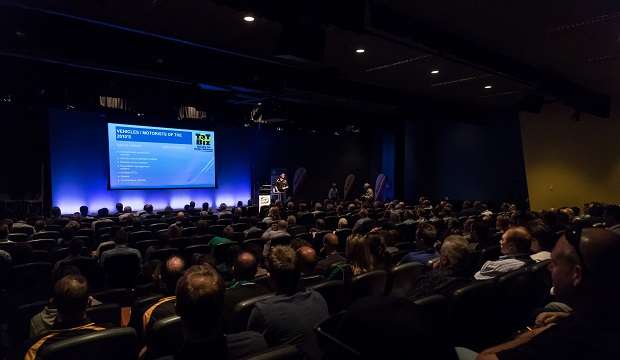
Autocare 2018 is an event focused on education, information and industry development, designed to address the latest developments, trends and issues facing the automotive aftermarket parts and service supply chain sector. Organised by the Australian Automotive Aftermarket Association (AAAA), the national body representing the $14bn Australian automotive aftermarket industry, the event leaves no stone unturned in ensuring that anyone involved in the automotive parts manufacturing, distribution, wholesale and retail sectors will benefit from taking part. Rod Sims, Chairman of the Australian Competition and Consumer Commission (ACCC), will provide the opening keynote address, in which he will outline the major findings and recommendations arising from the watchdog’s market study into the new car retailing industry and its implications for the Australian automotive aftermarket industry. Sims will also outline what the ACCC intends to do to ensure that the independent aftermarket can have confidence in the future. Other highlights of the speaker program include Saul Eslake, one of Australia’s best known and…

March 23, 2018
In manufacturing, we see an industry under pressure. An industry trying to do more with less. A more proactive approach is needed now to break out of this cycle of simply fulfilling demand. While it may seem unlikely to some, your quality manager or quality director is in the perfect position to guide this strategy. Reason one – A focus that is principled and positive Quality leaders are focused on … quality. By this I mean customer satisfaction and reputation building are inherent in their goals. ‘Quality’ often means meeting the customer requirements or meeting safety objectives. They are high-integrity individuals who make analytical decisions based on fact and with no hidden motive. It is this type of input that is needed when difficult choices have to be taken. HepcoMotion, a manufacturer of linear motion systems and automation components, is an example of a company who…

March 23, 2018
AMT: Let’s start with Brand Tasmania. When was it established and what are its aims and objectives? Michael Grainger: The Brand Tasmania Council was formed in the early 1990s. It was established by a group of like-minded individuals who were exporting and promoting Tasmanian product all over the world. It became affiliated with the State Government not long after that and has grown over the years to represent Tasmania in many different aspects – for example, food & beverages, tourism, manufacturing, education and the arts are all pillars of our organisation. We share a fairly broad and equal range of promotion. AMT: What sort of activities does it engage in to achieve its objectives? MG: We engage really with the Tasmanian companies that are represented by Brand Tasmania to promote what they do, encourage and stimulate growth in the economy, create employment and just promote all things that are Tasmanian. We attend trade shows, we have our eFriends mailing list, a very big subscription for our Tasmanian…
March 17, 2018
One way to anticipate the future is to look to the past. British economist Angus Maddison has estimated that in the year 0, the population of Western Europe was 24.7m. A millennium later it was 25.4m, an increase of just 700,000. Total global population increased by only 37.3m in 1,000 years. Had we continued at this pace, in 2015 there would have been 312m people on Earth. Gross domestic product fared even worse. Between the year 0 and 1,000 - GDP per capita was stagnant or fell across all of Maddison’s seven global zones. Over the next 800 years, the pace quickened a little. World population quadrupled to crack the billion for the first time. By 1819, the Eastern European population of 91.2m generated some $60.9bn worth of stuff (1990 International $) or $665 per person. Then in 1820 everything changed, sort of. Fuelled by a potent mix of technology, ideas, appropriated resources, and a distressing number of…

March 16, 2018
AM refers to methods that generate three-dimensional structures layer by layer. Each AM technology is compatible with the specific form of the raw input material, which may be in liquid, powder and sheet form. AM processes are not subject to the constraints associated with traditional manufacturing methods and provide significant opportunities for the design of novel geometries and complex structures, such as cellular structures in particular. Cellular structures possess a number of properties compared to solid structures. For example, the design freedom offered by AM may be used to enhance the strength-to-weight ratio of structural components by transforming solid geometry into a cellular structure or space-filling hollow sections of the model with a cellular structure. The cellular structure within the model may be useful in distributing the loads evenly compared to a hollow model while conforming to the geometric boundaries of the object. This article discusses some of the basic concepts behind the metallic lattice structures manufactured using selective laser melting (SLM)…

March 9, 2018
As a longstanding industry leader and innovator in the world of metalworking, Iscar has taken the IQ concept of machining intelligently even further by applying logical improvements to tool development. The result is the LogIQ range of tooling solutions that both predicts and fulfils customer needs. LogIQ represents a smart logical progression in a series of strategic moves to implement Industry 4.0 standards while ensuring continuity and stability. Industry 4.0 directives – to integrate interoperability, technical task assistance and decentralised decision-making into factory practices – challenge machining centres to review their operations and adopt procedures to meet these objectives. Machining logically responds to this need. Iscar provides the tools to make it happen. LogIQ applications have created new tool families, upgraded existing lines, and inspired innovative product ranges to maximise equipment utilisation and optimise performance. Listening to customer concerns and staying ahead of market developments, Iscar’s product managers, research & development (R&D) engineers and designers have combined their expertise and experience to develop highly effective and logical tool solutions that meet today’s machining centre demands. In an industry where…

March 9, 2018
Like many sheet metal manufacturers, Wilson & Gilkes provides custom-designed solutions for applications as well as off-the-shelf products under their brand names Bosco, Boscotek, Lectrum, Gilkon and Argent. Improving their products to be stronger, safer and more efficient is an ongoing process in their business practice, so it’s easy to overlook as R&D because it’s simply second nature in innovative businesses like theirs. In conversations regarding its product development program, the company’s accountant and advisor William Buck identified the potential for an R&D Tax Incentive claim. Ian Wilson, Director of Wilson & Gilkes, contacted William Buck, which assessed the company’s business processes and projects and found it met the eligibility criteria of the R&D Tax Incentive program, enabling them to receive a sizeable R&D claim. So what constitutes R&D? And how would you know if…

March 2, 2018
Among other things, the new system from acp (advanced clean production GmbH) increases productivity by around a third when machining workpieces made from polyether ether ketone (PEEK) and aluminium. A further advantage is that components and machines stay much cleaner. In recent years, the use of CO2 as a coolant for machining processes has become much more popular as an alternative to conventional cooling lubricant concepts. One of the reasons for this is the higher rate of material removal, which increases productivity and also reduces tool wear and the associated downtimes. The so-called cryogenic cooling method with carbon dioxide therefore decreases production costs. With its quattroClean snow jet technology, acp offers a cooling system that has proved its worth in serial productions. It can also be integrated into CNC machines and machining centres at a later stage. The quattroClean system works with liquid carbon dioxide, which is generated as a by-product from chemical processes as well as from the generation of energy…
March 2, 2018
February marked a 17th month of expanding or stable conditions for the Australian PMI – the longest run of expansion since 2005 (readings above 50 indicate expansion in activity, with the distance from 50 indicating the strength of the increase). For the fourth consecutive month all seven activity sub-indexes in the Australian PMI expanded. Five sub-indexes slowed, however, with only employment (up 5.7 points to 57.8) and exports (up 4.7 points to 56.5) accelerating. Six of the eight manufacturing sub-sectors expanded in February (according to trend data), with the larger sub-sectors such as metal products (up 1.7 points to 58.3) continuing to see a sustained period of expansion and/or recovery. Weaker conditions remain evident in textiles & clothing (an historic low of 33.0 points adding to more than two years of continuous contraction) and printing & recorded media (down 5.3 points to 39.7). “The broad-based expansion in Australia’s manufacturing sector continued in February led by the food & beverage and the petroleum, chemicals &…
February 23, 2018
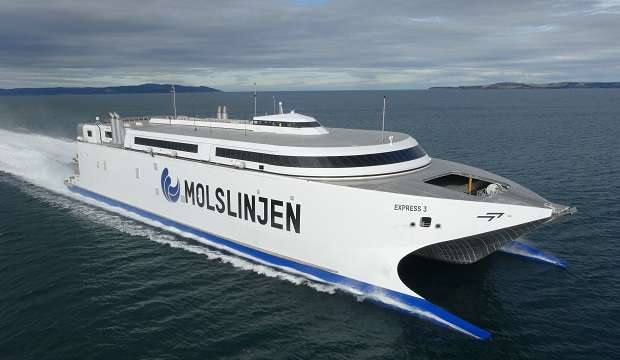
Four new deals worth a total of more than $80m are expected to generate nearly 50 new skilled jobs. Tamar Hydro in Exeter was selected in November to build hydro turbines for Indonesia, while Taylor Bros in Hobart will build two high-powered Antarctic landing barges for Australia’s new icebreaker RSV Nuyina. Meanwhile Liferaft Systems Australia (LSA) has signed a contract to build inflatable marine evacuation systems for a new class of warship being built in Britain, and Penguin Composites is working on its first major Defence-related contract and putting on 15 new employees. Tamar Hydro will create 20 new positions after signing the contract to build turbines for an extensive mini-hydro network in Indonesia; the deal is expected to bring in about $45m over three years. General Manager, David Hillier, said it was a significant coup for the Exeter-based business, which is now looking for a larger factory in the Westbury or Bell Bay areas. “This contract will bring us into the modern age with new machinery,” he said. “A…
February 23, 2018
In this report, certain generic words such as product and others are used. However it should always be understood that, while manufacturing terminology may be used, the ideas described are equally applicable to service organisations. They may also cover specific elements of a business process, rather than simply the whole business. Many people have the impression that mass customisation is about mass production, and through some magical process allows an unlimited number of variations to be offered to the customer. This is wrong. Mass customisation is about tailoring the offering to the customer, while retaining the lower costs per item that are offered by mass production. This allows SMEs to complete with larger enterprises. Mass customisation is also highly data-driven. Consequently, it is relevant to the ongoing developments in the field of Industry 4.0. From pull to push, and back again Before industrialisation, everything was craft production,…