



April 14, 2022
The word “robot” was first coined in Czech writer Karel Čapek’s play ‘R.U.R.’, written in 1920 and first performed in 1921. The play begins in a factory that makes artificial people, called roboti (robots), whom humans have created. Initially happy to work for humans, the robots revolt and cause the extinction of the human race. While ‘R.U.R’ was the first countless works of science fiction in the century since that have depicted robots as sources of menace or wonder, the reality today is much more down to earth. Modern robots have become a feature of many modern workplaces, but nowhere more so than in the manufacturing industry. In today’s factory, robotics and automation systems have liberated human personnel from an ever-growing array of repetitive and dangerous tasks. At AMW 2022, the Robotics & Automation Zone will showcase the latest state-of-the-art equipment and processes for the optimisation and digitalisation of manufacturing operations. While some of the world’s leading robot brands will be on display, there will also be exhibits from…

April 12, 2022
Under the laws of cricket, it is illegal for players to rub any substance other than saliva and sweat onto the ball, let alone scuffing it with their fingernails. Similarly, strict rules apply to the manufacturing of cricket balls. Cricket ball manufacturer Kookaburra designed its first ever machine tending robotic system to produce the perfect ball, with the help of industrial robot supplier TM Robotics and its Australian partner MAP Services. Machine-tending is repetitive work. The job of loading and unloading machines with parts or materials is usually done by humans. In the production of cricket balls, workers would place covers ― the outside leather of cricket balls ― onto trays after being pressed into shape to form half of a cricket ball. These trays are then placed into a rack and moved to the next process ― trimming excess leather from the pressed cover. Originally, when Kookaburra approached MAP Services, the distribution partner for Shibaura Machine’s industrial robot ranges in Australia, its system for manufacturing cricket balls involved having human operators at the…

April 12, 2022
A regional development package has been revealed as well, targeting a bunch of regional centres includes massive investment into infrastructure projects in the Northern Territory, Queensland, New South Wales and the Pilbara area of WA. These sectors cover telecommunications, road, rail and regional health. The commitments total more than $21bn over the medium term. Simon Birmingham, the Liberal government finance minister, described the government’s budget management was allowing for the delivery of a dividend back to taxpayers. But, he said, “it seeks to apply those dividends in a careful, cautious, responsible way to set Australia up for the future.” The deficit for 2021-22 is expected to be $79.8bn, with total deficits across the four-year forward estimates totalling $224.7bn.…

April 12, 2022
AMT: You were recently the author of a report ‘Rebuilding Vehicle Manufacturing in Australia’. Tell us a little about its findings. Mark Dean: My report shows that Australia has all the key elements to develop an electric vehicle (EV) manufacturing industry in this country. We have rich mineral reserves. We have an advanced industrial base. We have a highly skilled workforce. And we have consumer interest, not just in the purchase of EVs, but also in seeing an EV manufacturing industry in Australia. The one thing we lack is a Federal Government with the political will to create an active, interventionist industry policy to bring those pieces together and develop a plan for the growth of an EV industry, which could effectively be economy-transforming. And I’ve developed four building blocks around areas that would be fundamental to an industry policy for EV manufacturing in Australia. AMT: Would this be a significant export industry as well? In the past Australian car-makers often struggled outside the domestic…
April 12, 2022
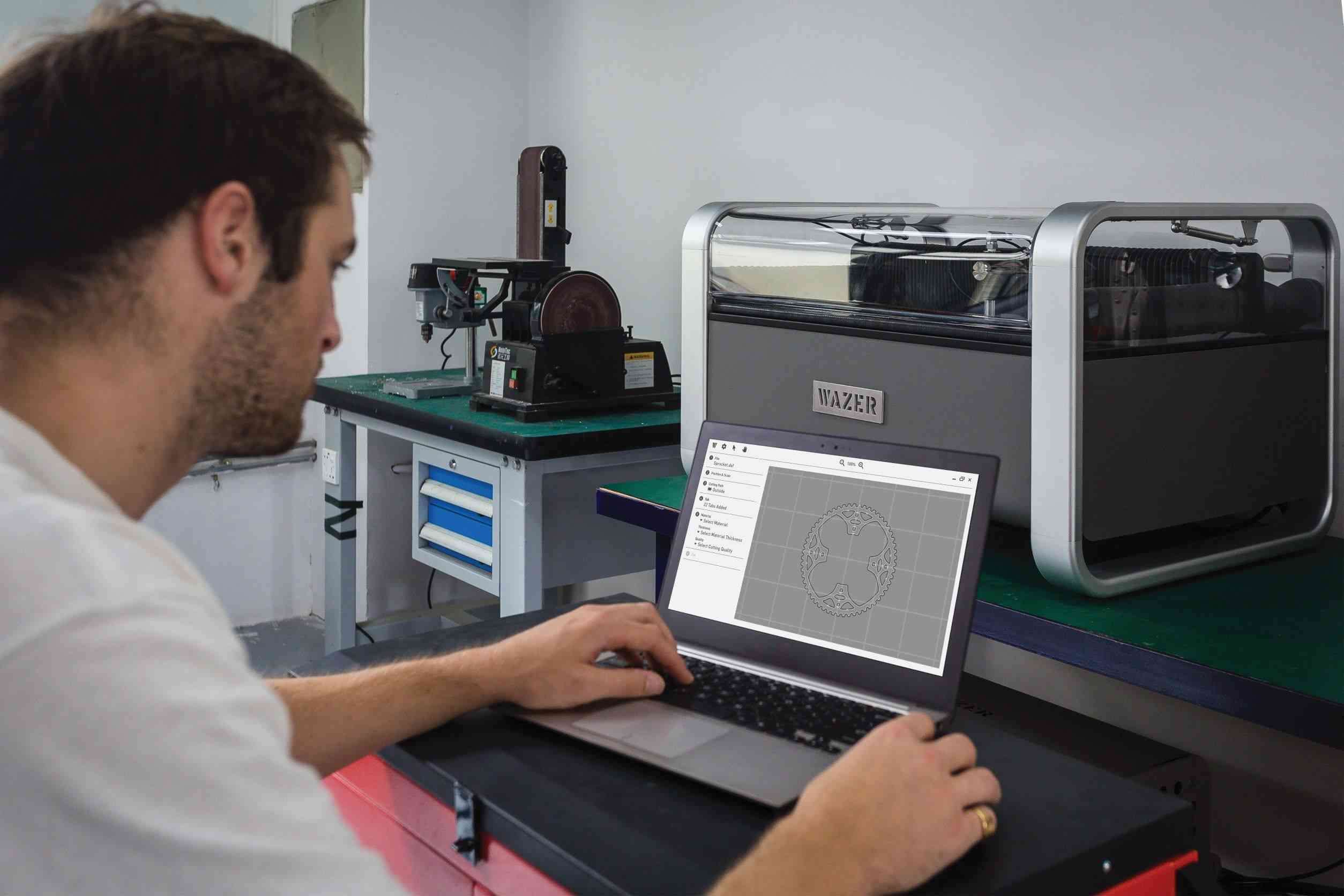
The co-founders of WAZER, Nisan Lerea and Matthew Nowicki met at Penn Engineering in the US when they were building custom racing cars for the Formula SAE international competition. Their quest for a solution to make precision cuts in hard materials sparked their interest in low-cost waterjet technology. In 2012 Nisan led a team of undergraduate students on research in developing the technology and in 2015, the project had advanced to the point where both he and Matthew quit their jobs to continue developing the waterjet. By January 2016, the team temporarily moved to Shenzhen in China to join the Hax Accelerator, the world’s first and largest hardware accelerator. Most of that year was spent in Shenzhen to develop the business and refine the design and engineering of WAZER. During that time an engineering team was assembled to assess market…
April 12, 2022
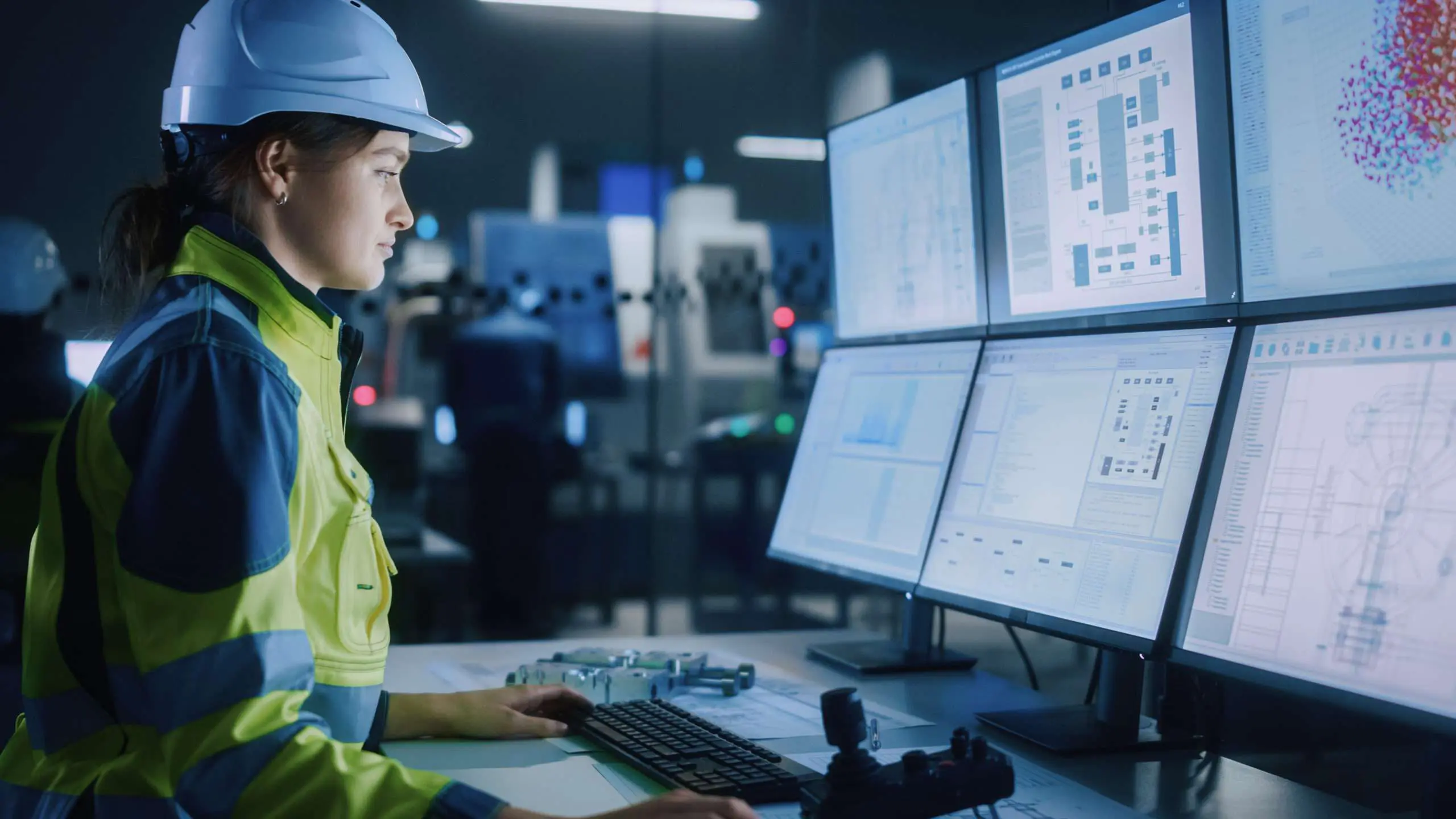
“COVID has been a game-changer in many negative ways over the past couple of years, but it has also delivered many positive opportunities by accelerating change in key Australian and New Zealand industries,” said Anthony Wong, Regional Director – South Pacific at Rockwell Automation. “These ongoing efficiency and innovation gains will be most pronounced in key local industries – such as food and beverage manufacturing, mineral processing, oil and gas production, and public infrastructure.” Wong outlined a series of Rockwell Automation’s initiatives in an exclusive interview with AMT magazine, saying the new technologies and capabilities will have major relevance to its readers. Rockwell Automation – which employs over 24,000 people and has customers in more than 100 countries – is best known for its FactoryTalk software and Allen-Bradley automation systems, incorporating its programmable logic controller (PLC) and programmable automation controller (PAC) ranges from large to small and even micro applications. The company continues…

April 7, 2022
The history of welding dates back thousands of years. The earliest examples of the technique stem from the Bronze and Iron Ages in Europe and the Middle East. According to the ancient historian Herodotus, iron welding was “single-handedly invented” by the Glaucus of Chios, a Greek sculptor in metal, around 500 years BC. Today, welding is an essential manufacturing process used across a range of settings, from medical devices and electronics, to larger-scale applications such as mining or shipbuilding. It continues to advance to new levels of technological sophistication. Robot welding has today become commonplace, and researchers and companies continue to develop new welding methods and to gain greater understanding of weld quality. The Weld Solutions Zone will provide a comprehensive showcase for this critical part of the manufacturing world. As well as offering a chance to see some of the latest, state-of-the-art welding technology, it will feature an array of exhibitors supplying ancilliary equipment, safety systems and gases. Australian Manufacturing Week 2022 will take place at the International Convention…
April 4, 2022
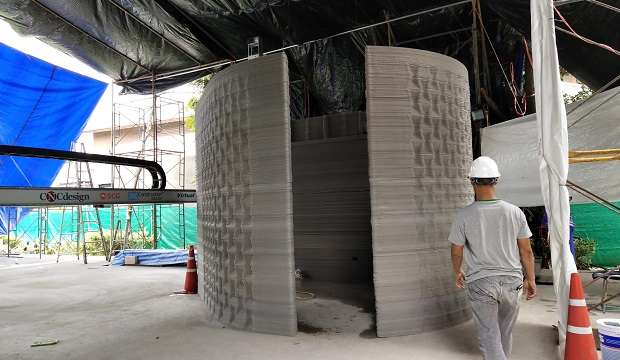
Founded in 1984, CNC Design is a leader in motion control and drive-based solutions throughout Australia, New Zealand and South-East Asia, and has established itself as one of the world’s foremost specialists in developing and retrofitting CNC machinery. CNC Design is based in Nunawading, Victoria, and in the last few years the company has been building and supplying very large volume 3D printing and machining systems for thermoplastics, concrete, and wax. In addition, CNC Design is the exclusive representative for Siemens machine tool products in Australia and South-East Asia, and has partnerships with Güdel and Comau. The company has an extensive service, sales and engineering network in the Asia-Pacific region, with more than 175 people located in its offices in Australia, New Zealand, Indonesia, Thailand, Malaysia and Singapore. The team at CNC Design has completed more 2,500 projects in 30 countries. Big area additive manufacturing Drawing on its extensive experience…
April 4, 2022
Australia’s manufacturing industry spent $5.3bn on electricity in 2019, more than the combined spend of mining, transport, utilities and construction. Of this consumption, 45% of energy consumed by manufacturing is derived from natural gas and 22% comes from coal, while renewables only account for 28%. The writing’s been on the wall for fossil fuels for a considerable time now. Continuing to rely on natural resources to maintain growth exposes a business to serious risks, not just to its public image, but also exposes its tangible and intangible value. If the environmental arguments alone aren’t rousing enough, the price of renewable energy now rivaling those of fossil fuels means that manufacturers can make huge financial savings by getting a handle on their energy usage. There are two ways manufacturers can go about saving with smarter energy use: they can switch to renewable energy; or they can find ways to cut down on the amount of energy…

April 4, 2022
Toolbox can also provide an innovative 3D unfolding service, whereby it can be fed full 3D schematics of a product and it will select precisely all the 2D sheet metal surfaces required to be cut by a laser workshop. It’s also possible to create the drawing without using any CAD software, using Toolbox’s Quick Part parametric parts library. Quick Part has a broad range of customisable parts, including brackets, flanges, gussets, and plates that can be adjusted to the specific needs of the user. “ToolBox is designed to put the tools in the hands of small laser cutting and fabrication workshops that are looking to grow their business,” says Felipe Lechuga, President of Tempus Tools. “It helps with cleaning drawings, part creation or extraction, and laser cutting calculations, so the business can quote more jobs and expand its operations. With the shift to Industry 4.0, slow quoting processes just aren’t competitive anymore, so job shops need new tools to get…

April 4, 2022
In harsh environments, for example where heavy rainfall or snowfall is likely, soldiers need the reassurance that their presence can remain concealed. Composite telescoping poles are chosen to support camouflage nets over alternative materials like aluminium because of several advantages such as lighter weight and speed of assembly. The composite tubes must therefore combine the strength and durability needed for support with the lightweight flexibility to be able to carry heavy loads. To achieve these properties, careful consideration goes into every stage of manufacturing, from choosing the reinforcing fibres to the manufacturing process itself. So, what are these considerations and how do they ensure the end product is fit for purpose? Choosing the composite material Early applications for fibreglass date back to World War II, where design engineers used it for…
April 4, 2022
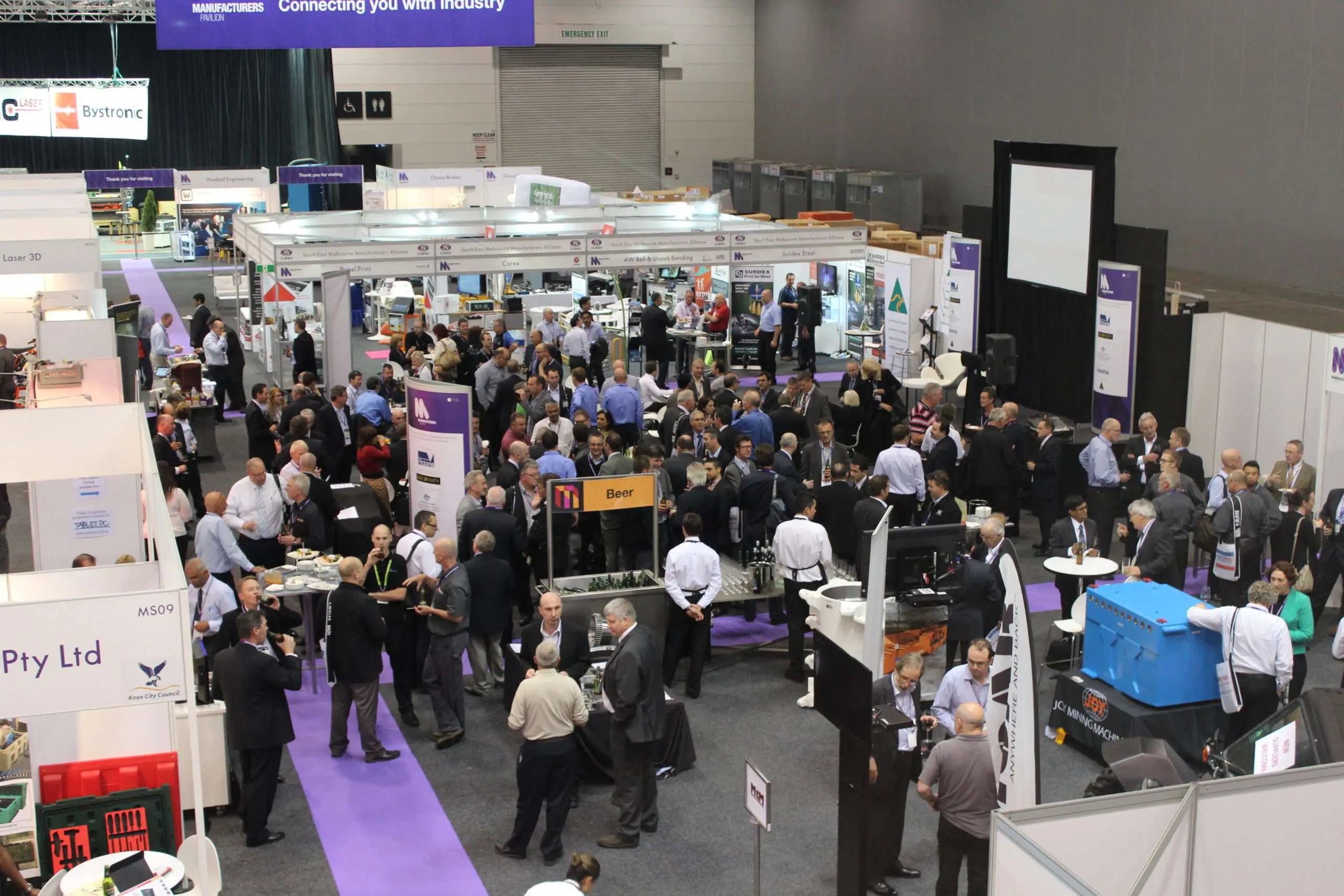
The Australian Manufacturers’ Pavilion is a specially dedicated section of the Australian Manufacturing Week exhibition that spotlights Australia’s precision engineering and advanced manufacturing industry. Having first featured at the Austech 2013 exhibition, the Manufacturers’ Pavilion is now an integral part of AMW, with 12 manufacturing businesses signed up to exhibit this Aussie year. “We’ve worked very hard over the years to make the Manufacturers’ Pavilion a key feature of AMTIL’s exhibitions, and it’s been really satisfying to see it establish itself,” says Shane Infanti, CEO of AMTIL. “We see the Manufacturers’ Pavilion as an opportunity to showcase our industry as a whole, and we’ve got a really strong line-up of exciting, innovative manufacturing companies that have booked stands this year.” The Australian Manufacturers’ Pavilion showcases the capabilities of component manufacturers, precision engineering firms, toolmakers, advanced manufacturers and general engineering companies. For example, Marand Precision Engineering designs, manufactures and sustains complex and innovative equipment and products primarily for the defence, aerospace, mining, rail, and renewable energy industries, while Marsh Alliance is one of the most…
March 24, 2022
Advanced Composite Structures Australia (ACS Australia) is a key participant of the Blue Economy Cooperative Research Centre (Blue Economy CRC), bringing critical composites engineering design and manufacturing capabilities to major renewable energy projects in the aquaculture space. The most recent projects to be announced involve the design and manufacture of renewable energy devices taking advantage of advanced composites technologies. In partnership with the Blue Economy CRC, headquartered in Launceston, Tasmania, Carnegie Clean Energy and other industry experts, ACS Australia is progressing the development of two major projects: the MoorPower Scaled Demonstrator project; and a Mooring Tensioner for wave energy converters. MoorPower Scaled Demonstrator project Global aquaculture is moving operations further offshore, presenting a challenge to access clean renewable and reliable offshore energy. Moored feeding barge facilities rely on diesel fuel generators for power out at sea, leading to high operating costs and carbon emissions. The MoorPower project aims…