




January 31, 2019
I wanted to start off with that because 2019 is going to be a big year for us here at AMTIL. Most importantly, it will be the 20th anniversary of the establishment of our Association. It seems hard to believe it’s been two decades since AMTIL was formed with the merger of the Institute of Machine Tools Australia and the Australian Machine Tool Association. The time has flown by, but the enthusiasm of the team here hasn’t faded, and we’re looking forward to many more years supporting the interests of manufacturers and manufacturing technology suppliers in Australia. We hope to be holding a number of events to celebrate AMTIL’s 20th birthday, but the biggest of all will – of course – be Austech, which will take place at Melbourne Convention and Exhibition Centre (MCEC) from 14-17 May. As Australia’s premier showcase for advanced manufacturing technology, Austech has been a core part of our activities for almost as long as AMTIL itself has been in existence. The show has…
January 24, 2019
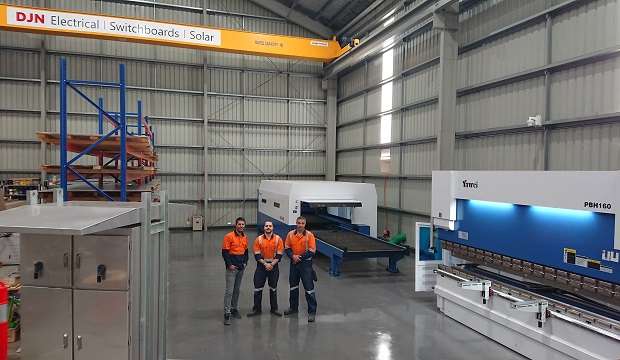
Founded in 1994 by David Nabulsi and his wife, this specialist manufacturer of switchboards and switchrooms took advantage of the latest in pressbrake and fibre laser technology to boost its capabilities and efficiencies in this area. Nabulsi, an industrial electrician by trade, initially established DJN Electrical as an electrical contractor primarily specialising in industrial controls and industrial electrical work. In 2000 he spotted an opportunity to start making switchboards, and built a specialised workshop for switchboard manufacturing from which DJN Switchboards was born. These used enclosures that were pre-manufactured by external companies. Early in 2017, Nabulsi decided to establish his own sheet metal department to enable him to produce the cabinets and assemblies in-house. “We wanted to build our enclosures in the most modern way possible,” says Nabulsi. “I bought a CAD designer on board to design our own cabinetry, and looked at what CNC pressbrake and laser cutter we would buy. We ended up selecting the…
January 24, 2019
Over more than two centuries of machining history, the elements of production economics have multiplied in number. Manufacturing first evolved from craft-level single-item output to mass production of standardised parts using machine tools. Improving manufacturing methods brought about a second generation of mass production featuring production lines and output of increasingly greater numbers of identical parts: a high-volume, low-product mix (HVLM) scenario. Then CNC machines and robots fostered a third generation of mass production efficiency. Most recently, digital technology applied in programming, machine tool controls and workpiece handling systems is facilitating a fourth generation of manufacturing production, known as Industry 4.0, that enables cost-efficient, high-mix, low-volume (HMLV) production. To effectively accomplish the shift from HVLM to…
January 17, 2019
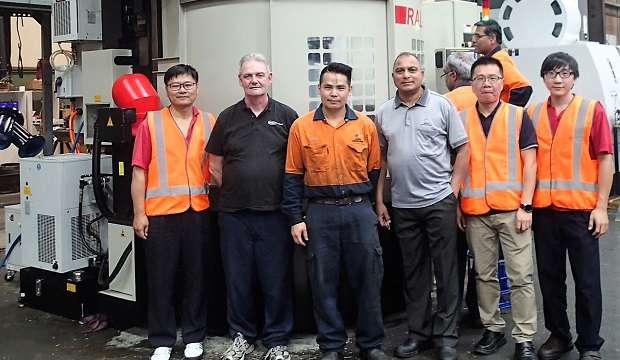
The new machine is a Kingfisher RAL12 CNC vertical lathe by Radar Industrial, a Taiwanese manufacturer of high-precision machine tools. The vertical spindle is supported to a full 360 degrees, eliminating ‘spindle droop’ and increasing the maximum weight allowable on the spindle. As Isaac Newton would have noticed, gravity provides a downward force on the workpiece, assisting the workholding. Minimal clamp force can be applied where desirable, and gravity keeps each part in the chuck. This not only provides additional stability, especially when machining delicate parts, but also dissipates the cutting forces created by heavy cutting. Increasing capability These facts were in the thoughts of the management team at Meeke Engineering as they considered the needs of their current and prospective customers. The team was seeking to add more capability and capacity to the company’s workshops by installing a new machining centre. They worked together with the engineers at 600 Machine Tools to identify they right machine for the envisaged…
January 17, 2019
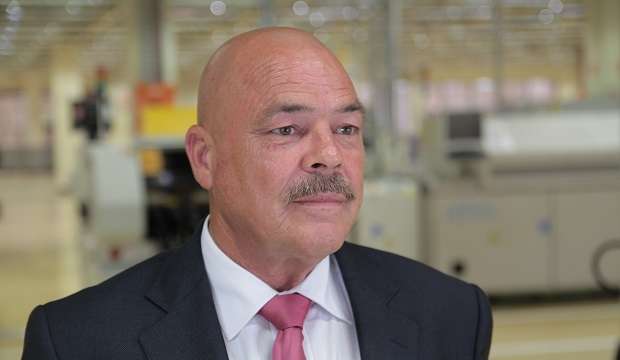
Led by AMTIL and generously supported by the Victorian Government, the AM Hub has been established to grow and develop additive manufacturing (AM) capability. Its goals are to: promote and market AM capabilities; support the creation of high-quality AM jobs; provide a forum for dialogue and communication for the AM industry; encourage R&D, innovation and collaboration; and provide a strong, cohesive voice on AM sector development. John is uniquely well placed to oversee the direction of the AM Hub, having been at the forefront of the adoption of AM technology in Australia for more than two decades. In the early 1990s he launched Interact Plastic Services, the first private company in this country to move into AM, having purchased a Stratasys FDM 2000 3D printer. For John, part of the appeal of his new role with AMTIL has been the opportunity to re-engage with AM and…
January 17, 2019
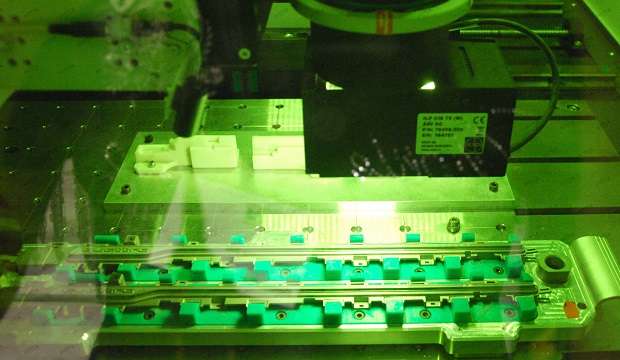
Chrome-plated decorative panels with 3D lettering in two different matt finishes that also glow in different colors at night have only been available in series production from a German OEM for a few weeks. The changing day-night design – the haptics above the 3D lettering by day, the illuminated color selected by the driver at night – is an eyecatching feature, at a time when customisable interior ambience is currently a trend among OEMs. Dr Carsten Brockmann, KTB’s Managing Director, is enthusiastic about the new design: “This greatly increases the value of the interior design. This day-night design also allows further customisation of the car’s interior. The panel’s surface and contour lighting gives us a new design element that appeals to the senses.” Using a multi-component injection moulding process, KTB manufactures components of polycarbonate (PC) and acrylonitrile butadiene styrene (ABS) and finishes them in…

January 17, 2019
The question businesses need to ask is whether they are ready for digital transformation, and whether they’ll find themselves forging ahead, or falling behind? It’s time discuss how manufacturers can better prepare themselves for Industry 4.0 and take that all important step of digitising their manufacturing facilities. Kevin Dherman, SYSPRO’s Chief Innovation Officer, believes the best way to prepare your business for Industry 4.0 is to implement an enterprise resource planning (ERP) system that can pave the way for digitisation by providing real, working solutions that will enable manufacturers and distributors to leverage on new technologies and trends that are shaping and redefining the competitive landscape. For this reason the SYSPRO team has worked hard to ensure that they have embedded the most pragmatic and useful features and functionality of Industry 4.0 into their latest ERP release.…
January 10, 2019
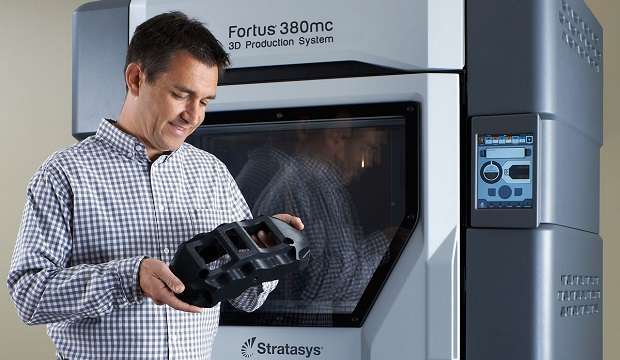
The size of the Australian continent, its geographically dispersed population base and the importance of major commodities to its economic output means that freight transport sector performance has a significant influence on national productivity and efficiency. Figures surrounding the industry are significant. Trucking handles more cargo than trains, ships or planes, carrying more than 2,100 million tons. Moreover, according to the Australian Bureau of Statistics the trucking industry is worth over $40bn and employs 140,00 Australians. Trucks are an essential part of our economy. Without trucks, goods would never get from suppliers to manufacturers and into the hands of consumers. Just as the economy depends on the trucking industry, the trucking industry depends on high-quality equipment. Kenworth Australia has built a reputation around superior-quality, custom-engineered trucks with proven reliability over 47 years of local manufacturing. It manufactures around 2,200 trucks every year for delivery, and has the largest amount of 2015 models on the market. So, when Kenworth was faced with a late design change that threatened the production timeline of…

January 10, 2019
I found myself sitting down to talk to Jacob Harpaz in the cafeteria at Iscar’s head office in Tefen, Israel. Chatting with Harpaz, you would never think you were talking to a man responsible for more than 12,000 employees in 140 subsidiaries and 61 countries. He’s perfectly pleasant and charismatic, with achievements to his name few in Israel can match; yet he isn’t a spotlight-seeker. Nevertheless, he has shaped his company like no other since joining in 1972, 20 years after its foundation by Stef Wertheimer, who had the foresight and vision to challenge an established industry. Iscar’s humble beginnings in an old shack in Nahariya, Israel, along with intense, hard work and commitment to continued innovation, have led Iscar to become an industry leader today. Since 1982, Harpaz and Wertheimer’s son, Eitan Wertheimer, have run the company from one of the most rural and remote corners of the country, far from the commercial capital Tel Aviv. Harpaz’s office offers a commanding view…
January 10, 2019
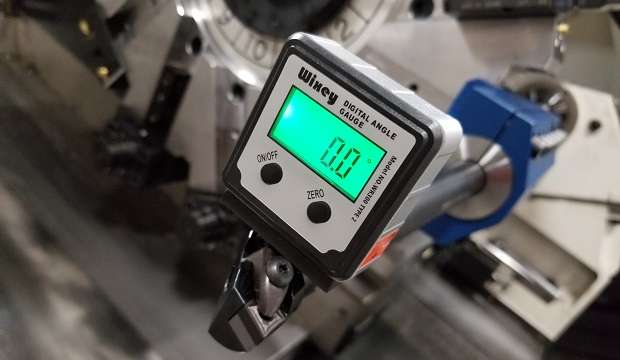
Walk into most any machine shop and there’s a good chance you’ll hear it: the high pitch whine of a deep boring operation, the chatter loud enough to have even the most hard of hearing among us scrambling for a pair of ear plugs. It’s a problem that has plagued machinists since the day that Henry Maudslay (1771 – 1831), the inventor of the lathe, first chucked up a piece of steel and tried to bore a hole through it. And the problem has only become worse as metals have grown tougher and more challenging to machine. But not anymore, according to Kennametal. Its new boring system boasts the most effective anti-chatter mechanism that the company has ever developed, and it also offers an extensive range of indexable heads and shank sizes. Creating a vibration-free zone Someone who knows all about this is Sam Eichelberger, a Product Engineer for lathe systems engineering at Kennametal, and part of the team that developed the internal dampening mechanism. “Perhaps the most important thing to know…
January 2, 2019
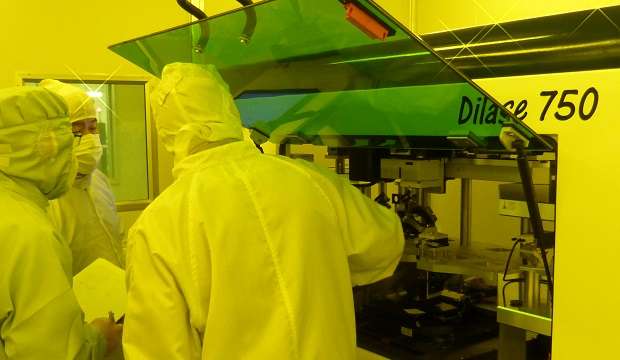
Lasers can be used for a myriad of tasks and situations: attached to a robot arm, or on the side of a bottling line, or inside a protective chamber for 3D printing metal parts. This wide variation in applications requires expert installation, support and training to ensure effective incorporation of the laser system. Sometimes, Raymax is presented with the challenge of a ‘never done before’ solution: a new application or use for a laser system. “These are the challenges we love,” says John Grace, Managing Director of Raymax.“We not only get to apply our knowledge and skill, but we are giving the user an opportunity to do something they could never have done before, and that’s pretty satisfying for everyone.” Lasers provide the opportunity to innovate, change and improve processes. For example, materials-processing applications such as welding, cutting and cladding in fields as diverse as consumer electronics, automotive manufacturing and defence, are now dominated by industrial lasers. This uptake changes traditional processes, influenced by the…
January 2, 2019
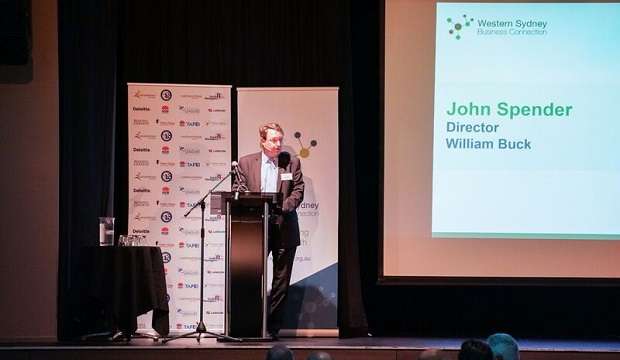
NSW is the state for manufacturing, accounting for around 30% of Australia’s total manufacturing output. Manufacturing employs 7% of the NSW workforce, and Western Sydney is the key driver of the advanced manufacturing sector. Australian manufacturing is predominantly a SME market, with 24,319 firms having fewer than 19 employees, 1,663 with 20-199 employees, and only 164 with more than 200 employees. While the infrastructure boom currently sweeping NSW is set to enhance the state’s economy, the paradox is that the SME manufacturing sector is suffering a skills gap within both ‘blue collar’ and ‘new collar’ workers as a direct result. A survey conducted by Business Chambers found that 63.3% of participants who owned manufacturing businesses reported a perception of a skills shortage. Kevin Adler,…

January 2, 2019
GJS Managing Director John Rees has been at the helm throughout, and he and GJS’ software engineers have worked directly with businesses to be sure that their Job Commander solutions have been formed with the input of customers, answering the special needs of the engineering industry. Job Commander is a simple-to-use job costing system that produces quotes, schedules, purchase orders, job cards, delivery dockets and invoices, all personalised for the client. The quoting software allows faster, more accurate quotes by drawing on data from previous jobs and enabling storage of job-specific electronic documentation that is easily retrieved. Job Commander’s integration with MYOB, XERO and QuickBooks avoids double handling of data and reduces accounting costs. Job Commander has taken over a decade to develop with extensive industry research, testing and substantial investment by the company. Rees says: “This has resulted in a powerful, easy to use, and innovative suite of software tools that a client can install…