



January 2, 2019
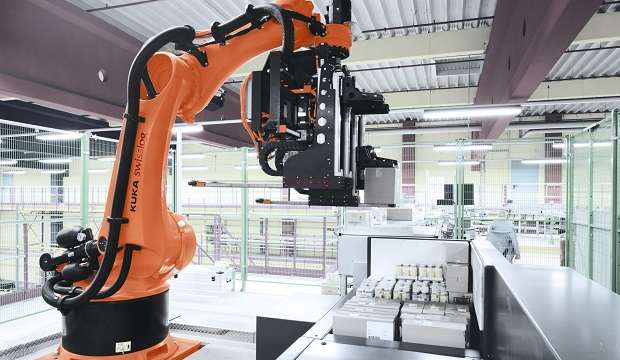
Global robotics and logistics automation technology leader Swisslog has found that as automation accelerates, a common concern is that if a machine goes offline, the entire system suffers. But this is becoming less and less of a problem through synchronised automation, which is a natural evolution of islands of automation, explains Martin Kohl, Senior Consultant at Swisslog. Kohl has more than 18 years experience in global logistics automation. He says that the megatrends driving digitalisation and industry 4.0 – such as urbanisation, an ageing society, increased health focus, e-commerce, increasingly digital lives and regulations – mean that better technology utilisation is needed to optimise supply chains and achieve tangible benefits. From islands of automation to synchronised automation “The concept of islands of automation means users can have several automated processes working in isolation, which can be linked up with Automatic Guided Vehicles (AGVs), with end-to-end integration,” says Kohl. “Swisslog takes this one step further with its synchronised automation systems. The technologies are still separate,…

December 21, 2018
When anyone talks about advanced manufacturing, there’s a tendency to think of certain definitively modern, high-tech applications: aerospace parts, medical devices, maybe smart-phone components. But arguably one of the oldest segments in advanced manufacturing is often overlooked: watchmaking. People first started wearing portable timepieces some 500 years ago, and ever since, watchmaking has been a key driver of technological development and innovation, combining engineering challenges around accuracy and reliability, with a critical focus on aesthetic design. Moreover, the history of watchmaking is characterised by disruption. Much has been made of the impact of smart-watches in recent years, but that battle has been going on since the ‘Quartz Crisis’ of the 1970s, when cheap, mass-produced electronic watches overturned the Swiss-led dominance of traditional mechanical watches. And yet, lots of people still recoil at the idea of wearing a miniaturised smart-phone on their wrists, and will pay a premium for something more classical. So traditional mechanical watchmaking endures, a craft sustained largely by dedicated independent practitioners. Nicholas…
December 21, 2018
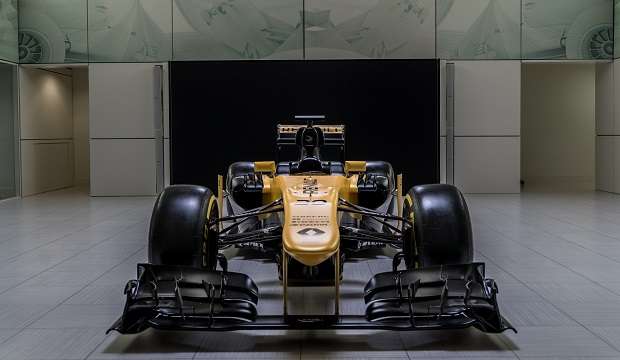
Formula One racing is an endurance engineering sport fuelled by relentless innovation. Teams work tirelessly to reach and beat an ever-evolving standard of peak performance, and the spirit is no different at Renault Sport Formula One Team. There, the R&D machine never stops and the contributions of technical partners play a crucial role in helping the organisation reach its targets. “Race after race, new components made of complex composites and aerospace alloys see the light after surviving a harsh selection in the R&D and simulation labs,” explains Renault Sport Formula One Technical Director, Nick Chester. “At the end of a racing season, we expect our race car to be in excess of a second per lap quicker than when we started, and our technical partners have to survive the same ruthless selection. We aren’t interested in relationships that don’t bring value in our quest for performance.” This requirement for ongoing innovation and active collaboration is the foundation for Renault Sport Formula One Team’s choice of 3D…
December 21, 2018
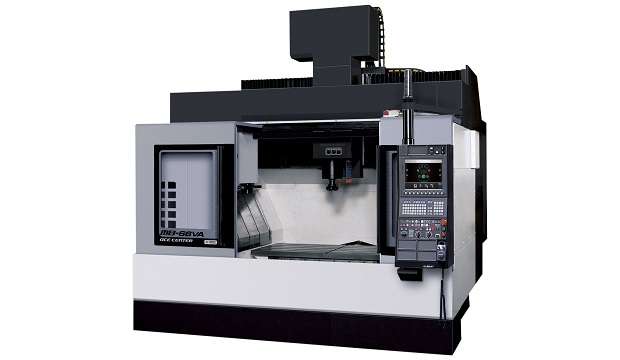
Founded in 1978 by Michael Byrnes – still the company’s owner and chairman – Anglade completes all work in-house, including design, drafting, manufacture, electrical, pneumatics, hydraulics and PLC programming, with capabilities in CNC milling, CNC turning, wire EDM and precision grinding. Using the latest high-end machines, this 40 year-old, second-generation family company designs and manufactures specialist injection, blow, vacuum, thermos vacuum and polystyrene moulds, along with press tools, special-purpose machines, jigs, fixtures and gauges for a broad range of clients quickly and efficiently. Michael and his son David Byrnes – now the company’s general manager – have built up an impressive range of machines and equipment, such as the Okuma MB66VA S15 OSP-P200M vertical machining centre and Fanuc Robocut Alpha 1iD 310isWA, to meet the ever-changing demands for precision components. This has won them work on some impressive projects, including providing parts for two ambitious CSIRO radio telescopes. Anglade was commissioned to manufacture ortho-mode transducers (OMTs) and other specialised components…

December 21, 2018
One recent achievement, bringing ANCA’s AR300 SCARA robot arm and control system to market, took collaboration between the company, its suppliers and customers, and university researchers. The project dates back to 2014, when the ANCA noticed an unmet need for flexible automation for tool loading. Developing a local solution, instead of importing robot hardware, might also have applicability in a variety of other industries. “As a local contributor to advanced manufacturing, we’re continually looking for ways to grow,” explains Tom Nathan, New Products Development Manager at ANCA CNC Machines. Moreover Nathan adds that these opportunities can’t always be pursued, and there are times when the cost of engineering in Australia can cruel a business case. Another difficulty is quite simply that “robotics is hard”. This well-known adage has been very much in evidence over the last few months, following the demise of promising US robotics businesses Jibo, Mayfield and Rethink Robotics. The challenge of creating a robot from scratch is a daunting…
December 21, 2018
Damien Berry, R&D Manager, says that while Norris fell behind its competitors for a short period of time, it’s now overtaken them from a technology point of view: “We’ve overtaken in technology; we’re techier than everyone else in our industry. For a while, we lacked development and innovation, but moving forward, we’ve spent time developing the business and we’re using 21st-century technology to produce products people want. For example, our newest range focuses on power management – our AP500 is 50% more efficient on power than its predecessor, which is what everyone’s interested in.” Norris’ process is to make sure that it fully understands customer needs and issues, such as difficult water conditions or power restrictions. “While our products aren’t tailor-made, we try to understand difficult customer needs and incorporate solutions, rather than produce a one-size-fits-all bulk product range like our overseas competitors,” Berry explains. “We can’t compete with price, but our…
December 13, 2018
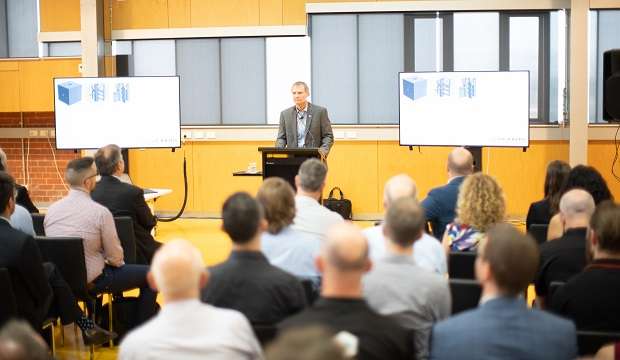
The seminar was part of a special three-day course on Design for Additive Manufacturing (DfAM), run by RMIT in partnership with Wohlers’s consultancy Wohlers Associates. The course addressed issues including DfAM guidelines and best practices, explored AM’s capacity to consolidate many parts into one, and focused on methods to reduce material and weight. Targeted at designers, engineers, and managers, the course offered participants hands-on experience in designing real parts and building them on industrial AM equipment. “Design for Additive Manufacturing is design for manufacturability as applied to AM,” explained Professor Milan Brandt, Technical Director of RMIT’s Advanced Manufacturing Precinct. “It is a design methodology that captures the benefits of additive manufacturing technology when considering product characteristics such as its manufacturability, reliability, and cost. “The RMIT course addressed this through a number of sessions, which included examining the complete AM process chain, from CAD part creation, to part production, and specific issues and guidelines around designing for metal AM,…
December 13, 2018
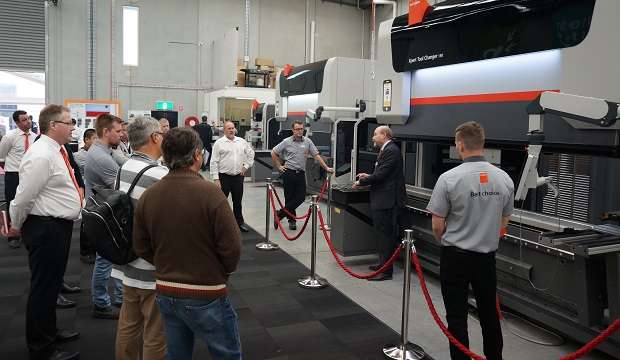
The Bystronic Automation Day was an opportunity for the company to catch up with its existing customers as well as to connect with potential new clients, while presenting some of the highlights from its product range. Already world-renowned as a leader in the fields of sheet metal cutting and fabrication systems, the event was also an opportunity for Bystronic to showcase its latest innovations in automation technology. Automation represents a key area of focus for Bystronic worldwide, and 2018 saw the Swiss-headquartered company taking a number of significant strides in this area. In March it completed the takeover of TTM Laser, Italian specialists in laser-based tube and profile processing, enhancing Bystronic’s existing technology offerings along the cutting, bending, and automation process chain. This was followed in June with the acquisition of a majority interest in Antil, a highly innovative company specialising in automation solutions for sheet metal processing, headquartered in Milan, Italy. Both TTM and ANTIL had their own dedicated exhibits at the Bystronic…

December 13, 2018
Margaret Rouse – a writer and manager at whatis.com’s TechTarget – has described haptics as “the science of applying touch (tactile) sensation and control to interaction with computer applications”. Every time we open an app on our phones or type information into a search engine on a tablet computer, we’re using touch sensations to utilise a range of applications. Haptic technology isn’t necessarily new. Early use of haptic technology actually dates back to the early 1990s when companies like Nintendo incorporated touch into the Nintendo 64 Rumble Pack console, and automobile and medical equipment manufacturers began to develop haptic-based applications in new hardware (think of the way a nurse sets up an automatic intravenous push for a patient). There are a number of features that make touchscreen technology so handy. It gives designers scope to make their applications more user-friendly, which in the end means it’s easier and faster for us to use them in our everyday…

December 13, 2018
Consider a child playing with Lego. Watch how adaptable he or she is to multiple tasks and how adjustments are made effortlessly on the fly. We’re using that innate human talent as inspiration today in a program that trains robots to build with bricks, and while such a capability seems flippant, imagine the power in a robot that can perform any number of movements and actions and teach itself how to remember and build on them, just like a kid playing with Lego. As consumers demand further customisation and speed, the factories of tomorrow won’t have single-purpose ‘dumb’ machines that do one repetitive action. They’re going to be as responsive and constantly evolving as we are. Here are three of the most impactful changes they’ll impose on manufacturing in the coming years. Generative design In Marvel’s Iron Man, Tony Stark (Robert Downey Jr) designs the streamlined Iron Man suit digitally and then tells his artificial intelligence (AI)-equipped helper Jarvis (Paul Bettany) to fabricate it while he…

December 7, 2018
From a one-person operation with floor space of 75sqm, the company has grown to now employ 26 highly skilled tradespeople and support staff in a purpose-built factory of more than 900sqm. Jorge, his wife Amanda and their family have invested in the latest machine technology to ensure Campagno stays at the cutting edge of engineering and maintain an ethos of fast, efficient service and prompt on-time delivery. The company specialises in product categories that include packaging, medical, truck, defence and general engineering. Prototyping is another area; the company’s extensive experience has often enabled it to suggest better, more efficient ways to manufacture new parts. Jorge was keen to acquire a barfeeder to complement a new CNC machine to assist in producing parts more efficiently. The increased productivity the barfeeder would bring was the key reason for the purchase. “We looked at a number of different brands but it was the sheer quality and rugged construction of the servo-driven Hydrafeed that won us over,” says…

December 7, 2018
A ground-up redesign has seen one of the world’s most recognisable portable measuring arms modernised to meet the needs of today’s metrology users, with a key focus on improved usability and versatility without compromising on speed and accuracy. A standout feature of the new Absolute Arm is its modular wrist design. This allows both the RS5 Laser Scanner and the pistol grip to be completely removed, facilitating easy probing in tight spaces. When reattached for laser scanning applications, a variety of grip sizes are available to ensure a perfect fit for every user. The new wrist also now features a display screen that allows for measurement result oversight, profile switching and calibration right at the point of measurement, reducing time spent switching attention between the arm and its control computer. “Over the last eight years we’ve received a lot of positive and constructive customer feedback, and hopefully people will see how this has informed our design,” says Anthony Vianna, Product Manager for the Absolute Arm range. “Many customers told us they needed…

December 7, 2018
From its beginnings 30 years ago as a relatively small family company based in Booleroo Centre, South Australia, Kelly Engineering has grown into a global concern. The agricultural equipment it produces – chiefly tillage systems for soil preparation and weed control, designed to be towed behind tractors – is now manufactured in Australia, Germany and the US. Roger Dunlop, Engineering Manager at Kelly Engineering, estimates that today some 50% to 60% of the company’s customer base is in the US and Canada. The remainder is spread across Australia, Europe and emerging markets such as Southern Africa. Central Innovation has been assisting Kelly Engineering with its design process solutions for the past seven years, and the relationship has been a fruitful one. The latest step of this ongoing journey is the company’s implementation of Central Innovation’s DataSuite data transformation solution, which facilitates the seamless transfer of data across multiple platforms by providing a common language between…