



October 4, 2018
AMTIL regularly sends a delegation to the major overseas exhibitions and this year it was IMTS in the USA. AMTIL had a booth within the International Associations area of the show, alongside manufacturing assocations from countries all over the world. As well as enabling us to provide information and advice about manufacturing in Australia to anyone who came by the stand, it offered the opportunity to network and interact with those other associations, sharing insights about the state of the industry and exploring opportunities to collaborate. Moreover, having a fixed presence on the exhibition floor meant we were able to support any Australians who were visiting the show, offering a port of call where they could drop by for a chat and a coffee – our team were pleased to bump into a fair few familiar faces from back home during the week of the show. Australian companies were also making their presence felt in the exhibition, with the ANCA Group, Techni…

October 4, 2018
The Australian Advanced Manufacturing Council defines advanced manufacturing as a family of activities that either: depend on the use and coordination of information, automation, computation, software, sensing, and networking; and/or make use of cutting edge materials and emerging capabilities enabled by the physical and biological sciences, for example nanotechnology, chemistry, and biology. This involves both new ways to manufacture existing products, and especially the manufacture of new products emerging from new advanced technologies. Manufacturing in Australia accounts for almost a significant proportion of jobs across the country, with approximately 253,000 people employed in the industry. Embracing advanced manufacturing technology is crucial for the ongoing profitability of the industry, and the strength and diversity of the economy. Headland’s new Advanced Manufacturing Division boasts an extensive portfolio of product lines including Trumpf metal 3D printers and laser welders, VisiConsult Inspection/CT/X-ray scanners, and Voxeljet investment casting and industrial 3D printing (sand and plastic), and Mimaki colour 3D printers. Annaliese Kloé, Managing Director of Headland, says: “We’re thrilled to have partnered with such…
October 4, 2018
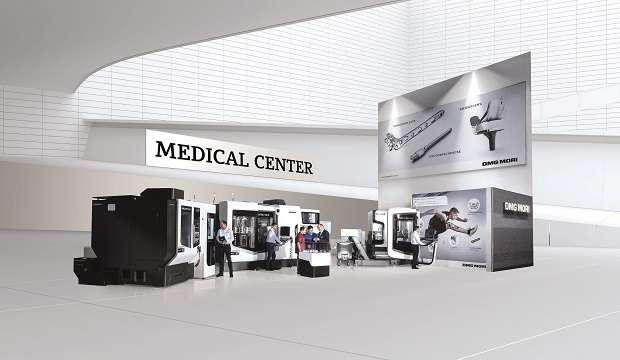
Advances in the orthopaedic field in particular are enormous; hip and knee prostheses and spinal implants are in demand like never before. Around 180 different types of product are being used in the human body nowadays. Interest in diagnostics and surgical instruments is also growing. Amid this growth, economic production of medical technology products is a key issue. As the leader of technology in machining and as a partner for virtually all notable manufacturers in the industry, DMG MORI plays a key role in enabling implants and instruments to be machined efficiently and above all to meet the high demands on quality. This comprises the entire material mix from high-strength plastic, stainless steel and titanium. to cobalt-chrome and now degradable magnesium alloys. CNC solutions for six-sided turn-mill machining, five-axis simultaneous milling, ultrasonic technology and high-speed cutting are all included in the portfolio, as well as additive manufacturing with powder bed technology, and digital solutions for future-oriented processes in medical technology. Continuous growth in the market for medical technology…
October 1, 2018
The Australian PMI has indicated positive conditions (results above 50 points) for 24 consecutive months – the longest run of recovery or expansion since 2005 (readings above 50 indicate expansion in activity, with the distance from 50 indicating the strength of the increase). Five of the eight manufacturing sub-sectors expanded in September (according to trend data), with expansions strongest in food & beverages, non-metallic minerals, and wood & paper products. Recovery in the petroleum, coal & chemicals sub-sector has been slowing in recent months and was broadly stable at 50.5 in September, with many respondents reporting that rising oil prices were putting upward pressure on input costs. “The run of strong performance by Australia's manufacturing sector hit a new milestone in September capping two years of growth,” said Ai Group CEO Innes Willox. “The food & beverages sub-sector has been the cornerstone of this run and has been solidly supported by the construction-related non-metallic mineral product…

September 25, 2018
As a listed entity within the Commonwealth Government portfolio of the Treasury, the Royal Australian Mint is the sole supplier of Australia’s circulating coinage. Since its establishment, the Mint has produced more than fifteen billion circulating coins and now has the capacity to produce two million circulating coins per day. The demand for uncirculated coins has led to the expansion of the Mint’s manufacturing capability of high-quality and innovative collector coins. In addition to producing Australia’s coinage, the Mint produces coins for other countries – along with medals, medallions, tokens, and seals for private clients both national and international. The Royal Australian Mint is also a tourist attraction. It educates students and visitors on the history of Australian coinage, and it explains how technology is being used in its modern manufacturing environment. Shifting focus In 2010, the Royal Australian Mint had implemented a manufacturing resource planning solution to facilitate the production of circulating coins and…
September 25, 2018
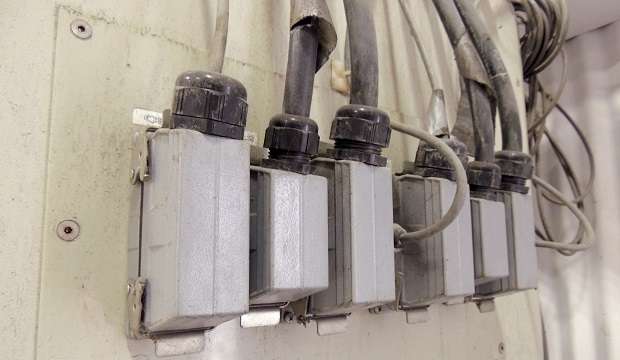
If you design or build industrial machines, you probably know all about hardwiring. It remains the most common way to bring power and signal to the machine because it offers perceived savings in installation costs. But the cost savings are really a mirage once you factor in the full range of wiring costs. These obviously include time and materials: the cost of the wire, cable, accessories and labour. Less obvious is the fact that you’ll also incur hidden installation costs with their own labour and time-to-market considerations. For example, many machines have to be disassembled for shipping and reassembled for start-up, so you’ll have to hardwire parts of the machine at least twice. Then there’s the cost of errors. Field wiring errors are common, especially when local electricians, unfamiliar with the machine, handle the wiring. At best, these errors can delay machine commissioning. At worst, they can damage the machine. Finally, add in the cost of testing, which can be complex and expensive in hardwired systems. Keep in mind the hidden costs will grow…

September 25, 2018
Before making the investment to overhaul its glass bottle tooling systems, the maker of James Boag’s Premium Lager needed to know an update to its bottle would not be change for change’s sake. It needed to be sure the new bottle would look good and be well received by customers. Ideally, this confidence would come before spending major time and capital on the project. As the supplier of Boag’s bottles, Orora had skin in the game to validate the design quickly and accurately. Orora’s Innovation & Design team put wheels into motion by contacting 3D Systems On Demand Manufacturing, a long-time partner, to develop a state-of-the-art 3D printed prototype. Keeping Boag’s existing supply chain processes top of mind, a new-look bottle was designed to comply with the manufacturing infrastructure already in place to help avoid expensive and time-consuming changes. To get Boag’s buy-in on the new design, a credible appearance model was needed for evaluation. To be convincing, the 3D printed models needed to have the same clarity and hue as glass…
September 20, 2018
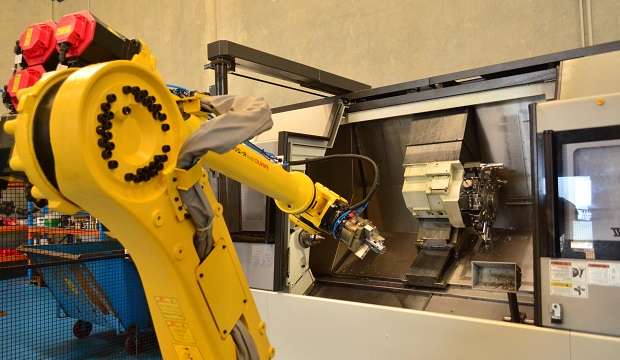
Based at Bibra Lake, SQP is a proud family-run business founded by husband and wife team David and Heidi Miller more than a decade ago. SQP takes its name from Service Quality Products, and these qualities are present in every level of the business. “Providing high-quality service and products is at the forefront of every aspect of the company from building relationships with customers and suppliers to manufacturing quality products using the latest low impact technologies,” says David, SQP’s Managing Director. The provision of quality service is proudly expressed by SQP in interactions with customers at every step of the process. David holds the strong belief that ‘service is in the detail’, and this is evident in situations as simple as a phonecall, or as complex as understanding how different material grades will suit an application. SQP prides itself on its availability to answer questions and provide accurate updates so the customer is…

September 20, 2018
Integra Systems has seen the chaos that can arise from not having a well-integrated production process. Led by the Hughes family, the team believes that communication, trust and the right organisational alignment are among the key elements in ensuring innovation and production ‘play nice’ together. “Innovation is not always about massive, inventive breakthroughs,” explains Integra’s Commercial Director, Erika Hughes. “Working together with the production team allows you to create new innovations on a smaller scale, not just on these grand, inventive scales. “I think a lot of people make the mistake of trying to innovate with old technology and old mindsets and old machinery. I think that’s a really important factor – thinking more about advanced manufacturing in a high-tech manufacturing era. Innovation is working together with an innovative approach to production, as well as design.” The innovation and design handshake As Managing Director of Integra, Paul Hughes believes it’s impossible to innovate without having design and production teams…
September 20, 2018
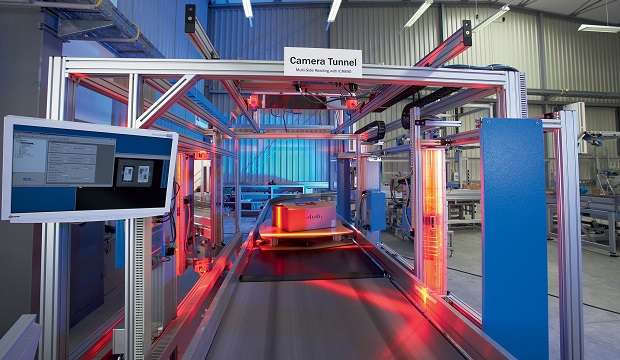
Sensors provide the senses for machines. They provide the feedback that makes intelligent machines possible in the first place. Sensor intelligence focuses on one aspect of sensor technology: equipping machines with the ability to see, recognise and communicate intelligently. Intelligent sensors contribute the ability to classify and interpret information. This is characterised by intelligent signal processing, which derives the truly relevant information from large quantities of data. This is why – in addition to the primary control system for machines and systems – information is provided for monitoring production systems and making it possible to detect faults. Transparency of processes and material flow produces additional potential for optimisation. Processes are becoming more efficient and cost-effective, increasing competitiveness. As a driver of technology in Industry 4.0, SICK is already capable of presenting and implementing solutions to the four key challenges throughout the production levels: Quality Control at the sensor-and-drive level; Flexible Automation, at the machine level; Safety at the production level, and Track & Trace, at the corporate level. Flexible automation: customising…

September 14, 2018
Dimac was recently confirmed as the distributor for Lang Technik’s cutting edge innovative products. As a result, any company that is involved with workpiece milling in Australia or New Zealand now has easy access to Lang Technik’s Makro-Grip technology, which provides a workholding solution to almost any clamping requirement from raw material to the finished workpiece. “We are thrilled to have been appointed Lang Technik’s sole distributor in Australia,” says Dimac Managing Director, Paul Fowler. “This well-known German company is recognised as one of the leading manufacturers of workholding and machine tool automation. Every month thousands of clamping set-ups are delivered to customers all over the world to help them increase their production efficiency.” Makro-Grip stamping technology is a patented form-closure technology which provides the highest holding power for five-face machining worldwide. The stamping technology, also called pre-stamping, involves the workpiece being stamped outside of the machine tool with up to 20 tons of hydraulic pressure, before being clamped in the Makro-Grip five-axis vise. Clamping scenarios that require high holding…

September 6, 2018
The AM Hub was officially launched on 3 September at the headquarters of Objective 3D in Carrum Downs, in an event attended by Minister for Industry and Employment Ben Carroll and Sonya Kilkenny, the local member for Carrum. The AM Hub will be delivered by AMTIL, and supported by $1.85m from the Victorian Government. Membership of the AM Hub is free for all AMTIL members (but not limited to AMTIL members). “3D printing is a game changer for manufacturing, which is why we’re backing the technology so more local companies can reap the benefits,” said Minister Carroll. “This new Hub will help local manufacturers innovate, become more productive and excel in future industries.” AM is a breakthrough technology for advanced manufacturing, helping businesses design and make new high-value products that are not possible using traditional methods. Capability in this form of high-value manufacturing will help to position local businesses for success in future industries such as defence, medical technologies and pharmaceuticals, and transport technologies. The AM Hub will improve…
September 6, 2018
The Australian PMI has indicated positive conditions (readings above 50 indicate expansion in activity, with the distance from 50 indicating the strength of the increase) for 23 consecutive months – the longest run of recovery or expansion since 2005. All seven activity sub-indexes in the Australian PMI expanded in August. Six of the seven sub-indexes accelerated, with only inventories decelerating (down 3.6 points to 51.1). New orders grew strongly (up 8.5 points to 59.6) while exports, lower than the other activity sub-indexes over the past year, jumped 8.5 points to 58.4. The input prices sub-index jumped 9.3 points to 77.4, its highest result since March 2011, while wages also continued to rise (up 4.1 points to a record high of 64.7). In response, the selling prices sub-index rose by 5.1 points to 58.1 – the highest result for this sub-index since April 2017. “The Australian PMI rebounded in August on the cusp of two years of uninterrupted expansion,” said Ai Group Chief Executive Innes Willox. “The manufacturing sector has…