



November 1, 2018
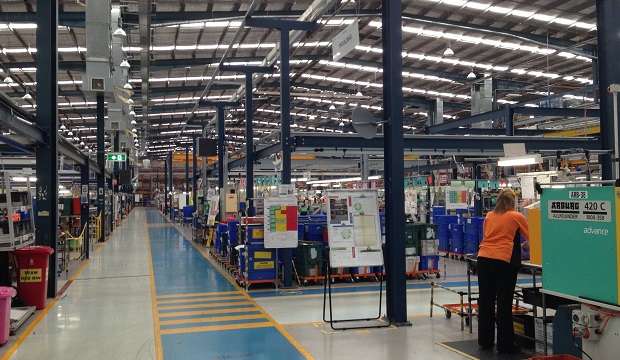
Compiled by the Australian Industry Group, the latest PMI extended the index’s period of uninterrupted growth to 25 consecutive months – the longest run of recovery or expansion since 2005. Readings above 50 indicate expansion in activity, with the distance from 50 indicating the strength of the increase. For a third consecutive month, all seven activity sub-indexes in the Australian PMI expanded in October. Production (up 2.9 points to 61.6), supplier deliveries (up 3.7 points to 60.9) and sales (up 2.3 points to 59.9) were all encouragingly strong, while employment (down 5.4 points to 52.6), new orders (down 3.8 points to 58.8) and exports (down 3.8 points to 55.1) all slowed in comparison to September. “The strength of Australia’s manufacturing sector continued into October with production, domestic sales and new orders all growing at encouraging rates,” said Ai Group Chief Executive Innes Willox. “Employment also lifted – although at a slower pace than in September.” Seven of the eight manufacturing sub-sectors expanded in October…

November 1, 2018
Based in the Netherlands, Seatools is a global provider of bespoke subsea solutions for companies ranging from offshore oil and gas to offshore renewables and aquaculture development. In light of its expansive and diverse scope, Seatools faced a distinct challenge in quickly and effectively communicating its range of custom offerings at the highly attended Offshore Technology Conference (OTC) in Houston, Texas. As the largest event in the world for the oil and gas industry, OTC attracts over 2,300 exhibitors a year and counting. Therefore Seatools knew it needed to make a splash with a creative trade show display to ensure a positive return on investment, and that it had to do everything in its power to attract attention and engage new business. With the help of 3D Systems’ On Demand Manufacturing services, Seatools devised a unique subsea landscape to display seven distinct 3D printed appearance models of its various custom underwater technologies. Offering expansive prototyping and manufacturing services to support the entire product development lifecycle, 3D Systems’ On Demand…

October 25, 2018
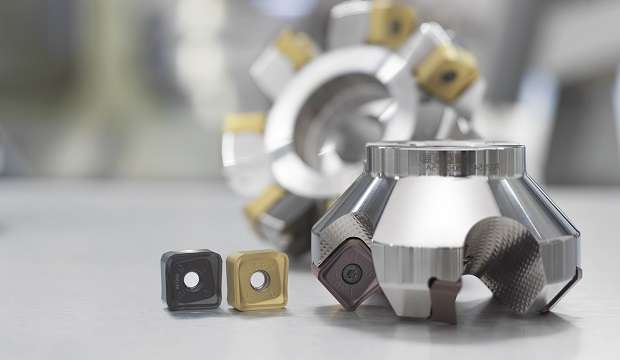
One of the greatest advantages of my role with Sutton Tools has been to gain a perspective of the global manufacturing industry. Over the years, I’ve been able to observe technological trends and advancements across the industrial sector, and in different market segments. One of these changes has been the way additive manufacturing is replacing subtractive manufacturing in some areas, beginning with the aerospace and medical sectors. Subtractive manufacturing is the process of machining the purchased raw material to precisely required dimensions by removing the excess material. Across the medical industry, where unique low-volume components need to be produced from expensive and difficult-to-machine materials such as titanium, additive manufacturing is proving to be more effective in both cost and effort. One of the tools that is proving particularly important and useful for the medical mould-and-die industry undertaking additive manufacturing is the micro endmill. This tiny cutting tool precisely cuts away material for medical device moulds in the orthodontic, orthopaedic and respiratory…
October 25, 2018
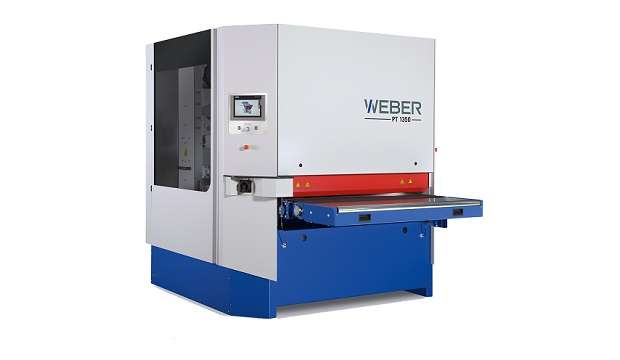
Weber Grinding Machines offer a solution to this with a range of machines that can grind, round, deburr and descale lasered, punched and nibbled parts, thereby providing perfect surfaces and edges. The technology allowing this is Weber’s sophisticated brush system, comprising multiple brush heads. Three types of brush head are available: a compact planetary head, double-row planetary head, or the multi-rotation brush (MRB). The Compact Planetary head provides an excellent solution to the problem of large rotating brush systems. Dividing up the brushes onto several smaller tool carriers minimises machining differences along the operating width of the machine, which occur otherwise. The DR planetary head provides all-round edge machining across the entire width. This allows for all-round edge machining with cup brushes. In this process, several rotating brushes arranged in groups are given an additional turning motion. This means that the brushes work at the ideal angle on the workpiece. Weber’s MRB system is ideal for perfect edge machining. When round brushes are used, several rotating heads are also arranged next to…
October 25, 2018
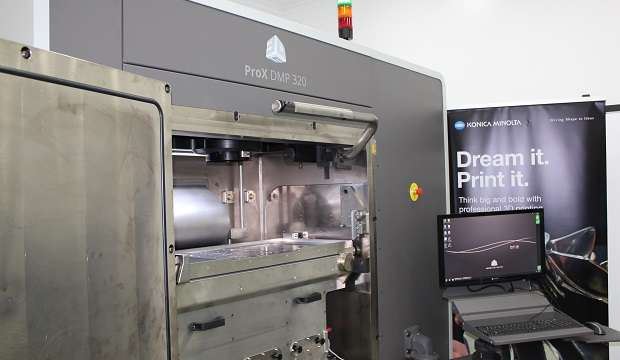
Australia’s manufacturing industry is on the rise again after a tough period in which many businesses ceased operating or moved offshore. Traditionally a competitive and innovative industry, Australian manufacturing is embracing additive manufacturing techniques as a way to increase competitive advantage in the face of cheaper overseas competitors. Manufacturers are reimagining the industry with the help of this emerging technology. Additive manufacturing technology and 3D printing have been prominent for some time, letting manufacturers make custom products quickly and to a high standard. This ability to custom-make products onshore and deliver them to customers faster can help local manufacturers compete with offshore companies that must ship products to Australia, which takes time, as well as with those manufacturers clinging to traditional methods, which are costly and just as time consuming. Since 3D printing doesn’t require expensive moulds and complex equipment setups, it lets manufacturers be more agile in responding to customer demands. Short-run and customised products are now not just economically viable…

October 18, 2018
As product design complexity increases and high-performance materials become a necessity, manufacturability generally decreases. These fabrication realities are evident in high-performance components such as turbine discs, blades and vanes made from difficult-to-machine titanium and nickel alloys for the defence and aerospace sectors. Fabrication of these components results in low productivity, and therefore high final component costs. Custom cutting tools are often required over standard mass-manufactured tooling as the latter may not be capable of performing the task, or the current rate of production is limiting profitability. However, the costs and long lead times associated with custom tooling fabrication often acts as a strain on production and a barrier to their wider adoption. Additive manufacturing (AM) technologies expand the horizon of manufacturable designs as they have fewer constraints compared with conventional manufacturing methods due to the layer-by-layer manufacturing process. Recently, the knowledge base has matured, to the point where…

October 18, 2018
The concrete samples were manufactured at Talga’s German process test facility and the Betotech (Heidelberg Cement Q&C) laboratory in Germany, using industry-standard cement with additions of Talga’s pristine graphene, graphite and silica-rich by-product of ore processing. The optimised formulation targeted high electrical percolation at low material concentrations and with potentially lower cost factors. Graphene is a layer of crystalline carbon a single atom thick, with properties of strength, conductivity and transparency that stem from its unique 2D structure. The samples were tested in-house by a European industrial partner and further measurements were undertaken by Professor Ian Kinloch’s group at the University of Manchester (UoM) in the UK. In the UoM study, the conductivity of samples was measured using electrical impedance spectroscopy in both through-plane and in-plane directions over a range of frequencies. For reference, a standard mortar (without Talga additives or…

October 18, 2018
Things are changing fast in our increasingly digitised world and manufacturing is no exception. The hot topic of the last few years, Industry 4.0, is a collection of no fewer than nine technologies revolutionising the way things are made. Nine revolutions, all at once. Every sector and every supply chain is being shaken up. The electrification of cars, for example, will see parts per vehicle shrink from over 2,000 to less than 20. For those making these parts, or the tools that make these parts, there are big implications. According to research by the International Federation of Robotics, in 2015 the number of industrial robots increased 15%, and growth will continue by double-digit percentages through to 2019. At ANCA, we supply the automotive, electronic, medical, aerospace and many other manufacturing verticals, and it’s our business to meet their fast-changing needs. We keep a close watch on market trends, and our salesmen and application engineers are constantly visiting customers’ factories. In…

October 18, 2018
According to the Australian Index Group, the next two-year forecast for the manufacturing industry is predicting growth. On the back of this forecast, businesses that have seen a downturn in results should look to seize this opportunity to turn their business around. The Government is making headway to allow manufacturing to flourish and evolve in Australia through grants and the Research & Development (R&D) Incentive. Furthermore, to promote innovation, the introduction of Safe Harbour Legislation creates a safety net for entrepreneurs to fail – if they act in good faith – and removes the historical stigma attached to insolvency. Prior to the introduction of Safe Harbour, entrepreneurs facing risk of insolvency only had the option of a Voluntary Administration (VA). Safe Harbour acts as an alternative to VA; parking the risk of personal liability by providing an insurance policy for directors…
October 15, 2018
The new 25,000sqm facility provides space for around 500 employees, with SLM aiming to reach a production capacity of some 500 machines per year. The company invested approximately €25m into the new headquarters, confirming its intention to remain in Lübeck and to grow its already-strong market footing in metal 3D printing. The new facilities allow SLM to develop improved processes and to streamline production workflow of its current product range: the SLM125, SLM280 2.0, SLM500 and the latest SLM800 system. Spaces have been allocated for customer consultation and training on dedicated machines, as the company shifts from being purely a machine manufacturer to a solutions provider. By forming partnerships with clients it will provide support and advise on uptake of an SLM laser systems into ‘real’ business operations. Research & development are not being neglected, with a proposed 12-laser SLM Cube system on track to be launched in 2019. The development of the Cube…
October 11, 2018
“Seco has always been committed to providing our customers with the best products and services available,” said Ben Alexander, Business Manager Online Services at Seco Tools. “Partnering with MachineMetrics will allow us to not only continue to help our customers learn about themselves but will transform our ability to help them improve their machine tool utilisation and production capacity.” Seco plans to use the MachineMetrics Industrial IoT platform and its manufacturing analytics applications as a cornerstone in its expansion into new technology services. With data provided by MachineMetrics, Seco can apply its extensive experience and engineering capabilities to the continuous improvement of its customers by helping them make data-driven decisions to improve their efficiency and bottom line. Leveraging Seco’s experience in tooling with MachineMetrics’ data collection capabilities will help both Seco and MachineMetrics customers gain a deeper understanding of what’s happening with their tools in real-time. These insights…
October 11, 2018
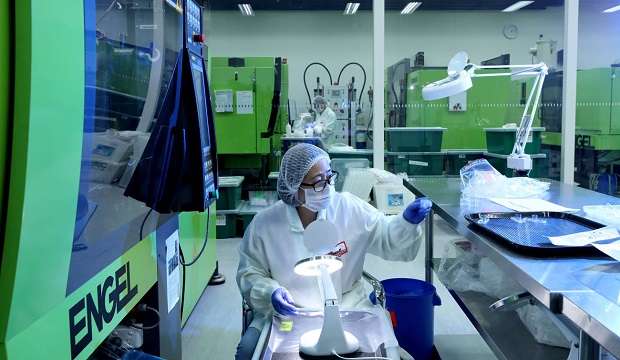
Australia’s life-sciences sector is booming, with investment in the industry at an all-time high. Business and employment growth are highly positive and Australia is recognised globally for its innovation, quality and expertise in life-sciences. This was revealed in the eighth annual Biotechnology Industry Survey, released this July. AusBiotech, supported by Grant Thornton, conducts this valuable industry survey every year. The research responses this year show that the biotech sector is thriving, with 87% of businesses surveyed expecting to grow in 2018. A massive $1.073bn was raised by Australian biotech companies last year to 31 December 2017, the second-largest amount this decade. Australia is regarded as one of the world’s leading countries for life-sciences innovation, quality and expertise. Investment and interest in life-sciences is growing, with around 140 ASX-listed life-sciences businesses, holding a market capitalisation of more than $50bn. The life-sciences sector employs 232,200 people across 1,654 organisations, or 1.86% of the nation’s labour force, with the industry employing 69,000 people in 850 companies. These figures compare favourably with the mining sector, which accounts for…
October 11, 2018
I don’t need to convince you of the game-changing benefits of the additive manufacturing (AM), do I? If I do, then you need to sign up to the AM Hub so you can see for yourself the great work that is being done right here in Australia. So what will this AM Hub funding go towards? Firstly, the AM Hub will have a dedicated person, working exclusively on the AM Hub; this will give the program some much needed energy and effort. Second, the AM Hub will have its own website, much like the AMTIL website, but focused on additive manufacturing (and not purple, but orange!). With a comprehensive capability directory, the latest news and events, case studies and information. The new website will be the first port of call for anyone seeking information about additive manufacturing technology. Lastly, the AM Hub will also deliver the ‘Build It Better’ grant, a…