



March 9, 2018
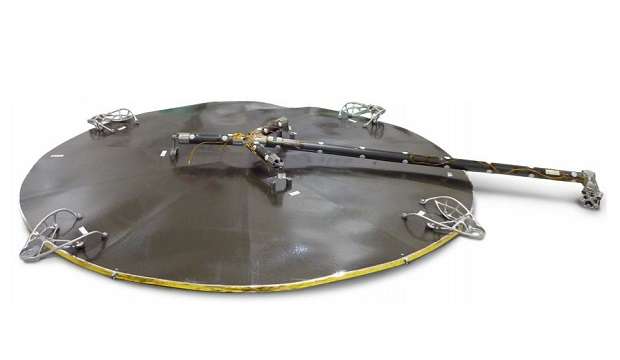
In his best-selling 2000 book, Malcolm Gladwell defined ‘The Tipping Point’ as “the moment of critical mass, the threshold, the boiling point”. By that definition, direct metal printing (DMP) is standing on the precipice, as it moves rapidly from prototyping to production for mission-critical, risk-averse applications in defence and aerospace, where nothing is left to chance. An example of this mainstream acceptance is a long-term partnership between 3D Systems and Thales Alenia Space to leverage DMP for aerospace components. Based in Toulouse, France, Thales Alenia Space is one of the leading aerospace suppliers in the world, with revenues topping €2bn in 2014. The company has 7,500 employees in eight countries, specialising in space telecommunications, navigation, Earth observation, exploration and orbital infrastructures. The collaboration between Thales Alenia Space and 3D Systems can be seen in the production of antenna brackets (190mm x 230mm x 290mm) for a geostationary telecommunications satellite. DMP is now qualified and fully available for Thales Alenia Space’s titanium aerospace applications. Today, for certain products like the satellites, 80%…
March 9, 2018
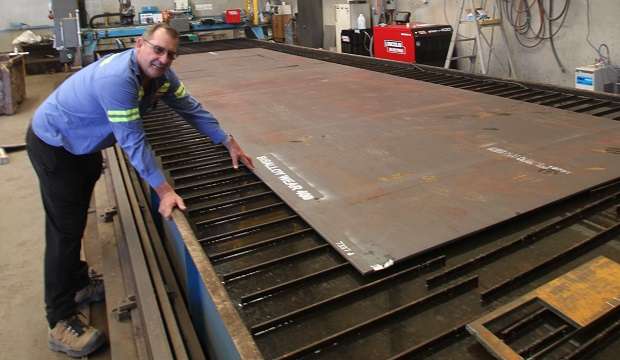
The new Lincoln Spirit 400 machine – now operating in the company’s 400sqm plate-processing facility – was specified to deliver industry-best standards of cut quality on standard and specialty steels, including stainless steels and heavy-duty chromium carbide protective plates up to 60mm thick. According to TW Woods’ Managing Director Tom Woods, high-quality, wear and impact-resistant materials are now in high demand as coal and mineral processing plants place new emphasis on long-life products that avoid delays and breakdowns as mines step up production. The same quality, traceability and accountability standards are being required by private and state organisations involved in the energy, marine, oil & gas and defence sectors, where safety and durability are paramount. The investment in state-of-the-art plasma cutting technology has also been complemented by the installation of a new Truflow spray booth and bake oven to deliver best-quality protective finishes for customers in industries including defence, energy, manufacturing, mining, minerals-processing, materials-handling, metals, process engineering, and water and…
March 9, 2018
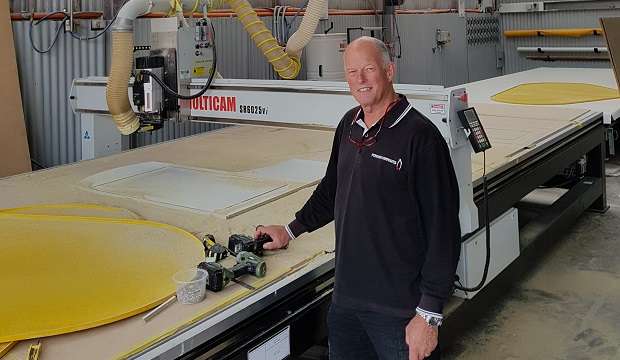
In October Penguin Composites had a major win for the business and for Tasmanian manufacturing when it signed an three-year, $8m contract with Thales Australia to produce bonnets and other components for the Hawkei protected mobility vehicle. The deal represents the company’s first major defence related contract and it is expected to create around 15 jobs at its factory in the town of Penguin. Christopher Pyne, the Federal Minister for Defence Industry, congratulated Penguin Composites on the contract and said it would provide a significant boost to Tasmania’s share of the nation’s defence investment. “This contract will not only create new jobs in Tasmania, it will also involve the upskilling of existing personnel to help deliver this work,” said Minister Pyne. “This is a textbook example of how Australian small-to-medium enterprises are building their capabilities and contributing to our sovereign defence industry capability.” Thales signed a $1.3bn contract in October 2015 to supply 1,100 Hawkei vehicles and more than 1,000 trailers, and is now ramping up for low-rate production.…

February 23, 2018
In this report, certain generic words such as product and others are used. However it should always be understood that, while manufacturing terminology may be used, the ideas described are equally applicable to service organisations. They may also cover specific elements of a business process, rather than simply the whole business. Many people have the impression that mass customisation is about mass production, and through some magical process allows an unlimited number of variations to be offered to the customer. This is wrong. Mass customisation is about tailoring the offering to the customer, while retaining the lower costs per item that are offered by mass production. This allows SMEs to complete with larger enterprises. Mass customisation is also highly data-driven. Consequently, it is relevant to the ongoing developments in the field of Industry 4.0. From pull to push, and back again Before industrialisation, everything was craft production,…
February 23, 2018
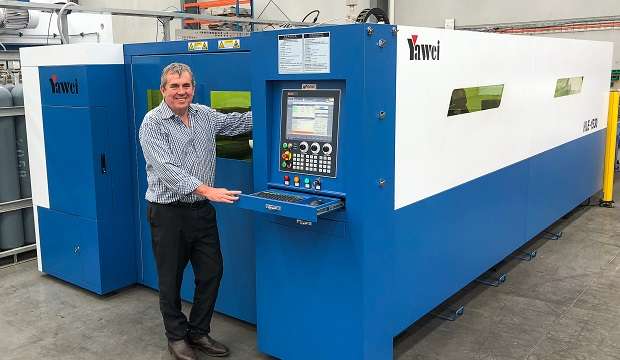
Following many years working in the sheet metal industry, Jon Flynn founded Wildcat Industries around 10 years ago. Based in Dandenong, Victoria, the business now employs 20 people across four divisions: high-tolerance sheet metal work; architectural facade work; the manufacture of high-tech wood and gas flue systems; and most recently, Wildcat wood-fired pizza ovens. While the architectural division services clients throughout Australia, the sheet metal work is predominantly Melbourne-based. Wildcat offers custom perforated panels to the architectural, building, construction, interior design and landscaping industry. Flynn already had extensive experience dealing with Applied Machinery having, in his own words, “virtually bought every single piece of equipment to date” from them. “The Applied Machinery people look after me as though they are part of my business,” says Flynn. “The service, support and warranty are very important for me and Applied excel in this area. So the decision to buy a Yawei fibre laser from Applied Machinery was both a…

February 16, 2018
For the majority of manufacturers, like gas, electricity and water, compressed air will be an indispensable utility to their operation. However, unlike gas, electricity and water, compressed air is more often than not produced the conventional way – via a compressed air system that the manufacturer actually owns. Here, the manufacturer not only pays for the utility itself (the compressed air produced), but at some point in time will have had the capital outlay for the purchase of the compressed air equipment, as well as the ongoing costs to service and maintain the compressed air system. Compressed air contracting presents a viable alternative to investing in, and maintaining your own compressed air system. Here, the end user simply purchases the compressed air they use, in the same way they would purchase gas, electricity or water. And, they can immediately enjoy the advantages…
February 8, 2018
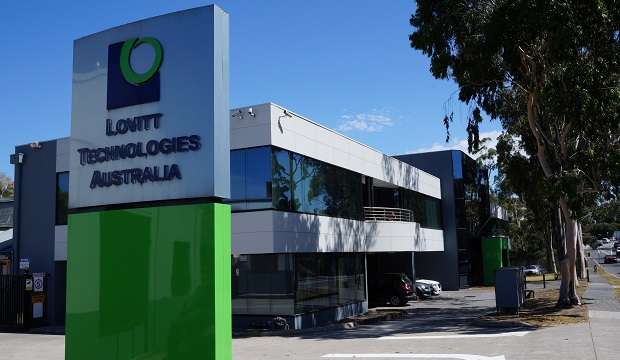
The Montmorency-based aerospace and defence company has been able to win lucrative global contracts and create new local jobs thanks to support from the State Government. As part of the Future Industries Manufacturing Program, Lovitt Technologies has taken on five new workers and acquired advanced manufacturing technology, including a next-generation computer to create precision aerospace components. The cutting edge technology has allowed the company to extend and secure major new contracts with clients in the aerospace industry such as Boeing and Lockheed Martin. Lovitt Technologies was established in 1954 to manufacture tooling for Australia’s automotive industry. Over the ensuing six decades it has evolved continuously, anticipating the eventual decline of Australian car-making and acting decisively by branching into fields as diverse as communications, defence and food & beverages. Primarily, however, the company has developed a strong niche in the field of aerospace over the last 20 years. Today, aerospace components account for around 95% of the company’s…
February 1, 2018
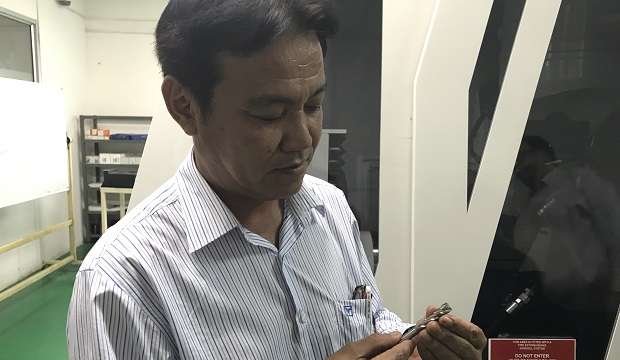
The Thai Government understands that manufacturing will be a key driver of the country’s long-term economic growth and has been encouraging companies to establish facilities in their territories through tax and other incentives. As a result, the country today has flourishing automotive and aerospace sectors that require suppliers. SK Precision has around 50 people working two shifts servicing their traditional market of cutting carbide tools and PCD tools. “We have been operating for over 20 years and know the local Thai market intimately,” says Tibordee Srikul, President of SK Precision. “We saw an opportunity in the tap grinding segment as until now companies could only source taps from overseas suppliers and that means longer lead times of up to three months and higher cost. Our customers want just-in-time products so they can reduce stock and inventory costs. Having a local supplier who can deliver taps in a short period of time helps them achieve a more efficient supply chain. “Taps are…

January 26, 2018
Based in Tullamarine, Ferraro is a tight-knit family-run business that supplies more than 25 varieties to some of Australia’s leading food manufacturers including Arnotts, Paddy’s Pies and Goodman Fielder. As production of shredded mozzarella, shredded parmesan and grated parmesan increased, Ferraro needed larger volumes of nitrogen and carbon dioxide gas, which resulted in a new solution to support its modified atmosphere packaging (MAP) process. “Since moving to BOC, we’ve had no gas supply issues and can confidently increase our cheese production knowing that we have the right gas solution,” says John Ferraro, the company’s owner. “We don’t change for the sake of change – but BOC’s offer was competitive and they have really looked after us.” The challenge Ferraro had outgrown its existing gas system from a previous supplier, and now required more nitrogen and carbon dioxide gas flows and larger vessels to support increasing quantities of cheese packs being produced using a MAP process. “We have a single chamber and double chamber machines that need gas all day long,” says Ferraro.…
January 26, 2018
South Australian-based car battery handle supplier Rope & Plastic Group had a successful business in Australia and the United States before the automotive industry’s decline. However, the company has now begun manufacturing clotheslines. According to owner John Sutton the transition was an obvious choice. “We were supplying car battery company Exide with handles, cases and lids, so it was a very lucrative business,” he explained. “In the meantime about five or six years beforehand we got involved with a company called Mrs Peggs Clotheslines, and started to manufacture, warehouse and distribute clotheslines in China. “About the same time that Exide decided to close down their manufacturing operations, Mrs Peggs came to us and said they were going to take back the business and run it themselves. We had a double whammy.” With the automotive industry offering no real future, Sutton decided to draw on the company’s experience in clothesline manufacturing to design and manufacture his own washing line. The venture was assisted by a $200,000 grant through the SA…

January 26, 2018
Eilbeck Cranes – Lifting capabilities A third-generation family-owned business in its 110th year in operation, Eilbeck Cranes is now Australia’s largest and most advanced crane manufacturer, towering over the Australian crane market due to its engineering and manufacturing excellence. Today Eilbeck has manufacturing facilities in Sydney, Western Australia, Mackay in Queensand, and a new facility currently under construction in Melbourne, as well as service centres around the country. Eilbeck Director Tom Eilbeck took the bold move in 2015 and invested massively into the development of the Eilbeck Heavy Machining Centre. This daring decision was not only aimed at gaining competitive advantage, but also an investment in the future of Australian manufacturing and the security of future Australian jobs. Investment over the last two years has been significant for this company, with the installation of the Okuma MB8000H CNC horizontal machine centre with OSP P300M control in 2016, followed this year by an Okuma Genos…

January 26, 2018
Throughout its long history, turning in the conventional direction – namely starting at the end of the workpiece and working longitudinally towards the chuck – has prevailed. Although this technique has proved successful, as the process has matured, ongoing advances in productivity and profitability have been increasingly difficult to achieve. Many are bound by the limitations of traditional turning. For instance, while experienced operators are aware that factors such as small entry angles permit increased feeds, they are restricted to around 90 degrees in conventional turning in order to reach the shoulder and avoid the long, curved chips that small entering angles characteristically provide. In recent years, the advent of…
January 19, 2018
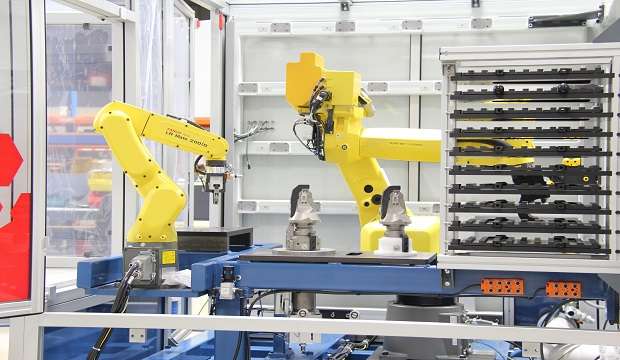
In high and low-wage countries, interest in the many benefits of industrial robots has never been higher. Released last year, the International Federation of Robotics (IFR) Industrial Robots report showed unit sales figures in 2015 up 15% on the year before, reaching an all-time high of 253,748. Since 2010, technical improvements in robots and automation have turbocharged investment, according to the report. Furthermore, double digit percentage growth is predicted to continue every year up to 2019 . However, within CNC machining, robotics applications have been dominated by machine tending. Overall, the benefits enjoyed by industrial users of robots – such as accuracy, productivity and capacity utilisation – have been under-realised by machine tool users. According to 2012 IFR research, only 1.5% of machine tools were being automated in conjunction with robots . Nonetheless, this trend is starting to shift, with robots becoming increasingly affordable and easy to program – making the technology more accessible to the CNC grinding market. Global influences are also having an impact, such as the South…