




June 8, 2018
Manufacturers today live in a very competitive, price-sensitive and crowded world. Companies that operate in developed economies can no longer compete on cost alone and are looking at how to achieve a more stable revenue forecast. The need to differentiate from competitors is also a key priority. One way this can be done is to look at servitisation (the shift from selling just a product to selling a product and a service) as a way to provide a complete solution to customers. Many of the companies I speak to are investing in disruption and innovation, and they aren’t doing it merely from a new product development perspective but something far more advanced. They are going from a ‘make and sell’ business model and evolving it into one that increasingly adopts and embraces services, which in turn helps build long-lasting customer relationships. Why manufacturers are servitising their businesses The main benefit for companies adopting servitisation…
June 8, 2018
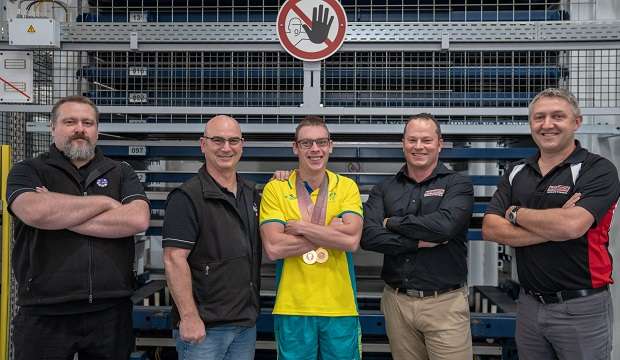
Despite being born with cerebral palsy and a number of ongoing health issues, Tim began learning to swim at the age of four, and began swimming competitively when he was 10. Contests and medals culminated in his selection for the Australian Paralympics team at the Rio games in 2016. Tim came away with three medals, including gold in the S9 100m freestyle. The success story continued at the Gold Coast Commonwealth Games in April, where he won the gold medal in S9 100m freestyle and Gold in SB8 100m breaststroke. In 2017 he was awarded the Medal of the Order of Australia (OAM). Now Tim has the 2020 Paralympic Games in Tokyo in his sights, and he is being supported BY one of AMTIL’s CEO Groups as sponsors. New Touch is one of the members of that CEO Group, and Tim’s visit was a chance to have a look round the factory and get an understanding of what the company does. “It was great to have Tim…

June 1, 2018
May marked the longest run of expanding or stable conditions for the Australian PMI since 2005, with the longest positive run being 50 continuous months from July 2001 to July 2005. Five of the seven activity sub-indexes in the Australian PMI expanded in May. New orders edged up 0.8 points to 62.4, indicating healthy demand and a strong likelihood of further near-term growth, while sales levels were stable (down 12.1 points to 50.4). Seven of the eight manufacturing sub-sectors expanded in May (based on trend data), with the wood & paper products sub-sector’s stable conditions the only exception (down 0.6 points to 49.4). Sub-sectors providing manufactured goods for large transport projects and the construction sector continue to report very strong levels of activity: petroleum, coal & chemicals (down 0.9 points to 64.2); metal products (down 0.2 points to 61.4); machinery & equipment (down 0.3…

June 1, 2018
Budget papers released on 8 May reveal that R&D Tax Incentive claimants including SMEs and the start-up sector may be faced with additional compliance burdens. Under the new measures, which come into effect on 1 July, there will be additional funding for enforcement activity allocated to the Tax Office and AusIndustry. Jack Qi, Director of Tax Services and R&D specialist at William Buck, says that while at first glance SMEs and start-ups may have been spared the brunt of the tightening of the R&D Tax Incentive, compliance changes could have the biggest impact. “Given that such activity has already ramped up in recent years, any further focus will mean it’s more important than ever to prepare robust R&D claims and quality, contemporaneous internal documentation that will withstand scrutiny,” says Qi. “From a cash flow perspective, we anticipate potential delays in companies receiving their R&D refunds until any review is finalised.” Qi warns the Government against making any more changes to the R&D Tax…

May 23, 2018
Kennewell CNC Machining Based in Murray Bridge, 76kms east of Adelaide, Kennewell CNC Machining is a precision engineering company that has successfully launched a project supported by the Government of South Australia’s Regional Development Fund, integrating a Fanuc Robot with an Okuma Genos M560V vertical machining centre, and also purchasing an Okuma LB3000EX-II-MYWx800 multi-axis CNC lathe with OSP-P300L Control. Established in 1995, Kennewell had already been an important Okuma customer for many years. The company’s Managing Director Brett Kennewell had served his apprenticeship on Okuma machines more than 25 years ago. “The Okuma machines are robustly built for stability and precision - as an example our 11 year-old machine, is still operating and is as accurate today as it was on installation,” says Brett. “Okuma personnel do everything they can to assist us with technical advice and support which is readily available locally and remotely. The ongoing training is a key factor in the relationship with this partner as we strive…

May 23, 2018
Austin is a leading designer and manufacturer of customised dump truck bodies, buckets and ancillary products used in the mining industry. With more than 30 years’ experience in the mining and manufacturing industry, the company is an expert at solving engineering challenges. As a complete service provider, it offers on and off-site repair and maintenance and heavy equipment lifting services to customers including miners, mining contractors and original equipment manufacturers. With a presence in some of the world’s principal mining regions, Austin provides high-quality, cost-effective solutions, delivered on-time and backed by through-life product support. With a significant amount of welding carried out every day and anywhere between 80-120 G-size cylinders used each week, Austin was keen to work with BOC to improve safety of its workers and reduce costs by upgrading its gas…
May 23, 2018
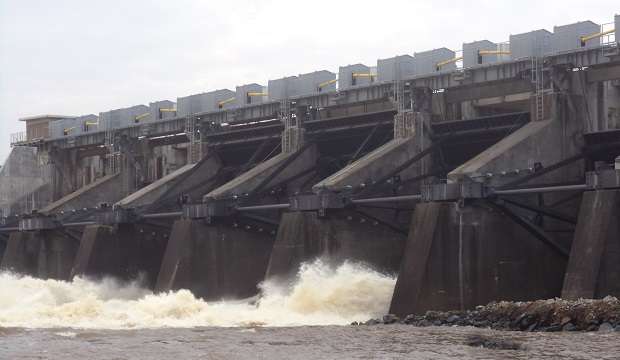
As an enabler of high-performance Industry 4.0 concepts, IO-Link has become indispensable in tool machine engineering and in production facilities. In addition, however, hydro power plants can be wired quickly and efficiently using IO-Link: at the Mount Coffee dam in Liberia an intelligent IO-Link installation connects dozens of sensors and actuators over long distances simply while saving time and cost. The power plant operator had already come to appreciate the typical IO-Link benefits when it came to diagnostics and maintenance. By December 2016 the time had finally come: after more than 20 years of interruption the first turbine was started up, and now all four turbines are feeding 22MW each into the power grid. The integrated wiring solution developed by project partners Balluff and Andritz Hydro has the potential to be utilised in future power plant projects as well. The origins of the Mount Coffee dam, which lies 30km north-east of the Liberian capital Monrovia, go far back: the former dam was finished in 1966, but was almost totally destroyed during the…
May 23, 2018
The irony is that one of the most productive of these solutions is far from new—in fact, it’s been a champion in the war on machine tool downtime for nearly three decades. It’s called KM Quick Change Tooling from Kennametal. Now, Kennametal has now launched an entirely new KM product line: Turret-Adapted Clamping Units. In addition, the company has partnered with global lathe tool specialist, EWS Tool Technologies, to manufacture and support this series of KM adapters. Together, the two companies plan to redefine how shops will tool up the turrets on their DMG MORI, Okuma, Mazak, Haas, Doosan, Nakamura, Hwacheon, and Hyundai lathes, with more to come. Embracing change Some companies have looked at quick-change tooling and decided not to invest, on the grounds that it is too expensive or not worth the hassle that comes with implementing any new technology. That might be why many…
May 18, 2018
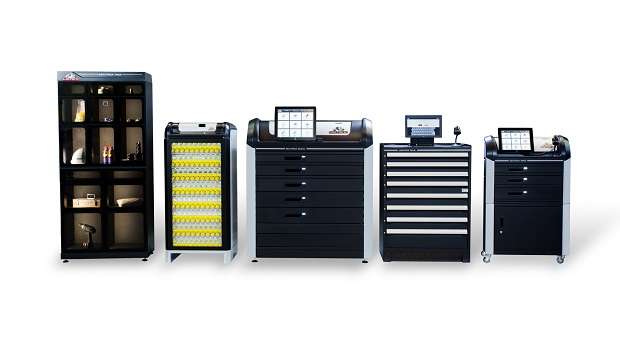
Compact smart vending Big bulky machines have their place, but they will never be fully point-of-use or provide the smart manufacturing cell with its own autonomy. Some suppliers offer bench-top units that are compact in size but pack a punch well above their weight when it comes to features. They typically offer a full software suite and provide 100% control and accountability per bin or per individual item. This makes them ideal for the modern shopfloor, where the machining process and selection of cutting tools cannot be compromised. Mobility Mobility has been one of the catch words of the last decade or so. Today we take it for granted that our office, social activities and more sit in our pocket. Users expect to…
May 4, 2018
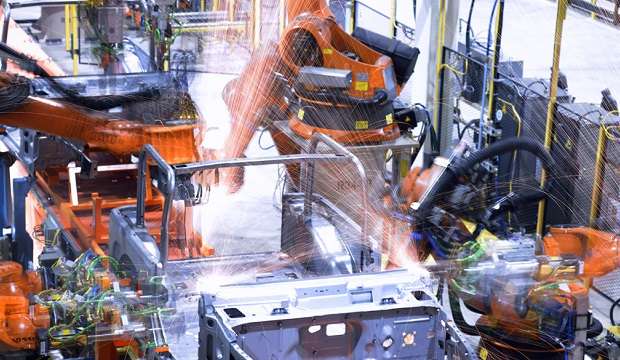
April marked a 19th consecutive month of expanding or stable conditions for the Australian PMI – the longest run of continuous expansion since 2005. Readings above 50 indicate expansion in activity, with the distance from 50 indicating the strength of the increase . Six of the eight manufacturing sub-sectors expanded in April (according to trend data), with four sub-sectors reaching record highs in trend terms: machinery & equipment (up 1.0 point to 61.2); petroleum, coal & chemicals (up 0.4 points to 67.6); metal products (up 1.6 points to 63.8); and textiles, clothing & furniture (up 5.6 points to 57.1). Ai Group Chief Executive Innes Willox said: “The manufacturing sector extended its broad-based expansionary run in April. Growth was led by the machinery & equipment; metal products; coal, petroleum, chemical & rubber products; and non-metallic mineral product sub-sectors, all of which are enjoying strong demand from high levels of building and construction activity. The largest manufacturing sub-sector – food & beverages –…

May 4, 2018
The Australian Manufacturing Technology Institute Limited (AMTIL) is the peak national body for the precision engineering and advanced manufacturing sector in Australia. Having a stand enables it to show its support for AMTIL members visiting or exhibiting at NMW, while also providing the opportunity to engage with Australian manufacturing businesses more generally and discuss the ways it can help them. For AMTIL members, ‘Happy Hour’ drinks will be held on the Wednesday and Thursday of the show (9 and 10 May) , from 4.00pm at the AMTIL stand. Any members at the show are invited to drop by the AMTIL stand for refreshments and a chat. AMTIL has a long-standing relationship with NMW, having co-located its own Austech exhibition with NMW for many years, and continuing to do so every second year in Melbourne. AMTIL’s participation in this…
April 27, 2018
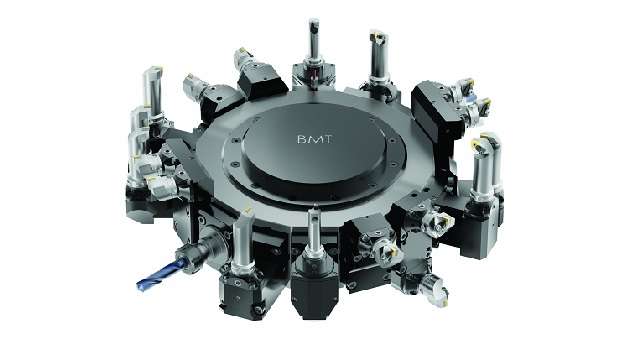
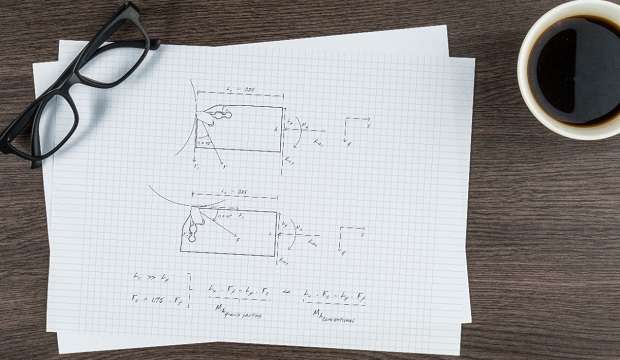
Adding rotating tools to turning centres means you can combine several set-ups in a single machine for a more streamlined and productive machining process. To accomplish this, turn-mill machines were introduced in the 1990s. The initial idea was to enable driving a milling cutter, drill or threading tap on one or more tool positions in the turret to eliminate limitations of polar interpolation and other related programming difficulties. To improve reach, an extra set of ways was added to move the rotating tool across the spindle face. This was accomplished by mounting the tools on revolver sides or on its face, by installing the Y-axis ways on a slanted bed or by using an independent milling head. Both machine tool makers and manufacturers soon recognised the benefits of integrating both milling and turning operations. Today, the Y-axis option has become a…

April 27, 2018
In CNC systems, the design of a mechanical part and its manufacturing program is highly automated. The part’s mechanical dimensions are defined using computer-aided design (CAD) software, and then translated into manufacturing directives by computer-aided manufacturing (CAM) software. The resulting directives are transformed by post-processor software into the specific commands necessary for the chosen machine to produce the component. What that means, in simple terms, is that the days of “one man, one machine” are now a fast-fading memory. One programmer at a computer console can program, implement, and supervise machine work that would be the equivalent of several operators on lathes, grinders, routers, mills, and shapers in earlier times. Computer-controlled, automated machining methods can achieve reaches, holds, and other actions that human operators and conventional machines typically don’t do efficiently. Generally, lathes and machining centres have two axes, but more sophisticated models have more, allowing for more advanced jobs to be…