




October 20, 2020
As a business owner, it can be tempting to seek short cuts to find your best-fit insurance cover. The internet offers you an overwhelming range of options, but it can be tricky to work out the right cover to suit your business needs (and cheaper is not always the best). You could have then taken out a policy because it was quick and ticked most of your boxes. Maybe the impact of COVID-19 has belatedly made you take to the fine print with a magnifying glass. For example, did you have a chance to check the independence of the comparison website? Social proof might have weighed in on your decision-making too, rather than doing your usual due diligence. Spoilt for choice With millions of individual insurance policies offered through multiple brands, and distribution channels across Australia, insurance brokers are a valuable guide to help businesses determine which policy offers the best fit for their needs. It…
October 15, 2020
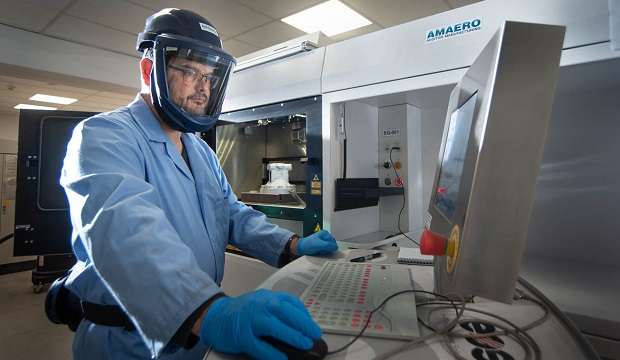
Working with Melbourne-based Amaero Engineering, researchers at CSIRO’s Lab22 Innovation Centre, one of Australia’s leading centres for metallic additive manufacturing, developed the innovative solution using some clever simulations. Sam Tartaglia, Program Manager at Amaero, said the company, which specialises in additively manufactured high-performance parts, saw an opportunity to explore the use of conformal cooling in 3D-printed die cast tooling, using computational modelling. “High-pressure die casting (HPDC) is by far the most popular manufacturing route for mass-produced near-net-shape metal parts,” Tartaglia said. “The process forces molten metal into a die cavity via a series of passages or ‘runners’, which include the ‘sprue area’, to produce a part in the shape of the cavity before the final solidified product is removed. “We were looking to find a solution to a stubborn problem that was challenging one of our clients - the sprue area running too hot. The issue was causing prolonged cycle times, with the die taking longer to cool between shots, and frequent production line stoppages”. Using Finite Element Method computational modelling, the partners explored optimising…

October 15, 2020
Joining an elite group of Australian companies that build and export manufacturing technology, John Hart designs and manufactures the systems in its Melbourne facility for local and international markets. With a facility in Cincinnati, Ohio, Agile Robotic Systems offers on-site demonstrations, technical support and sales for the entire North American region. Three levels of machine tending products provide the basis of this innovative success story. The Agile Flex range is an out-of-the-box machine tending solution that is solid in construction, rapid to deploy, easy to use and very affordable. The Agile Modular range offers a flexible machine tending solution created by bringing together pre-engineered modular system components to meet project requirements. Finally the Agile Engineered range offers a fully bespoke solution designed specifically to meet the unique requirements of each project. Known for their advanced design, simplicity of use, build quality and reliability, Agile Robotic Systems come in a range of sizes and configurations to meet the…

October 15, 2020
The recent change to the Australian Consumer Law (ACL) directly impacts manufacturers and sellers of goods that are not generally used for domestic or household purposes. A buyer of an $80,000 industrial motor may now be a “consumer”. Currently, a person or business is considered a “consumer” for the purposes of the ACL if they purchase goods or services for their own use that: Are of a kind ordinarily acquired for domestic, household or personal use or consumption; OR Cost up to $40,000, irrespective of their kind or purpose. A person who on-sells goods or uses them up in the course of manufacturing other goods is not a consumer. But their customer may be a consumer for those on-sold goods or new goods. This definition has been amended by the Treasury Laws Amendment (Acquisition as Consumer – Financial Thresholds) Regulations 2020. From July 2021, the monetary threshold will increase from $40,000 to $100,000. This will, undoubtedly, shake up the traditional…

October 13, 2020
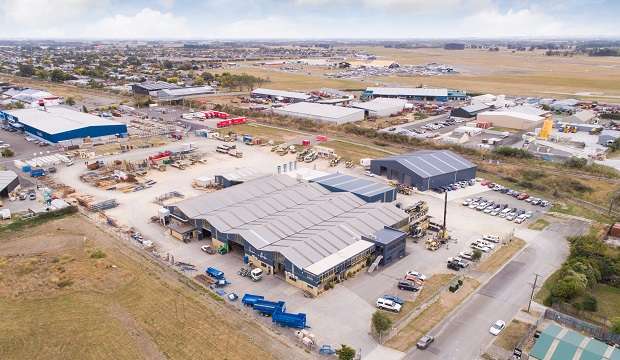
Suzanne Shipp is one of the key people responsible for Laser Central’s aggressive growth strategy. Since being appointed as the company’s new CEO earlier this year, Shipp has been busy driving new ideas and initiatives at this 100% Australian, family-owned business. “One of our core strategies has been around establishing a complete, centralised network of suppliers that can provide complimentary services and a full capability suite to our clients,” says Shipp. “The reasoning behind this, is that we can simplify our client’s supply chain. The client can come to us and while we might provide 80% of the work, we might also incorporate another supplier to provide the finishing, which means we can provide a full end-to-end service. “This makes it easier for the customer as they only have to deal with one supplier, while they receive the end product that they need. We’ve worked hard to establish a large and reliable network of partners that we can work with and fill any capability gaps.” Moving…
October 13, 2020
McIntosh specialises in supplying quality forage and feed-out wagons, tip trailers, manure spreaders and bale feeders to farms and vineyards and wanted to replace its existing ERP system to significantly improve its production and scheduling capabilities. The company has been designing and manufacturing reliable farm and agricultural machinery for more than 60 years from its Palmerston North production facility on New Zealand's North Island, after being established by the McIntosh brothers as a farm equipment maintenance business. The company provides its farming equipment through over 200 trusted dealers across New Zealand, Australia and Chile. The firm had concerns over its ability to plan for future customer orders, ensuring it had the right stock on hand to meet production needs. The management team also felt that as a family-run business with a loyal longstanding workforce, much of the knowledge and expertise is in people’s heads. Many processes are paper-based, and the company has over 6,000 production drawings featuring around 20,000 parts. “We found our…

October 8, 2020
A starting point would be to recognise that manufacturers across the developed world succeed not because they make certain products, but because they have invested in manufacturing technology, adopted sophisticated manufacturing methodologies and process techniques. They typically use a combination of three factors to remain competitive: advanced knowledge, advanced processes and advanced business models. But this is not new news. According the World Economic Forum’s Readiness for the Future of Production report, Australia is a “high potential” country for this type of future production. Key opportunities and advantages are arising for Australian manufacturing from increasing amounts of investment in digital technologies, but also from the integration of these new technologies into an increasing range of the manufacturing processes and supply chains. Manufacturing workplaces increasingly rely on technologies, methodologies and techniques (what we…

October 8, 2020
There are various types of cutting materials: cemented carbide, polycrystalline diamond, high-speed steel, ceramics and so on, and each type contains different grades. At various stages in the history of metal cutting, the introduction of each new cutting material and its use have led to a significant change in the level of cutting speeds, and consequently of productivity. However, if the previous century, especially its second half, was marked by the rapid progress of tool materials, today we do not see any significant new solutions in this field. Does this mean that the development of new tool materials has already reached its peak and is experiencing stagnation? Of course not. It is simply that the new developments are deep within the cutting material and are focused on its structure and can be observed only with the help of scanning electron microscopy (SEM), X-ray diffraction (XRD), electron backscatter diffraction (EBCD), and other sophisticated methods. They cover a tremendously complicated world of…

October 6, 2020
The modern industrial robot has come a long way since 1961 when Unimate #001, the first industrial robot arm, appeared on the General Motors assembly line in Trenton, New Jersey. When entreprenuer Joseph Engelberger, the father of modern robotics, appeared on the Tonight Show with Johnny Carson in 1966 to demonstrate the Unimate, many began to envision a future where it might be possible for artificial intelligence to completely take over industrial production processes. Six decades later, we have not seen the Hollywood narrative of the 1956 sci-fi movie Forbidden Planet play out, where robots perform every task requested of them by their masters. And we are still some time away from full automation with a science fiction icon like ‘Robby the Robot’ taking control of manufacturing systems. We have, however, seen industrial robotics improve rapidly and adapt into its most commonly recognisable form: the SCARA (Selective Compliance Assembly Robot Arm, or Selective Compliance Articulated Robot Arm) format. For business owners and engineers, selecting the right SCARA robot…
October 6, 2020
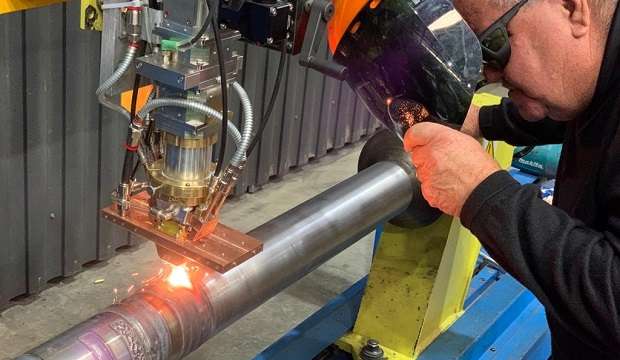
With the aim of retaining QSP’s position as a key provider of metal spraying repairs for worn parts, Managing Director Neville Brokenshire looked to install the latest innovations in metal spraying technology, to ensure high-quality output and a more efficient, cost-effective process to integrate into its workshop services. Already utilising a fibre-coupled high-power diode laser by Laserline supplied by Raymax Applications for laser cladding with metal powder, Brokenshire sought advice from Dr Cédric Chaminade from Raymax in regard to improving output. A new coaxial nozzle was deemed the solution. High processing speeds with specifically designed coaxial nozzles used with Laserline fibre-coupled diode lasers provide distinct advantages, including low exposure time, strong metallurgical bonds between the cladding layers and substrate, low warpage, and short, highly energy-efficient cladding times. By introducing a new laser cladding nozzle, QSP has effectively extended the current available advantages to its customer base. A coaxial nozzle combines inert gas flows and metal powder with exceptional throughput capability. Additionally, protection glass monitoring…
October 6, 2020
The report, Averting an Escalating Labour Market Crisis for Young People in Australia: A Proposed National Job Cadet Program, argues that utilising parts of Australia’s apprenticeship platform in new occupations, not covered by the current system, will create the tens of thousands of jobs needed to avert a major crisis in the youth labour market. “There is very strong evidence that combining an employment contract with formal education and training improves employment outcomes,” said Professor Peter Dawkins, Vice-Chancellor of Victoria University and the report’s co-author. “This job cadetship program will help reverse the long-term deterioration in youth employment outcomes that the pandemic has intensified.” New research in the report shows that school leavers and recent graduates have been hardest hit by the coronavirus pandemic. While there has been a small improvement in other parts of the labour market, recent graduates have missed out with 100,000 fewer jobs available than before the pandemic. Most concerning is the increase in young people who are not in…

October 2, 2020
Prime Minister Scott Morrison announced the plan on 1 October, which will see around $1.5bn in new funding invested over the next four years in a Modern Manufacturing Strategy to make Australian manufacturers more competitive, resilient and able to scale-up to take on the world. The centrepiece of the Strategy is the $1.3bn Modern Manufacturing Initiative (MMI), which will see the Government strategically invest in projects across six priority manufacturing sub-sectors, helping manufacturers to scale up and create jobs. Shane Infanti, CEO of AMTIL, was broadly positive about the plan, while stressing that the details to be unveiled in next week’s Budget will be critical. Infanti welcomed a $50m increase to the Manufacturing Modernisation Fund and greater commitments to government procurement and supply chains, while warning that the Strategy’s focus on six National Manufacturing Priorities should not leave other sectors at a disadvantage. “Identifying specific sectors we have a competitive advantage in and supporting these sectors with a robust, long-term plan…
October 1, 2020
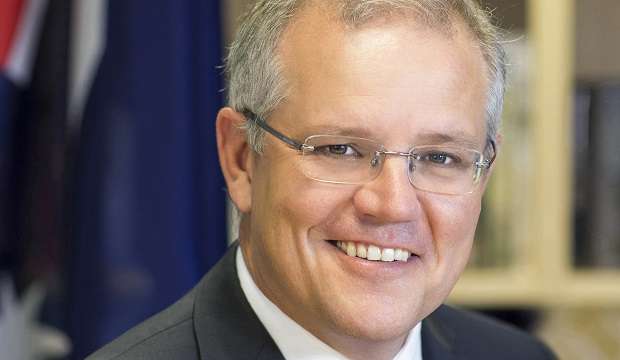
Morrison made the announcement on 1 October in an address to the National Press Club. Under the plan, around $1.5bn in new funding will be invested over the next four years in the Modern Manufacturing Strategy, in a bid to make Australian manufacturers more competitive, resilient and able to scale-up to take on the world. “We make things in Australia. We do it well. We need to keep making things in Australia. And with this strategy, we will,” said Morrison. “The COVID crisis opens a new chapter for Australian manufacturing as a revitalised source of high-wage jobs, valuable exports and national income. “Our Modern Manufacturing Strategy is at the heart of our JobMaker plan. It starts with creating a stable and competitive business environment to grow our all parts of our manufacturing sector, but it does not end there. It will play to Australia’s strengths, improve collaboration and commercialisation, and create a sector that is modern, dynamic and highly skilled. “Through this Strategy, we are…