




September 15, 2020
The world-first personalised nutrition wearable patch being developed by Melbourne-based start-up Nutromics painlessly measures key dietary biomarkers and sends the information to an app, enabling users to precisely track their bodies’ response to different foods. A collaborative team led by Nutromics, RMIT University, Griffith University, and established medical device manufacturer Romar Engineering, with support from the Innovative Manufacturing Cooperative Research Centre (IMCRC), is now developing the capabilities required to pilot manufacture the device. Diabetes is one of the largest chronic health challenges globally, but with early interventions and lifestyle changes, the condition is often preventable. Nutromics co-CEO Peter Vranes said the smart patch leverages emerging technologies to empower people to take greater control of their health: “Research has shown that what we eat affects us all differently; two people might have the same meal but their post-meal response can vary wildly. People want to make healthy food choices but with so much conflicting nutrition advice, many of us are confused. Being able to…

September 10, 2020
The company that would eventually become Forme Technologies started life in the early 1990s, when Charles Land established CL Plastics in Melbourne’s south-east suburbs. For its first decade in business the company achieved a solid degree of success as a contract manufacturer of plastic components. In the mid-2000s it was acquired by the Anderson family investor group, with Mirko Tappero appointed as General Manager shortly after that. Since then the business has undergone a significant modernisation process, as well as a name change. “The company started out as a nicely run ‘Mom-and-Pop’ sort of organisation, and I think we’ve turned it into a fairly sizable player in the industry,” says Tappero. “We’ve spent a lot of money on automation, mechanisation, streamlining processes and just getting smarter about how we do things. Our biggest investment over the last five or six years has been very modern machinery, coupled with a lot of automation. That’s probably…
September 10, 2020
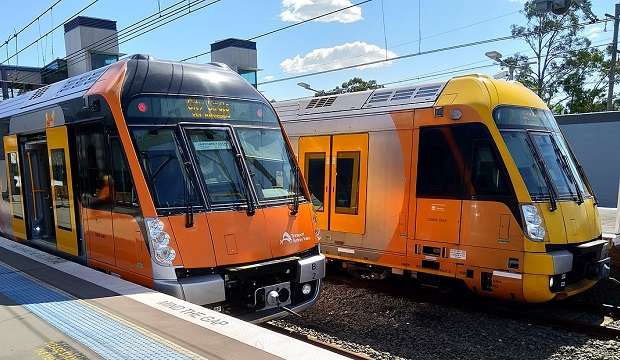
While unveiling a new fleet of Chinese-built Waratah 2 trains last week, NSW Transport Minister Andrew Constance said “there’s a reason” why the trains weren’t built locally. Constance said that locally manufactured trains were likely to cost 25% more due to higher labour, energy and material costs. His comments came just a week after NSW Premier Gladys Berejiklian reportedly said Australia and NSW are “not good at building trains”. The comments drew widespread criticism from the opposition, unions and industry bodies. Geoff Crittenden, Chief Executive Officer of Weld Australia, said: “It is precisely this attitude – that sees state governments send what could be local jobs offshore – that will prevent Australia from recovering from the COVID-19 pandemic.” Weld Australia has called on all state governments to support local welders and fabricators in their rail procurement processes, arguing that this would create thousands of jobs, a solid local supply chain, and an industry equipped to export world-class trains all over the world. According to Crittenden, there is a real opportunity for…

September 10, 2020
For maximum flexibility and efficiency of production, Swiss gearbox manufacturer Rollstar AG recently invested in a large six-jaw pendulum compensation chuck with a jaw quick-change system and jaw quick adjustment. The convenient solution minimises set-up times and delivers perfect results right from the start – faster and more economically than conventional clamping solutions. The SCHUNK ROTA NCR 1250 six-jaw pendulum compensation chuck, which Rollstar uses to manufacture gears on a Pittler PV 1600 turn machining centre, is a large-dimensioned chuck with clever features. Christian Märki, Purchasing Manager at Rollstar considers whether it was a worthwhile investment. “Definitely,” he says. “Due to the machine design, including the clamping devices, we were able to reduce set-up times by half while decreasing the reject rate by 75%.” In particular the investment pays off when it comes to thin-walled components and high-quality materials. The company’s aim was to achieve the necessary quality levels, reduce throughput times and lower the overall costs of producing deformation-sensitive parts in two operations while ensuring process reliability. Due to the SCHUNK ROTA NCR,…

September 8, 2020
With more than 19 years’ experience in the industry, this award-winning engineer with trophies for Top World Skills Machinist for Western Australia and a top ten World Skills entrant for Australia, has a business theme of ‘If you can dream it, we can machine it’. When establishing a new green-field site with a pristine engineering workshop, Latham’s first purchase has been a brand new Okuma Model Genos L3000e-MY x 1000 CNC lathe. “Over the years I have worked on a wide range of CNC machines and I love the Okuma machines for the easy interface and the outstanding finish they achieve,” says Latham. “The back-up service that Okuma provides is also outstanding from people who really care. This machine is a very big investment for us; however the new plant layout is planned for additional machines and I already know the next Okuma machine model I want.” In following his dream, Latham has held a passion to start his own engineering business for some…
September 7, 2020
As Singapore’s public housing authority, the Singapore Housing & Development Board (HDB) is responsible for the development of 80% of the housing in the island city-state. There is a great demand for housing, and 3D concrete printing could help to speed up the housing development task that HDB faces. On 16 September 2019, HDB declared South-East Asia’s largest 3D printer for construction operational. The Virtual Smart Factory (VSF) 3D Concrete Printing System is capable of printing concrete components up to 9m long, 3.5m wide and 3.8m tall. The project was a joint effort involving Robin Village Development, Nanyang Technological University, Witteveen+Bos and CNC Design. Witteveen+Bos is an independent engineering consultancy that services clients in water, infrastructure, environment and construction projects. Witteveen+Bos engaged CNC Design for the development of an advanced six-axis gantry robot as part of the 3D Concrete Printing System. This is now operated for HDB by Witteveen+Bos. CNC Design is an Australian-owned company established in Melbourne in 1984, with core competencies in machine tools,…
September 7, 2020
Undoubtedly there are many benefits associated with the use of additive manufacturing (AM) as a production technology. Across industries, manufacturers exploit the fact that with AM they can not only build complex parts in one piece that were previously impossible, but they can also build stronger, lighter-weight parts, reduce material consumption, and benefit from assembly component consolidation across a range of applications. These advantages have been well documented over the last 10-20 years, as AM has emerged as atruly disruptive technology for not just prototyping but also production. They are invariably seen as being enabled by the additive hardware that builds the parts. In reality, this is a partial picture, particularly for serial production applications of AM. The hardware systems are just one part – albeit a vital one – of an extensive ecosystem of technologies that enable AM, both pre- and post-build. Of unique importance today is the role of post-process…
September 3, 2020
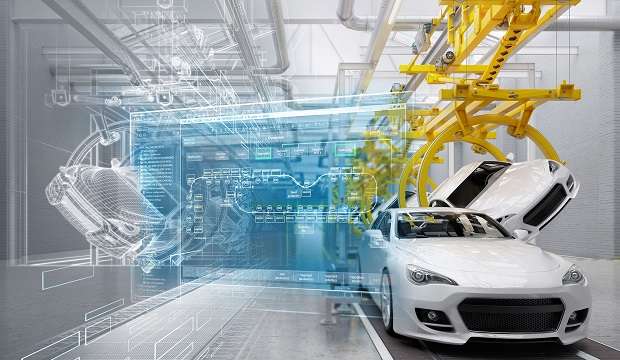
AMT: What are manufacturers talking to you about right now? Reece Moore: Definitely Industry 4.0 and the Fourth Industrial Revolution. Manufacturers are obviously keen to utilise a lot of the new transformative technologies, to help them develop products, but also to transform the actual manufacturing process itself. What manufacturers are particularly talking to us about though is how to improve the management of their product data and processes to harness these technologies. They look to us for advice on how to digitally transform their businesses using product lifecycle management software. AMT: What is your advice to those who are keen to adopt these technologies? RM: We advise them on how to achieve digitalisation throughout the product lifecycle phases: the ideation phase, where you’re doing your concepts and designs; the realisation phase, where the manufacturing takes place; and utilisation – how the product is used and maintained by the customer. Many manufacturers are trying…
September 3, 2020
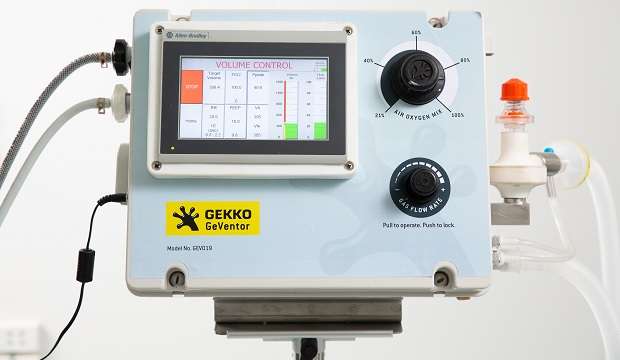
The Victorian State Government on 1 September announced an order for 170 of the units, after Gekko’s machine was provided with a production exemption from the Therapeutic Goods Administration (TGA). Gekko will now harness its local suppliers and 100-strong workforce to build the GeVentor ventilators, which will be among the first to go into production. They are expected to be available within five weeks and will be used in health services across the state. The GeVentor is an affordable alternative to the latest model ventilators, designed to be simple, robust and reliable. It features low gas and power consumption and can be operated using batteries and an oxygen bottle, making it ideal for more remote and regional health centres. A prototype for the GeVentor was developed in April by Gekko’s innovation team lead by technical director Sandy Gray, in consultation with Ballarat anaesthetist Doug Paxton. The initiative was in response to fears of shortages of ventilators in Australian hospitals. The development of the prototype was assisted by a…

September 3, 2020
Robovoid Pty Ltd was established in July 2018 by Dr John Stehle and Scott Olding for the specific purpose to research, develop and commercialise Stehle’s Robovoid Invention. The Robovoid Invention is a patent-pending recycled plastic void former for concrete construction applications. The Robovoid Invention has drawn on Stehle’s previous experience developing new and innovative precast construction solutions, an example being the innovative dowel connection system adopted in the flooring system implemented for the Leadenhall Building (aka the “Cheesegrater”) in London. On the back of Stehle’s 25-year career in the construction industry, and with a strong desire by Stehle and Olding to introduce new solutions to the industry that reduce the environmental impact of new construction, the Robovoid Invention commenced its development journey. The Robovoid Invention involves multiple research & development (R&D) components but one of the key areas identified at the beginning of the project was how to make the Robovoid recycled plastic components, or Robovoid Components. Of course,…

September 3, 2020
The Wage Theft Act 2020 (Vic) (Wage Theft Act) passed the Victorian Parliament on 16 June 2020 and commences operation on 1 July 2021. The underpayment of wages and entitlements have been a particularly fraught issue in Australia over the past few years with a number. A range of large employers have self-reporting ed underpayments to the Fair Work Ombudsman. These instances of underpayments have coincided with a push to criminalise some types of deliberate underpayment. As a result, The phrase ‘wage theft’ has been introduced into the Australian industrial landscape. Underpayment of wages and record-keeping obligations are issues that have historically been governed by industrial relations laws that, if not abided by, may lead to civil penalties being imposed on employers. The Wage Theft Act is different. It is the first piece of legislation in any jurisdiction in Australia that creates statutory criminal offences related to non-payment of employee entitlements or the falsification of employee records. Under the Wage Theft Act there are three main criminal offences. Offence 1 - Dishonestly withholding of employee entitlements It is an…
September 1, 2020
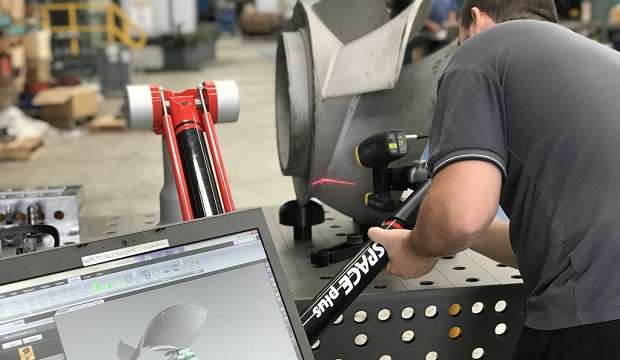
In short, reverse engineering is the reproduction of a product or part that cannot be obtained by other means. It involves measuring an object and reconstructing it as a 3D model, then manufacturing the part. The process is primarily used for machinery parts, rather than the production of parts for mass assembly line manufacturing. “Reverse engineering is the only option when OEM parts are no longer available, particularly for an aged piece of equipment,” says Leussink’s Managing Director Jason Leussink. “However, there is no reason why reverse engineering processes cannot be used for newer components. The process can be applied in many industries and applications.” Reverse engineering can be undertaken using a variety of tools and technologies. Generally, the complexity of the part being reverse engineered will dictate the type of equipment and software used. “The simplest reverse engineering process is manual measurement and data collection…