



March 24, 2022
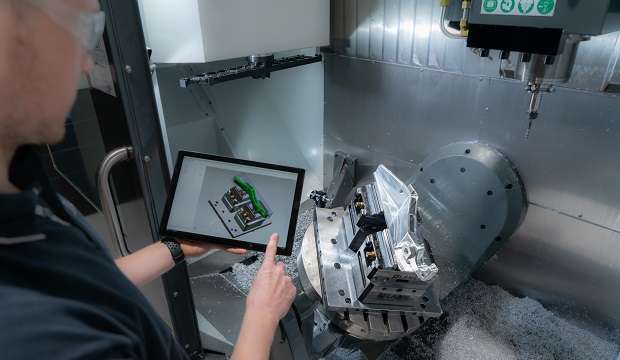
The implementation of Closed-Loop Manufacturing (CLM) across its manufacturing capability using Siemens’ Manufacturing Execution System (MES) will enable HeliMods to achieve development and production of high-complexity, high-value, scalable solutions using a single digital thread across the entire product lifecycle. The implementation of the software was enabled by a $350,000 co-investment grant from the AMGC and will support HeliMods’ global and local growth trajectory in aerospace, defence, air ambulance and other key industries. In total, the project will see an investment of $808,543 from combined AMGC, industry and in-kind contributions. The announcement was made at HeliMods’ premises in Sunshine Coast by Federal MP Andrew Wallace “Thanks to this project, HeliMods is now the only Australian business with Defence Production Approval that is using such a Closed Loop Manufacturing system, offering Australia a unique new sovereign defence industry capability-based right here on the Coast,”…
March 24, 2022
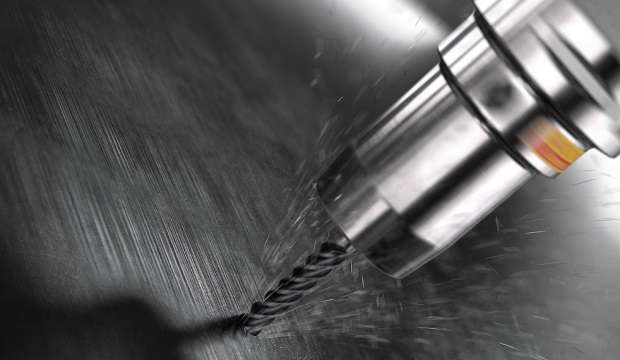
When drilling holes in most aerospace components, manufacturers have three chances of getting the hole correct – after which, it will be impossible to rework the hole within the required design specifications. If just one hole misses those three chances, by diameter, surface finish or delamination, the entire component will need to be scrapped. Given the enormous value of aeroplane components, holemaking is a risky business. That applies especially when drilling composite materials, which place new demands on machining. Holemaking has emerged as one of the most common machining processes when working with composites. Machining composite materials – which combine two or more materials with different physical and chemical properties – involves cutting, or fracturing, of the fibre part of the material. If this is done incorrectly then layers of the composite material peel away from where they belong. This is known as delamination, and according to…
March 18, 2022
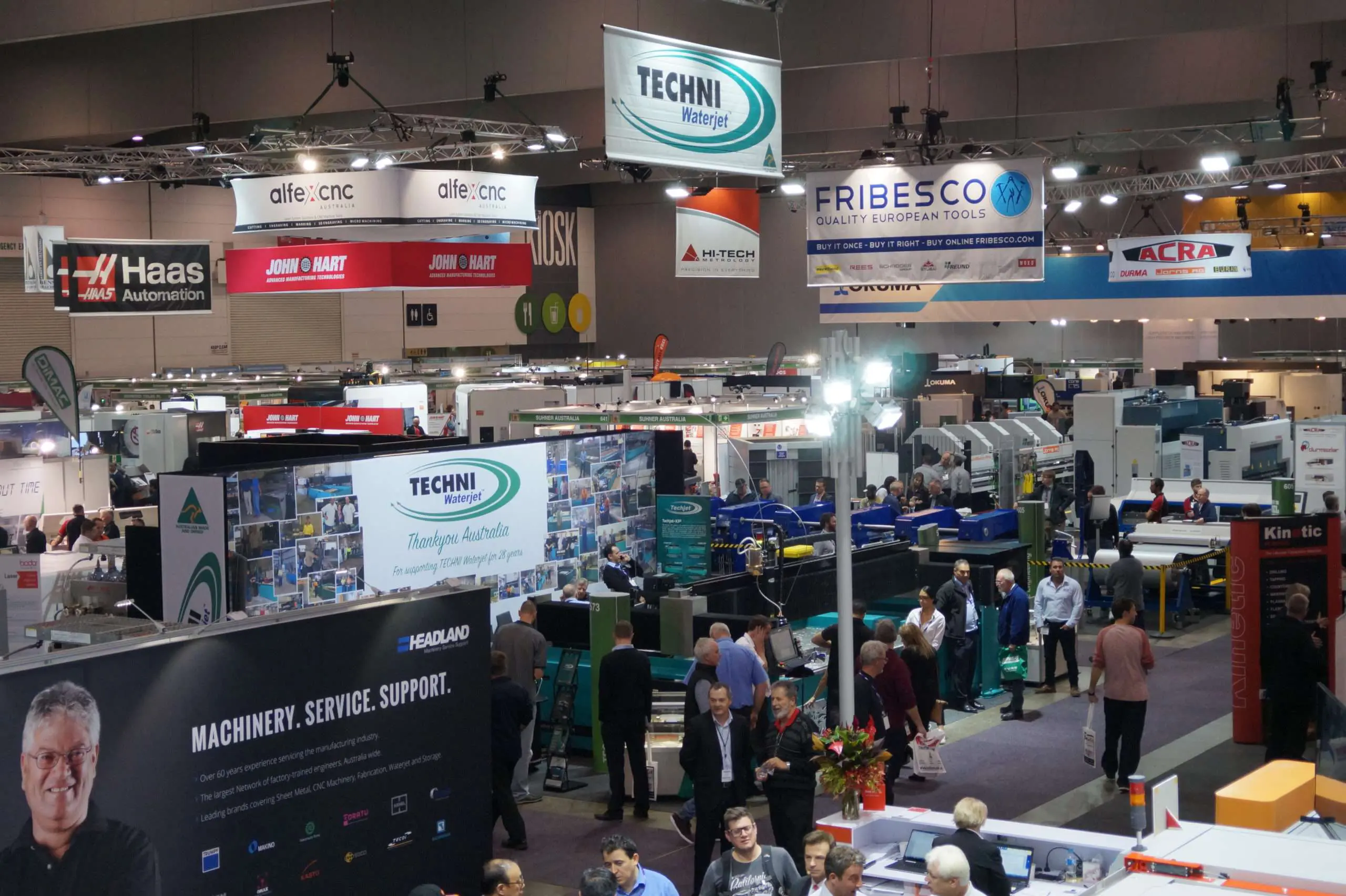
Between 2000 and 2019, AMTIL operated Austech, Australia’s premier advanced manufacturing and machine tool exhibition. The event was historically co-located with the National Manufacturing Week (NMW) exhibition, run by Reed Exhibitions. When Reed decided in 2020 to cease the operation of NMW, AMTIL saw an opportunity to create AMW, a more extensive event demonstrating the full scope and diversity of the manufacturing industry in Australia today. Austech has now been incorporated into AMW as a specialist zone showcasing the latest metalworking, machine tools and ancillary equipment. The Austech zone will cover a vast spectrum of advanced manufacturing products and processes, including: CNC Machinery, Lathes, Mills. Contract Manufacturing/Precision Machining. Cutting Tools, Tooling & Tool Holding. Forming & Fabricating Machines. Plasma, Laser, Waterjet & Ultrasonic Machines. Ancillary equipment suppliers. A diverse range of companies will be exhibiting within the Austech section of AMW. Founded in 1952, ISCAR has grown from its origins as a small blades factory to one of the world’s leading manufacturers of metalworking tools, and will be showcasing its vast range of innovative cutting tools for…
March 18, 2022
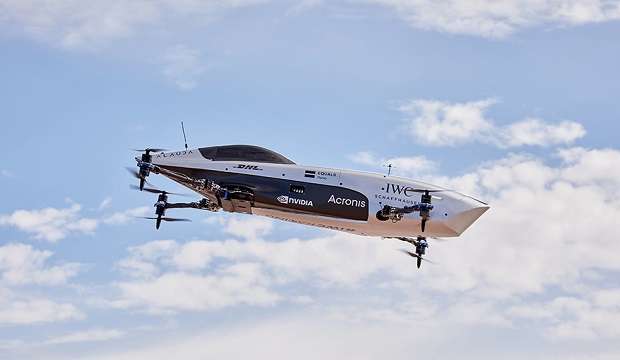
Airspeeder’s comms requirements are taken care of by sports industry comms specialists D2N. Jason Owen, Managing Director of D2N, explains: “Airspeeder and the engineering team at sister company Alauda Aeronatics reached out to us as they knew of our reputation in the sports industry and were looking for a comms solution for their new race program. They were developing a flying racing car series and were in the test and development stage. This in turn called for a communication system between the pilot, who flies the aircraft remotely, the engineers and the flight test director.” Alauda’s engineers initially wanted a comms system to cover two applications for the forthcoming EXA remotely piloted racing series and the Airspeeder crewed electric flying cars races. These were firstly the research & development (R&D) of the vehicles with a pilot, and secondly a number of engineers who all communicate as a group. The second application was…

March 10, 2022
DMTC Limited is working together with Australian defence manufacturers assisting in their capacity and technology development in digitalisation, artificial intelligence (AI), robotics, Industry 4.0 and the Internet of Things (IoT) – including smart factories. Spanning an 11-year career at DMTC, Deepak Ganga is currently Head of Program Management, where he leads the Enterprise Program Management office, responsible for business transformation and the strategic alignment of DMTC’s programs. “We have expanded a lot recently,” says Ganga. “As well as traditional defence R&D projects, we are also working on technologies with applications in related areas like health sciences, AI, robotics, IoT and Industry 4.0. During the last two years, we’ve been working behind the scenes on our program governance framework and to standardise processes. We’re now developing more software to digitalise project management tasks, as well as automating the reporting that we need to continue to do to demonstrate the value we provide to our…
March 10, 2022
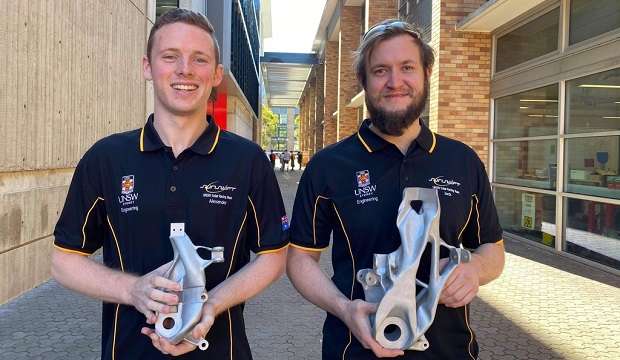
The broad aim of the team is to redefine sustainable transport. However, they are probably better known for their success at competing in the World Solar Challenges. Since 1996 the teams of students and academics have built six solar-powered vehicles to enter these challenges – and most recently have been hard at work on the development and manufacture of car number seven. With some 45 people in the Sunswift team all contributing in different ways, the primary aim is to show the world that innovative technology is available today, not in years to come, and they are setting about to demonstrate their ideas and applications. Sub-teams make up the construction sections of the car-building group, comprising mechanical, electrical, computer science, photovoltaics – in other words, solar cells – and systems engineering. Each of these groups has a defined task that also provides them with opportunities to develop skills that they can use in future work environments. For example, the…
March 8, 2022
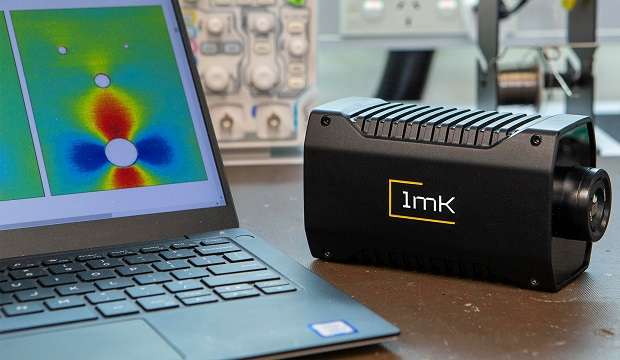
The LTS-640V is designed to be used during the certification stage before an aircraft is approved for commercial or military use. The capability it provides will allow for a potentially more streamlined certification process, and should help eliminate some of the surprises that can occur during testing of a new aircraft structure. The technology was developed in collaboration with scientists at the Australian Department of Defence where a prototype of the technology has helped support sustainment of the F/A-18 Classic Hornet, and more recently provided Lockheed Martin Aeronautics with valuable new information during structural certification testing of the F-35 Joint Strike Fighter. The Australian invention is the first of its kind, providing real-time fusion of stress and visible spectrum imaging – in effect merging the visible with the invisible. “This inspection approach is based on the ‘thermoelastic effect’; put simply, when you squash something it heats up, when you stretch something it cools down,” said a spokesperson for the Department of Defence.…

March 1, 2022
The vehicle, aimed to be launched in 2030 and code-named the Polestar 0 Project, will be developed with the single goal of eliminating emissions from the entire supply chain including all logistics and support functions rather than planting trees to offset CO2 emissions. “At Polestar, we are not just about changing the cars we drive, we are about changing the way vehicles are made,” says Samantha Johnson, Managing Director of Polestar Australia. “Vehicles are not produced sustainably today but by addressing the challenge of climate change through the supply chain we can be part of the solution. “We know that Australia is home to some of the best innovative minds and businesses, manufacturing high-quality products that are competitive on the world stage. We are seeking their input into the global Polestar 0 Project as we accelerate the shift to sustainable mobility.”…
February 22, 2022
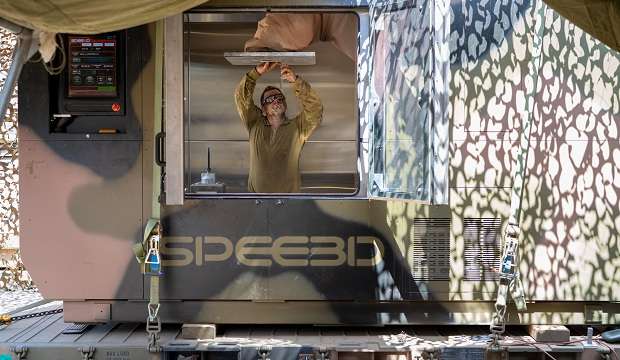
The outstanding contribution SPEE3D’s technology has made to furthering the manufacturing capability of Defense was recognised by the US Defense Strategies Institute (DSI) at their 6th Military Additive Manufacturing Summit, which took place in Tampa, Florida. At the summit, SPEE3D was announced as the inaugural winner of the Defense Strategies Institute’s Award for Expeditionary & Tactical 3D Printing Excellence. The Defense Strategies Institute (DSI) is a non-partisan Institute designed to assist in advancing the mission critical goals of the United States' Military and Government. They are also the organisers of the Annual Military Additive Manufacturing Summit event which enables thought leaders and key policymakers across military services, Defense agencies, and civilian organisations to come together for actionable discussions and debate. The 2022 Military Additive Manufacturing Summit focused on advancements made in the 3D printing space, as well as how the DoD is working to quickly integrate AM technologies in order to supply durable, affordable equipment and parts to the Warfighter in the battlespace. “We had an incredible number of entries…
February 17, 2022
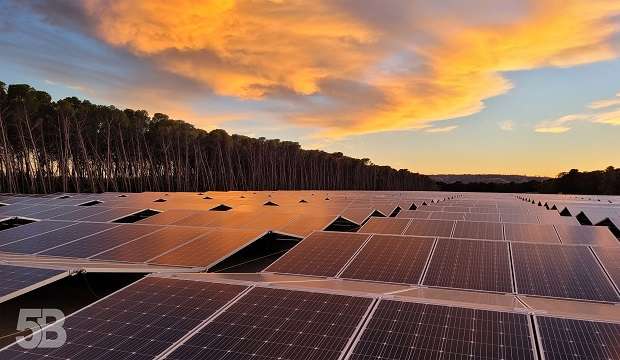
It is the week of launch day at solar system innovator 5B’s new headquarters and clean tech campus at Mascot, a few kilometres south of Sydney’s CBD. After a quick look at its warehouse and proving ground, we walk past a big pile of unboxed monitors and desks that are yet to have chairs wheeled under them. The mood is friendly but urgent. There is a place to get into shape, an event for hundreds fast-approaching, and stuff everywhere. Last year was a breakout one for a company moving at a rate that guarantees this article – written in mid-December – won’t include important recent events. 5B gained a presence in three new countries in 2021, is in the middle of a $50m capital raise at the time of writing, and has just announced that it has acquired its manufacturing partner since 2018, IXL Solar. “We used to manufacture internally three years ago and then IXL took it all on,” explains CEO Chris McGrath, who…
February 17, 2022
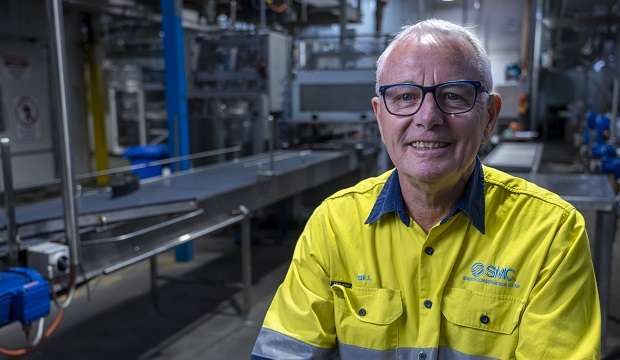
In a recent white paper, SMC’s Industry Projects Manager for Energy (EU), Andy Still, shared his thoughts on how companies can optimise their energy efficiency in-line with one of the industry’s best-kept secrets. While it is possible to introduce compressed air efficiencies, today, some plants still suffer from 20 to 50% leakage rates as well as other forms of wastage. It’s common knowledge that the typical operating pressure (for main compressed air lines) in industrial plants is around 7 bar. However, not so commonly known is that by simply lowering the pressure to 5 bar, facilities can reduce their energy consumption up to 15%. Dropping the pressure to 4 bar offers savings of up to 29%. “The global understanding of pressure reduction is that it will affect performance,” Still explains. “Although this statement is true for some equipment, it must be said that most processes can operate efficiently at reduced pressures.” Bill Blyth, Energy Conservation Group Manager at SMC Corporation ANZ, echoes this sentiment saying that while…
February 17, 2022
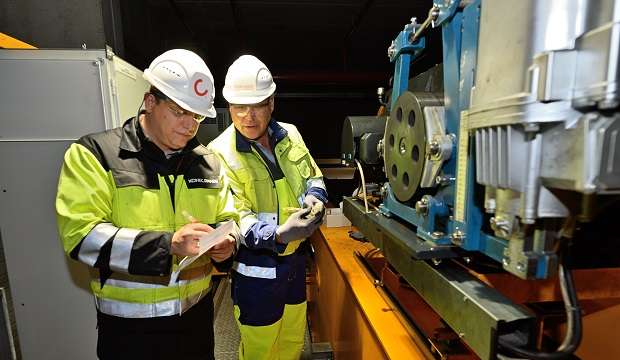
As a global leader in crane maintenance – with more than 600,000 pieces of lifting equipment of all makes and models under service agreement worldwide – Konecranes is offering Oil Analysis as a supplement to its service agreements. When combined with routine inspections and preventive maintenance, the cost of doing an Oil Analysis can be kept very low. “Good managers know that the key to changing a crane’s oil is finding a good balance of not too late (when it may impact on performance, cause additional wear, or even screech in protest), and not too early (when it will add unnecessary cost, without delivering a benefit,” says Mark Beckwith, Australian Service Operations Manager at Konecranes. With a crane’s gear case sealed off, it means visible signs of wear and tear are hidden from view, as the crane continues performing vital tasks for industries such as manufacturing, automotive, construction, public and…

February 17, 2022
Fully automatic, efficient, and process-reliable – bending cells show their advantages particularly in large-scale production. They reduce cycle times and perform bending tasks with maximum precision. The CNC 40 Rotary from Schwarze-Robitec’s High Performance series can also be easily expanded into a bending cell. Thanks to its freely rotating bending head, it realises even complex tube geometries without collisions. All of the steps related to tube processing – from tube feeding to loading and unloading of the machine to post-processing – are automated. Each bending cell is designed by Schwarze-Robitec to be highly customised to the user’s production requirements. The CNC 40 Rotary bends tubes made of all common materials such as aluminium, titanium, copper, steel, and stainless steel with a diameter of 6mm to 38mm. This also applies to tubes with already preformed contours. Thanks to its rotating bending head, the rotary function offers the particular advantage that tubes can be bent in both left and right bending directions in a single operation.…