



May 17, 2022
Applied Machinery will again be showcasing a diverse range of machines at Austech. Taking centre stage on the Applied stand will be a 9-Axis Yawei CNC pressbrake. Yawei pressbrakes offer manufacturers access to affordable, precision CNC bending. With a range available from 35 ton up to 3000 ton there are virtually no limits to what can be bent. The Yawei pressbrake on display is a PBH Series with a 160-ton bending capacity. It features a Delem DA-69T Controller, 6-axis CNC backgauge and a servo driven hydraulic system. An automatic tool clamping system, CNC bending help and robotic integration are amongst the additional options that are available. Over the past decade Yawei has built a loyal following; establishing an enviable reputation for quality, performance and outstanding value for money. In addition to pressbrakes, Yawei has an extensive range of fiber lasers, turret punch presses, guillotines, and smart-factory automation solutions. Also on the stand will be a Weber grinding and deburring machine. Weber is a German-based company with an impressive 100 years’ experience in grinding…
May 12, 2022
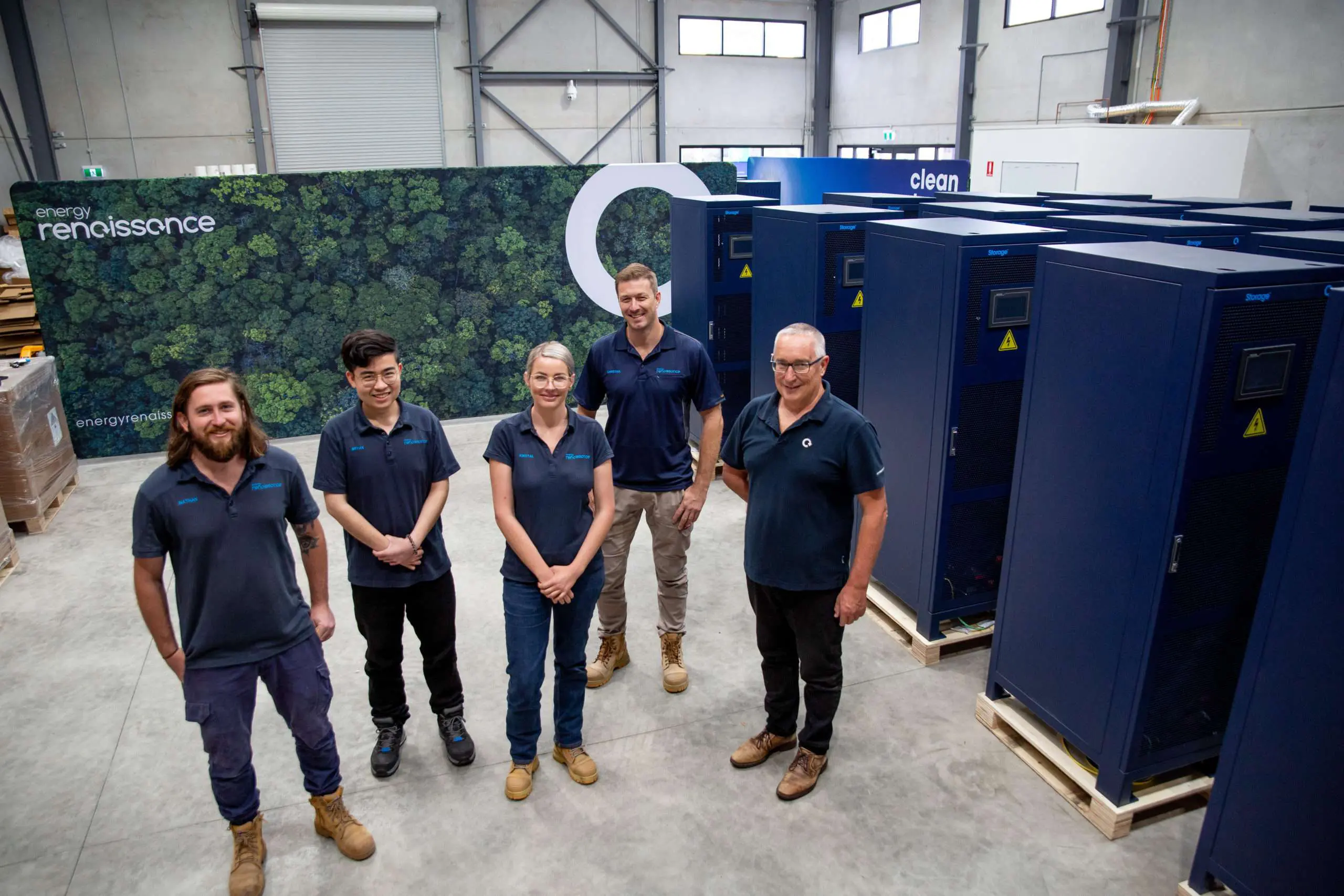
Through long term framework agreements and preferred supplier relationships, this forms part of the company’s move towards achieving 100% onshoring of its manufacturing of batteries in Australia and contributes to 92% of components in their batteries sourced from Australian companies. Academy Sheetmetal, a family owned sheetmetal manufacturer in Newcastle, NSW, will supply the steel cabinetry that is used for the Renaissance superRack™ and superPak™. GPC Electronics, one of Australia’s largest contract electronics manufacturers in Penrith, NSW, will supply the printed circuit board assemblies that are used in the Battery Management Systems (BMS). B&C Plastics, an Australian plastic moulding injection manufacturer in Brisbane, QLD, will supply the plastic components that are used in the packs. Almost all of the 35 components that make up a superStorage™ battery are produced in Australia, validating Energy Renaissance’s commitment towards strengthening its local supply chain, creating local jobs and opportunities for all Australians. The running of electronics in Australia, and everywhere else, depends on future-proofing…

May 12, 2022
The Commonwealth Budget failed to take the crucial first step on the path to decarbonising and slashing household energy bills, because it prioritises subsidies for fossil fuels over renewable-powered electrification of our homes, according to Rewiring Australia. The 2022 Budget contained more than $10.5bn in fossil fuel subsidies, according to an Australia Institute analysis released this week, the vast bulk of which $8bn goes to the Fuel Tax Credits Scheme. “This budget was the perfect opportunity to start that process with a pilot program to electrify a suburb and a street. It’s disappointing to see taxpayer dollars directed to subsidising fossil fuels rather than investing for a cheaper, cleaner future,” said Rewiring Australia chief scientist, Dr Saul Griffith. The Budget should instead have directed money towards electrifying Australia’s homes and vehicles, replacing fossil-fuelled devices with solar panels, batteries, heat pumps, induction stoves, electric vehicles and household and community batteries. “This budget could have been underwriting electric vehicles that run on Australian sunshine and develop the zero-emission vehicle market, but instead is investing in dated technology and the…
May 11, 2022
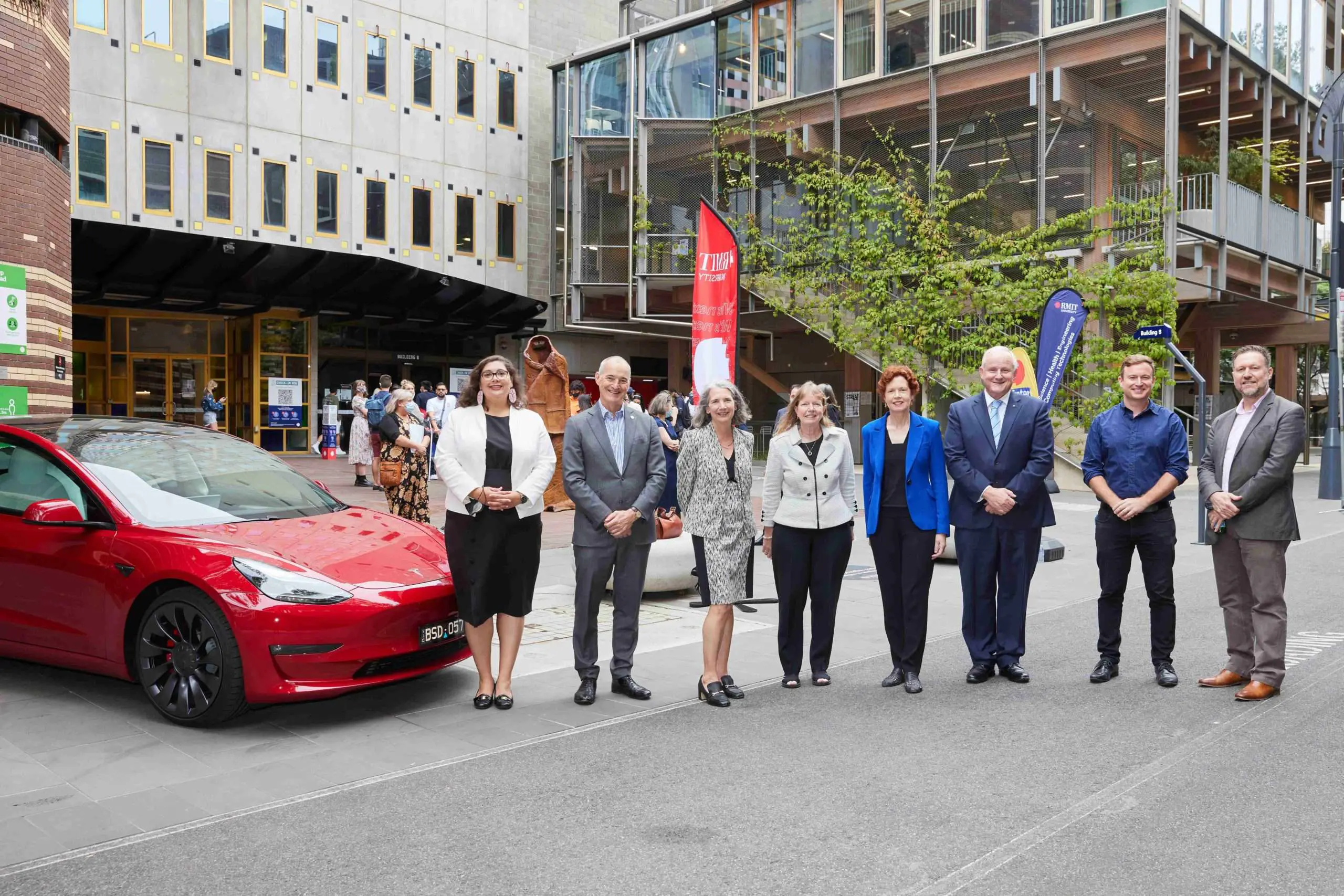
Supporting the Electrification of Victoria’s Future Fleet is a major project bringing government, university and industry partners together around the expertise and infrastructure needed to support widespread adoption of electric vehicles in Victoria. The $5.2m funding was announced today by the Hon Gayle Tierney MLC under the Victorian Higher Education State Investment Fund (VHESIF). It marks an important step towards the state’s net zero targets, while boosting skills and employment for Melbourne’s pandemic recovery. With transport responsible for around 25% of greenhouse gas emissions in Victoria, Minister Tierney said electrification of transport was critical for tackling climate change, as well as creating new jobs in low-carbon industries. “This is an important project for the future of clean, green transport in Victoria but also for our plan to meet net zero emissions by 2050 through innovative research and the development of new technology,” said Minister Tierney. RMIT Deputy Vice-Chancellor Research and Innovation and Vice-President, Professor Calum Drummond, said activity would focus around a new Electric Vehicle Living Lab with EV…
May 6, 2022
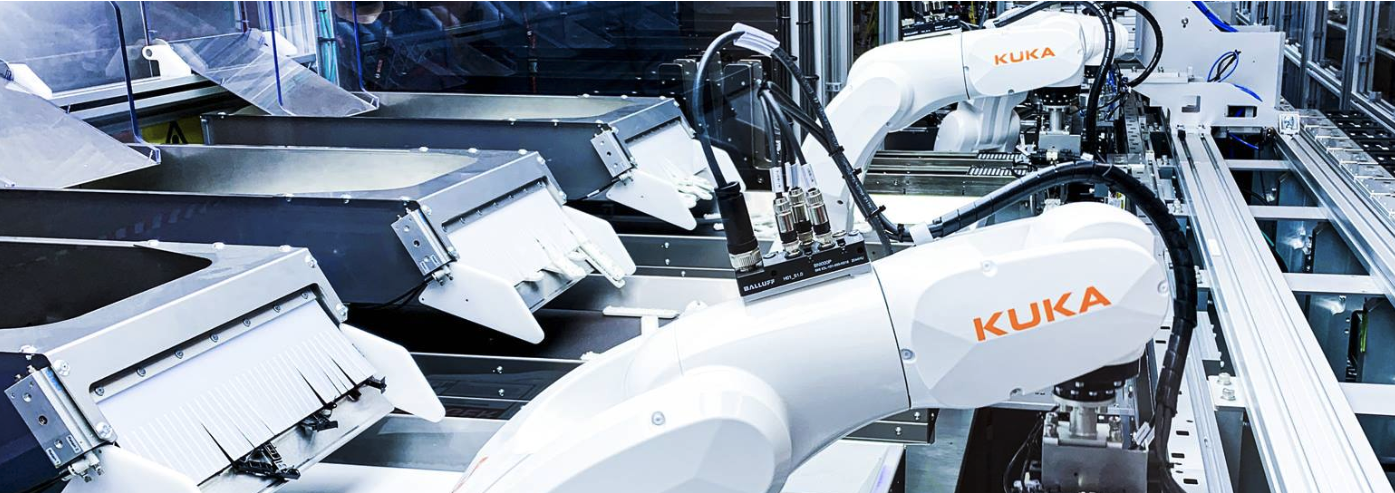
Brisbane-based Ellume has developed COVID-19 rapid tests that are used in laboratories, doctors' offices and by consumers themselves. To meet the huge global demand, the diagnostics company, with the help of Bosch Australia Manufacturing Solutions (BAMS), has been relying on automated production lines with 16 KR AGILUS from KUKA since 2020. Now Ellume is expanding its production capacity – with 144 more KUKA robots. Bosch's Australian division is expanding large-scale production for COVID-19 rapid tests at Ellume – following the already successful collaboration in 2020. The goal is 27 state-of-the-art automated assembly lines to increase production capacity. The 144 KUKA robots ordered for this purpose are from the KR AGILUS series and are designed for maximum operating speeds – crucial for the Ellume project, which has a capacity of nine parts per second. Three lines for the Brisbane plant have already been successfully installed and full production has begun. In addition, another completely new…

May 5, 2022
The new materials were designed by Scientia Professor Mat Santamouris, Anita Lawrence Chair in High Performance Architecture at the School of Built Environment, UNSW Arts, Design & Architecture. He says the new materials could be used worldwide in buildings to help better protect them from the elements. “This is a smart, intelligent building material that understands the urban temperature, and it is modulated according to the weather conditions,” Professor Santamouris says. “So it is ideal for cities that have issues with overheating in summer, but also have heating requirements during winter.” Professor Santamouris specialises in developing heat mitigation technologies and strategies that decrease urban temperatures in cities worldwide. Extreme urban heat is the most documented climate change phenomenon, affecting more than 450 cities worldwide. Higher urban temperatures significantly increase energy consumption needs and adverse impacts on health, including heat-related…

April 29, 2022
The Additive Manufacturing Pavilion will be an unmissable part of AMW 2022. The boom in interest in 3D printing continues to gain momentum, and AMW visitors will get a chance to see the latest innovations in this area first-hand. The Additive Manufacturing Pavilion will feature demonstrations of the latest 3D printers and services from a range of companies and organisations that lead the field of additive manufacturing. One highlight of the Additive Manufacturing Pavilion will be RAM3D. Based in Tauranga, New Zealand, RAM3D has been leading the way in metal 3D printing in the Southern Hemisphere for more than 10 years. From its high-tech manufacturing facility it creates parts for a variety of world-wide industries; from titanium knives used by the Team NZ Americas Cup crew, to customised handlebar extensions for the New Zealand Olympics Cycling team. It produces inconel and titanium parts for aerospace and defence customers, and can also print in Stainless Steel 15-5ph and 316L, Titanium 64, Inconel 718 (high temperature alloy) and Aluminium (AlSi10Mg). “Advances in 3D…
April 21, 2022
PwC’s ideas were presented to global steel industry representatives at the 2018 Surface Inspection Summit (SIS) in Aachen, Germany. Their ideas were widely seen as outlandish at the time, including predictions that: original equipment manufacturers (OEMs) would centralise their sales online, like Amazon; would increasingly support customers with design and development, like Tesla; and would form digital networks, much like Uber. The predictions raised eyebrows at the time. However, if anything, manufacturers have since moved beyond eCommerce and adopted customer engagement (CE) and customer experience (CX) as main principles behind their online investments. As confirmed in PwC’s later Retail Outlook 2020 report: companies are competing on CE; and most of the competition now takes place online. Manufacturers have embraced multi-channel commerce models that bring several customer routes — online web pages, product catalogues and sales teams — into a unified, single ecosystem that…

April 14, 2022
The word “robot” was first coined in Czech writer Karel Čapek’s play ‘R.U.R.’, written in 1920 and first performed in 1921. The play begins in a factory that makes artificial people, called roboti (robots), whom humans have created. Initially happy to work for humans, the robots revolt and cause the extinction of the human race. While ‘R.U.R’ was the first countless works of science fiction in the century since that have depicted robots as sources of menace or wonder, the reality today is much more down to earth. Modern robots have become a feature of many modern workplaces, but nowhere more so than in the manufacturing industry. In today’s factory, robotics and automation systems have liberated human personnel from an ever-growing array of repetitive and dangerous tasks. At AMW 2022, the Robotics & Automation Zone will showcase the latest state-of-the-art equipment and processes for the optimisation and digitalisation of manufacturing operations. While some of the world’s leading robot brands will be on display, there will also be exhibits from…
April 4, 2022
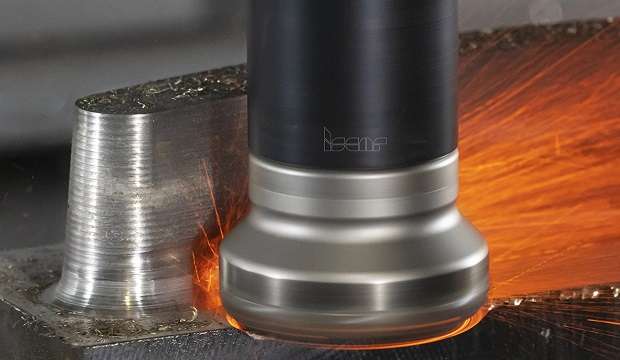
Superalloys – metal alloys which reflect their complex alloyed structure – feature extremely high elevated temperature strength, and therefore often are referred to as high-temperature superalloys (HTSA) or heat-resistant superalloys (HRSA). The history of superalloys started with the development of gas-turbine engines that required reliable materials for high operating temperature ranges. As a result of intensive research and progress in metallurgy, modern superalloys provide a long service life for working temperatures more than 1,000 deg.C. Understandably, the largest superalloy consumers today are aerospace and marine engine producers. Superalloys are also very common in the medical industry, which effectively use them for prosthetic implants in orthopedic surgery. In addition, superalloys have become widespread in power generation and the oil & gas industries as crucial materials for essential parts of various devices. Exceptional high-temperature strength and corrosion resistance are the undeniable advantages of superalloys. However, there are two sides to the coin: superalloys are not only highly priced, but their machinability is poor, which can…

April 4, 2022
Toolbox can also provide an innovative 3D unfolding service, whereby it can be fed full 3D schematics of a product and it will select precisely all the 2D sheet metal surfaces required to be cut by a laser workshop. It’s also possible to create the drawing without using any CAD software, using Toolbox’s Quick Part parametric parts library. Quick Part has a broad range of customisable parts, including brackets, flanges, gussets, and plates that can be adjusted to the specific needs of the user. “ToolBox is designed to put the tools in the hands of small laser cutting and fabrication workshops that are looking to grow their business,” says Felipe Lechuga, President of Tempus Tools. “It helps with cleaning drawings, part creation or extraction, and laser cutting calculations, so the business can quote more jobs and expand its operations. With the shift to Industry 4.0, slow quoting processes just aren’t competitive anymore, so job shops need new tools to get…

April 4, 2022
In harsh environments, for example where heavy rainfall or snowfall is likely, soldiers need the reassurance that their presence can remain concealed. Composite telescoping poles are chosen to support camouflage nets over alternative materials like aluminium because of several advantages such as lighter weight and speed of assembly. The composite tubes must therefore combine the strength and durability needed for support with the lightweight flexibility to be able to carry heavy loads. To achieve these properties, careful consideration goes into every stage of manufacturing, from choosing the reinforcing fibres to the manufacturing process itself. So, what are these considerations and how do they ensure the end product is fit for purpose? Choosing the composite material Early applications for fibreglass date back to World War II, where design engineers used it for…
March 24, 2022
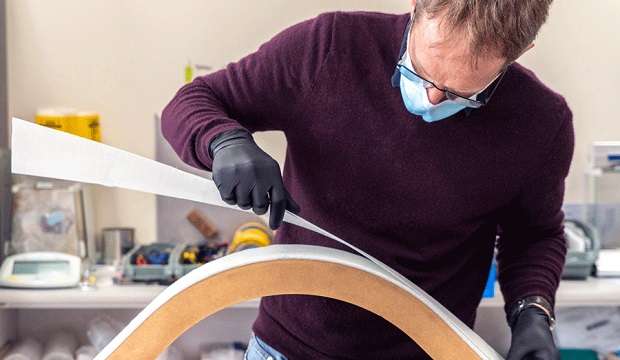
Advanced Composite Structures Australia (ACS Australia) is a key participant of the Blue Economy Cooperative Research Centre (Blue Economy CRC), bringing critical composites engineering design and manufacturing capabilities to major renewable energy projects in the aquaculture space. The most recent projects to be announced involve the design and manufacture of renewable energy devices taking advantage of advanced composites technologies. In partnership with the Blue Economy CRC, headquartered in Launceston, Tasmania, Carnegie Clean Energy and other industry experts, ACS Australia is progressing the development of two major projects: the MoorPower Scaled Demonstrator project; and a Mooring Tensioner for wave energy converters. MoorPower Scaled Demonstrator project Global aquaculture is moving operations further offshore, presenting a challenge to access clean renewable and reliable offshore energy. Moored feeding barge facilities rely on diesel fuel generators for power out at sea, leading to high operating costs and carbon emissions. The MoorPower project aims…