



February 4, 2021
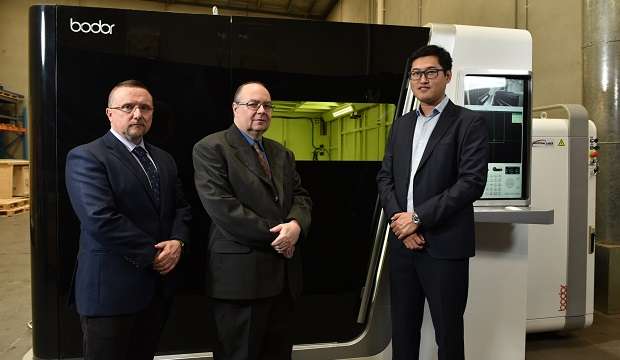
In the past 36 months, more than 50 Bodor laser systems have been installed within Australia by Industrial Laser, who will now be stepping back from system machinery sales and concentrating on assisting resellers and end users with high-level support for all brands of laser systems. Laser Machines recognised Industrial Laser as a premium laser service provider with several laser field engineers, combined with Australia’s largest stock holding in laser consumables. The two companies have signed an agreement with Laser Machines utilising Industrial Laser’s local resources for the installation and support of all Bodor laser systems going forward. Adam Kibel, Director of Laser Machines, said: “ This resource allows our customers to enjoy the very best service and after-sales support from a company that has been dedicated to this industry for over 20 years. I believe no company can look after laser users better than Industrial Laser, and we want the very best for our customers.We also have dedicated local Bodor factory engineers supporting our service partners.” Miles Wang, Sales Director of Bodor Laser Australasia…
February 4, 2021
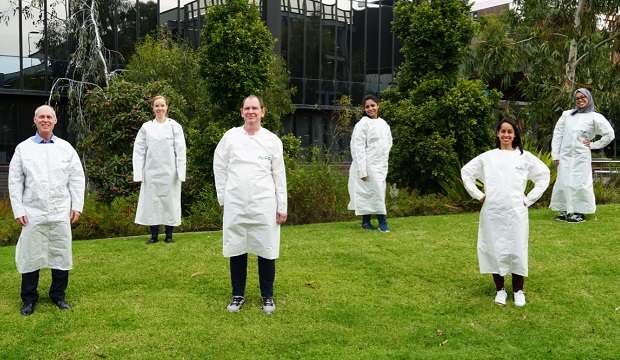
Researchers at Monash University’s BioPRIA, Department of Chemical Engineering and School of Biological Sciences have created medical gowns for healthcare workers and first responders using paper laminated with a coating of polyethylene – a lightweight thermoplastic. Paper has never been used to produce medical gowns with viral protection. However, this innovation could see the mass rollout of high-quality PPE to vulnerable communities across the world. Machine-glazed, bleached and newsprint papers were laminated with polyethylene coatings of different thicknesses, before being characterised for their potential use as medical gowns for healthcare workers and COVID-19 patients. The findings show paper could be the missing element in creating alternative materials for PPE to reduce the spread of COVID-19 and keep people safe. “The global pandemic, spike in demand, and shortage of traditional PPE materials suitable for viral transmission protection has driven researchers, virologists and biomedical experts to collaborate and explore low cost alternative materials…
January 25, 2021
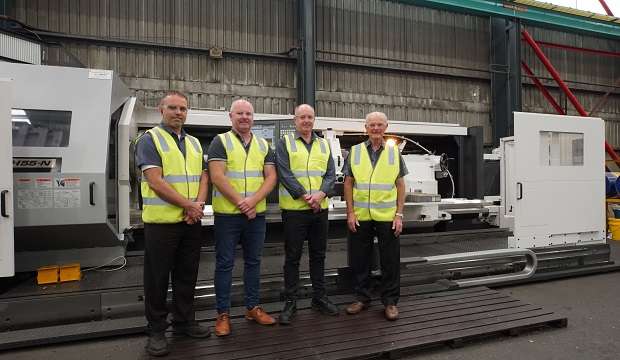
Carel and Muriel Leussink founded Leussink in 1977, initially operating out of a humble home garage in Unanderra, New South Wales. Today it is a second-generation family business offering complete design, fabrication and machining services and solutions for clients over a wide spectrum of industries. It prides itself on delivering world-leading after-sales service, maintaining close client liaison to ensure expectations are met or exceeded on each job. It is equally renowned for machining bespoke components, fabrication or projects manufactured to turnkey operational level, leveraging years of skills and experience. “At Leussink we genuinely believe in local manufacturing,” says Jason Leussink, the company’s Managing Director. “Of course, in our industry, it is not always possible to buy 100% Australian made materials, but where we can, we do buy Australian and support other organisations that have the same philosophy.” The company’s boasts a wide range of capabilities including CNC machining, milling and turning, wire cutting, surface grinding, design, metal fabrication,…
January 25, 2021
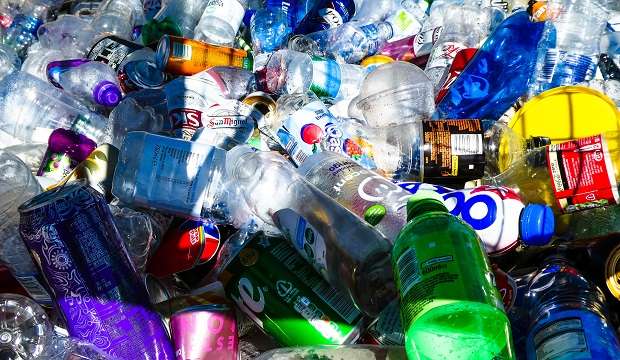
The National Circular Economy Roadmap found innovation is crucial to realising Australia’s largest economic gains, which will come from designing new products and materials, including through advanced manufacturing, and in embracing new business models that will create domestic and export markets for waste streams. This could more than triple job creation from resource recovery in Australia, where the recycling sector currently generates 9.2 jobs per 10,000 tonnes of waste, compared with only 2.8 jobs for the same amount of waste sent to landfill. Increasing Australia’s recovery rate by just 5% would add an estimated $1bn to GDP. The Australian Government’s ban on the export of waste last year creates an opportunity for a new circular economy strategy that turns landfill into economic returns. CSIRO Chief Executive, Dr Larry Marshall, said science and technology can drive Australia’s next wave of economic opportunities. “Australia is among the world’s best in advanced manufacturing and environmental research, and that unique science can turn industry and…
January 25, 2021
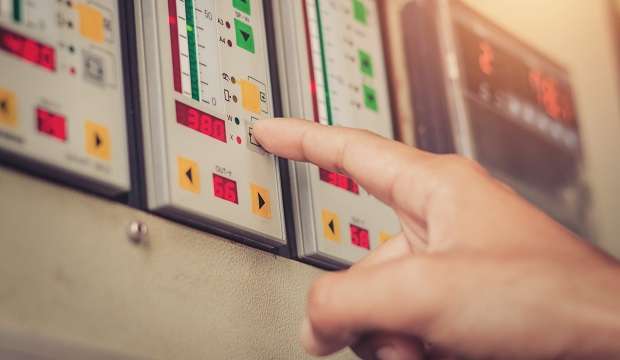
According to power and automation company ABB, the addition of a VSD can reduce energy consumption by as much as 60%. This means that, if a 90kW motor in continuous operation is combined with a VSD, financial savings can amass to over $16,000 per year. A VSD can help achieve these savings by better catering for the needs of a specific application. Traditionally, induction motors run at fixed speeds and are suited to applications that require a constant motor output speed, such as in pumps or fans. Yet sometimes, varying motor output speeds are preferable to meet the changing requirements of the load, such as in fans, pumps and precision tools. Also known as a frequency converter or adjustable speed drive, a VSD is able to control the speed and torque of the motor to better match the process requirements of the machine it is driving. It is the…
January 25, 2021
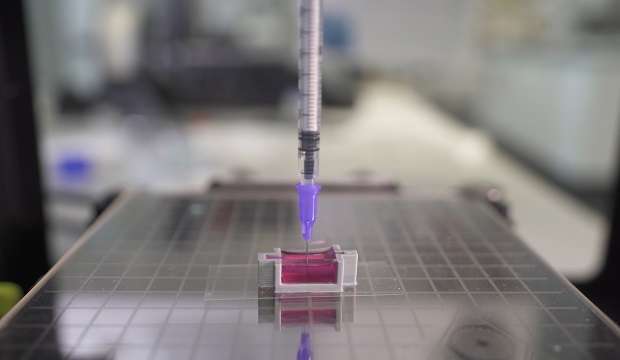
Scientists from UNSW Sydney have developed a ceramic-based ink that may allow surgeons in the future to 3D-print bone parts complete with living cells that could be used to repair damaged bone tissue. Using a 3D-printer that deploys a special ink made up of calcium phosphate, the scientists developed a new technique, known as 'ceramic omnidirectional bioprinting in cell-suspensions' (COBICS), enabling them to print bone-like structures that harden in a matter of minutes when placed in water. While the idea of 3D-printing bone-mimicking structures is not new, this is the first time such material can be created at room temperature – complete with living cells – and without harsh chemicals or radiation, says Dr Iman Roohani from UNSW’s School of Chemistry. “This is a unique technology that can produce structures that closely mimic bone tissue,” he says. “It could be used in clinical applications where there is a large demand for in situ repair of bone defects such as those caused by trauma, cancer, or where a big chunk…
January 25, 2021
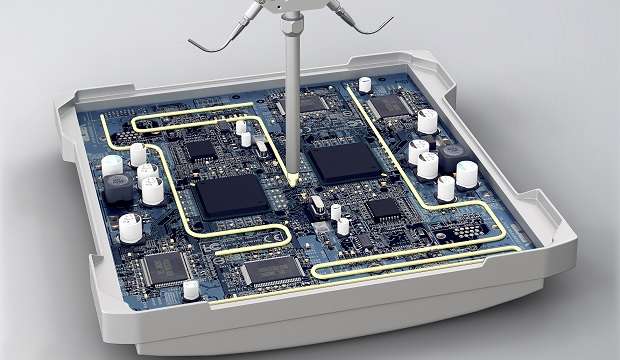
Precise, fully automated, easily adjustable and endless dosing is the prerequisite. Purely volumetric dispensing systems like ViscoTec dispensers enable exactly that: continuous, repeatable, material-friendly dispensing of TIMs, gap fillers, sealing materials and adhesives – regardless of their viscosity. A specially developed rotor in the ViscoTec dispensers ensures long service life, even when using highly abrasive materials. For example, a long-term test with a two-component gap filler, with aluminium-oxide fillers, showed a nine-fold service life compared to the standard rotor. By using a special coating on the rotors or more specifically by using a ceramic rotor, customers can achieve even greater process stability due to a much longer lifetime of the dispenser components. Battery cell assembly The thermal connection of the electronic modules or battery modules to the heat sink is crucial to dissipate the generated heat via the heat sink and therefore prevent overheating. For this purpose, heat-conducting pastes and adhesives with increasingly higher thermal conductivities are used to eliminate the air…
January 8, 2021
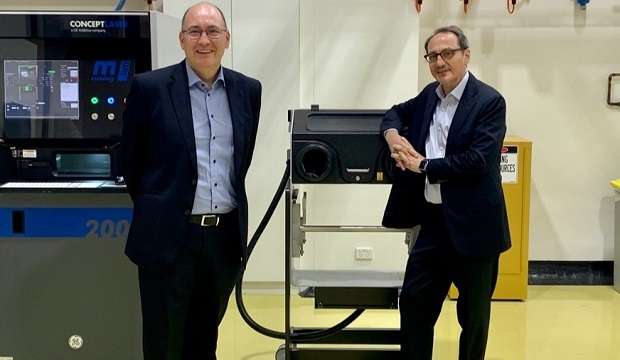
The agreement will establish capabilities in metal additive manufacturing technology at the Sydney Manufacturing Hub, a space for training specialists and academics working in additive manufacturing, and the incubation of small to medium manufacturing enterprises. Located at the University of Sydney’s Darlington campus, the Sydney Manufacturing Hub will enable advanced alloy design and applications to support a range of sectors including aerospace, defence, medicine and agriculture. Following a memorandum of understanding signed in 2018 and GE Additive’s agreement with the New South Wales government to develop additive manufacturing capabilities in Western Sydney, the parties will work together on developing the broader advanced manufacturing agenda within NSW and Australia. Advanced manufacturing accounts for half of Australia’s manufacturing output and is one of the fastest growing export sectors. The output of Australian manufacturing is estimated to reach $131bn by 2026, with advanced manufacturing potentially growing the domestic sector by approximately $30bn over the next five years. Sam Maresh, country leader, GE Australia, said: “This is a breakthrough for Australia’s advanced manufacturing industry. Via the Sydney Manufacturing Hub,…
December 1, 2020
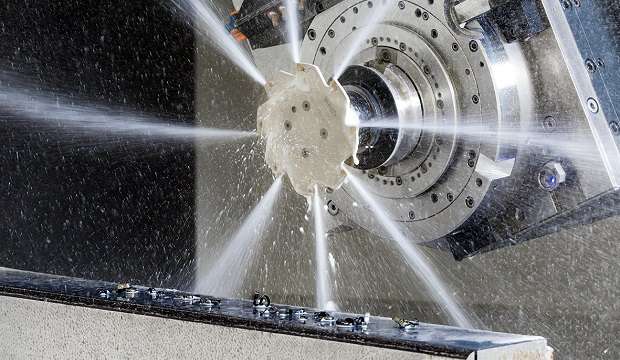
“Stainless” and “corrosion” steel are generally used synonymously, along with other terms such as rust-resistant steel, inox steel, and non-corrosive steel. Stainless, originally meaning “free of red rust stains”, was developed as a result of iron oxidising. Corrosion is caused by chemical and physical-chemical reactions. There are different types of corrosion. Stainless steel can be divided into the following groups, according to their main functional features: Corrosion-resistant steel: resistant to corrosion under normal conditions. Oxidation or rust-resistant steel: resistant to corrosion under high temperatures in aggressive environments. Heat-resistant or high-temperature steel that does not change its strength under high temperature stress. Therefore, corrosion-resistant steel can be considered a type of stainless steel. The functional features of these stainless-steel groups determine the choice of a steel grade as a material for cutting tool design. For a manufacturer involved in machining stainless steel, the key…
October 15, 2020
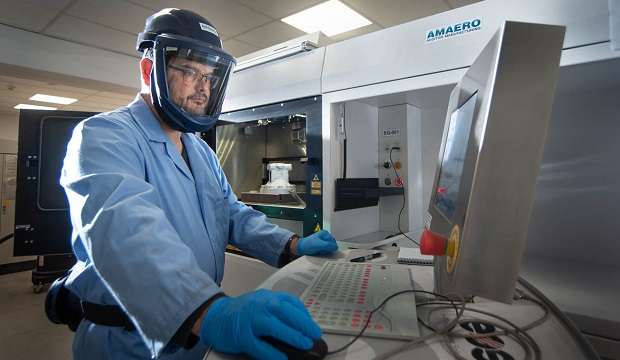
Working with Melbourne-based Amaero Engineering, researchers at CSIRO’s Lab22 Innovation Centre, one of Australia’s leading centres for metallic additive manufacturing, developed the innovative solution using some clever simulations. Sam Tartaglia, Program Manager at Amaero, said the company, which specialises in additively manufactured high-performance parts, saw an opportunity to explore the use of conformal cooling in 3D-printed die cast tooling, using computational modelling. “High-pressure die casting (HPDC) is by far the most popular manufacturing route for mass-produced near-net-shape metal parts,” Tartaglia said. “The process forces molten metal into a die cavity via a series of passages or ‘runners’, which include the ‘sprue area’, to produce a part in the shape of the cavity before the final solidified product is removed. “We were looking to find a solution to a stubborn problem that was challenging one of our clients - the sprue area running too hot. The issue was causing prolonged cycle times, with the die taking longer to cool between shots, and frequent production line stoppages”. Using Finite Element Method computational modelling, the partners explored optimising…
April 15, 2020
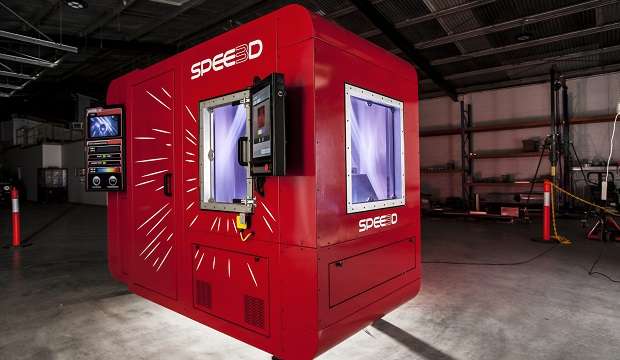
The process, known as ACTIVAT3D copper, has been developed by modifying AMTIL member SPEE3D’s world-leading 3D printing technology, using new algorithms for controlling their metal printers to allow existing metal parts to be coated with copper. Copper parts are difficult to produce using traditional methods and thus 3D printing may be the only tool available to rapidly deploy copper. SPEE3D technology makes it fast and affordable. Australian NATA-accredited clinical trial speciality laboratory 360Biolabs tested the effect of ACTIVAT3D copper on live SARS-CoV-2 in their Physical Containment 3 (PC3) laboratory. The results showed that 96% of the virus is killed in two hours and 99.2% of the virus is killed in five hours, while stainless steel showed no reduction in the same time frame. Stainless steel is currently the material typically used in hygiene environments. With laboratory testing complete, it is hoped the Australian-developed breakthrough can be applied to common…

February 21, 2020
On 3 December 2019, the Australian Space Agency (ASA) signed a Statement of Strategic Intent and Co-operation with defence and space giant Thales, strengthening Australia’s international space connections to create new local jobs. Minister for Industry, Science and Technology Karen Andrews said the agreement was an important step in the Federal Government’s plan to create opportunities for Australian industry and new local jobs in the burgeoning space sector. “Engaging with big international players like Thales will allow Australian businesses, including our advanced manufacturers, to carve out a place in the international space supply chain,” said Andrews. “Space is very much an international game and for Australia to succeed we need to play to our strengths and have our businesses and researchers working co-operatively. This statement is designed to mutually identify key areas of investment as well as potential research, development and commercial opportunities.” The agreement with Thales was the latest in a string of recent announcements by…

February 21, 2020
Once constrained to a few specialist tasks due to limitations in force sensing and machine vision, today’s manufacturing environment sees a broad range of applications, from trimming flashing from plastic and aluminium mouldings, removing moulding flash and edging material from carbon fibre products, polishing moulds and dies, and deburring edges following machining. While previously these applications relied solely on compliant tools, more recent developments such as force sensing control and vision have created the ability to handle variability in the position and size of the material that has to be removed. Force sensing provides greater control over cutting loads and the direction of the applied force, leading to more consistent and cleaner edges. In more recent times, the robot is used to articulate the part itself over the tool, versus the traditional method of a robot mounted tool. Whichever approach is used, the accuracy and path repeatability of the robot provides less variability across the substrate, irrespective of the die or machine they were manufactured in, overcoming one of the major hurdles for manufacturers…