



February 21, 2020
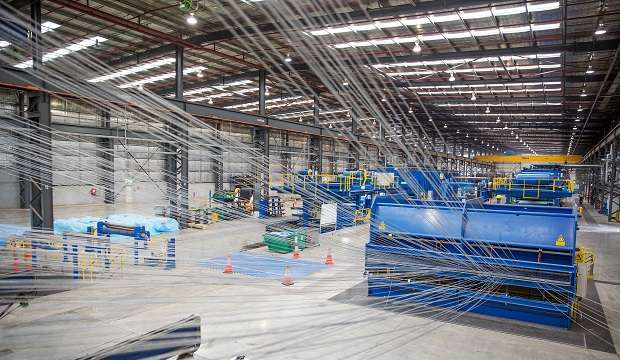
Headquartered in Melbourne, Fenner Dunlop manufactures and supplies a complete conveyor system from head-to-tail: belt, electrics and terminal equipment. With more than 30 sites in Australia, the company delivers engineered conveyor solutions to evolve the way mining companies approach their conveyor belt life cycles, saving costs, and increasing productivity. “As a company, everything we do is supported by information systems,” said Sammy Jammal, National IT Manager at Fenner Dunlop Australia. “Manufacturing, technical support, installation, maintenance, diagnostics services, you name it. “If the system is down for even 10 minutes, the whole operation would come to a halt. This not only has financial implications but is detrimental to our brand reputation and diminishes our customers’ confidence. As an IT team, we want to leverage technology that can help optimise our processes, allowing us to focus on enabling our users and thereby benefiting our customers.” Jammal oversees an IT team of six, which supports more than 900 employees nationwide, including the core applications – spanning finance, payroll,…
February 21, 2020
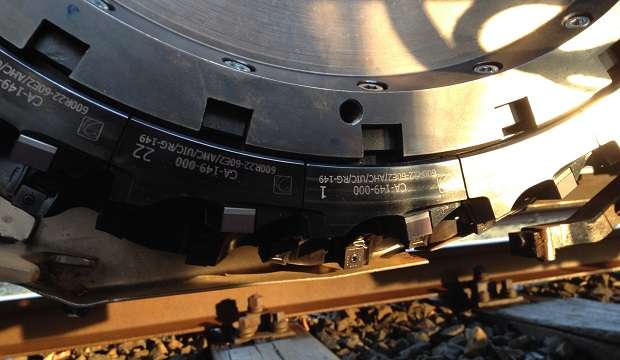
Specially designed trains, operating at a constant speed of 700 metres per hour, machine the existing track profile. By removing millimetres of metal from the damaged surface, the track is restored to its original condition. With each application, the first cutter roughens the surface, the second one finishes it, and the two units act on both rails simultaneously. The operation provides a high-quality surface finish, while metal chips produced during the milling stage are transferred to a nearby container, ensuring no debris is left on the track. This ‘on the-move’ application requires specialised equipment to achieve optimum results, such as ‘train machine tools’ designed to carry dynamic rail milling cutters and inserts. An increasing number of these are being produced by leading global manufacturers as demand from railway organisations and government bodies for track maintenance increases. Global cutting tool manufacturer Dormer Pramet works in partnership with several high-speed milling machine manufacturers to delivery key projects around the world. One of these projects included the milling…
February 21, 2020
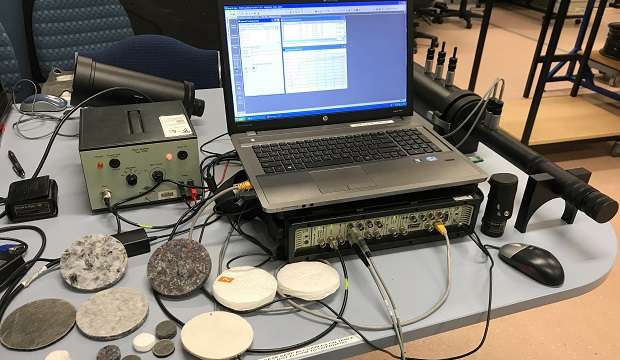
For a long time, additive manufacturing has been known as a new processing method for rapidly prototyping concept designs in various industrial sectors. Nowadays, advanced 3D printing technology is on the cusp of reaching a critical level in the innovation, research & development of new products. Research activity at RMIT’s School of Engineering shows the feasibility of using 3D printing technology for acoustic research and noise control applications. A number of micro-perforated panel multilayer acoustic absorbers have been fabricated using 3D printing technology. These sound absorbers are particularly good at attenuating noise in a specific frequency band. The research motivation A micro-perforated panel absorber (MPPA) usually consists of a thin panel with many sub-millimetre-sized perforations in the front of a rigidly backed air cavity, forming a mass- and spring-resonant sound absorber. Such sound absorbers are used in acoustic design to enhance noise attenuation and to tune the sound absorption peak frequency in various industrial applications, such as transport vehicles and buildings. The geometric design of…

May 9, 2019
Co-located with National Manufacturing Week (NMW), Austech is Australia’s premier advanced manufacturing and machine tool exhibition. In total, more than 150 organisations will be putting their products and services on display within Austech this year. Moreover, with a high number of exhibitors opting to book substantially larger stands than in previous years, the exhibition floor space will occupy more than 6,000sqm – a footprint unprecedented in two decades of Austech expos. “We’ve been quite blown away by the bookings this time round,” says Kim Banks, AMTIL’s Events Manager and Austech organiser. “The fact that exhibitors have been booking early and taking larger stands suggests people in the industry are anticipating significant sales activity at this year’s show. We’re also well ahead in terms of advanced registrations from people booking in to visit the show. This year’s Austech is going to be packed.” The high take-up for this year’s event builds on the momentum established with Austech 2017, which was…
January 2, 2019
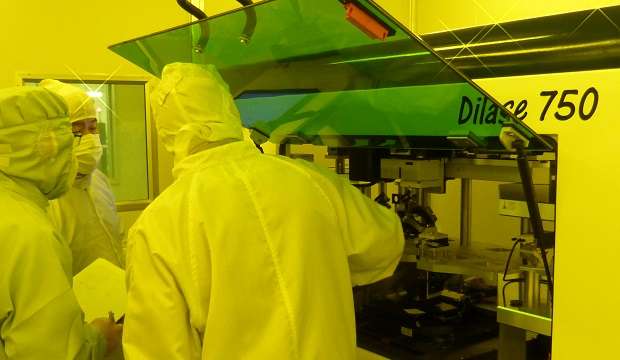
Lasers can be used for a myriad of tasks and situations: attached to a robot arm, or on the side of a bottling line, or inside a protective chamber for 3D printing metal parts. This wide variation in applications requires expert installation, support and training to ensure effective incorporation of the laser system. Sometimes, Raymax is presented with the challenge of a ‘never done before’ solution: a new application or use for a laser system. “These are the challenges we love,” says John Grace, Managing Director of Raymax.“We not only get to apply our knowledge and skill, but we are giving the user an opportunity to do something they could never have done before, and that’s pretty satisfying for everyone.” Lasers provide the opportunity to innovate, change and improve processes. For example, materials-processing applications such as welding, cutting and cladding in fields as diverse as consumer electronics, automotive manufacturing and defence, are now dominated by industrial lasers. This uptake changes traditional processes, influenced by the…

January 2, 2019
GJS Managing Director John Rees has been at the helm throughout, and he and GJS’ software engineers have worked directly with businesses to be sure that their Job Commander solutions have been formed with the input of customers, answering the special needs of the engineering industry. Job Commander is a simple-to-use job costing system that produces quotes, schedules, purchase orders, job cards, delivery dockets and invoices, all personalised for the client. The quoting software allows faster, more accurate quotes by drawing on data from previous jobs and enabling storage of job-specific electronic documentation that is easily retrieved. Job Commander’s integration with MYOB, XERO and QuickBooks avoids double handling of data and reduces accounting costs. Job Commander has taken over a decade to develop with extensive industry research, testing and substantial investment by the company. Rees says: “This has resulted in a powerful, easy to use, and innovative suite of software tools that a client can install…
January 2, 2019
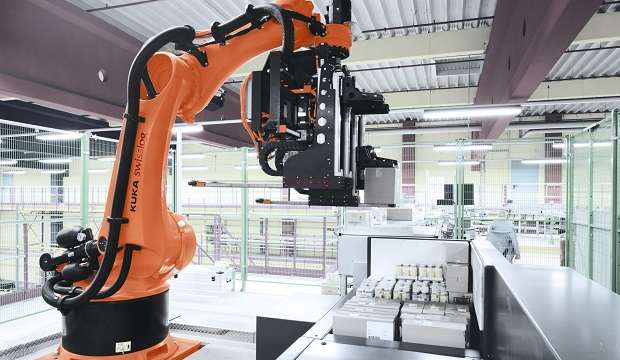
Global robotics and logistics automation technology leader Swisslog has found that as automation accelerates, a common concern is that if a machine goes offline, the entire system suffers. But this is becoming less and less of a problem through synchronised automation, which is a natural evolution of islands of automation, explains Martin Kohl, Senior Consultant at Swisslog. Kohl has more than 18 years experience in global logistics automation. He says that the megatrends driving digitalisation and industry 4.0 – such as urbanisation, an ageing society, increased health focus, e-commerce, increasingly digital lives and regulations – mean that better technology utilisation is needed to optimise supply chains and achieve tangible benefits. From islands of automation to synchronised automation “The concept of islands of automation means users can have several automated processes working in isolation, which can be linked up with Automatic Guided Vehicles (AGVs), with end-to-end integration,” says Kohl. “Swisslog takes this one step further with its synchronised automation systems. The technologies are still separate,…
December 13, 2018
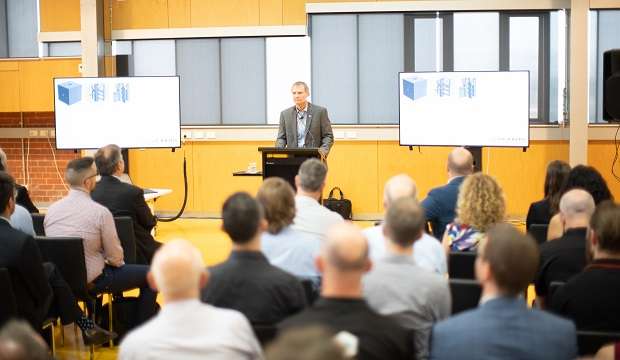
The seminar was part of a special three-day course on Design for Additive Manufacturing (DfAM), run by RMIT in partnership with Wohlers’s consultancy Wohlers Associates. The course addressed issues including DfAM guidelines and best practices, explored AM’s capacity to consolidate many parts into one, and focused on methods to reduce material and weight. Targeted at designers, engineers, and managers, the course offered participants hands-on experience in designing real parts and building them on industrial AM equipment. “Design for Additive Manufacturing is design for manufacturability as applied to AM,” explained Professor Milan Brandt, Technical Director of RMIT’s Advanced Manufacturing Precinct. “It is a design methodology that captures the benefits of additive manufacturing technology when considering product characteristics such as its manufacturability, reliability, and cost. “The RMIT course addressed this through a number of sessions, which included examining the complete AM process chain, from CAD part creation, to part production, and specific issues and guidelines around designing for metal AM,…
December 13, 2018
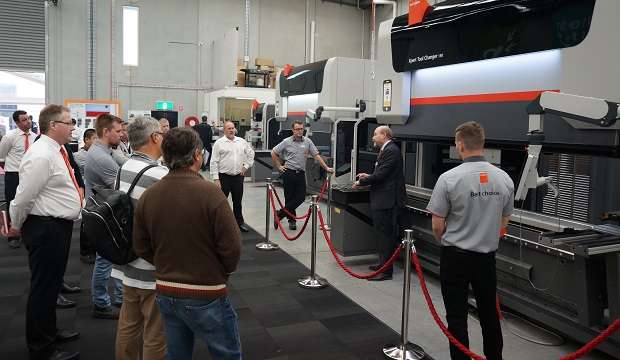
The Bystronic Automation Day was an opportunity for the company to catch up with its existing customers as well as to connect with potential new clients, while presenting some of the highlights from its product range. Already world-renowned as a leader in the fields of sheet metal cutting and fabrication systems, the event was also an opportunity for Bystronic to showcase its latest innovations in automation technology. Automation represents a key area of focus for Bystronic worldwide, and 2018 saw the Swiss-headquartered company taking a number of significant strides in this area. In March it completed the takeover of TTM Laser, Italian specialists in laser-based tube and profile processing, enhancing Bystronic’s existing technology offerings along the cutting, bending, and automation process chain. This was followed in June with the acquisition of a majority interest in Antil, a highly innovative company specialising in automation solutions for sheet metal processing, headquartered in Milan, Italy. Both TTM and ANTIL had their own dedicated exhibits at the Bystronic…
December 13, 2018
Margaret Rouse – a writer and manager at whatis.com’s TechTarget – has described haptics as “the science of applying touch (tactile) sensation and control to interaction with computer applications”. Every time we open an app on our phones or type information into a search engine on a tablet computer, we’re using touch sensations to utilise a range of applications. Haptic technology isn’t necessarily new. Early use of haptic technology actually dates back to the early 1990s when companies like Nintendo incorporated touch into the Nintendo 64 Rumble Pack console, and automobile and medical equipment manufacturers began to develop haptic-based applications in new hardware (think of the way a nurse sets up an automatic intravenous push for a patient). There are a number of features that make touchscreen technology so handy. It gives designers scope to make their applications more user-friendly, which in the end means it’s easier and faster for us to use them in our everyday…

December 13, 2018
Consider a child playing with Lego. Watch how adaptable he or she is to multiple tasks and how adjustments are made effortlessly on the fly. We’re using that innate human talent as inspiration today in a program that trains robots to build with bricks, and while such a capability seems flippant, imagine the power in a robot that can perform any number of movements and actions and teach itself how to remember and build on them, just like a kid playing with Lego. As consumers demand further customisation and speed, the factories of tomorrow won’t have single-purpose ‘dumb’ machines that do one repetitive action. They’re going to be as responsive and constantly evolving as we are. Here are three of the most impactful changes they’ll impose on manufacturing in the coming years. Generative design In Marvel’s Iron Man, Tony Stark (Robert Downey Jr) designs the streamlined Iron Man suit digitally and then tells his artificial intelligence (AI)-equipped helper Jarvis (Paul Bettany) to fabricate it while he…
August 30, 2018
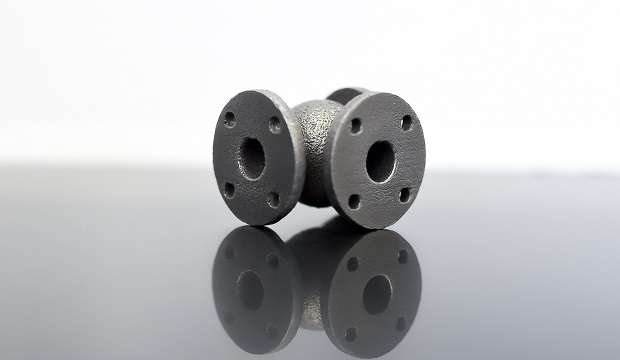
Frequently asked questions about additive manufacturing (AM): Could 3D-printed parts ever match the characteristics of traditionally manufactured components? Are the parts reliable, or safe? Can’t you only print small components? Isn’t it slow? Aren’t the materials expensive? And can’t people just steal your intellectual property (IP) by copying your designs and printing them? A lot of people are working on answering one of these questions or another. But Aurora Labs aims to tackle them all. Aurora makes 3D printers, but it brands itself as “an industrial technology and innovation company”, and Founder and Managing Director David Budge describes a number of separate divisions to the business, covering distinct elements of manufacturing process. The actual printers are only part of the story, but they’re a good place to start. “When we first looked at 3D printing we realised there were two primary problems: the machines were very slow, and very expensive,” says Budge. “So naturally the parts produced had to be…

August 16, 2018
Based in High Wycombe, FBR designs, develops and builds construction robots that can work in demanding outdoor environments. Hadrian X is a construction robot mounted on a truck to easily transport it to and from building sites. It has been designed with the smallest possible worksite footprint, while maintaining a 30m reach. Using FBR’s core Dynamic Stabilisation Technology (DST), Hadrian X measures movement caused by wind, vibration and inertia, and counteracts it in real time using advanced algorithms to lay bricks with unprecedented precision. Although Hadrian X can lay standard house bricks, it is optimised to work with the Fastbrick Wall System, which uses blocks approximately 12 times bigger than standard bricks and are lighter, stronger and designed to minimise waste. The blocks are fused together using a special adhesive, which bonds in just 45 minutes, holds stronger and results in greater thermal and acoustic properties than traditional mortar. According to FBR, it will take Hadrian X between one and three days to build the walls of a home, depending…