



August 2, 2018
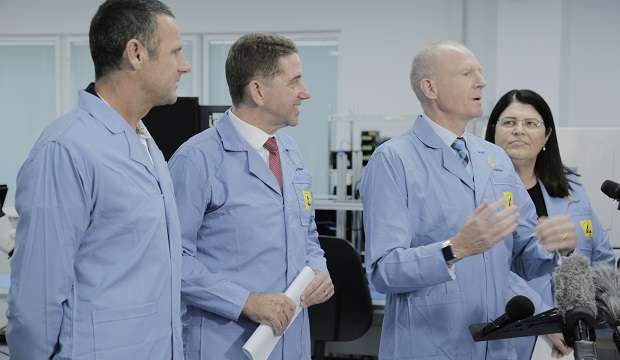
Founded in Sydney in 1981, Cochlear is a global leader in implantable hearing solutions. The company has a global workforce of 3,500 people and invests more than $150m a year in research & development. Products include hearing systems for cochlear, bone conduction and acoustic implants. Over 450,000 people of all ages, across more than 100 countries, now hear because of Cochlear. Cochlear has completed the final phase of redevelopment at the Newstead site, which it has owned since 2007 when the company acquired the manufacturing operations of Brisbane company Crystalaid. Currently around 200 people are employed on the site, with 130 working in direct manufacturing and logistics, 40 working in engineering, and the remainder in administration and operations. The new facility has been built for growth in mind, with Cochlear planning to expand and take on more employees, commencing in early 2019, plus ongoing training and upskilling for staff currently employed. Cameron Dick, State Minister for State Development, Manufacturing, Infrastructure & Planning, and Grace Grace, State Minister for Education and Minister for Industrial Relations,…

July 20, 2018
Moreover, while the main material used for the additive production of vehicle components to date has been aluminium, the new brake caliper is made from titanium. This is therefore the world’s largest functional component 3D printed from titanium. Vehicle trials for the use of the 3D titanium brake caliper in series production are to start by mid-2018. “Vehicle development is a never-ending process. This is particularly true at Bugatti,” says Frank Götzke, Head of New Technologies in Bugatti’s Technical Development Department. “We are always considering how new materials and processes can be used to make our current model even better and how future vehicles could be designed. As our performance data are often at the physical limits, we are especially demanding. This is why Bugatti always goes at least one step further than other manufacturers in the development of technical solutions.” Götzke joined Bugatti in 2001 and played a key role…

July 12, 2018
The compact new DMU 50 3rd Generation sets new standards in five-sided to five-axis simultaneous machining. With its extended swivel range, more powerful spindle and an innovative cooling concept, the new machine guarantees a competitive edge in a multitude of branches. Its areas of application range from training to general mechanical engineering, jig construction, and applications in demanding branches such as the aerospace, medical and automotive industries. While developing the DMU 50 3rd Generation, DMG MORI has managed to harmonise the modern appearance of the design with user-friendly operation. For example, the large, smooth opening door to the work area, with a width of 876mm ensures unrestricted access from the front, even in combination with automation solutions. The table also has an ergonomic loading height of 800mm. The optimum accessibility of the DMU 50 3rd Generation even encompasses maintenance…
May 23, 2018
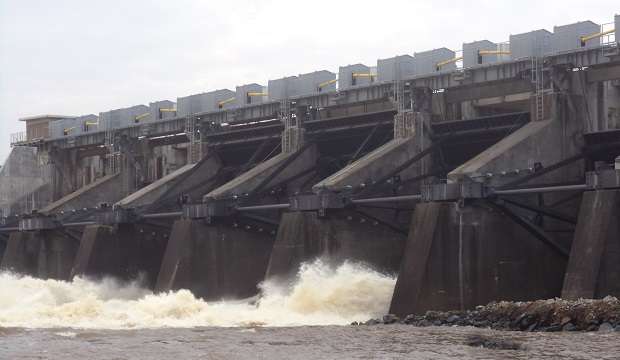
As an enabler of high-performance Industry 4.0 concepts, IO-Link has become indispensable in tool machine engineering and in production facilities. In addition, however, hydro power plants can be wired quickly and efficiently using IO-Link: at the Mount Coffee dam in Liberia an intelligent IO-Link installation connects dozens of sensors and actuators over long distances simply while saving time and cost. The power plant operator had already come to appreciate the typical IO-Link benefits when it came to diagnostics and maintenance. By December 2016 the time had finally come: after more than 20 years of interruption the first turbine was started up, and now all four turbines are feeding 22MW each into the power grid. The integrated wiring solution developed by project partners Balluff and Andritz Hydro has the potential to be utilised in future power plant projects as well. The origins of the Mount Coffee dam, which lies 30km north-east of the Liberian capital Monrovia, go far back: the former dam was finished in 1966, but was almost totally destroyed during the…
May 23, 2018
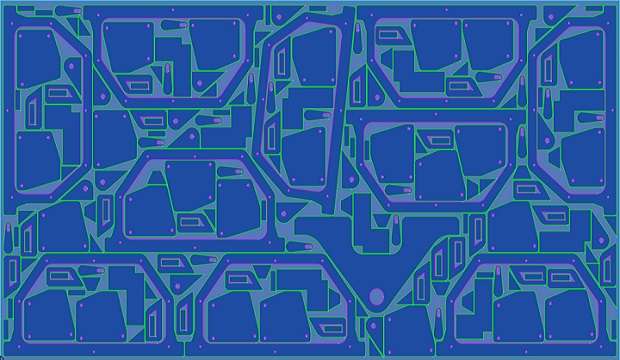
To this end, more fabricators are replacing basic software with more advanced applications provided by the specialists. Glenn Durham, Vice-President of Engineering at SigmaTEK, explains what the industry can expect from CAM software providers moving forward. AMT: Scrap-reduction and accelerated cutting cycles are a few obvious benefits of nesting programs. Where else do they make a difference? Glenn Durham: Nesting isn’t only about scrap-reduction. It’s also about part-placement for manufacturability. A main goal for fabricators – beyond simply cutting and processing materials, is to efficiently manage inventory. While companies like SigmaTEK want to help manufacturers reduce scrap, we also provide tools that make it easier and more efficient to track and reuse drops. To elaborate, there are many situations in which the location of a part on the material must be optimised before we can even consider material utilisation. For example, vacuum table routers have the strongest…
May 18, 2018
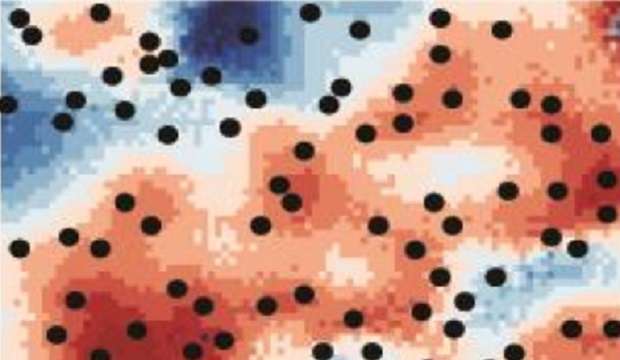
Na3Bi is a topological dirac semi-metal (TDS), considered a 3D equivalent of graphene in that it shows the same extraordinarily high electron mobility. In graphene, as in a TDS, electrons move at constant velocity, independent of their energy. This high electron mobility is highly desirable in materials investigated for fast-switching electronics. The flow of electrons in graphene can be, theoretically, 100 times as fast as in silicon. However in practice there are limitations to graphene’s remarkable electron mobility, driven by the material’s two-dimensional nature. Although graphene itself can be extremely pure, it is far too flimsy to use as a standalone material, and must be bound with another material. And because graphene is atomically thin, impurities in that substrate are able to cause electronic disorder within the graphene. Such microscopic inhomogeneities, known as ‘charge puddles’, limit the mobility of charge carriers. In practice, this means that graphene-based devices must be painstakingly constructed with…
May 11, 2018
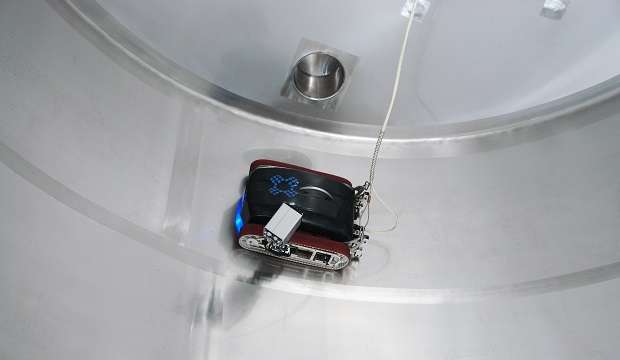
Invert Robotics’s patented climbing robots are installed with high-definition cameras and sensor technology that allow for equipment to be assessed for maintenance and preventative analysis on a remote basis. The robots enable precise and accurate remote inspection of surfaces, even those made from non-ferromagnetic materials such as stainless steel, carbonfibre, aluminium and glass. Inspectors are fed real-time video during the inspection, enabling immediate and highly accurate analysis. “Unlike other inspection methods using dyes, drones and optical or laser devices, Invert Robotics’s technology provides 360-degree diagnostics and does so in up to half the time of traditional inspections,” says Invert’s Managing Director Neil Fletcher. The robots are already being used by the major Australian and New Zealand dairy companies and co-operatives such as Fonterra, Synlait and Murray Goulburn, as well as a number of global brands throughout the food & beverage manufacturing industry in Europe and Asia, such as FrieslandCampina and Heineken. However, Invert’s technology…
May 4, 2018
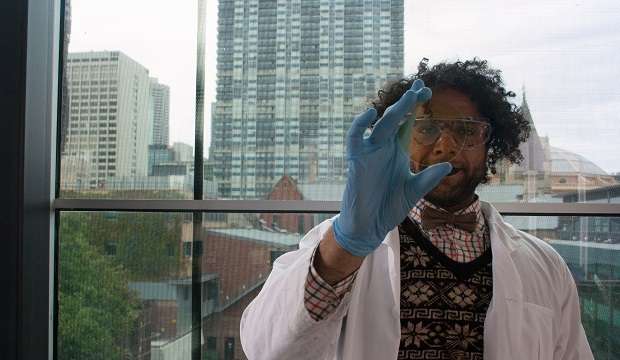
The self-modifying coating, a thousand times thinner than a human hair, works by automatically letting in more heat when it’s cold and blocking the sun’s rays when it’s hot. Smart windows have the ability to naturally regulate temperatures inside a building, leading to major environmental benefits and significant financial savings. The self-regulating coating is created using a material called vanadium dioxide. The coating is 50-150 nanometres in thickness. At 67 degrees Celsius, vanadium dioxide transforms from being an insulator into a metal, allowing the coating to turn into a versatile optoelectronic material controlled by, and sensitive to light. The coating stays transparent and clear to the human eye but goes opaque to infra-red solar radiation, which humans cannot see and is what causes sun-induced heating. Until now, it has been impossible to use vanadium dioxide on surfaces of various sizes because the placement of the coating requires the creation of specialised layers, or platforms. The RMIT researchers have developed a way to create and deposit the ultra-thin coating without the need for…
April 27, 2018
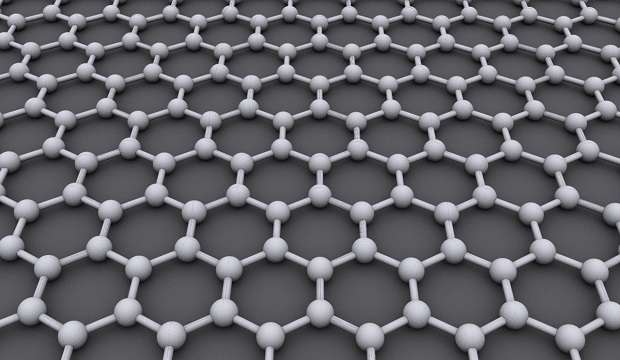
The Flinders team has partnered with Swinburne University of Technology, advanced materials company First Graphene and Melbourne-based manufacturer Kremford. The collaboration is developing a GO-powered battery, a super-capacity energy storage alternative to emerging lithium-ion battery (LIB) technology. Graphene is the lightest, strongest, most electrically conductive material available and has been predicted to generate revolutionary new products in many industry sectors. But so far unreliable quality and poor manufacturing processes has prevented an industrial graphene market. In 2015, Flinders scientists were awarded an Ig Nobel Award for creating the Vortex Fluidic Device (VFD) and using it to unboil an egg. The device has also been used to accurately slice carbon nanotubes to an average length of 170 nanometres using only water, a solvent and a laser, and to process graphene to a high quality for commercial use. VFD creator and professor of clean technology at Flinders Professor Colin Raston said the production of GO from graphite ore with minimal waste was an important part of the collaborative project.…
April 27, 2018
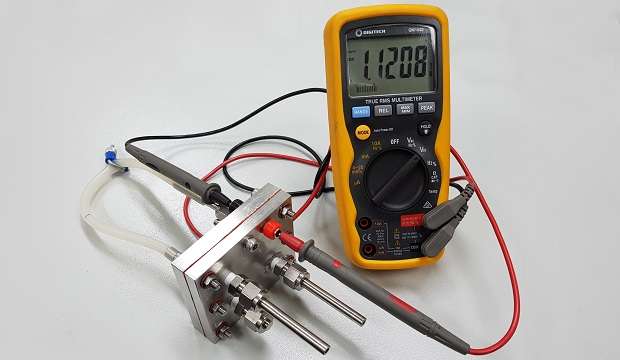
Potential applications for the proton battery include household storage of electricity from solar photovoltaic panels, as done currently by the Tesla ‘Power wall’, which uses lithium ion batteries. With some modifications and scaling up, proton battery technology may also be used for medium-scale storage on electricity grids – like the giant lithium battery in South Australia – as well as powering electric vehicles. The working prototype proton battery uses a carbon electrode as a hydrogen store, coupled with a reversible fuel cell to produce electricity. It’s the carbon electrode plus protons from water that give the proton battery its environmental, energy and potential economic edge, says lead researcher Professor John Andrews. “Our latest advance is a crucial step towards cheap, sustainable proton batteries that can help meet our future energy needs without further damaging our already fragile environment,” says Professor Andrews. “As the world moves towards inherently-variable…
April 20, 2018
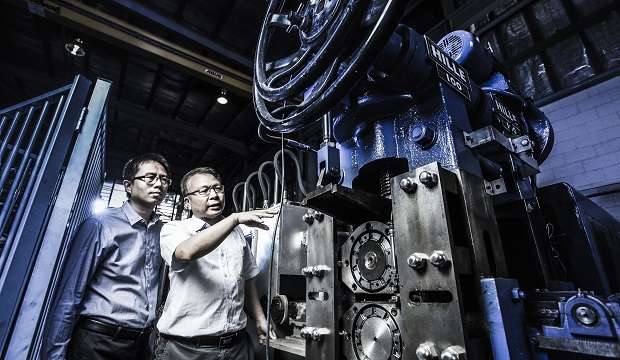
For example, every 10% reduction in total vehicle weight achieves an average fuel economy improvement of 4.9%; however, a decrease of 100kg in the weight of a car can also cause a 3%-4.5% increase in safety risk. One way forward is to develop new materials that are lighter and stronger than those they replace. Responding to the needs of vehicle manufacturers, steel makers around the world are developing new advanced high-strength steels (AHSSs) that are both lighter and stronger than conventional steel, offering improved fuel efficiency without compromising safety. According to an environmental case study reported by the World Steel Association, the use of every 1kg of AHSSs in a five-passenger family car could achieve a total lifecycle saving of 8kg greenhouse gas, which corresponds to a 5.7% reduction in emissions over the life of the vehicle. In their paper ‘Thermomechanical processing of advanced high strength steels’, University of Wollongong (UoW) researchers Professor Zhengyi Jiang and Dr…
April 13, 2018
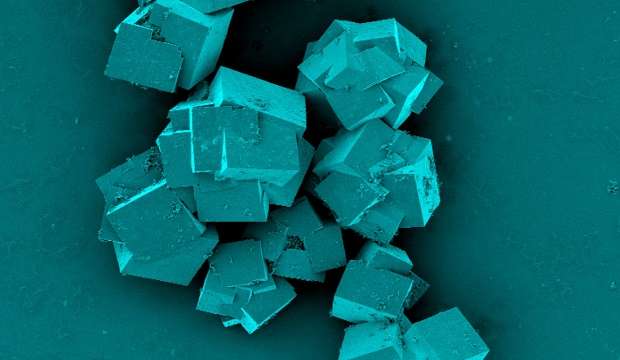
If successful, this cutting edge new technology could form part of the Government’s Future Submarines Program (SEA1000), the largest and most complex military program ever undertaken in Australia. SEA1000 involves the design and construction in Adelaide of 12 highly advanced submarines with a range in excess of 33,000km and capable of operating independently for up to 80 days. For a non-nuclear submarine those figures are already impressive. CSIRO and QinetiQ will work on making it even more so. “Together, we’ll be testing whether MOFs can allow submarines to remain submerged longer,” says CSIRO Project Leader Associate Professor Matthew Hill. “MOFs have the largest internal surface area of any known substance, which can be optimised to capture gases such as carbon dioxide (CO2). The more CO2 MOFs can capture and store, the longer a submarine can potentially remain underwater, undetected.” “If proven, MOFs could give Australian submarines an edge: a performance advantage…
April 13, 2018
The field of renewable energy and clean technology is highly diverse, encompassing everything from wind and solar power, through to technologies for improving energy efficiency and electricity storage. One area that is relatively undeveloped and has generated comparably limited media coverage is hydrogan fuel technology, but it is an area with enormous potential. Hydrogen Mobility Australia (HMA), publicly launched on 2 February, is the voice of Australian’s emerging hydrogen industry. With a membership comprising vehicle manufacturers, energy companies and infrastructure providers, it is a national body with a vision of a hydrogen society for Australia built on clean and renewable energy technology, including hydrogen-powered transport. HMA is also working in collaboration with the Australian Government on developing regulations, codes and standards for hydrogen fuel cells and hydrogen production. The organisation’s CEO, Claire Johnson has extensive experience in policy development across the public and private sector. Based in Melbourne, she recently led Toyota…