



June 10, 2025
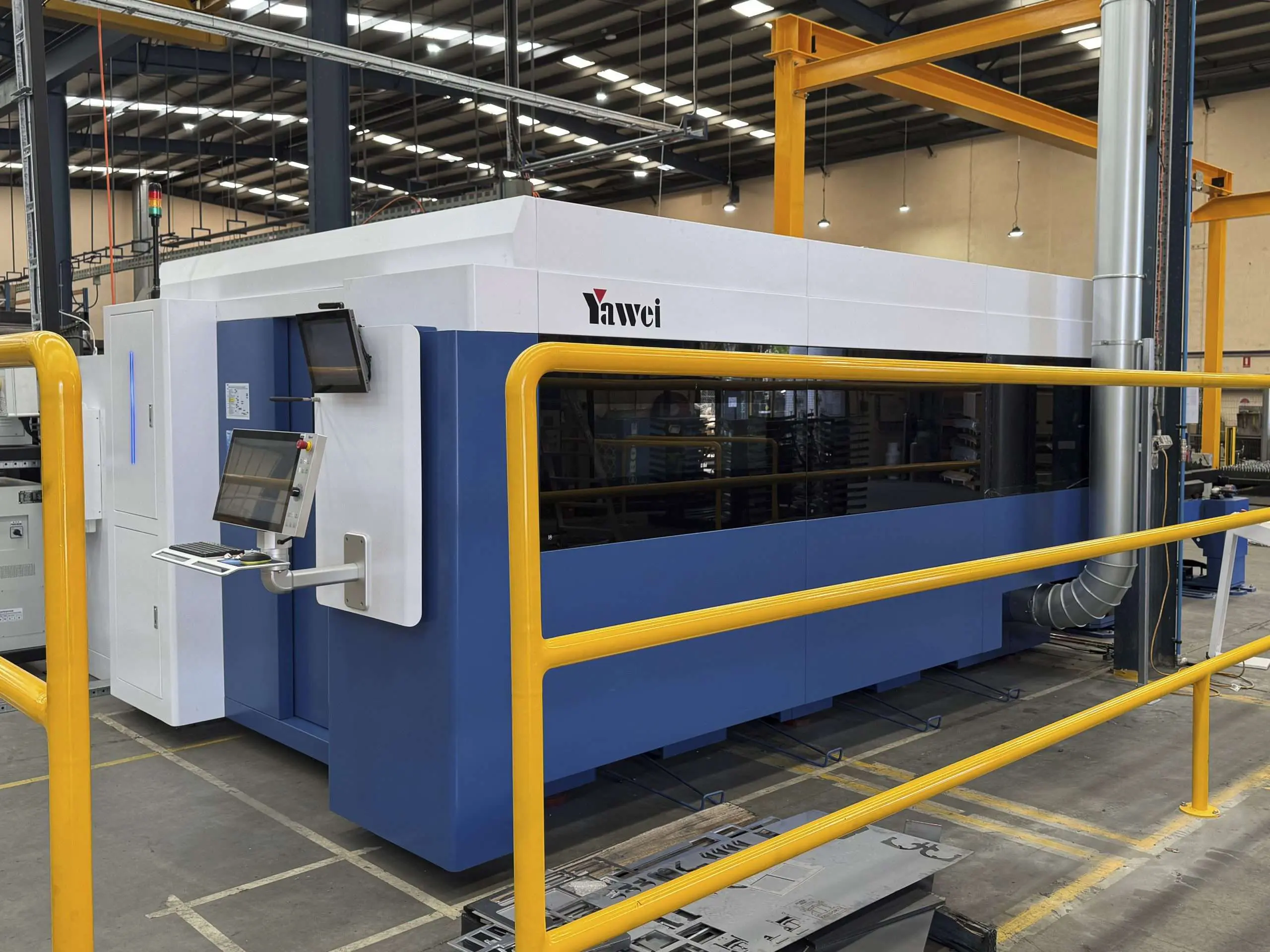
In the fast-paced and cost-driven world of manufacturing, businesses often face tough decisions when investing in new machinery. While price is a major factor, cutting costs by opting for non-certified machines can have serious consequences—ranging from safety hazards to costly downtime, regulatory challenges, and limited resale opportunities. Globally, machinery safety regulations have become more stringent, particularly in regions like Europe, where CE certification is the benchmark for compliance. While Australia does not mandate CE certification, the risks of operating non-certified equipment are becoming increasingly evident. What is CE certification, and why does it matter? CE certification, or CE marking, is a European safety and compliance standard ensuring machinery meets rigorous health, safety, and environmental protection requirements. The CE mark signifies that the manufacturer has verified the machine’s compliance with European safety directives, often involving independent assessments and rigorous testing. For manufacturers, CE certification assures that equipment meets a globally recognised standard, minimising the chances of operational failures, safety incidents, and compliance issues. While Australian standards such as AS/NZS 4024 focus on machinery safety, CE certification continues to be a well-regarded mark…

June 5, 2025
Linde Engineering has signed an agreement with PsiQuantum to deliver a cryogenic cooling plant for the world’s first utility-scale quantum computer in Brisbane, Queensland, Australia. The plant will be one of the largest cryogenic cooling facilities ever constructed to operate a quantum computer. It will cool the cryogenic cabinets housing PsiQuantum’s new Omega chipset and other systems. Quantum computing is anticipated to propel advancements in healthcare, energy, material design, and encryption, while the project in Brisbane advances Australia’s quantum ecosystem across academia, commercial partnerships, and supply chains. The large-scale cryogenic cooling infrastructure will achieve the required 4 Kelvin range (-269 °C, -452 °F). Linde Engineering is among the very few companies worldwide with the necessary expertise, having installed over 500 cryogenic plants. These plants serve high-tech industries such as semiconductors and magnetic resonance imaging and scientific applications like particle accelerators and fusion research. “We are proud to help PsiQuantum realise their ambitious vision for quantum computing. This collaboration demonstrates how combined expertise can drive advancements in technology and innovation,” says John van der Velden, Senior Vice President Global…

June 5, 2025
For over 30 years, Dimac has supported manufacturers across Australia and New Zealand with expert workholding solutions that enhance the performance of CNC machines. As a trusted performance partner, Dimac works closely with clients to streamline processes, improve productivity and strengthen operator safety. With tailored solutions that deliver precision, repeatability and efficiency, Dimac helps clients achieve consistent performance while reducing operational costs and driving long-term value. One such client is Marand Precision Engineering — a leader in precision manufacturing that understands the value of continuous improvement. Looking to implement a more efficient workholding strategy, Marand engaged Dimac’s Sales Manager (Victoria and Tasmania), Adrian Crisan, to explore the best fit solution. Challenges in modern CNC manufacturing For over five decades, Marand has been at the forefront of precision engineering, supplying high-quality solutions to industries including defence, aerospace, rail, mining and energy. As the demand for higher efficiency and standardised manufacturing processes grew, Marand needed a solution to: Reduce machine downtime caused by lengthy and inconsistent workholding setups. Ensure part accessibility to optimise cycle times across various CNC machines. Create a universal…

June 4, 2025
Studio Kite is at the forefront of 3D printing technology, having built two massive 3D printers, fittingly named CADzilla. As the name suggests, these printers are designed for large-scale fabrication and have been fully operational for the past seven years, producing props, sculptures, public art, and prototypes, all on a grand scale. With 25 years of experience in 3D printing and 35 years in cinematic special effects, sculpture, and model making, Studio Kite now plans to start mass-producing affordable homes from plastics destined for landfill. Introducing Jindi, a building solution that Studio Kite says “doesn’t cost the earth. " “Over the last few years, we have vigorously fine-tuned the shapes to optimise the materials as best we can; these forms have been rigorously tested to enter the housing and construction market. We’re 3D printing using 100% recycled consumer waste, which is challenging and costly to recycle consistently. We 3D print an optimised sacrificial formwork that gets coated with a thin shell of basalt fibre-reinforced cement,” said…

June 3, 2025
Students from across five Monash region schools stepped into the future of work at the Australian Manufacturing Week (AMW2025) Industry Immersion, hosted by AMTIL at AMW, in collaboration with Monash Tech School. The event, dubbed Future Solutions, provided a rare and powerful opportunity for secondary students to engage directly with cutting-edge technology, training providers, and industry professionals in the heart of Australia's advanced manufacturing sector. Held at AMW2025, the immersive experience gave 61 students a firsthand look at the innovation driving the sector, with hands-on exposure to emerging technologies and career pathways. Participating schools included Ashwood High School, Brentwood Secondary College, Highvale Secondary College, Mazenod College, and Wheelers Hill Secondary College. “It’s one thing to see this kind of work online,” said a teacher from a partner school. “But it’s quite another to walk the floor and speak directly to the people shaping Australia’s industrial future.” Students didn’t just observe — they engaged. They asked questions, explored training options, and imagined themselves in roles they may never have considered before. Survey results from the day highlight the event’s significant…
June 3, 2025
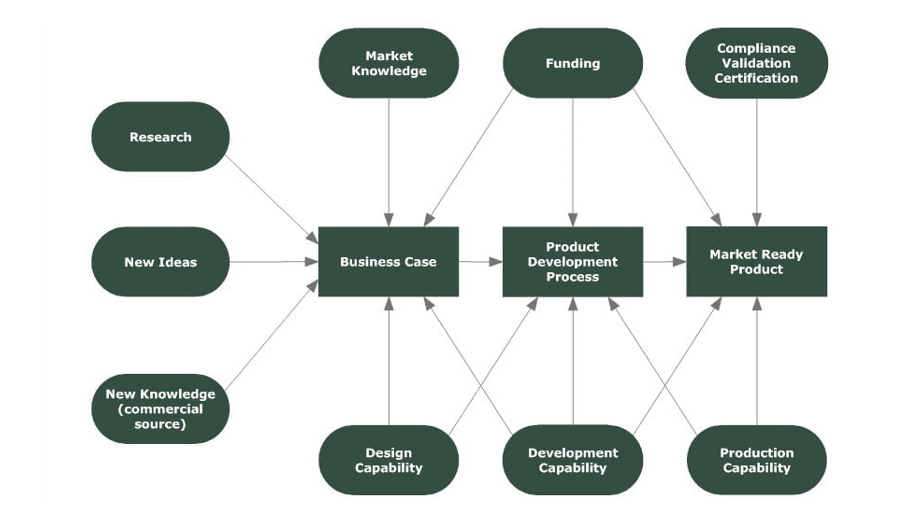
When it comes to manufacturing, Australia operates in a high-cost business environment, much like Germany. This means we’re not the ideal place for producing low-grade, low-value, and easily replicated products. This is especially true in the electronics sector. So, if you can’t compete on raw transactional costs, what can you compete on? Eighteen months ago, we relocated to a larger design office and a separate electronics manufacturing factory in Dandenong South. Now, we have an SMT pick and place line, enabling us to produce higher volumes of products at a reduced unit cost. However, we are not aiming to become a Contract Electronics Manufacturer (CEM), and we still collaborate with established Australian CEMs such as Precision Electronic Technologies, Duet Electronics, and Entech Electronics. We are not looking to compete with them in volume manufacturing; instead, we specialise in high-quality, high-mix, low-volume manufacturing for prototypes, field trial units, and niche opportunities. While this is not the core business for the CEMs, it represents a critical area for startups…
June 2, 2025
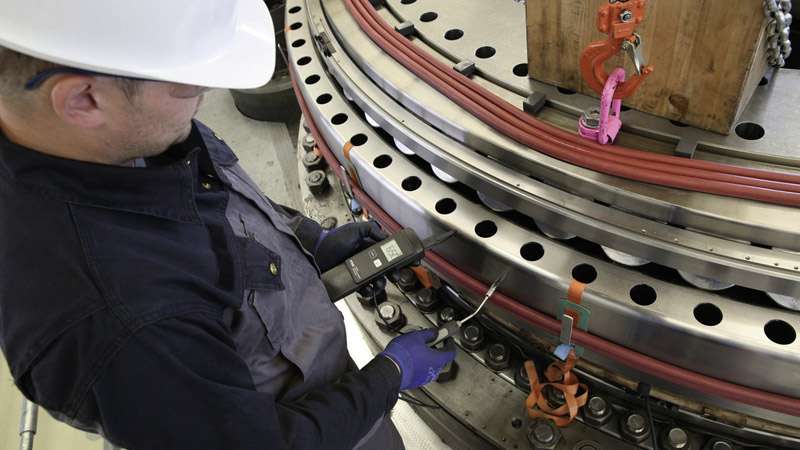
A versatile new family of safety and efficiency-focused medium frequency induction heaters is being introduced to Australasia by the global motion technology company Schaeffler, providing shorter heating times and reducing bearing mounting and dismounting times by half. The new generation medium frequency technology (MFT) heaters enhance safety during bearing mounting and dismounting by eliminating the need for traditional heating methods that involve open flames, such as gas burners or oil baths, ensuring more controlled and stress-free heating of machinery components. Crucially, unlike conventional heaters suitable only for mounting, MFT heaters offer a large thermal capacity and flexible installation methods that enable safe and efficient bearing dismounting. This minimises the risk of damage to both the bearing and the shaft, thereby allowing for quick dismantling and rebuilding times. The productivity gains of the energy-conserving MFT heaters – including nine models ranging from 1.2kW to 45kW – dramatically reduce maintenance costs, even for heavy workpieces such as gear wheels, gear drives, bearings, and couplings. The ‘HEATER’ series of induction…

May 30, 2025
Emerging AI technologies coupled with a digitally savvy and a highly educated workforce are giving Australia the opportunity to reinvent its manufacturing industry as a high-value, niche enterprise capable of supporting high-end jobs. The transformative change will manifest as autonomous manufacturing, in which machines independently make decisions, boosting productivity, ensuring quality, enhancing safety, minimising waste, optimising energy consumption, and so forth. The relevant technologies that support these capabilities are already accessible, as evidenced by autonomous vehicles. Australian mines have been early adopters of these technologies, with self-driving trucks operating in several local mines. The algorithms that facilitate decision-making are trained through machine learning, enabling machines to emulate human cognition. This capability allows machines to perceive their environment, reason, and make rational and safe decisions—with the advantage that machines can perform these tasks consistently and faster than humans due to their superior data processing capacity. Engineers and data scientists collaborate to guide the algorithms. As the nation’s premier research organisation focusing on translational applied research, CSIRO is committed…

May 29, 2025
Australian-built generative AI software trialled by iconic American confectionery company Tootsie Roll could provide hundreds of millions of dollars in savings to the manufacturing industry. The software includes real-time insights that facilitate a greater connection between the C-suite and operational teams. Australian manufacturing efficiency software company OFS has launched Mayvn AI, a first-of-its-kind artificial intelligence platform designed to improve productivity and strengthen communication between manufacturing executives and operational teams. The Australian-designed and engineered software, Mayvn AI, offers real-time information and insights into what’s happening operationally in manufacturing facilities. This can encompass current issues delaying production all the way through to preparing a business case for capital investment and the related return on investment (ROI). Mayvn AI has been trialled with major Australian and global manufacturers, including the iconic US confectionery maker Tootsie Roll Industries, which has reduced specific data-related procedures by over 90%. “There are things we ‘knew’ were a problem, but Mayvn AI validates and quickly provides us with data to effectively demonstrate the impact of those problems,” said Eric Bader, Manufacturing Systems Manager at Tootsie Roll Industries. “We’ve…

May 28, 2025
Objective3D, Australia and New Zealand’s leading provider of additive manufacturing solutions, has officially merged with TCL Hofman (Australia) and TCL Hunt (New Zealand), both part of the Ravago Group. This strategic merger creates the region's most comprehensive additive manufacturing solutions provider, operating under the unified Objective3D brand. This merger combines unparalleled expertise and technology offerings, including polymer, metal, and ceramic 3D printing, advanced 3D scanning, and additive manufacturing software. In addition to the extensive range of cutting-edge solutions from Stratasys, Lithoz, Artec3D, and Materialise, Objective3D will expand to incorporate other additive manufacturing technologies including both Formlabs and Nikon SLM solutions. This positions Objective3D as a driving force in the Australian manufacturing landscape, empowering industries to embrace innovation, enhance efficiency, and strengthen local manufacturing capabilities. What sets Objective3D apart is not only the scale of its operations but also the authenticity of its approach. Its Additive Manufacturing Centre in Carrum Downs, Victoria, is one of the largest of its kind in the country. Unlike others who merely sell 3D printers as part of a broader portfolio, Objective3D employs the same technologies…
May 27, 2025
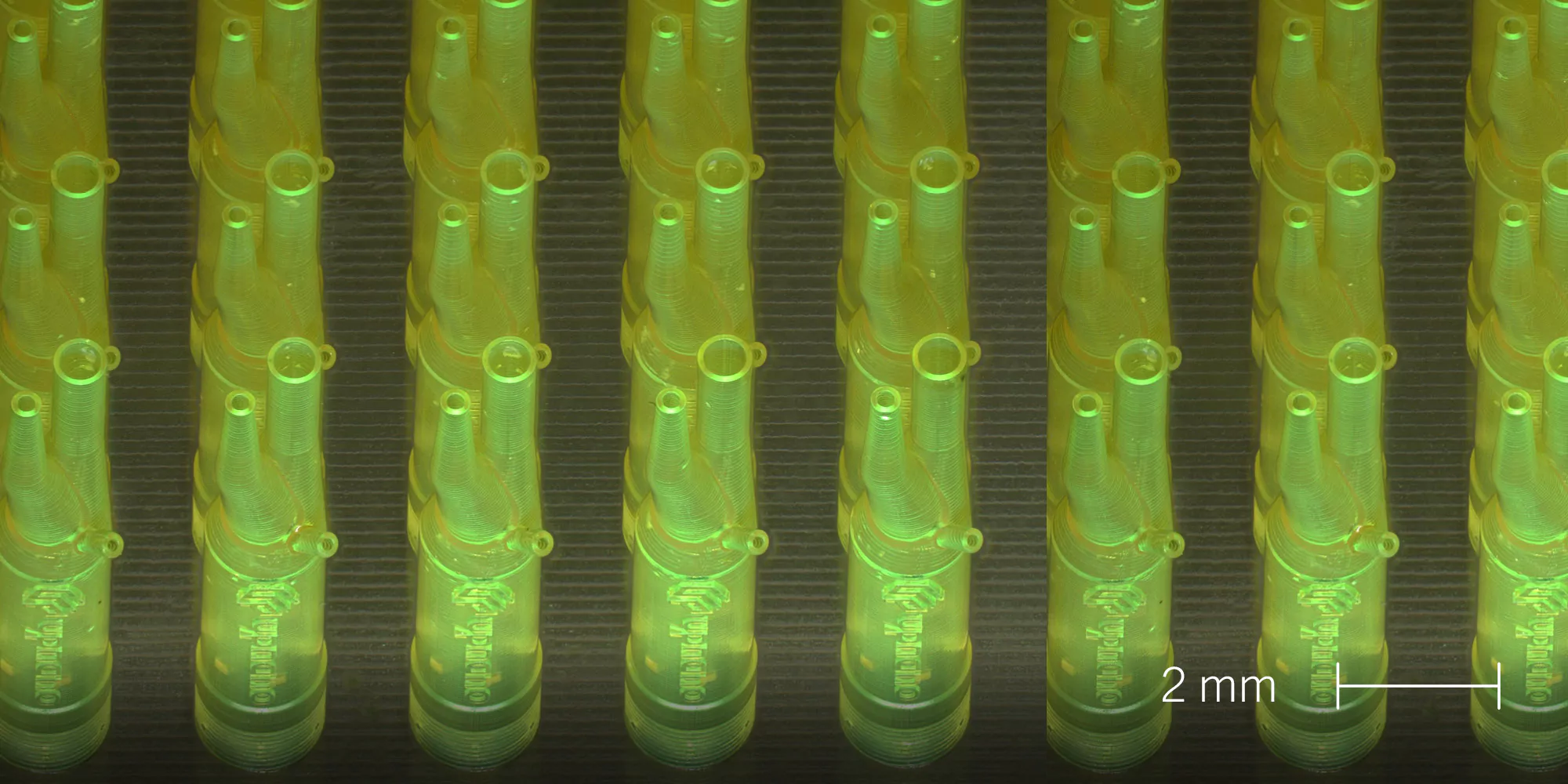
3D printing is often referred to as rapid prototyping due to its ability to quickly and affordably manufacture small volumes of components, particularly those with complex geometries. With no need to produce expensive tooling or moulds, 3D printing is significantly more economical, especially during the development phase, when compared to processes such as injection moulding. However, making the transition to industrial-scale production has been a challenge… until now. For those needing to fabricate parts with high-resolution (better than ~0.3mm) and a surface finish akin to injection moulded parts, resin-based 3D printing using light-based technologies is the solution. At the top end of the scale is the UpNano NanoOne Green which can achieve feature sizes as fine as 100nm using 2-photon polymerisation (2PP) technology, making it the ultimate tool for rapid prototyping. Even with it’s industry-leading printing speed, print times can be relatively long and production volumes are limited. UpNano recently unveiled the NanoPro VT, the world’s first 2PP 3D printer built for industrial-scale production, offering high-volume microparts on a scale that has never been possible. The NanoPro…
May 26, 2025
Established in 1974 and trading as Jenkin Bros. Engineers until last year’s 50th anniversary, the new trading name Jenera pays homage to the company’s founders, Bob and Graham Jenkin, while looking forward to a new era in its evolution. Some key developments in the company’s history occurred with a buyout of management in 2004 by a group including Frank Taranto and Jamie Macaulay, the current business directors and owners. The acquisition of Arthur Ward, a fabrication business, in 2009 significantly boosted the company’s capabilities. The transfer of around two million dollars worth of Kenworth parts business from Australian Engineering (previously Elliott) in 2013 significantly increased turnover. Simon Bowen is the current CEO, and staff numbers today are around sixty. Operating primarily in Melbourne, Jenera’s key services include precision CNC machining, laser cutting, welding, bending, thread rolling, folding, and painting. A dedicated finished assembly area connects manufactured components, providing customers with a one-stop shop for all their sheet metal needs. Its machining centre features nine CNC lathes, five VMC mills, and two CNC saws. On the…

May 23, 2025
Gold Fields has awarded a contract to Goldwind to design, manufacture and construct seven wind turbines for its St Ives gold mine, located 80km south of Kalgoorlie in Western Australia. The turbines will form a 42MW wind farm as part of Gold Fields’ landmark $296m St Ives Renewable Energy project, which will become one of Western Australia’s largest renewable energy initiatives at an existing mine site. It’s not the number of turbines that’s news, but their gargantuan size. Together, these elements make the project one of the largest to be commissioned at an existing mine site in WA. Mobile batching plants will be deployed to the site in Kambalda to mix the 900m3 volume of concrete and allow for continuous pours at each of the seven turbine bases. The entire renewable system is projected to provide power for 73% of the St Ives site and reduce the mine’s carbon emissions by approximately 50% by 2030. Gold Fields Principal Specialist and Project Director Simon Schmid said the St Ives project was part of Gold Fields’ expanding decarbonisation…