



October 16, 2024
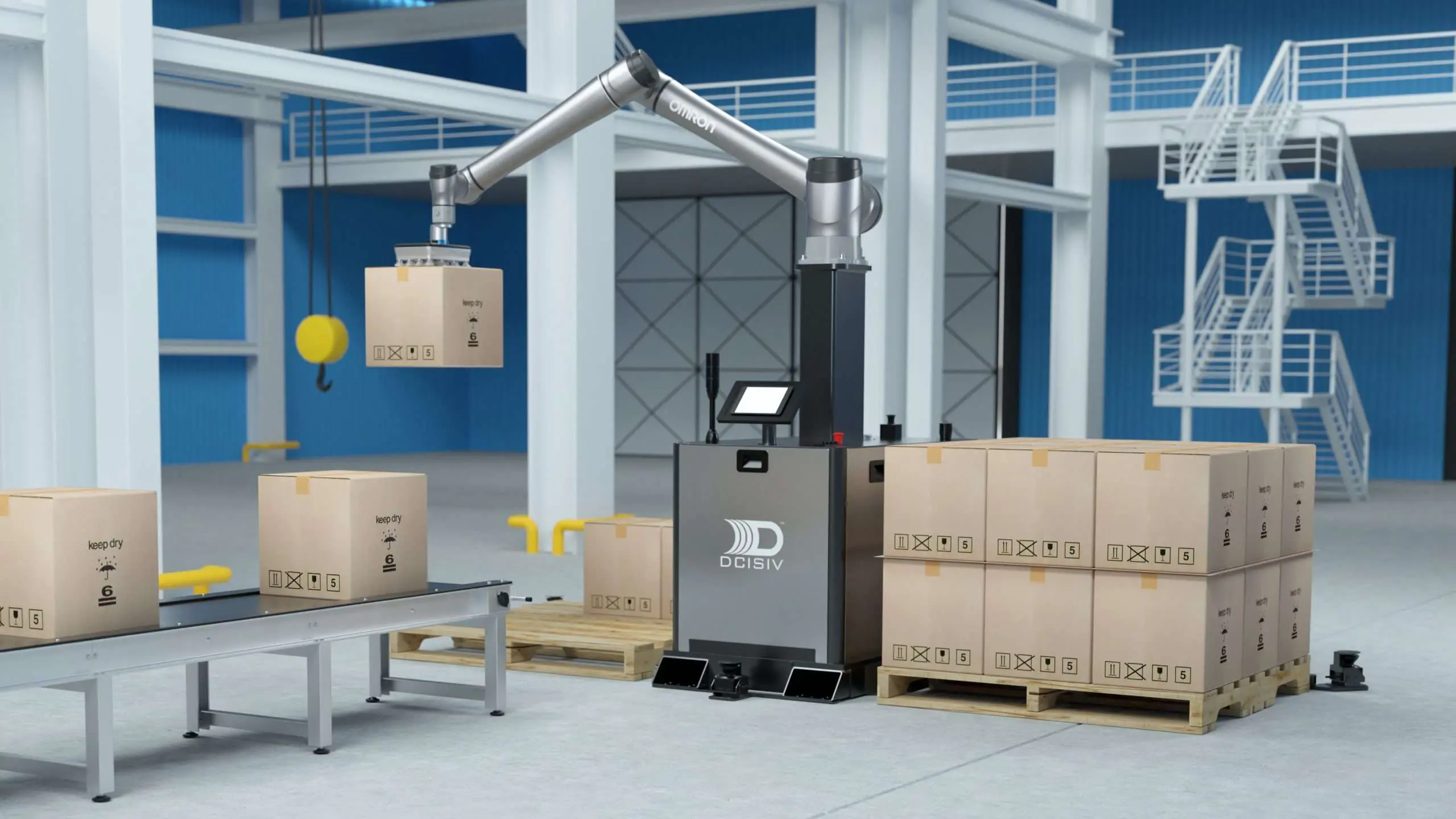
OnRobot, a world-leading turnkey provider for collaborative applications, has partnered with Queensland-based robotics and machine company DCISIV Technologies to introduce an off-the-shelf collaborative palletised for SMEs in Australia. This industry-first solution offers same-day installation, requires no programming, and can be re-deployed within minutes. DCISIV Technologies is situated in Toowoomba, inland from Brisbane. “OnRobot has successfully introduced end-of-arm tooling and sensors for robotic automation to the market by ensuring seamless integration with all major robot brands and providing a simplified and consistent user experience,” said James Taylor, Chief Commercial Officer for OnRobot. “With D:PLOY, we are taking the next logical step in simplifying the overall application rather than just focusing on individual components within the robot cell.” Founded in 2018 in Denmark – more than two decades after the first collaborative robot (cobot) came onto the scene - OnRobot identified a need for quality cobot hardware. “With so many cobot manufacturers coming onto the scene, we recognised a need for a reputable manufacturer that could provide all the complementary physical hardware required.” From two- and three-finger grippers to sanders, vacuums, polishers,…

October 15, 2024
Blade Pile, a top supplier of screw piles for Australia’s residential construction, began in 2007 in Southeast Queensland, producing locally at their Burleigh Heads factory and have since grown steadily. The management team realised that their traditional fabrication processes incurred high costs and challenged their competitive advantage. In 2022, Blade Pile recognised the opportunity to automate its production processes in its new purpose-built Yatala site using a TRUMPF TruLaser Tube 5000, automated material handling, and robotic welding. The Blade Pile Group manufactures, supplies, and installs a wide array of steel piles and piling accessories for the construction industry throughout Australia and New Zealand. Blade Pile is recognised as a leader in residential piling products and foundation systems. Our technical innovation and inventive approach to piling has provided our customers with a range of industry-leading products alongside our network of engineering and installation support services. Blade Pile encountered a pressing challenge: to differentiate their product in the market and control costs. Robotic welding was part of the solution. Robotic welding provides consistent welding results…

October 14, 2024
Auckland-based KANDO Innovation, headed by Keith Blenkinsopp, is a New Zealand manufacturing company that inspires innovation and success through world-leading design and technology. This has led to major export sales in the competitive international markets of America and Europe. KANDO Innovation began with the drive and objective of making New Zealand and international markets safer, more efficient, and more confident, leading to a safer workplace by developing and implementing the latest technology. Leveraging the latest in engineering, automation, machining, vision technologies and more, the idea was to maximise competitive advantage whilst meeting the challenges of safety, skilled labour shortages and minimising downtime and wastage in the industry. Advanced Okuma CNC machines and robotics today play an essential part in this strategy, with the first Okuma machine purchased in 2019 and now with an additional four machines following the Okuma Monozukuri philosophy in “The Art of Making Things Better”. KANDO’s Managing Director Keith Blenkinsopp commented, “The investment in Okuma is always the first we look at due to design, unparalleled service, robustness, precision and user-friendly programming.” KANDO Innovation is the home of the…

October 11, 2024
The Australian defence and space industry is set to gain onshore manufacturing of new eye-in-the-sky technology. This space camera can provide images back to Earth at high speed to aid in disaster resilience operations, land management, and defence. This multi-sensor Earth observation camera is now being developed with Leonardo, Spiral Blue, Nominal Systems and The Australian National University (ANU), brought together under an iLAuNCH Trailblazer project. “This partnership will bring first mover advantage to Australian industry and ANU, which is set to deliver a commercially viable product for future satellites,” said iLAuNCH Trailblazer Executive Director, Darin Lovett. “iLAuNCH is bringing together best-in-class technology that will help detect environmental changes, with translation opportunities to defence, including space domain awareness and missile guidance, and establishing an export market in partnership with Leonardo UK.” Leonardo has developed susceptible detectors for shortwave infrared, which can show heat on an image and see the earth's surface through clouds. However, this shortwave infrared technology has yet to be integrated into a full camera system for space applications. ANU has been developing its Rosella processor, the computer behind…
October 10, 2024
In the dynamic realm of aerospace and defence- where precision, reliability, and innovation reign supreme - the convergence of cutting-edge technologies is redefining the landscape. Among these technologies, 3D printing is a transformative force that revolutionises how complex components are created. However, the true potential of 3D printing is unleashed when it is coupled with AI, data analytics, and simulation. This triad is propelling these industries into a new era of efficiency and adaptability. The evolution of 3D printing: From novelty to precision crafting The journey of 3D printing from being a mere novelty item creator to a powerful tool for crafting intricate aerospace and defence components has been remarkable. With the advent of Industry 4.0 and the digitisation of manufacturing processes, 3D printing has transformed into a data-driven phenomenon. This transformation has empowered 3D printers to gather extensive information about the fabrication process, creating a wealth of data that becomes the bedrock for further innovation. The crucial role of data in data-driven 3D printing At the heart of data-driven 3D printing lies the immense treasure trove of information that…
October 9, 2024
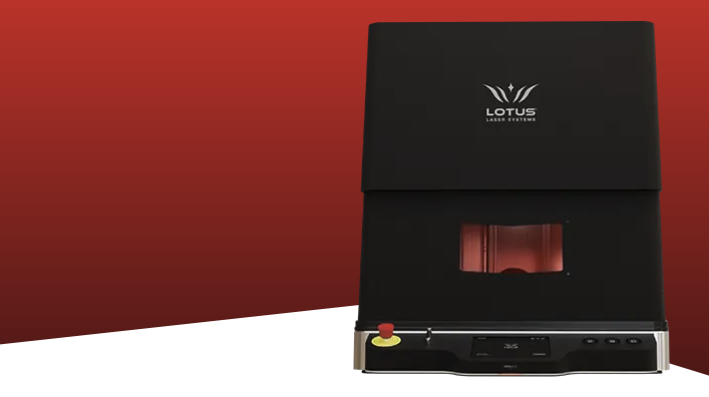
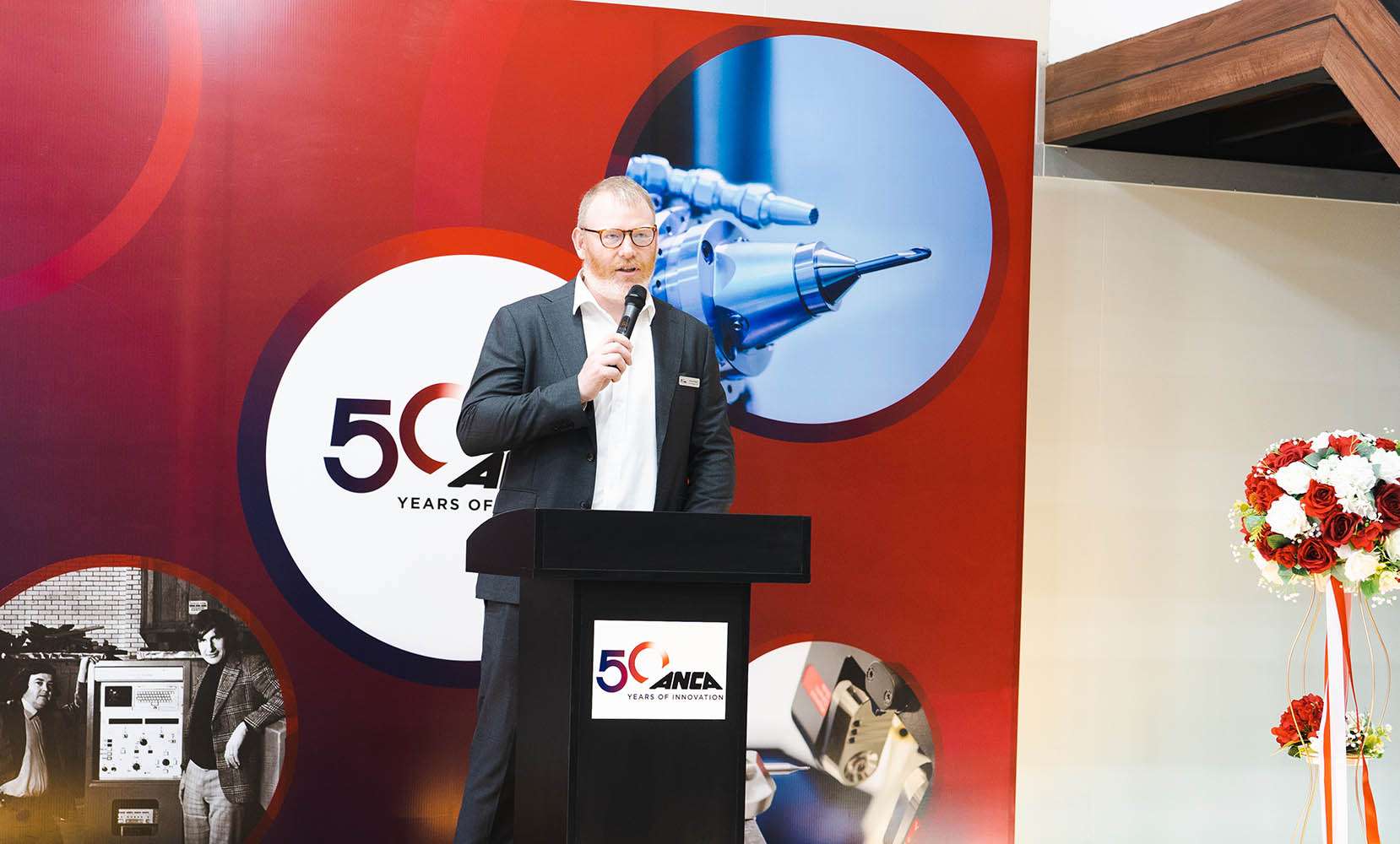
Just a person and a dog? The old story about the factory of the future being populated by one human and a dog—the human’s role is limited to feeding the dog, while the dog is charged with keeping the person away from the machinery—will be close to reality for tool grinding. At a minimum, said Boland, the entire production process will be linked digitally, “from the intake of the raw material to palletising, laser etching, and blank preparation…to the tool and cutter grinding, edge prep, coating, and right through to shipping the finished goods.” For example, when a particular job transitions from OD prep to the 5-axis grinders, the machines will automatically call up the correct program to finish grinding the tools. Everything will also be linked to a company’s ERP and MES system, providing “very good data analytics to help make the right decisions and improve your processes.” Individual processes, such as OD grinding or stream finishing, are often highly automated once they’re set up.…
October 8, 2024
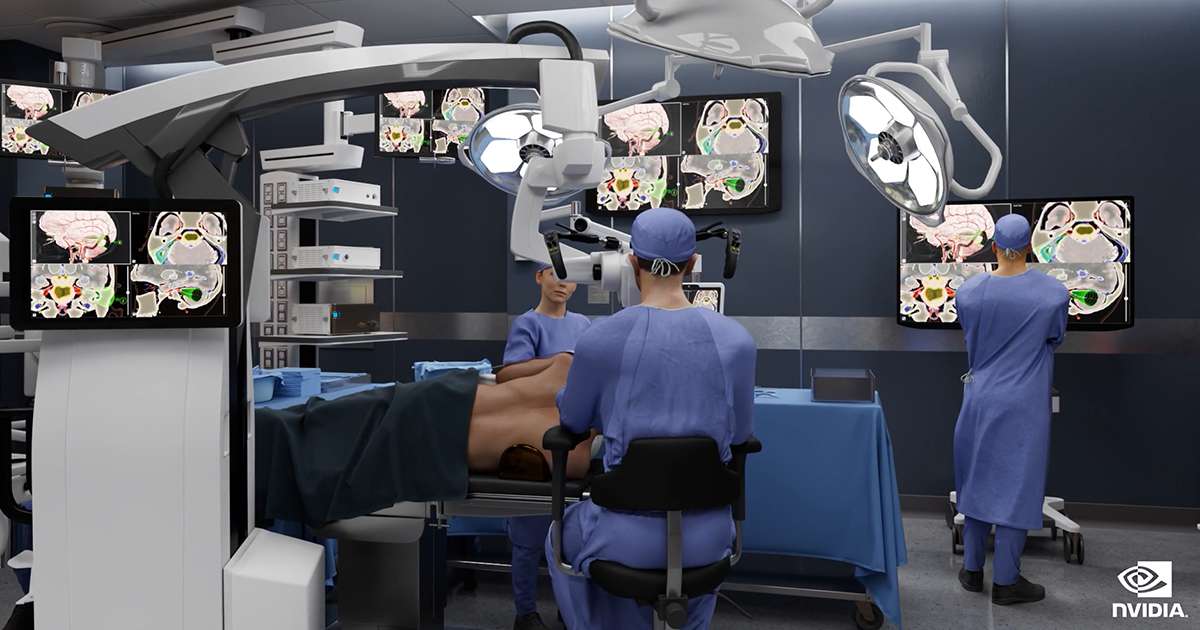
MathWorks has announced an integration that makes MATLAB® available in the NVIDIA Holoscan platform. Medical device engineers can now accelerate the development and deployment of streaming data analysis and visualisation applications by wrapping existing MATLAB algorithms and functions into GPU-accelerated NVIDIA Holoscan operators for real-time data processing and inference. Medical device engineers must navigate complex, ever-evolving global regulations while keeping pace with rapid technological innovation using cutting-edge materials and electronics. These conflicting forces caused many devices to be near-obsolete shortly after reaching the market and fueled the emergence of Software as a Medical Device (SaMD). The International Medical Device Regulators Forum defines SaMD as “software intended to be used for one or more medical purposes that perform those purposes without being part of a hardware medical device.” To stay competitive in the market after deployment, the SaMD products require the capability to integrate additional software feature functionality over time, necessitating engineers to develop a software-defined workflow for their development. “The medical technology industry is being transformed by artificial intelligence,” said David Niewolny, Director of Business Development for MedTech at…
October 8, 2024
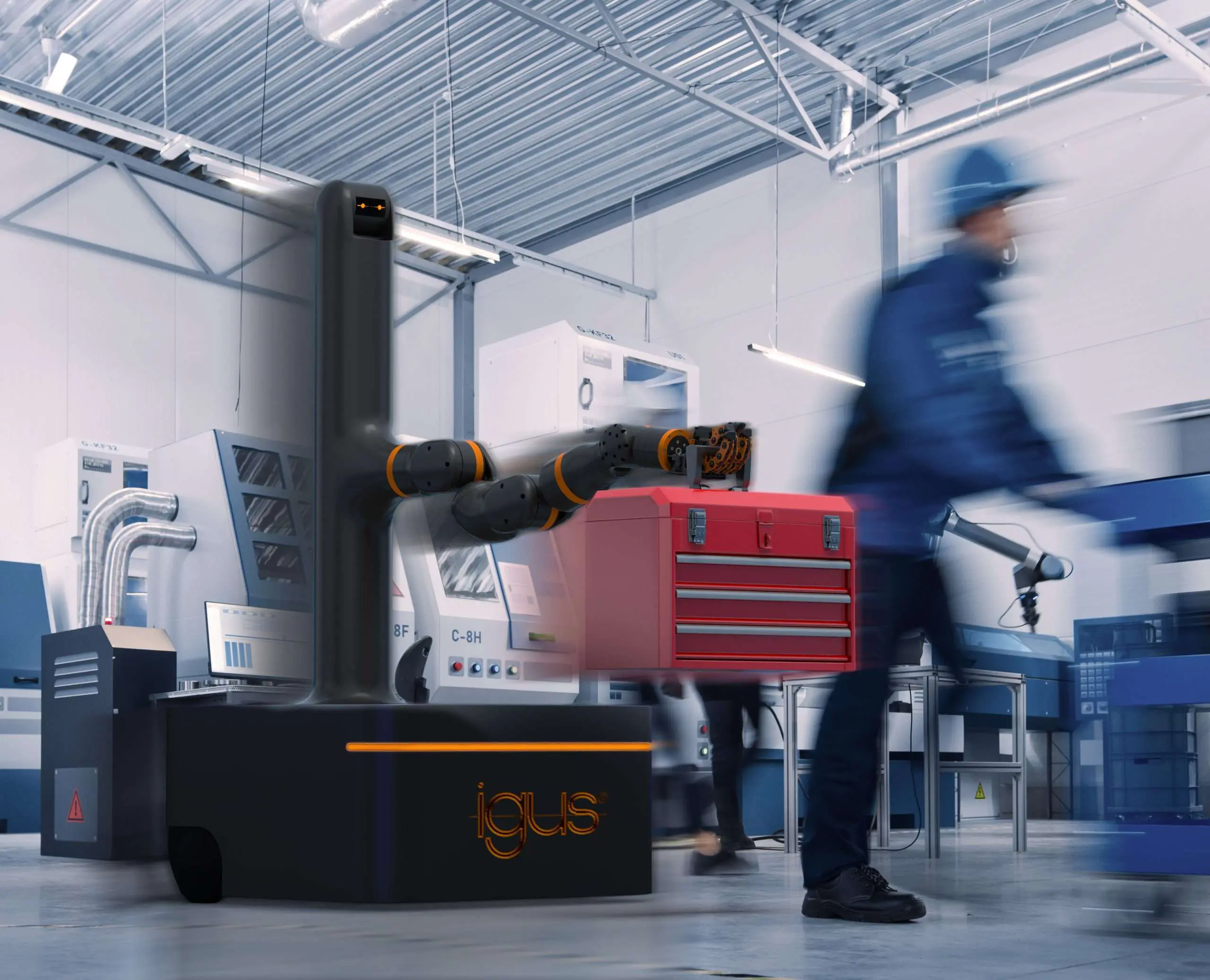
Mobile robotic systems are being used in more and more work areas, from e-commerce warehouses to modern restaurants. However, due to the high prices, widespread use is often unaffordable for small and medium-sized companies. igus wants to change this with new low-cost robotics offerings and presents a series of low-cost mobile plastic robots. The market for automated guided vehicles (AGV) and autonomous mobile robots (AMR) is booming: the global market for mobile robotics, including service robotics, currently totals around $20.3bn, and experts expect this figure to almost double by 2028. Mobile robots are ubiquitous in material handling and industrial applications. And these smart helpers are even increasingly making their rounds in catering and hospitals. The plastics experts at motion plastics specialist igus have also been successfully testing AGVs in-house for four years - driverless shelves that deliver mail and shipments to offices and mobile robots in production that move transports and rotary stacking containers. The experience gained flows directly into developing a new Low-Cost Automation product line, the "ReBeL on Wheels". The goal is to pave the…

October 7, 2024
Group GSA, a renowned design firm with offices in Sydney, Melbourne, Brisbane, Perth, Beijing, Shanghai, and Ho Chi Minh City, has successfully integrated Raise3D 3D printers from Bilby3D into its operations. Known for its innovative designs, such as the award-winning North Fitzroy Library and Community Hub, Group GSA offers multidisciplinary services in Architectural Design, Interior Design, urban design, Landscape Architecture, and Graphics. Challenges faced Prior to adopting in-house 3D printing technology, Group GSA relied on CGI fly-throughs and occasionally outsourced 3D prints for final display pieces. This process was time-consuming and costly, with each outsourced model taking one to two weeks to produce. The lack of rapid prototyping capability hindered their ability to develop and visualise design concepts efficiently and iteratively. To overcome these challenges, Group GSA adopted the Raise3D Pro2 Plus, provided by Bilby3D. This decision was driven by the need to enhance their design process, allowing for quick and cost-effective production of 3D models. The Raise3D Pro2 Plus has significantly reduced the time required to produce models, from weeks to mere hours, enabling more frequent…

October 4, 2024
Additive Industries and Additive Assurance partner to provide in situ process monitoring with Additive Industries’ MetalFab portfolio of laser powder bed fusion (L-PBF) machines. This collaboration will leverage both companies' complementary strengths to improve the process monitoring of additively manufactured parts in high-performance applications. Additive Industries is one of the significant manufacturers of metal L-PBF machines globally and has been serving production-oriented customers for over a decade. Additive Industries’ MetalFab printers offer class-leading automation, scalability, and capability. Their product portfolio has recently been updated with their newest machine, the MetalFab 300 Flex. It is the only metal printer on the market that offers a unique on-demand platform size, providing flexibility for manufacturers and making metal AM more accessible than ever. As AM printers increase build rates and productivity, the requirement for in-process monitoring and quality assurance is becoming essential in many industries to ensure repeatability and generate high production yields. Additive Industries has identified the market gap and is leading the charge with offering this extended capability to its customers. Australian start-up Additive Assurance was spun out of Monash University…

October 2, 2024
In the October/November issue of AMT last year, AXT described Projection Micro Stereolithography (PµSL), allowing 3D printing resolution to go beyond the limits of ~300µm of FDM techniques, using resin-based printing technology. Using PµSL, it is possible to achieve resolutions of just 2µm. But what if you want to print features in the nanometer range? The solution here lies in two-photon polymerisation (2PP), another resin-based printing technology that uses light curing or polymerisation. In microfabrication, systems like the NanoOne from UpNano set the standard, and printing features down to 170nm. The NanoOne is ideal for fabricating parts with complex geometries for academic research and industrial applications as engineers continue to push the bounds of miniaturisation. Contrary to popular belief, 2PP is a fast printing process, and producing parts using 2PP can also be done at a reasonable price. How 2PP printing works 2PP printing technology takes advantage of the spatial selectivity of 2-photon absorption (2PA), i.e. inducing polymerisation at the point where the two photons converge, enabling 3D structures to be directly created in…
October 1, 2024
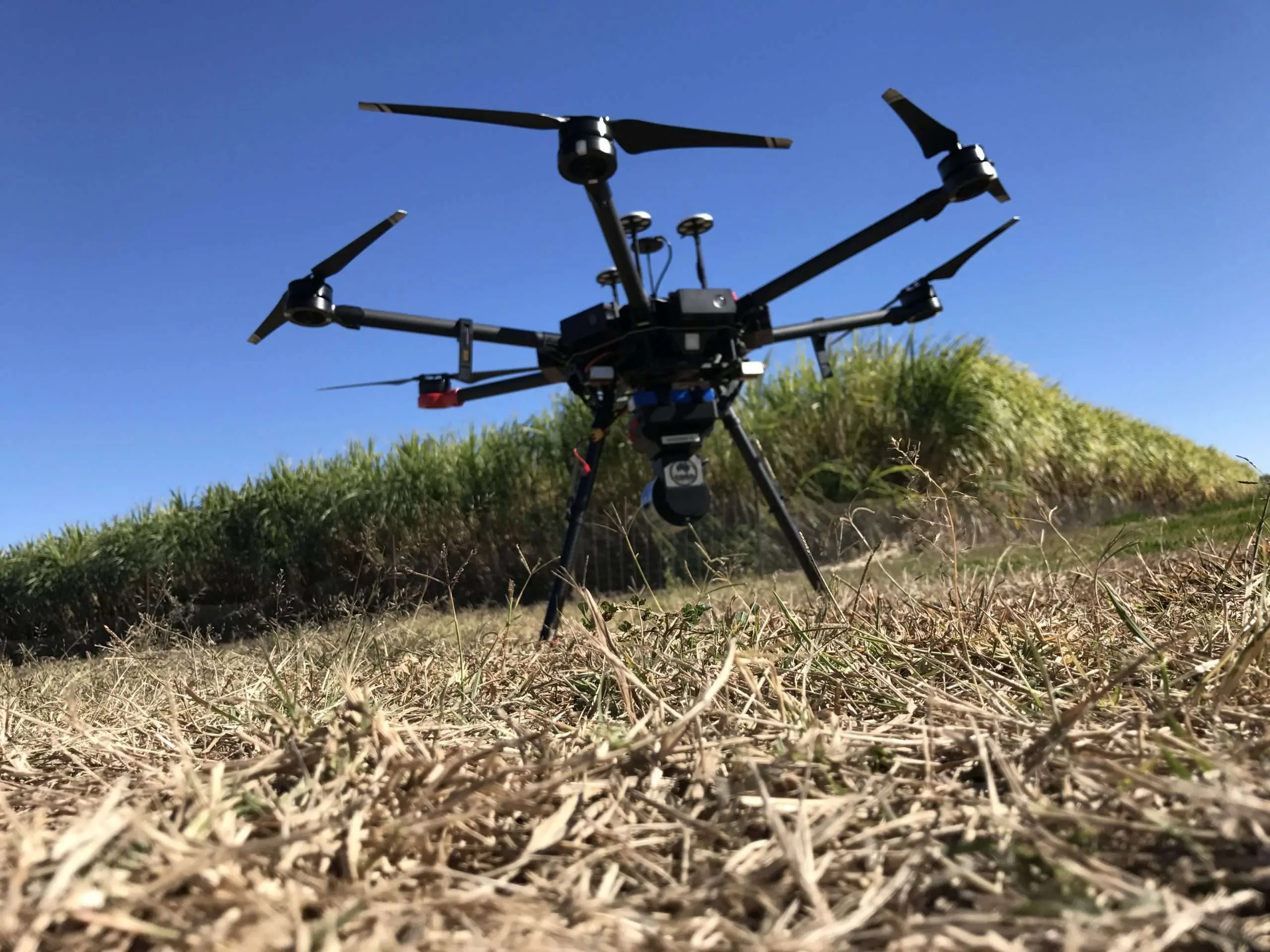
CSIRO, Australia’s national science agency, is announcing the call for applications to the Quad AI-ENGAGE Initiative on behalf of the Australian Government and science partner agencies in India, Japan and the United States. The Advancing Innovations for Empowering NextGen Agriculture (AI-ENGAGE) Initiative calls for cutting-edge research proposals in areas such as Artificial Intelligence (AI), sensors and robotics to help transform agricultural approaches and empower farmers in the Indo-Pacific to increase yield and resilience. By 2050, the world's population is estimated to increase to 9.7 billion people, with a corresponding rise in food demand and pressure on land and water resources. Many of the impacts of these trends will be strongly felt in the Indo-Pacific region, but so will the hope for meaningful solutions. The goal of AI-ENGAGE is to strengthen research collaboration among Quad countries and the broader Indo-Pacific region, improve the impact of critical technology research, and grow our respective agricultural sectors. CSIRO will work with the US National Science Foundation (NSF), Japan's Science and Technology Agency (JST) and the Indian Council of Agricultural Research (ICAR) to implement…
October 1, 2024
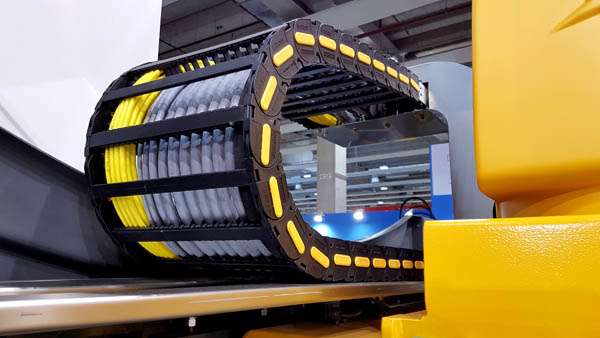
Chain Systems Australia stocks a wide range of energy chains and cables to meet the diverse needs of various industries. Often overlooked until urgently needed, energy chains play a critical role in all moving equipment applications, making them indispensable across multiple sectors. With their head office in Perth, Chain Systems Australia is the exclusive distributor of Italian-made Brevetti Stendalto energy chain and cables in Australia and New Zealand. The company recently expanded its reach by opening a new branch in New South Wales to serve the East Coast market better. Regional Manager Amy Saunders highlights the company’s commitment to substantial stockholdings: “We invest heavily in maintaining a large inventory. If you don’t have the stock, you can’t meet demand,” she explains. “For our ongoing customers who use products consistently, we always have enough stock to prevent any shortages.” The new Sydney branch in Cranebrook opened its doors in April this year. Strategically positioned to serve the East Coast market, this facility boasts ample warehouse space to maintain extensive stock levels. Sydney's central location between Queensland and…