



March 12, 2026
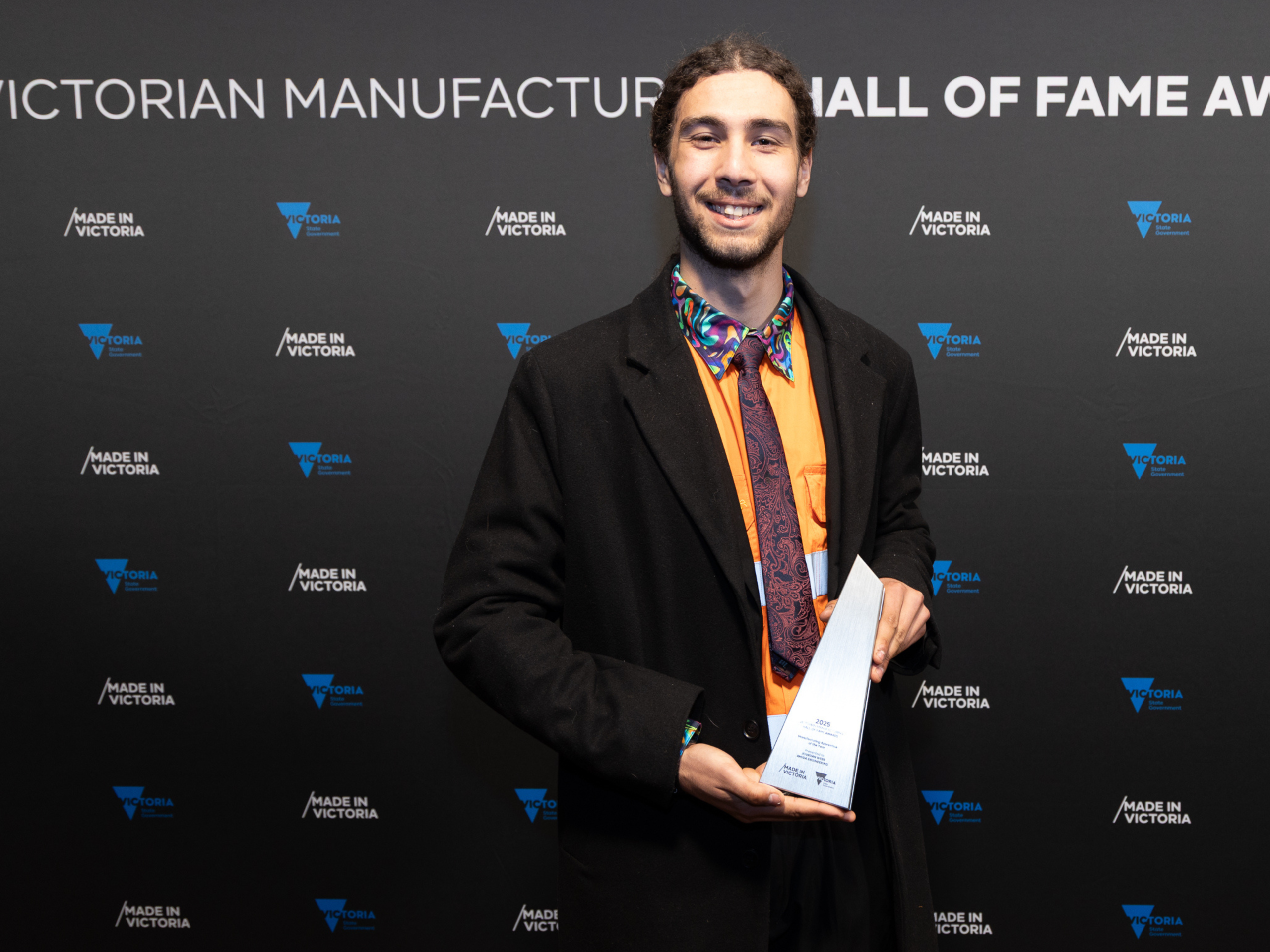
**This story originally appeared in the February 2026 edition of AMT Magazine** Amiga Engineering RFP program manager Dee Bourchier jokes that she decided to hire Jourdan Webb once he brought his own engine components to his interview. “I always tell people, if you’ve made something you’re really proud of, you’re welcome to bring it in… so when he’d brought in miniature engine components that he’d machined up outside of school… we were just like – ‘these are really good… when do you want to start?’” she says. Webb is one of two apprentices named as Manufacturing Apprentice of the Year at the 2025 Victorian Manufacturing Hall of Fame Awards, having recently entered the fourth year of his apprenticeship as a fitter and turner. But it was a career that almost came to a premature end when his first employer, which he describes as “an old-school valve shop,” closed shortly after he’d completed his first year as an apprentice. “I decided straight away I’d have to look…
March 10, 2026
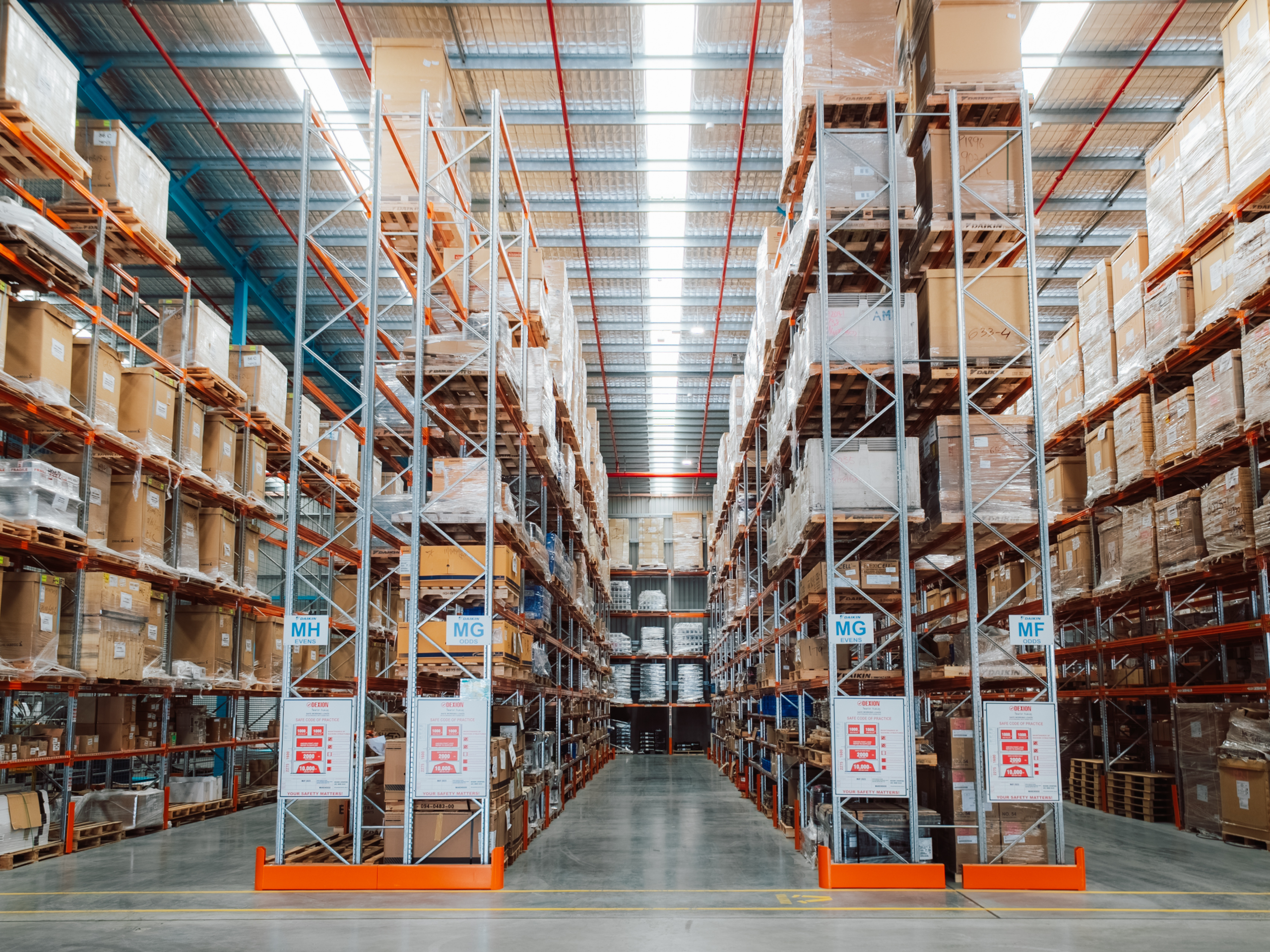
**This story originally appeared in the February 2026 edition of AMT Magazine** Daikin Australia has opened a new factory in the Sydney suburb of Chipping Norton which it says will help put local designs and skills at the centre. The new $28.2 million Factory 2 expands Daikin’s capability to produce customised Air Handling Units and Rooftop Packaged Air Conditioners for Australian buyers. Daikin Australia manufacturing general manager Nick McDonald explains the company’s Australian-made ducted units were engineered from the ground up for local clients. “They are designed to suit the Australian home… they have geometry such that they fit inside an Australian roof space, so they’re easy to install. They are designed so they come apart into several pieces, so they can be easily manhandled up into the roof space by our dealer group.” That Australian focus extends to performance in harsh conditions: “If you go to South Australia, the roofs are very hot. The temperature inside the roof cavity can be well in excess of 60 degrees, for example. So our equipment has…

March 7, 2026
**This story originally appeared in the February 2026 edition of AMT Magazine** Terry Wohlers has provided technical and strategic advisory services on rapid product development, additive manufacturing (AM) and 3D printing for 38 years – to more than 280 organisations in 27 countries. As a principal author of industry-leading publication the Wohlers Report, he has an earned reputation as an industry leader. Here he discusses some of the trends emerging in AM and where Australia can make the most of new opportunities. Looking at AM on a global scale, where does Australia sit? The growth of AM globally has been historically strong. In the past 15 years, it has grown more than 22 per cent on average every year. This past year has not been as strong, but still a growth rate of 9.1 per cent. Of the US$21.9 billion of revenue the sector generated in 2024, about US$3.7 billion is tied to production applications – parts made for final use – a figure which grew by 12.1 per cent last year. Adoption…

March 3, 2026
**This story originally appeared in the February 2026 edition of AMT Magazine** “It’s really, really interesting seeing how things are made, and what it takes… Now I know and understand much of what was required to assemble things. It’s interesting seeing how things work.” Ten years ago, Melanie Kramer walked away from her retail job at a jeweller in inner-city Melbourne to help her sister Simone and Simone’s partner Brian at Boss Tooling, their year-old CNC machining company in Dandenong South. She’s still there today – running machines which today include two new Okuma 5-axis CNC mills and helping to refine designs on the factory floor to keep processes running smoothly. Both Melanie and Simone say they did a lot of learning on the job, with Simone initially learning management skills at Brian’s family company Cogley Enterprises before the couple branched out on their own. “I didn’t have any skills when I started – I got put in an office and didn’t even know what a purchase…
February 26, 2026
**This story originally appeared in the February 2026 edition of AMT Magazine** By Martin U. Ripple, Chief Executive Officer, ANCA Group For much of modern history, engineers have been expected to advance humanity and build the future without being invited to shape it. They are often portrayed as technically brilliant but socially awkward, more comfortable with machines than people. A familiar cartoon shows a mother taking her child to the doctor, only to be told, “Oh no, it’s worse than I feared. Your son is going to be an engineer. The joke implies a lifelong condition of logic over emotion and facts over conversation. Yet this stereotype obscures a deeper truth. Almost everything that defines contemporary life from our homes and transport systems to our food supply chains, energy networks, medical devices and digital infrastructure - exists because engineers designed, built, tested and continuously improved it. While others debate direction, engineers quietly turn ideas into reality. Why then does a profession so central to modern civilisation…
February 20, 2026
**This story originally appeared in the October 2025 edition of AMT Magazine** Imagine this scenario: Your team installs a new collaborative robot application on the production line to automate what was once a manual task and introduce collaborative interaction with workers. Because the system does not rely on physical distance barriers such as perimeter guarding, it promises flexibility, space savings and productivity gains. The robot has been designed to operate under a power and force limiting (PFL) safety function, but no risk assessment was carried out to identify the contact scenarios, nor has validation been performed using a pressure and/or force measuring device. As a result, when the robot moves into action, its force and power output exceed the biomechanical limits set out in ISO 10218-2:2025, putting operators at risk of injury. It’s a stark reminder that a thorough risk assessment might have flagged that hazard and prompted better safeguards. Risk assessments are a cornerstone of workplace…
February 17, 2026
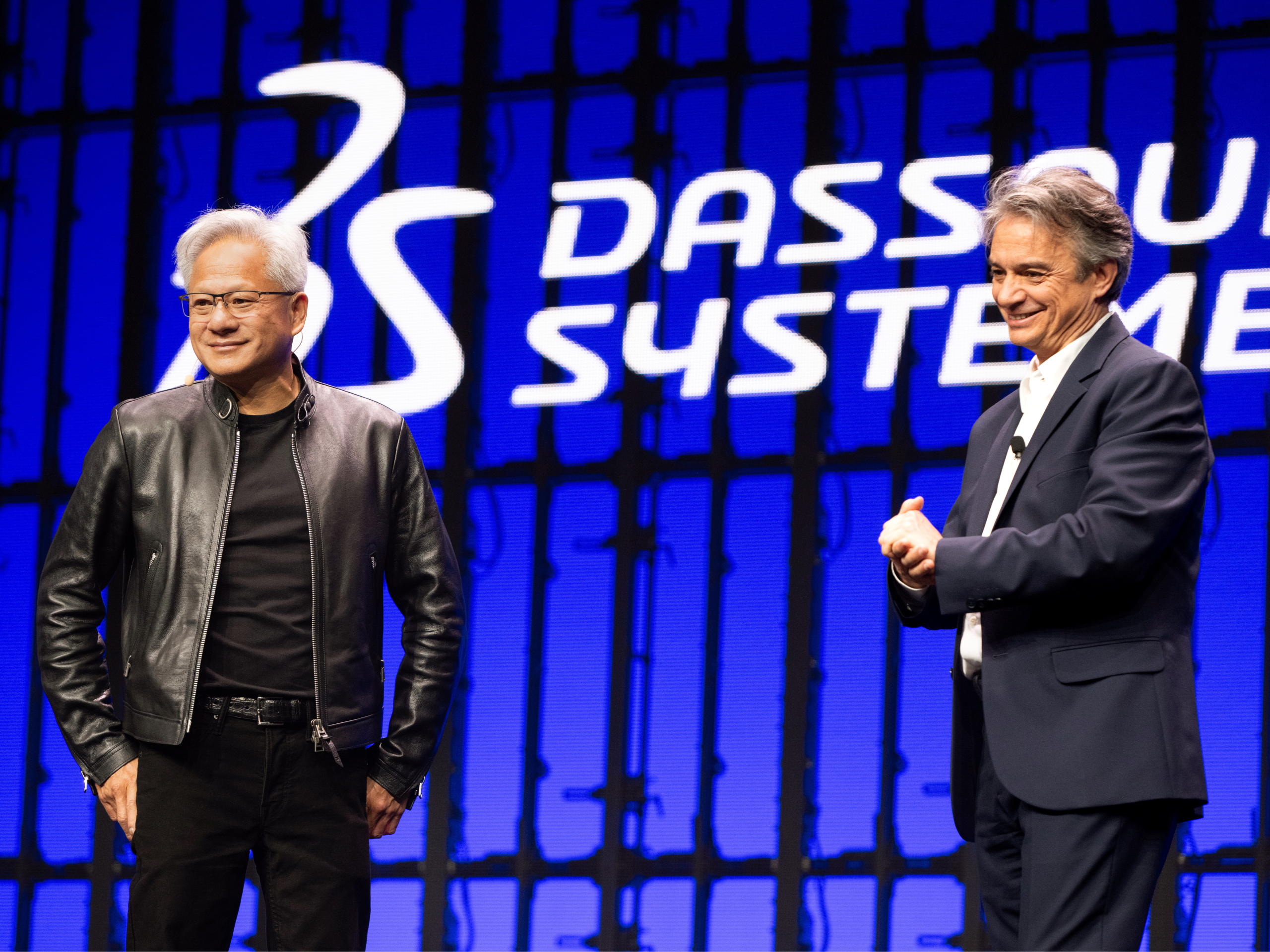
Newly announced technology greatly expands capacity of AI Replicates real world physics to truncate lead time and simulate stress testing of products Rolling out to select partners imminently, with plans for broad availability this year At 3DEXPERIENCE World in Houston, a joint announcement from NVIDIA CEO Jensen Huang and Dassault Systèmes CEO Pascal Daloz put “physical AI” and production‑grade virtual twins at the centre one of the largest engineering gatherings of the year. The message delivered to nearly ten thousand attendees was bold: a new class of industrial AI, grounded in physics rather than just language, could compress the distance between concept and reality in dramatic fashion. Whether or not this partnership ends up defining the next decade of manufacturing software, the idea of physical AI matters. It signals a shift that could reshape design, simulation, testing and factory optimisation for manufacturers of all sizes, including in Australia’s precision sector. “AI is just an engine — you…

February 5, 2026
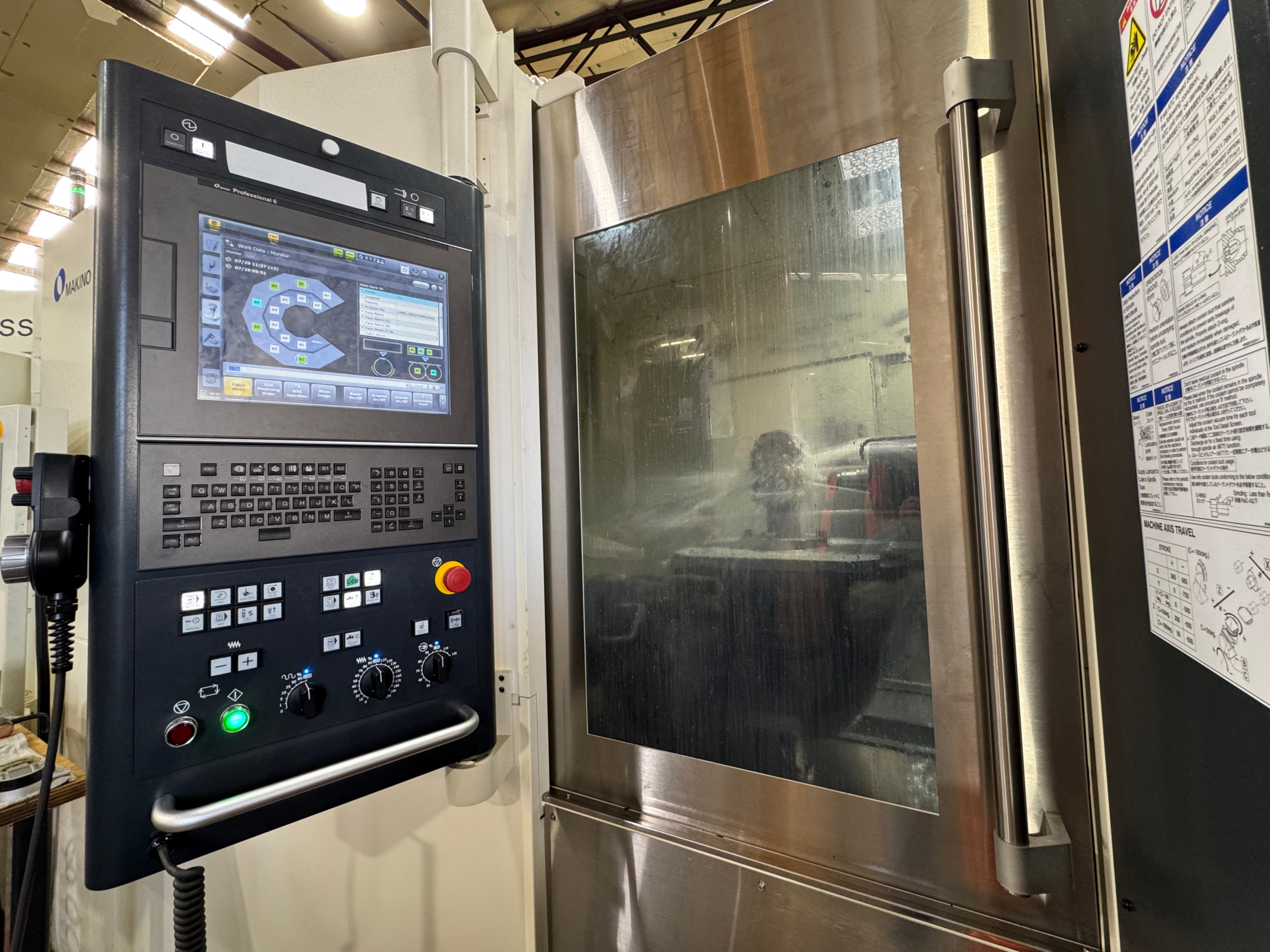
**This story first appeared in the October 2025 edition of AMT Magazine** A strong sense of confidence in Australia’s precision engineering future has encouraged Redline Engineering to invest in a new 11 pallet, 5-axis Okuma CNC vertical machining centre. The model MU-5000V & Tower APC with OSP-P500MH control is the first of its type – a 5-axis machining centre with a Tower APC an automatic multi pallet system – to be installed anywhere in Australia. Redline general manager Ken Stuart says he is confident his business will continue to grow manufacturing of its precision engineering components, due in part to the high regard in which Australian manufacturing is held around the world. This high regard is due both to its quality and the on-time delivery that companies generate, he says. “The service aspect, I think, is becoming really important,” he says. “Whether it is the culture we have or the way that we engage with the market, you get a sense there's a really strong passion for what we do – solving problems, being innovative, connecting to opportunities…
January 29, 2026
**This story first appeared in the October 2025 edition of AMT Magazine** Being faced with growing global demand for the high-precision gears that Ronson Gears produces is the sort of problem that might put a spring in the step of any company director. But for Ronson Gears technical director Jason Graham, the primary issue was throughput, as the company sought to serve a highly competitive global market. “We had a large backlog of work. Our equipment just wasn’t technologically advanced enough for what we were doing. Setups were taking far too long,” he says. Founded in 1954 as a local operation in Victoria, Ronson Gears today has become a globally trusted manufacturer, delivering high-precision gear solutions for industries ranging from outer space to mining. Offering full-service manufacturing capabilities covering turning, milling, gear cutting, grinding and advanced measurement, Ronson Gears employs 46 people and operates 24 hours a day, six days a week across three shifts. Graham says the company needed a solution…

January 27, 2026
Australia’s premier advanced manufacturing showcase, Australian Manufacturing Week (AMW), returns in 2026, and for the first time it is heading to Brisbane. From 12 to 14 May 2026, the Brisbane Convention and Exhibition Centre will host thousands of industry professionals eager to explore the technologies shaping the future of precision manufacturing. Register to visit AMW 2026 in Brisbane With visitor registration now open, prospective attendees are encouraged to secure their place early. Registering ahead of time not only guarantees smooth entry but also ensures visitors are fully credentialled before arriving at the venue. This saves valuable time and allows them to move straight onto the exhibition floor without delay. AMW 2026 promises an expansive and highly curated experience. Organised by the Australian Manufacturing Technology Institute Limited (AMTIL), the event brings together an exceptional array of suppliers, innovators and technology leaders from across the sector. The exhibition will be structured across six specialised product zones—Machine Tools, Additive Manufacturing, Robotics and Automation, Welding and Air Technology, Manufacturing Solutions, and the Australian Manufacturers’ Pavilion—giving visitors clear pathways to explore the…
January 22, 2026
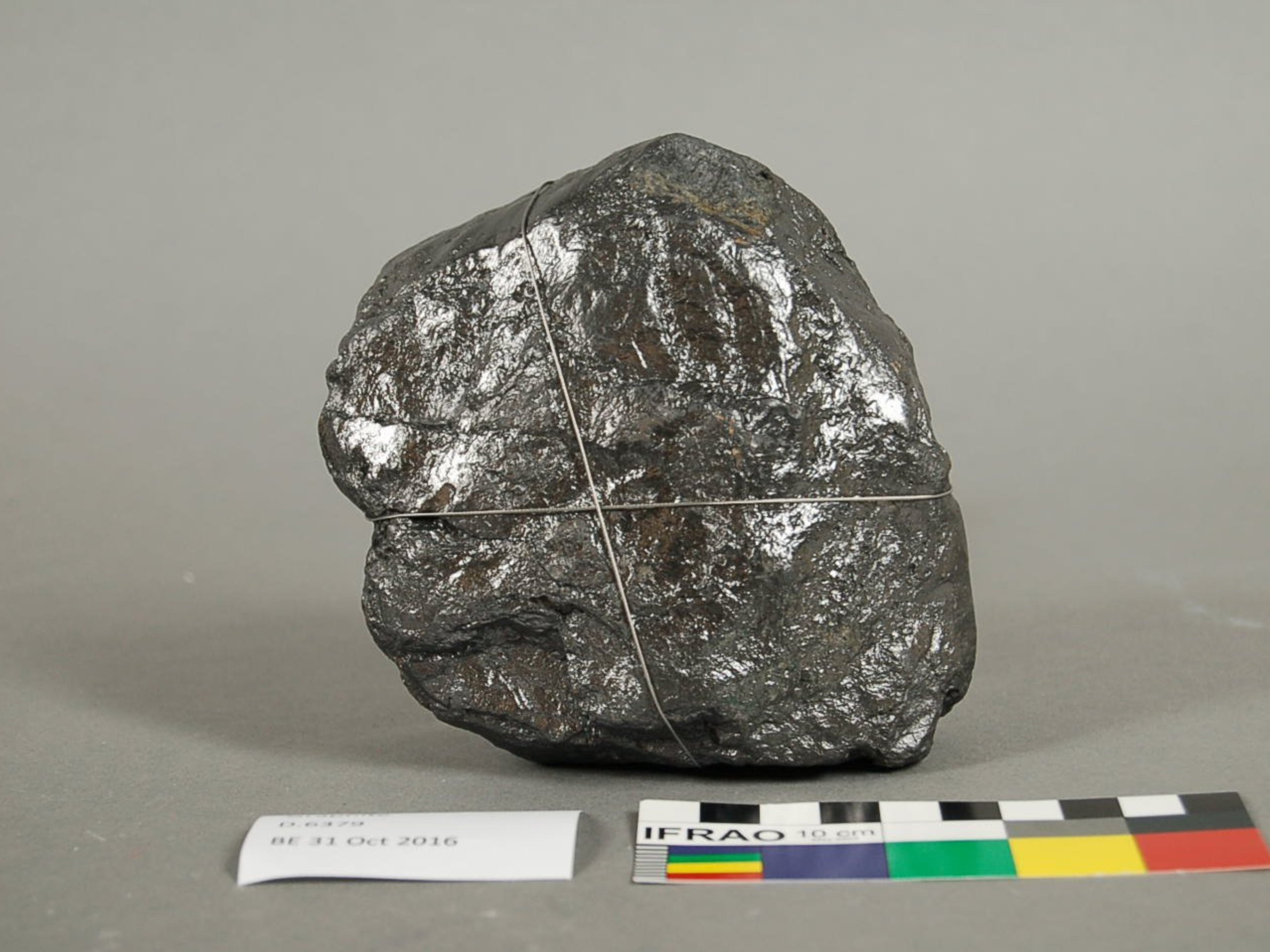
**This story first appeared in the October 2025 edition of AMT Magazine** Q1: Can you tell us a bit about your background and what led you to specialise in batteries? My background is in material science—I completed a Bachelor of Science with honours, focusing on materials in my final year. I initially wanted to pursue a PhD in chemistry, but due to the competitive environment at the time, I ended up crossing into engineering for my PhD at Monash University. My research focused on solid-state batteries before they became a major field, and I was fortunate to have supportive supervisors in Prof. Maria Forsyth and Prof. Doug McFarlane who encouraged me to pursue this path. The irony was that I ended up doing a PhD because I just really loved the research. I really enjoyed the collaborative and supportive work environment that I had – I had great other…

January 19, 2026
**This story first appeared in the October 2025 edition of AMT Magazine** Industry 4.0 – the integration of digital technologies into all aspects of industry – has been well established for some time now. But now researchers are looking at ways of using robots with a much older, more unpredictable technology. The human being. At the heart of the human-centric approach of Industry 5.0 is collaborative robotics, or “cobotics” – which are designed to work safely alongside human workers, and currently for sale and working at sites across Australia. Australian Cobotics Centre (ACC) associate director for research training Glenda Caldwell says there’s “a big shift” for researchers to consider. “Industry 4.0 is very much about how industry develops and uses more advanced technologies in their processes,” Caldwell says. “So the focus of Industry 4.0 is the technology itself, whereas Industry 5.0 is looking at, well, what are the complex problems that we face… and how do we use those technologies in different industry sectors to address those problems?” “Now we understand we’ve got these technologies,…